Mexico City has 9 million people in the city proper and 22 million in the metropolitan area, making it one of the five largest cities in the world. But scale isn't what makes it exceptional. What makes it exceptional is density: more museums per square kilometer than almost any city on Earth, a colonial historic center that UNESCO designated a World Heritage Site in 1987, an art scene that produced Rivera, Kahlo, and Orozco, and a food culture that UNESCO separately inscribed as Intangible Heritage of Humanity. All of this is layered on top of Tenochtitlán, the Aztec capital that was — by 1500 CE — larger than any city in Europe. Mexico City facts puts the numbers in context. Things to know before visiting Mexico City covers the practical ground. This guide focuses on the cultural layer — why the city feels the way it does, and what you're actually looking at when you're there.
9 UNESCO World Heritage Sites in and around Mexico City — more than most entire countries
More museums per square kilometer than Paris — over 150 museums in the metropolitan area
The food scene: more restaurants on the Latin America's 50 Best list than any other city in the region
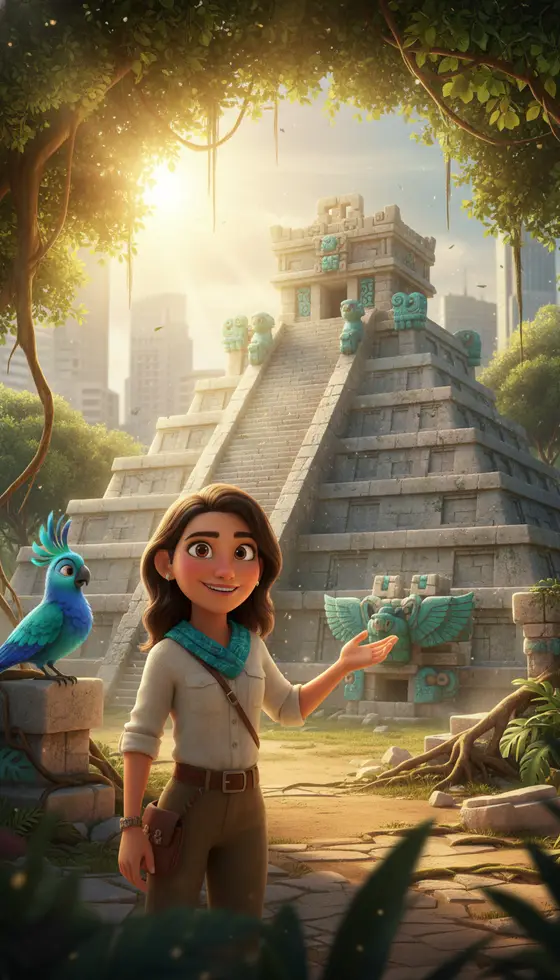
In 1325, the Mexica (Aztec) people founded Tenochtitlán on a swampy island in Lake Texcoco, guided by a prophecy: build where you see an eagle perched on a cactus devouring a serpent. The city they built became one of the largest in the world. At its peak in 1500, Tenochtitlán had a population of 200,000–300,000 people — larger than London, Paris, or Seville at the time. It was connected to the mainland by causeways wide enough for ten people to walk abreast, fed by aqueducts carrying fresh water from the mountains, and organized around a sacred precinct of temples at its center. Spanish soldiers who arrived with Cortés in 1519 described it with stunned astonishment in their letters home. Aztec history for beginners gives the full story. The ruins of the Templo Mayor — the main pyramid — sit one block from the Zócalo and are open to visitors in Centro Histórico. Walking Mexico City's downtown, you are literally walking over Tenochtitlán.
Tenochtitlán (1500 CE): population 200,000–300,000, larger than any city in Europe at the time
The Templo Mayor ruins are open to the public in Centro Histórico, one block from the Zócalo
Every major construction project in CDMX still uncovers new Aztec artifacts — the city is still being excavated
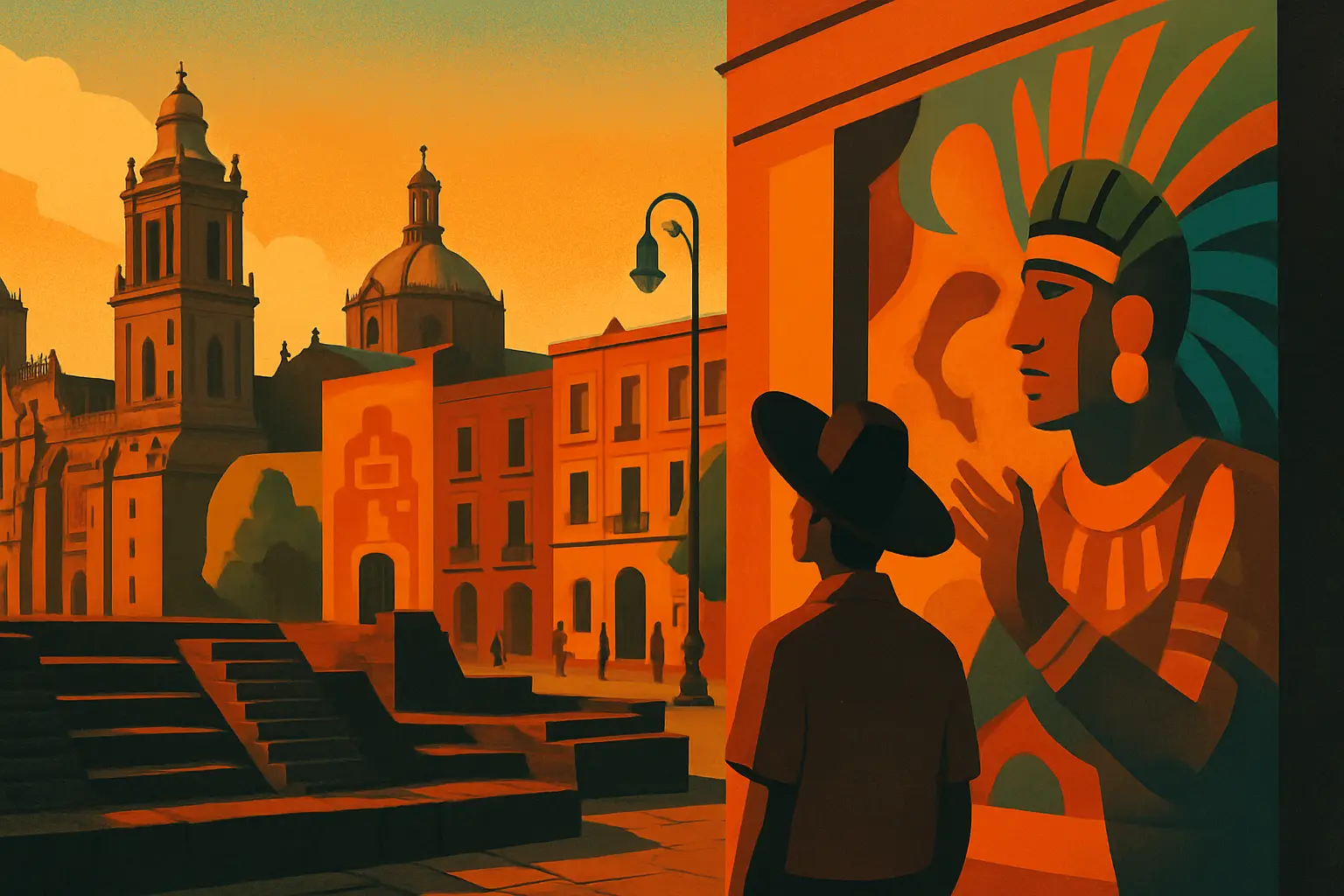
After the fall of Tenochtitlán in 1521, Hernán Cortés ordered the city rebuilt on the same site, using the stones of Aztec temples as building material. The Catedral Metropolitana — the largest cathedral in the Americas — stands on the northern edge of the Zócalo, built directly over the sacred precinct of Tenochtitlán. The stones you see in its foundation walls came from the pyramids and temples that stood there before. This is the central metaphor of Mexico City: the Spanish colonial city is not next to the Aztec city — it is on top of it, built from its remains. Centro Histórico is where this palimpsest is most visible: colonial baroque churches stand on former temple sites, and the streets still follow the original Aztec grid. The entire district sinks an average of 10 centimeters per year into the soft lakebed — a problem that has been continuous since the 17th century.
The Catedral Metropolitana is built on the foundation of the Aztec sacred precinct — stones from the temples are visible in the base
Centro Histórico streets still follow the original Aztec urban grid laid out in 1325
The historic center sinks ~10 cm per year into former lakebed — visible in the tilted cathedral and uneven streets
After the Revolution of 1910, the Mexican government commissioned three artists — Diego Rivera, José Clemente Orozco, and David Alfaro Siqueiros — to paint Mexico's history on public walls, creating a national visual identity accessible to a largely illiterate population. The result was the muralist movement, which produced some of the 20th century's most politically charged public art and influenced mural traditions globally. In Mexico City, this work is everywhere and free to see. Diego Rivera's murals at the Palacio de Bellas Artes include his recreation of the piece the Rockefellers destroyed in New York for depicting Lenin. The Palacio Nacional staircase — also Rivera — depicts the full arc of Mexican history from pre-Hispanic civilizations to the Revolution. The Palacio de Bellas Artes itself is a monument to the same national ambition: 30 years to build, a 22-ton Tiffany glass curtain, and a building that has sunk 3 meters into the lakebed since completion.
The murals are free to see — Palacio Nacional and Palacio de Bellas Artes are public buildings
Rivera's Man at the Crossroads was commissioned by Rockefeller Center, then destroyed for depicting Lenin — he rebuilt it here
Orozco's murals at the Hospicio Cabañas in Guadalajara (a World Cup host city) are considered the greater technical achievement
Get short, interactive stories that make each place easier to remember while you travel.
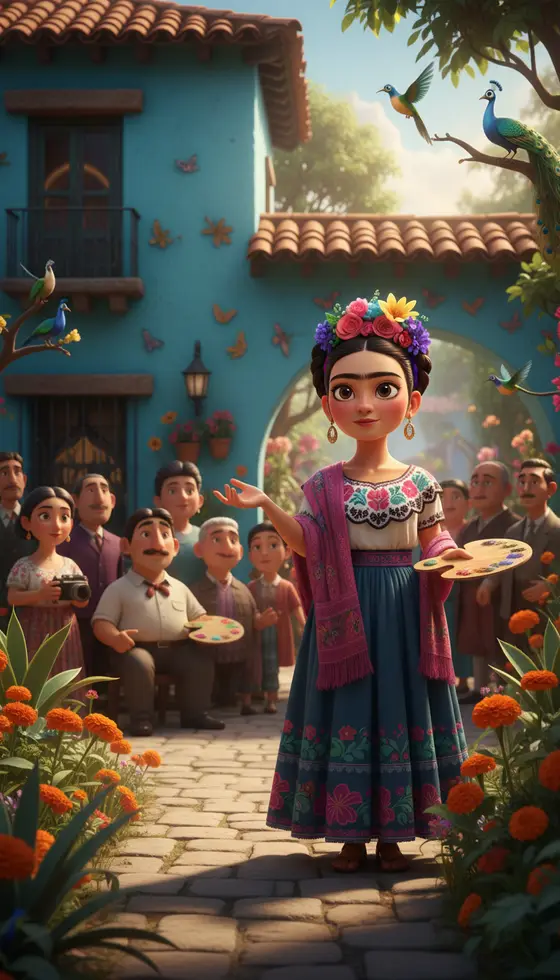
Frida Kahlo was largely overlooked by the Mexican art establishment during her lifetime — she was known primarily as Diego Rivera's wife. Global recognition came after her death in 1954, and the reassessment of her work in the 1970s and 80s transformed her into one of the 20th century's most recognized artists. Her house in Coyoacán — the Casa Azul, or Blue House — is now one of Mexico City's most visited cultural sites and a short walk from the main plaza. Visiting the Casa Azul requires advance tickets and patience with crowds, but it's one of the few places where you can see her actual studio, her pre-Hispanic artifact collection, and the bed where she painted while recovering from her injuries. Coyoacán itself remains one of the most characterful neighborhoods in Mexico City — colonial-era cobblestones, a central plaza with street food vendors, indie bookshops, and the former home of Leon Trotsky, who lived here during his Mexican exile.
Kahlo was not famous during her lifetime — the global reassessment began in the 1970s, nearly 20 years after her death
The Casa Azul contains her actual studio, her wheelchair-mounted easel, and her collection of pre-Hispanic artifacts
Coyoacán: Mexico City's most walkable cultural neighborhood — cobblestones, markets, and Trotsky's house on the same street
Mexico City is not a single urban experience — it's dozens of distinct neighborhoods (colonias), each with its own social class, history, and cultural personality. Centro Histórico is the Aztec-to-colonial core, dense and overwhelming. Coyoacán is the bohemian village absorbed by the city in the 20th century. Condesa and Roma Norte are Art Deco residential neighborhoods turned into Mexico City's food and nightlife capital. Polanco is the wealthy international district — luxury hotels, designer restaurants, and the Museo Nacional de Antropología. San Ángel is the colonial-era village with a Saturday artisan market. Understanding which neighborhood you're in — and why it became what it is — is the key to reading Mexico City. The neighborhood guide gives the full breakdown.
Mexico City has over 350 officially recognized colonias — each one a distinct community with its own character
Condesa and Roma Norte: the Art Deco zone that survived the 1985 earthquake and became the city's cultural center
Polanco: named after San Hipólito de Polanco, the wealthy enclave where the Museo Nacional de Antropología is located
Mexico City's restaurant scene is internationally acclaimed — but most of the city eats on the street, at markets, and at fondas (small family-run lunch spots). Understanding this is the difference between being a tourist and being a visitor. Street food in Mexico City is not a budget compromise — it's a culinary tradition UNESCO separately recognized as heritage. Tacos al pastor — spit-roasted pork with pineapple, introduced by Lebanese immigrants in the 1930s — is the city's defining taco. Tamales are breakfast. Elotes (corn) are afternoon. Tortas ahogadas are lunch. Each has specific vendors, timing, and ritual. The taco guide maps the varieties. The food history guide traces where each dish came from. Eating on the street in Mexico City — at a busy stand with locals, not a sanitized tourist taco cart — is one of the most culturally immersive things you can do.
Tacos al pastor: Lebanese shawarma technique brought to Mexico City in the 1930s, adapted with pork and pineapple
The 'taco' is a format, not a dish — Mexico City has 30+ distinct taco types, each with specific ingredients, vendors, and time of day
Fondas: the weekday lunch institution — a three-course comida corrida for under 100 pesos, where locals actually eat
Mexico City's markets trace their lineage directly to the pre-Hispanic tianguis (open-air markets) that Tenochtitlán was famous for. Spanish soldiers described the market at Tlatelolco — the commercial twin city of Tenochtitlán — with astonishment at its scale and organization. That tradition is unbroken. La Merced is the city's oldest and largest food market, supplying wholesale produce, dried chiles, and spices. Mercado de San Juan is the gourmet market where top chefs shop for imported cheeses and raw oysters. Mercado de Jamaica is the only 24-hour market, a wholesale flower operation that supplies the entire city's Día de Muertos marigolds. Mercado de Sonora is the famous 'witches' market' — not a tourist attraction but a working center for folk medicine and spiritual supply. The markets guide covers all of them.
The Tlatelolco market of Tenochtitlán (1500 CE) had an estimated 60,000 visitors per day — Spanish soldiers described it in stunned letters home
La Merced is Mexico City's oldest continuously operating market — on the same site since the colonial period
Mercado de Jamaica is the only 24-hour market in Mexico City, supplying flowers to the entire metropolitan area
The Museo Nacional de Antropología in Chapultepec Park is considered one of the greatest anthropology museums in the world — housing the Aztec Sun Stone (often called the 'Aztec calendar'), Mayan artifacts, and the most comprehensive collection of pre-Hispanic objects in existence. Chapultepec Park itself — one of the world's largest urban parks — contains the castle that served as Mexico's imperial palace, the national history museum, and the modern art museum. For live music, mariachi at Plaza Garibaldi on a Friday night remains one of Mexico City's most authentic experiences — dozens of competing bands in the open air. The Ballet Folklórico at the Palacio de Bellas Artes and lucha libre complete the live performance picture: three entirely different cultural registers, all native to Mexico City.
The Aztec Sun Stone in the Museo de Antropología weighs 24 tons — it was buried for centuries before being rediscovered in 1790
Chapultepec Park: 686 hectares, 2,000+ years of continuous human use, and five museums within its boundaries
Lucha libre at Arena México, the Coliseo, or Arena Neza: tickets from 100 pesos, performances every week
Mexico City is a warm, socially engaged city — but it has its own rhythms and expectations. Greetings matter: a kiss on the cheek is standard between people who've met before; a firm handshake is formal. Time is negotiable: 'ahorita' means soon but not necessarily right now, and dinner before 8 pm marks you as a tourist. Street food etiquette is specific: watch what locals do, eat standing at the taco counter, and understand that sharing a salsa container is normal. In markets and smaller shops, bargaining is culturally appropriate; in restaurants, it isn't. Tipping (10–15%) is standard in sit-down restaurants. In churches and sacred spaces — and Mexico City has many — modest dress is expected and photography restrictions are real. Things to know before visiting Mexico City covers the practical baseline. The single most important cultural insight: Mexico City is a city of stories. Ask, listen, and engage — and it opens up.
'Ahorita' is one of the most culturally loaded words in Mexico City — it means 'in a moment' on a very flexible timeline
Dinner before 8 pm marks you as a tourist — CDMX restaurants fill from 8:30 pm onward
The kiss-on-the-cheek greeting is not optional in social contexts — skipping it is considered cold or rude
Mexico City is one of the host cities for the 2026 FIFA World Cup, with matches at the legendary Estadio Azteca — the only stadium to have hosted two World Cup finals (1970 and 1986). For visitors coming primarily for football, understanding the cultural context transforms the experience. Mexico's football culture is intensely tied to national identity: El Tri (the national team) matches are civic events, neighborhood celebrations, and emotional rituals all at once. The city's World Cup guide covers logistics. The cultural layer: Mexico City in June is alive with street parties, competing music from open windows, and the kind of collective energy that the city — built for large public celebrations since the Aztec era — does better than almost anywhere. If you're coming for the World Cup, allow time for the city beyond the stadium. The culture is the event.
Estadio Azteca: the only venue to host two FIFA World Cup finals (1970 and 1986) — capacity 87,000
El Tri matches in Mexico City are civic events — neighborhood watch parties fill every plaza and street corner
The World Cup falls during the dry season, meaning Mexico City's best weather: warm days, cool evenings, clear skies
Mexico City rewards preparation more than almost any destination. Knowing that Tlatelolco was the site of a 1968 student massacre changes how it feels to stand in the Plaza de las Tres Culturas. Understanding why the jacarandas bloom in February makes the purple trees more than beautiful. Knowing that the mezcalerías in Roma Norte serve mezcal that comes from 30-year-old agave plants makes the drink taste different. TourMe is designed specifically for this kind of layered exploration: short interactive stories organized by location, neighborhood, and theme, with collectible cards that make the curiosity feel like progress. You don't need to memorize Mexico City before you arrive — you just need enough of the story to feel it differently when you're there.
Context transforms sightseeing: knowing the story behind a place changes how it feels to stand there
TourMe's stories are organized by neighborhood — unlock them as you walk through each colonia
400+ stories covering Centro Histórico, Coyoacán, Roma-Condesa, Chapultepec, and beyond