1. The secret hiding in the streets: Condesa was a racetrack
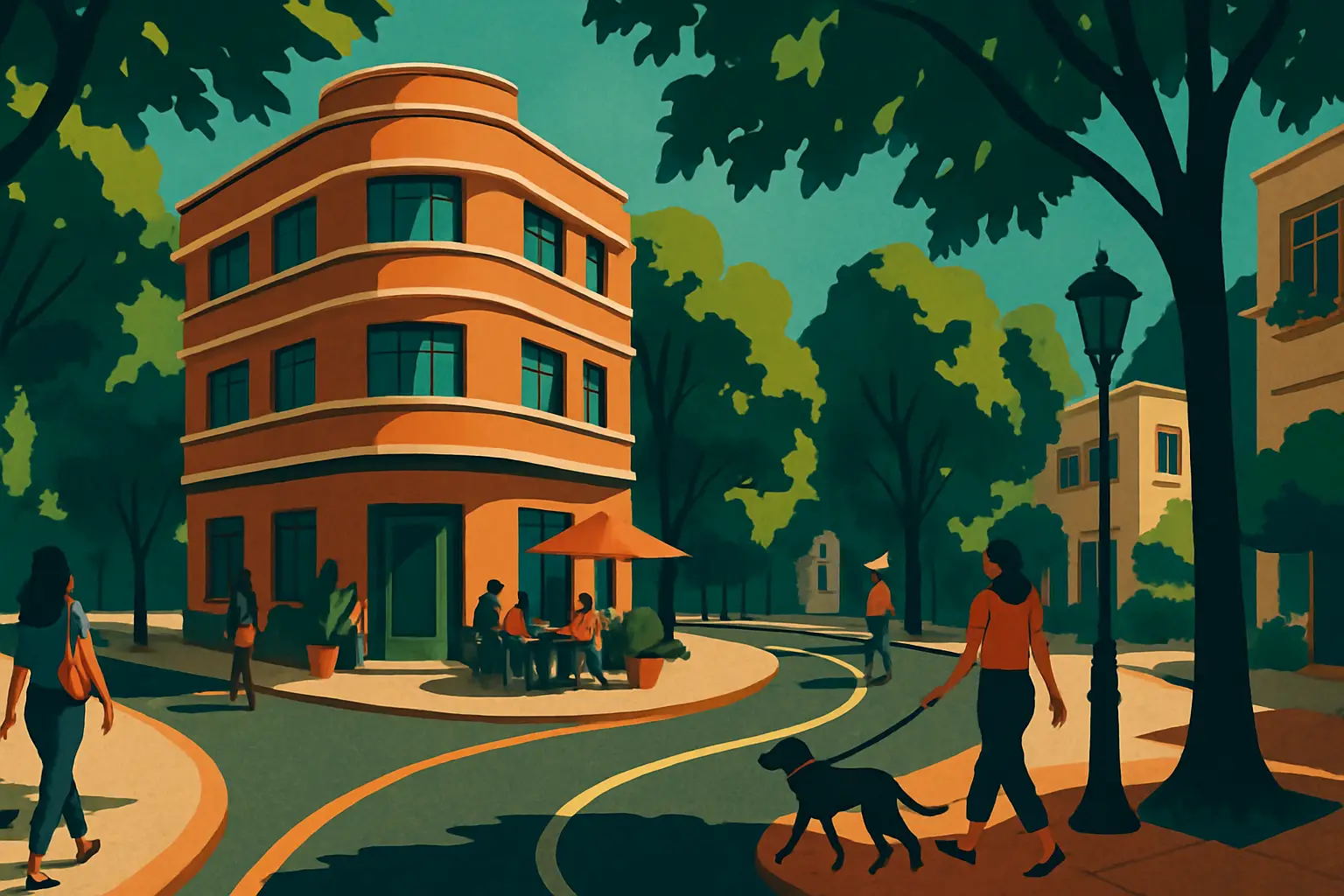
Pull up a map of Condesa and trace Avenida Amsterdam. That perfect oval isn't a coincidence — it's the outline of the Hipódromo de la Condesa, the horse racetrack that occupied this land until the 1920s. When developers parceled it out, they kept the oval as a ring road and built a tree-lined park inside. Once you know it, you can't unsee it: every block in the inner Hipódromo subdivision bends gently because you're walking the curve of an old track.
•Avenida Amsterdam = the old racetrack rail
•Parque México sits inside the oval, where the infield used to be
•Surrounding streets fan outward from the curve
2. Spend a slow morning in Parque México
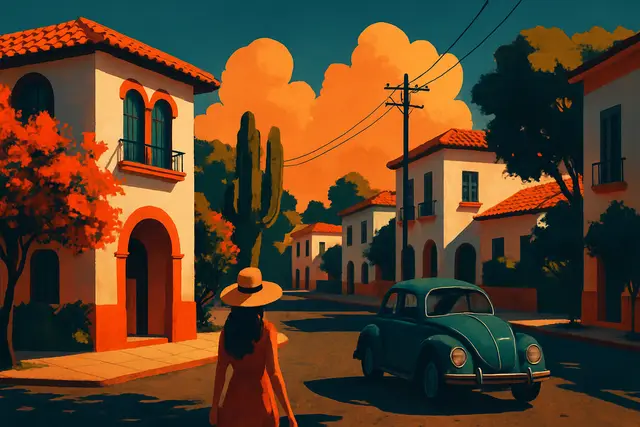
Parque México (officially Parque San Martín) is the social heart of Condesa. Locals come for sunrise tai chi, dog meet-ups, kids on scooters, and elderly couples reading the paper on Art Deco benches. Look for the Foro Lindbergh — a sunken Art Deco amphitheater with stylized peacocks and curving railings — it's one of the prettiest hidden corners in the city. Grab a coffee from a nearby café and just sit; the people-watching does the rest.
•Foro Lindbergh: Art Deco amphitheater inside the park
•Best dog-watching in CDMX (this is a known fact, not an exaggeration)
•Weekend tianguis pop up on the surrounding sidewalks
3. Walk Avenida Amsterdam (the prettiest 3 km loop in the city)
Amsterdam is a wide, tree-shaded median you can walk down the middle of, with original 1920s lampposts still standing every few blocks. Do the full oval — it's about 3 km — and you'll pass dozens of original Art Deco and Californian Colonial façades. Stop where Avenida Amsterdam meets Calle Michoacán; the cluster of cafés and corner restaurants there is a great spot to break the loop with a cortado.
•The full loop is roughly 3 km / under an hour at walking pace
•Original 1920s pedestrian lampposts still mark the corners
•Best done early morning or just before sunset (golden hour through the trees)
4. The Art Deco hiding in plain sight
Condesa was built during Mexico City's Art Deco boom, and the neighborhood is a living museum if you look up. The masterpiece is Edificio Basurto on Avenida México 187 — a 1945 apartment tower by Francisco J. Serrano with a curved façade, a tropical interior courtyard, and one of the most photographed staircases in CDMX. Then notice the smaller stuff: stylized fonts above doorways, geometric ironwork on balconies, sunburst motifs on garage doors. Half of Condesa's charm is at the second-story level.
•Edificio Basurto (Av. México 187): the must-see Art Deco landmark
•Look up — fonts, sunbursts, and ironwork are the giveaway
•Many buildings have plaques with the architect and year
5. Where to eat: from al pastor pioneers to neighborhood bakeries
Condesa's food scene is dense and casual. For tacos al pastor, El Tizoncito on Tamaulipas is one of the spots that claims to have invented the dish in the 1960s — order them gringa-style or just al pastor con todo. For breakfast, Maque on Avenida México is a longtime neighborhood bakery-café right across from Parque México, perfect for chilaquiles and pan dulce. For a sit-down lunch, Lardo (chef Elena Reygadas) does a wood-fired Mediterranean-leaning menu that locals book a week ahead.
•El Tizoncito (Tamaulipas 122): claimed birthplace of tacos al pastor
•Maque (Av. México 90): chilaquiles + pan dulce across from the park
•Lardo (Agustín Melgar 6): book ahead for the wood-fired weekday lunch
6. Nightlife: cocktail bars, mezcalerías, and walkable evenings
Condesa is a sit-down-and-talk neighborhood at night, not a club neighborhood. Baltra Bar on Iztaccíhuatl is a tiny cocktail spot from the team behind Licorería Limantour (in next-door Roma) — get there before 9 p.m. or expect a wait. Across the street, Felix is the slightly-louder, slightly-rowdier sister bar. For a quieter mezcal night, the area around Calle Nuevo León has a handful of mezcalerías and Oaxacan-leaning kitchens. Most places are walkable from each other, which is the whole point.
•Baltra Bar (Iztaccíhuatl 36): top-tier cocktails, tiny room, arrive early
•Felix (Iztaccíhuatl 14): louder bar across the street
•Walking between bars is the standard move — Ubers are barely needed
7. Is Condesa safe, and how does it compare to Roma Norte?
Condesa is one of the safer central neighborhoods for travelers and expats — it's well-lit, walkable, and busy with locals at most hours. Use the same big-city common sense you would in any major capital: don't flash phones at corners, take Uber late at night instead of street taxis. Compared to Roma Norte (a 5-minute walk east), Condesa is leafier, quieter, more residential, and slightly more dog-and-family oriented. Roma is a bit more nightlife-and-galleries; Condesa is a bit more parks-and-cafés. Most visitors end up zigzagging between them.
•Generally one of the safest central CDMX neighborhoods
•Use Uber or DiDi after dark — skip street taxis
•Condesa = parks/cafés, Roma Norte = bars/galleries
8. Best time to visit and how to get there
Condesa is great year-round, but late March through April is special: the jacaranda trees bloom purple along Amsterdam and inside Parque México. Rainy season starts in May/June and brings dramatic afternoon storms — pack a small umbrella and plan walks for the morning. From the airport, take an authorized airport taxi or Uber (about 25–40 minutes depending on traffic). The closest Metro stops are Chilpancingo (Line 9) and Patriotismo (Line 9); the Metrobús Line 1 runs along Insurgentes on Condesa's western edge.
•Best season: late March–April for jacarandas; year-round otherwise
•Closest Metro: Chilpancingo or Patriotismo (Line 9)
•Metrobús Line 1 along Av. Insurgentes is the easiest cross-town hop