Most American families who skip Mexico City do so based on a mental image that doesn't match the city's actual character. CDMX is a dense, walkable, transit-rich metropolis with more public green space than most U.S. cities its size. The colonias where most visiting families end up — Condesa, Roma Norte, Coyoacán — are full of parks, playgrounds, tree-lined sidewalks, and restaurants that handle children without drama. Mexican culture is deeply family-oriented: kids are welcome in nearly every restaurant and market without the side-eye you might get elsewhere, street food is abundant enough that even a picky eater can find a quesadilla or a churro within two minutes of anywhere, and weekend park culture is a serious institution. What catches visiting parents off guard is the scale and quality of the purpose-built family attractions — particularly the free zoo and the Papalote museum — which rival anything in New York or Chicago and run with dramatically shorter lines.
Papalote Museo del Niño sits at Av. Constituyentes 268 inside the second section of Bosque de Chapultepec, and it is one of the best children's museums in the Americas. The building holds nearly 300 interactive exhibits organized across five thematic zones — the human body, the natural world, creative expression, urban communities, and science and technology — and the execution is hands-on throughout: kids touch, climb, build, and operate rather than read labels. An IMAX dome theater screens science and nature films, with shows running throughout the day. General admission is 215 pesos (about $11 USD), with a 20% discount available Tuesday through Thursday. Hours are Tuesday through Friday from 10 a.m. to 6 p.m. and weekends from 10 a.m. to 7 p.m. The reliable strategy: arrive at opening on a weekday to beat the school group rush that builds between 11 a.m. and 1 p.m. The nearest Metro stop is Constituyentes on Line 7, or it's about a 15-minute Uber from Roma Norte.
Get short, interactive stories that make each place easier to remember while you travel.
The Zoológico de Chapultepec has been completely free to enter for decades — a fact that still surprises most visiting families. Inside Bosque de Chapultepec, the zoo houses nearly 2,000 animals from 200 species. The standout is Xin Xin, a giant panda who is the oldest of her species living outside China, resident at Chapultepec since the zoo's landmark breeding program in the late 1980s that made it one of the first facilities in the world to breed giant pandas in captivity. Beyond the panda: giraffes, tigers, gorillas, kangaroos, wolves, and an African savanna section with enough walking distance to keep kids engaged for two hours minimum. Hours are Tuesday through Sunday, 9 a.m. to 4:30 p.m. The butterfly house, reptile pavilion, and a small dinosaur exhibit each charge a small fee of 20 to 50 pesos. The main entrance on Av. Hidalgo puts you at the center of the first park section, walking distance from the Chapultepec Castle uphill and the rowboat lake to the south.
Free general admission — Tuesday through Sunday, 9 a.m. to 4:30 p.m.
Xin Xin: the oldest giant panda outside China, at Chapultepec since the 1980s breeding program
Arrive before 11 a.m. on weekends — the entrance corridor fills fast by midday
Chapultepec covers 686 hectares — bigger than Central Park — and most families only see the zoo entrance. The first section alone has a rowboat lake where pedal boats rent by the hour, multiple playgrounds along the interior paths, the Museo Nacional de Antropología (genuinely one of the best anthropology museums in the world, and manageable with older kids), and Chapultepec Castle rising on the hill above the lake. The castle is a former imperial residence with panoramic views over the entire city; the uphill walk from the lake takes about 15 minutes on a paved path. Bike rentals are available at several points throughout the park, with rates around 60 to 100 pesos per hour for adult and children's sizes. A half-day covers the first section comfortably — zoo, lake, and a castle visit — without rushing. A full day lets you cross into the second section for Papalote and the quieter forest trails. Bring water and snacks; the park vendors are fine but the lines on weekends can be long.
Rowboat and pedal boat rentals at Lago de Chapultepec — roughly 100 pesos per 30 minutes
Chapultepec Castle: 15-minute walk uphill from the lake, city views in every direction
Bike rentals throughout the park; children's sizes available near the main entrance
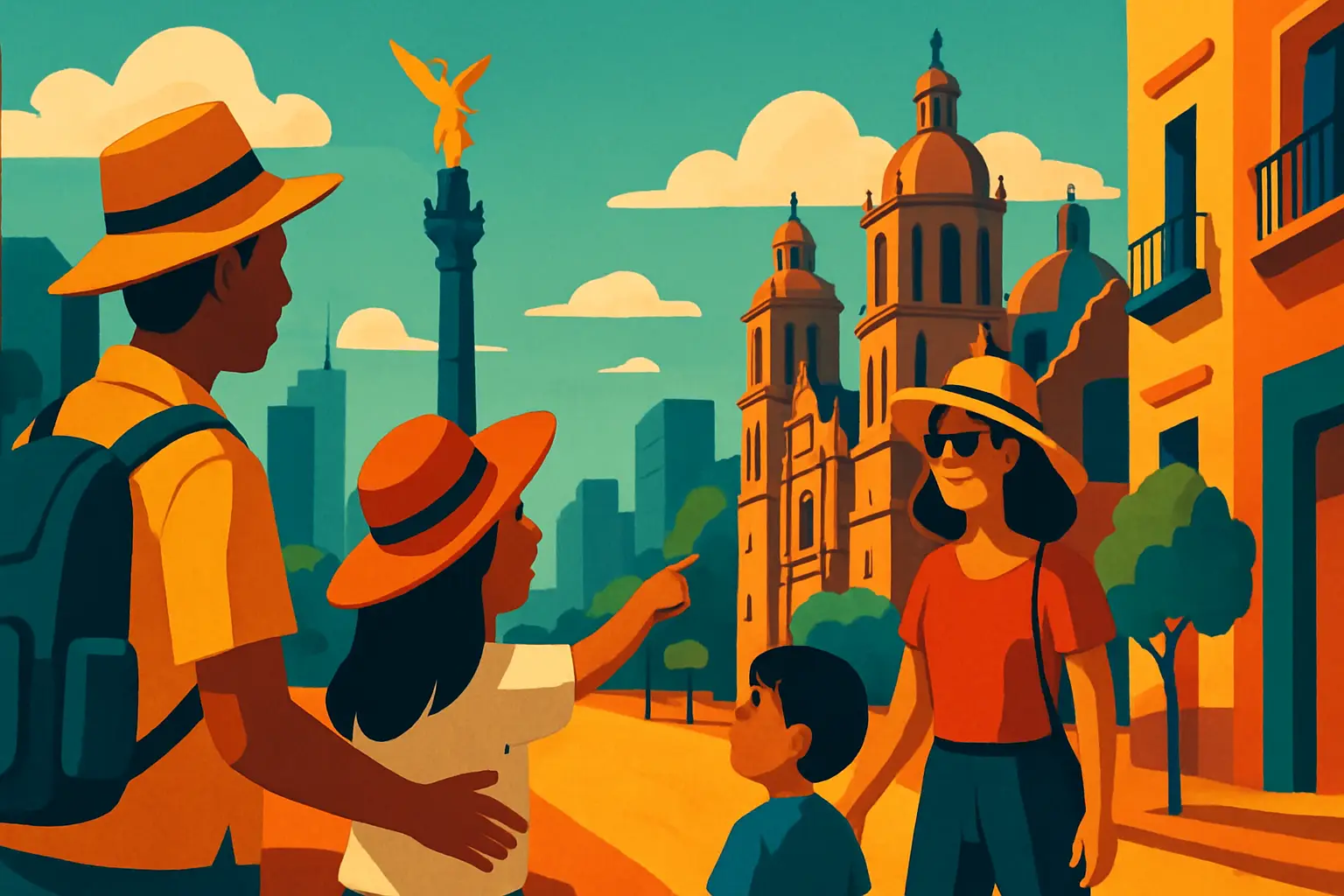
Every Sunday from 8 a.m. to 2 p.m., Mexico City closes Paseo de la Reforma to motor traffic — the full boulevard that runs through the city's most iconic neighborhoods, past the Ángel de la Independencia monument, through Zona Rosa, and out to Chapultepec. The Sunday Ciclovia draws tens of thousands of people who walk, run, cycle, rollerblade, and skate down the center of what is otherwise one of the city's busiest arterials. Bike rentals appear at multiple points along the route for around 80 pesos per hour; children's bikes and bike seats are usually available near the Chapultepec entrance. Food stands and pop-up markets line the route by 9 a.m. The most family-friendly stretch runs from the Chapultepec park entrance to the Ángel de la Independencia — wide open lanes with the park on one side and the monument corridor on the other. Kids old enough to ride independently get the rare experience of cycling down a major city boulevard with no cars. Arrive by 8:30 a.m. for the quietest window before the crowd builds.
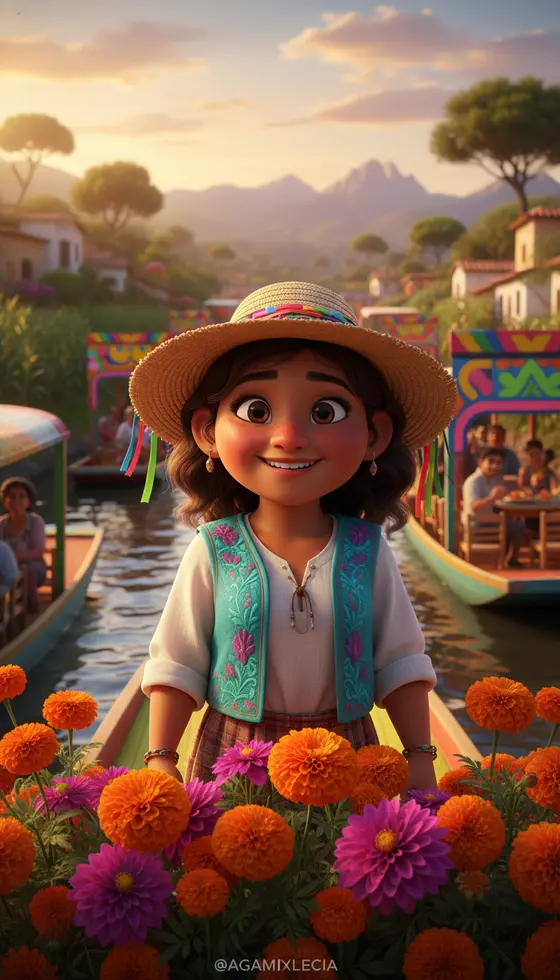
The Xochimilco canals — a UNESCO World Heritage Site and the last remnant of the ancient Aztec lake system — work well with kids, with a few caveats. The trajinera boats are flat-bottomed wooden barges about ten meters long, hired by the hour (400 to 500 pesos for a two-hour minimum) with a boatman who poles you through the canal network. It works for families because you're on a stable, wide platform; vendor boats pull alongside to sell fresh fruit, elotes, tamales, and drinks; and the canal scenery — flower farms, ancient chinampas, egrets, and herons — holds children's attention better than expected. The practical caveat: go on a weekday morning or early Saturday rather than Sunday afternoon. Sunday afternoons are when the adult party boats come out — floating mariachi bands, beer vendors — and the dynamic shifts accordingly. Arriving at the Nuevo Nativitas or Fernando Celada docks around 10 a.m. on a Saturday and leaving before 1 p.m. puts you in the right window. The full Xochimilco guide covers the history and canal logistics.
Weekday mornings or early Saturday: best window for families before the party boat crowd builds
Nuevo Nativitas dock: better maintained and slightly less chaotic than some alternatives
Budget 400 to 500 pesos for a two-hour hire; vendor boats selling food are part of the experience
Yes — with the same common-sense awareness you'd apply in any large city. The neighborhoods where visiting families spend most of their time — Condesa, Roma Norte, Coyoacán, Polanco, San Ángel — have low crime rates relative to the broader metro area and are full of local families, restaurants, and active street life well into the evening. The U.S. State Department currently rates CDMX at Level 2 (exercise increased caution), the same advisory level applied to many major European cities. The practical precautions are standard: use Uber rather than hailing taxis on the street, don't display expensive equipment conspicuously, stay in the central colonias rather than the city's outer periphery. On food: tap water should still be avoided (filtered and bottled water is everywhere and cheap), but cooked street food from busy stands with visible turnover is generally safe — Mexico City's food safety standards have improved significantly over the past decade. Papalote, the zoo, Chapultepec, and Coyoacán are all places where Mexican families spend their weekends in large numbers, which is the most reliable indicator of how accessible these spaces actually are.
Where to stay: Condesa and Roma Norte have the most child-friendly infrastructure — flat, walkable streets, parks every few blocks, and restaurants accustomed to families. Coyoacán is quieter and slower; its main plaza on weekend mornings, with street performers and market stalls, is one of the best slow-morning spots in the city. Food: Mexican restaurant culture is very family-friendly — high chairs are standard in most sit-down spots, and children are genuinely welcomed rather than tolerated. Reliable crowd-pleasers: tamales at a market breakfast, quesadillas de maíz at any fondita, elotes or esquites from street carts, and churros from Churrería El Moro at Eje Central 42 in Centro Histórico (open 24 hours, the city's oldest churro shop). Getting around: Uber handles car seats through the app — book ahead for the car-seat option. The Metro works for older kids on short hops but rush-hour crowds are intense. Timing: June through August is also summer break in Mexico, so the zoo and Papalote run busier than shoulder season — weekday mornings are the best buffer against peak crowds.
Condesa and Roma Norte: flattest, most walkable colonias with the most parks and playgrounds
Churrería El Moro, Eje Central 42 in Centro Histórico: open 24 hours, the city's original churro shop
Uber is the most practical transport for families — handles car seats on request, no language barrier