1. The neighborhood that California built in northern Mexico City
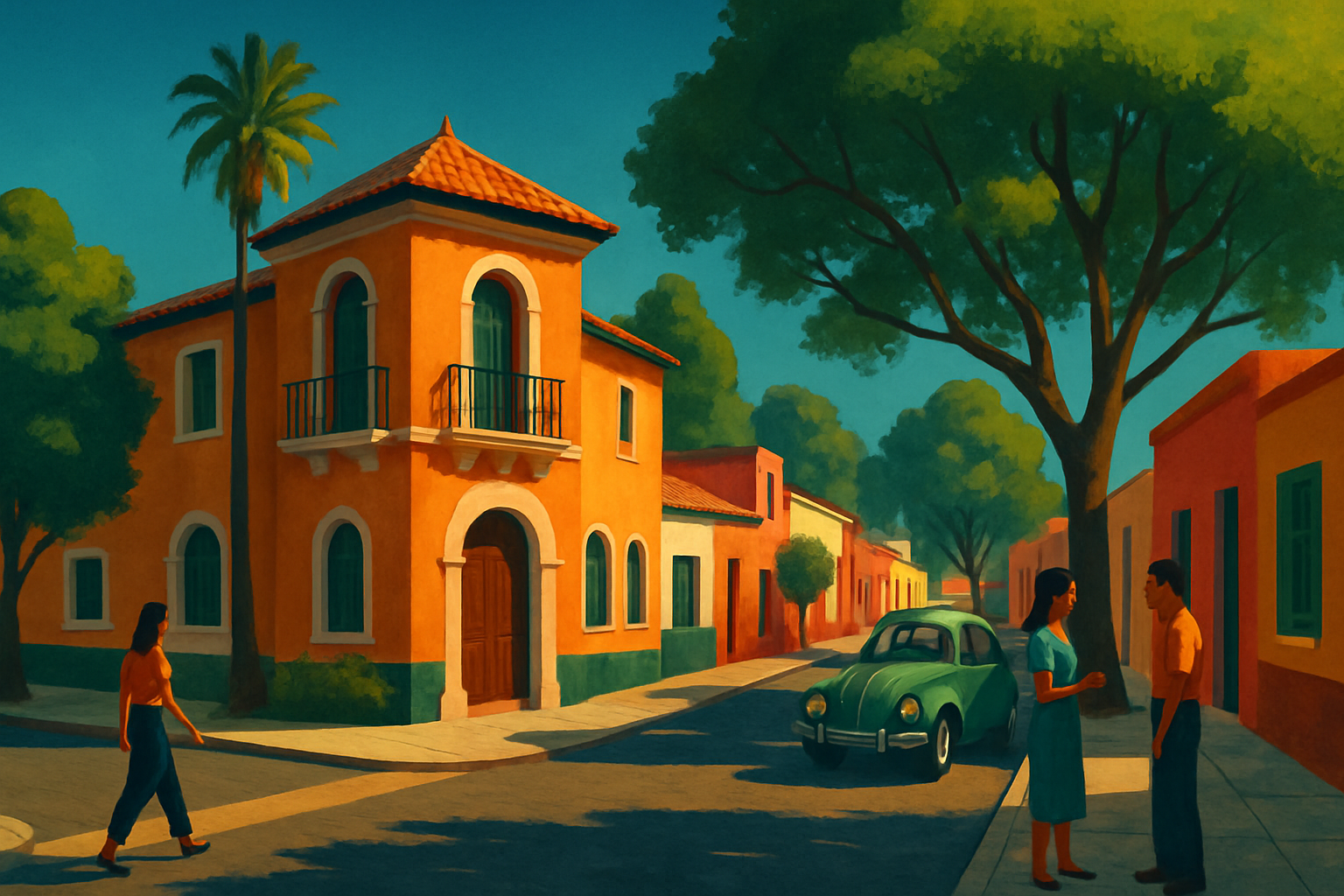
Lindavista was not born organically the way most Mexico City colonias were. It was designed — deliberately, from scratch — by an American real estate developer named Teodoro Gildred, who laid out the colonia in the late 1930s as one of Mexico City's first planned residential developments. The architectural style he chose was California Colonial: red clay tile roofs, carved quarry stone facades, wrought iron balconies, arched entryways, and walled gardens that make each property feel like a private compound. The result was a neighborhood that looked nothing like the colonial or Porfiriato-era architecture of central CDMX and everything like a Californian vision of what a Mexican suburb should be.
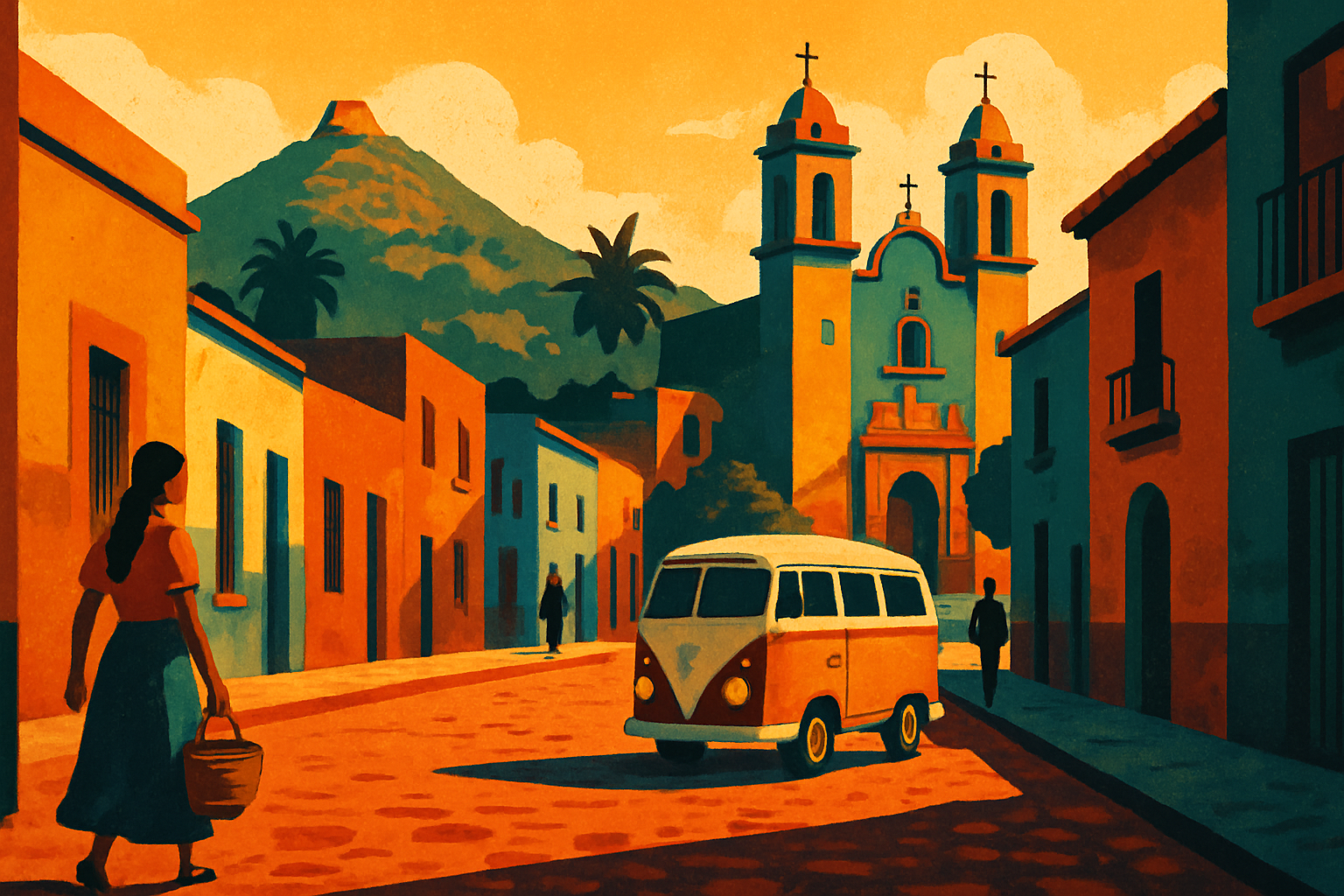
The name 'Lindavista' — 'beautiful view' in Spanish — is thought to refer to the sight lines toward the mountains visible from the northern edge of the basin, though the view from inside the colonia today is of its own immaculate mid-century streetscapes. Lindavista sits in the Gustavo A. Madero borough, about five kilometers north of the Zócalo and two kilometers northeast of Tepeyac hill — home to the Basilica of Guadalupe. For decades it has been solidly middle class, mostly residential, and deeply local: a neighborhood that serves its own residents rather than visitors from elsewhere.
2. Walking the Latin American streets
The most specific thing about Lindavista — the detail that makes it immediately different from any other colonia in CDMX — is its street names. Rather than the standard mix of Aztec rulers, independence dates, and former presidents that grid most neighborhoods, Lindavista's streets are named after Latin American capitals and cities: Cuzco, Lima, Caracas, Bogotá, Montevideo, Buenos Aires, Quito, Asunción, La Paz, Santiago. Walking through the neighborhood with that knowledge turns a residential stroll into something stranger and more interesting — a geography lesson collapsed into six city blocks, laid down by an American developer who apparently found Latin American place names more romantic than national heroes.
The California Colonial architecture on these streets has held up remarkably well. Red tile rooflines are intact on most buildings, carved stone facades keep their detail, and wide residential sidewalks lined with mature ash and fresno trees give the colonia a calm you don't find in the busier neighborhoods closer to the center. The best walking is southeast of Metro Lindavista, between Avenida Montevideo and Avenida Cuzco, where the original 1940s and 1950s construction is densest and most consistent. Come on a weekday morning when the streets are quiet and the facades catch the early light.
•Best walking zone: between Avenida Montevideo and Avenida Cuzco, southeast of Metro Lindavista station
•Streets named after Latin American capitals — Cuzco, Lima, Caracas, Bogotá, Montevideo, Buenos Aires
•Weekday mornings: minimal foot traffic, best light on the California Colonial facades
3. Centro Cultural Futurama: the megacinema that became a cultural center
The most surprising building in Lindavista is the Centro Cultural Futurama, and the surprise is structural. In 1969, architect Héctor Mestre designed what became one of the largest cinemas in Latin America on this site: the Cine Futurama, with seating for 4,800 people. For years it was one of Mexico City's great movie palaces — enormous, air-conditioned, operating at a scale of mass entertainment the city hasn't seen since. The cinema was later divided into a five-screen multiplex and then closed entirely as the economics shifted.
The city government purchased the property in 2003 and spent six years converting it into a public cultural center. The Centro Cultural Futurama opened in 2009. Today, its 3,000 square meters hold a functioning cinema hall showing contemporary and classic films, exhibition rooms, a library, workshop spaces, a computer lab, a café, and a playroom for children. Entry to the building is free. Programming rotates — film cycles, art exhibitions, youth workshops — and the schedule is posted through the city's cultural channels. The building is easily reached from Metro Lindavista on foot. What it represents, beyond its current programming, is a useful lens on Mexico City urban life: a neighborhood's biggest theater becoming the neighborhood's most accessible public institution, still serving the same blocks it served five decades ago.
4. The Thursday tianguis and what to eat
Lindavista's best street food experience happens on Thursdays, when the Tianguis de los Jueves sets up along Avenida Cuzco from around 8 a.m. The market runs until late afternoon, but the best window is before 11 a.m.: fresh stock is out, the best vendors haven't sold out, and the crowd is still a mix of early-morning regulars and local residents shopping for the day rather than the lunchtime crowd that arrives later.
The food section is the real reason to visit. The specialty most specific to this market is the huarache de cecina adobada — a thick oval of masa topped with cecina that has been marinated in achiote and chile paste and cooked on a griddle until the edges crisp. The combination of the masa base with the charred, slightly smoky beef is different from what you find at the tourist-facing markets in Roma or Condesa, and the price reflects it: roughly 60 to 80 pesos as of mid-2026. Quesadillas and tamales are also standard fare. Come with cash in small bills and enough appetite for at least two things. The tianguis also covers produce, secondhand goods, plants, and household items — it's a full neighborhood market, not a food fair.
•Tianguis de los Jueves: Avenida Cuzco, Thursdays ~8 a.m.–4 p.m., cash only
•Huarache de cecina adobada: 60–80 MXN, the most specific food reason to come
•Best window: 8–11 a.m. for freshest stock and manageable crowds
5. Mercado Lindavista and where the neighborhood actually eats
Beyond the Thursday tianguis, Lindavista has a permanent daily market that operates Monday through Saturday and serves the colonia's basic food shopping. The market's comida corrida stalls run from around 1 p.m.: three-course set lunches for 80 to 110 pesos, rotating by what is fresh and in season. The format is consistent across Mexico City markets — a soup, a rice or pasta course, a guisado, beans — but the Lindavista stalls have been serving the same blocks for decades, which means the recipes are calibrated for the neighborhood rather than for visitors with wide taste windows.
The market is also where you buy fresh tortillas, dried chiles, cut flowers, and produce at prices that make the organic markets in Roma Norte look expensive by comparison. On the surrounding residential streets, taquerías, torterías, and loncheras operate at the usual hours and serve the same clientele they have for twenty or thirty years. None of this is a destination in the sense that Mercado de San Juan or Mercado de Medellín are — it's a neighborhood feeding itself, which is both less spectacular and more real.
6. Combining Lindavista with the Basilica of Guadalupe
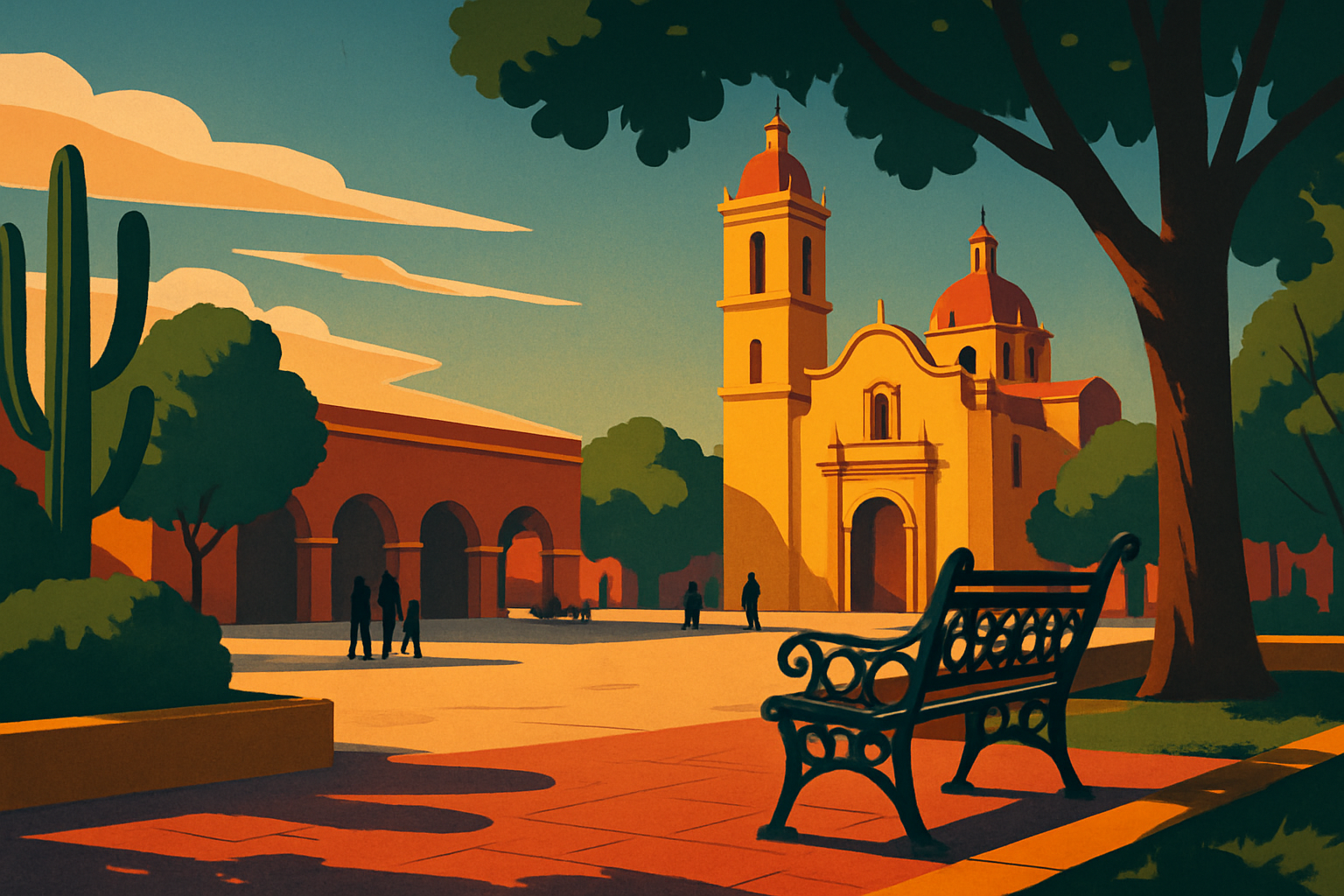
The most natural pairing with Lindavista is the Basilica de Guadalupe, which sits about two kilometers to the east on the slopes of Tepeyac hill. The Basilica draws twelve million pilgrims per year — more visitors than any Catholic site in the Americas — and Lindavista occupies the same zone of the city without any of that foot traffic or commercial pressure. The contrast is part of the point.
A practical half-day combination: start at the Basilica in the morning (before the midday crowds), then walk or take a short Uber west to Lindavista for a late-morning tianguis visit on Thursdays, or a neighborhood walk and comida corrida lunch on any weekday. Both sites are in the same northern arc of the city that most visitors flying into Mexico City and heading straight to Roma or Condesa never see. A morning in this part of town gives you a version of the city that operates entirely on its own terms — not cleaned up or adjusted for tourism.
•Basilica de Guadalupe: ~2 km east of Lindavista, 15 min walk or 5 min by Uber
•Best half-day: Basilica early morning, Lindavista tianguis (Thursday) or comida corrida after
•Both north-of-center sites off the typical Roma–Polanco–Condesa tourist loop
7. Is Lindavista safe? Getting there and when to go
Is Lindavista safe? Yes — the colonia is consistently among Mexico City's more stable, family-oriented middle-class neighborhoods. Gustavo A. Madero borough has uneven safety across different areas, but the Lindavista colonia itself — the planned residential zone around Metro Lindavista — is quiet, well-lit, and has a strong community presence during the day. Standard Mexico City awareness applies: keep your phone in your pocket while walking, use Uber or DiDi rather than flagging taxis on the street, and stay on the main residential streets you are navigating toward.
How to get there: Metro Lindavista is on Line 6 (the red line), which runs across the northern part of the city. From central colonias like Roma Norte, Condesa, or Polanco, the most practical option is Uber or DiDi — 25 to 40 minutes and 150 to 250 MXN depending on traffic. From La Villa-Basílica station (also on Line 6), Lindavista is just two stops west. From any Metro station on Lines 3 or 5, transfer at La Raza to Line 6 and ride toward El Rosario — Lindavista is the second stop after La Raza.
Best days and times: Thursday mornings for the tianguis (8–11 a.m. is the best window), any weekday morning for the neighborhood walk and architecture, lunchtime on any day for comida corrida at the daily market. The Centro Cultural Futurama is open Tuesday through Sunday. Sundays are the quietest day — some market stalls don't run and the tianguis doesn't operate.
•Metro: Line 6 (red line), Lindavista station — transfer at La Raza from Lines 3 or 5
•From Roma/Condesa: Uber is most practical — 25–40 min, 150–250 MXN
•Best day: Thursday morning for the tianguis; any weekday for comida corrida and walking