1. The Mexico City neighborhood that doesn't care if you find it
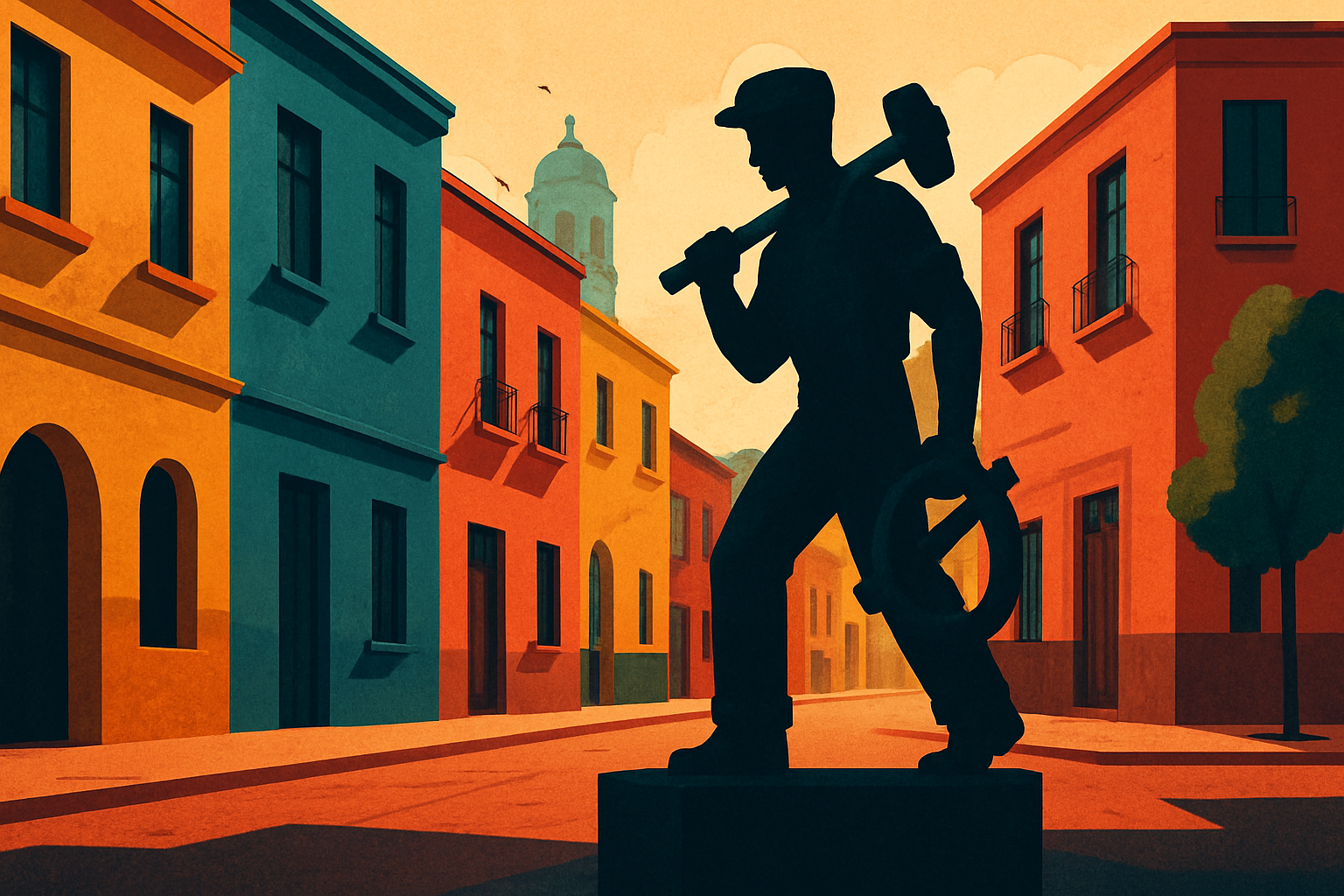
Colonia Obrera sits between Centro Histórico and the viaduct, hemmed in by Doctores to the east and Tepito to the north — a working-class grid of streets that never got renamed for poets or repaved for restaurants. The neighborhood was established in the late 19th century as El Cuartelito, a place to house the city's growing industrial workforce. By 1920 it had its current name — obrera means worker — and by mid-century it was a dense grid of garment factories, print shops, and the apartments of the people who ran them. The expat renovation wave never reached here. The specialty coffee routes don't come this far. What you find instead is Mexico City at a register most visitors never see: pragmatic, intensely local, and carrying a specific weight of history that most of the city's more photogenic neighborhoods simply don't have. If you're spending more than a few days in CDMX and want to understand something about the city that Roma Norte can't show you, Colonia Obrera is worth half a day.
2. September 19, 1985: how a neighborhood became the birthplace of Mexican civil society
At 7:19 AM on September 19, 1985, an 8.1-magnitude earthquake struck Mexico City. The destruction was citywide, but the garment district along Calzada San Antonio Abad — running through the heart of Colonia Obrera — took some of the worst of it. More than a dozen garment factories collapsed in the first minutes. The seamstresses — costureras — who worked the early-morning shifts were inside. Estimates of the death toll from garment-factory collapses alone run from 800 to over 1,000 workers.
What came next became part of Mexican history. When investigators examined the collapsed buildings, they found that many of the factory doors had been locked from the outside by owners — a standard practice meant to prevent theft — trapping workers inside when the buildings fell. The detail concentrated public anger in a specific way. Within a month, on October 20, 1985, survivors organized the Sindicato de Costureras 19 de Septiembre — the September 19th Seamstresses' Union — operating entirely outside the government-controlled CTM labor federation that had managed Mexican unions since the Revolution.
This was the first truly independent trade union in modern Mexican history. Historians of Mexico's democratic transition mark the costureras' union as one of the founding moments of independent civil society in the country — a chain that eventually led, over the next fifteen years, to the end of one-party rule. The neighborhood that produced this moment doesn't advertise it loudly. But the history is here, embedded in the streets and the rebuilt structures along San Antonio Abad.
3. The memorials and what they mark
The streets of Colonia Obrera and the San Antonio Abad corridor carry physical evidence of 1985 in the form of rebuilt structures, plaques, and commemorative markers that most visitors walk past without reading. The Sindicato de Costureras 19 de Septiembre maintained offices in the neighborhood for decades after the earthquake, and the calendar date retains a specific local resonance that differs from the national commemoration. September 19th is now a formal national memorial day in Mexico — partially because a second major earthquake struck the city on the same date in 2017, also early in the morning, adding another layer to what the date means in the city's collective memory. In Obrera, the date is not abstract. There are residents here who remember both earthquakes and the factories that stood between them. Walking the blocks along Chimalpopoca and San Antonio Abad with that knowledge changes what the street-level architecture tells you.
4. Galas de México: the factory that made the images in every Mexican home
At Calzada San Antonio Abad 121, Galas de México has been operating as a print factory for over a century. The company made its name producing illustrated calendars — the images of pin-up figures, revolutionary heroes, and idealized family scenes that hung on the walls of millions of Mexican homes, barbershops, cantinas, and workshops through the mid-20th century. If you've seen a Mexican illustrated calendar from before 1980, there's a reasonable chance it came out of this building.
The National Institute of Fine Arts (INBA) has recognized Galas de México as a site of artistic and cultural heritage — an unusual distinction for a commercial print factory, and a sign of how deeply these images embedded themselves in Mexican visual culture. The building is still an active factory, not a museum, which is part of what makes it interesting: you're looking at a working piece of 20th-century industrial heritage, not a curated reconstruction. The scale of the structure and its signage tell the story adequately from the street. Weekday mornings are when the building shows the most activity.
5. MUJAM: 40,000 toys packed into four floors
Technically one block into Colonia Doctores, but a five-minute walk from Obrera station, the Museo del Juguete Antiguo México (MUJAM) at Dr. Olvera 15 belongs on any Obrera visit. Collector Roberto Shimizu spent decades assembling one of the most singular collections in Mexico City: over 40,000 toys spanning from the 1880s to the 1980s, arranged across four floors of a former residential building that has been adapted, room by room, to hold them.
Tin robots from postwar Japan. Handmade wooden figures from Oaxaca. Vintage Mexican wrestling action figures. Board games from the 1950s with rules in three languages. The density is unlike anything in a conventional museum — there is no velvet rope, no explanatory wall text for every object, no gift shop. You pay the entrance fee and find your own way through the collection. The experience is closer to spending an afternoon in an extremely well-curated collector's home than visiting an institution. Open Tuesday through Sunday; closed Monday.
6. The street food that hasn't been written up
Colonia Obrera has the taco culture that every neighborhood in Mexico City had before tourism concentrated the food scene into a small number of known names. Guisado stands run from early morning, offering the day's stews on fresh tortillas from low-slung counters: rajas con crema, frijoles con epazote, chicharrón en salsa verde, huevo con chorizo — whatever was cooked that morning, rotating through the week. Los Machetes Amparito is one of the neighborhood's established names, a taquería serving machetes: the enormous folded tortillas filled with beans, cheese, and meat that are grilled flat on a comal until the outside crisps while the inside stays soft.
The cantinas along the main streets run their lunch hours in the mode that most of the city's more visible cantinas have now self-consciously replicated. Here it's unreconstructed: drinks arrive, plates of botanas arrive automatically alongside them, afternoon light comes in through frosted glass, ceiling fans turn overhead. Nobody is photographing the food. That's the point.
7. Is Colonia Obrera safe?
Colonia Obrera is a working-class residential neighborhood, not a tourist area, and that distinction matters for how you navigate it. The main commercial streets — Obrero Mundial, Calzada San Antonio Abad, the blocks around the Metro — stay active and relatively low-risk during daylight hours when businesses are open and foot traffic is continuous. The specific destinations covered in this guide (Galas de México, MUJAM, the taco spots near Metro Obrera) are all accessible by day without unusual risk.
The neighborhood's periphery is a different calculation. Streets running toward Tepito to the north, and quieter residential blocks after dark, require the same elevated attention you'd apply in any working-class CDMX neighborhood: don't display phones or cameras visibly, use Uber or DiDi after dark rather than walking unfamiliar blocks, and plan to leave the area before foot traffic thins. Obrera is not a destination for late-night wandering. As a focused daytime visit built around specific places, it's manageable and genuinely worth the effort.
8. How to get to Colonia Obrera
The most direct option from most of the city is Metro Line 8 (the pink line) to Obrera station, which deposits you near the center of the neighborhood. From Centro Histórico, Metro Line 2 (blue line) to San Antonio Abad runs along the western boundary of Obrera and is the most efficient route if Galas de México is your first stop. The neighborhood occupies a rough rectangle south of the viaduct, running between Eje 2 Norte to the north and Eje 2 Sur to the south.
From Roma Norte or Condesa, a Uber or DiDi takes 10 to 15 minutes depending on traffic and runs 50 to 80 pesos (roughly $2.50 to $4 USD). From Centro Histórico, the walk south on Eje Central Lázaro Cárdenas takes about 20 minutes and passes through the northern fringe of the neighborhood before you reach the denser working streets. If you're combining Obrera with a visit to MUJAM in Doctores, both neighborhoods can be done in a single afternoon — plan 2 to 3 hours total.