1. What Xochimilco actually is (and why UNESCO cares)
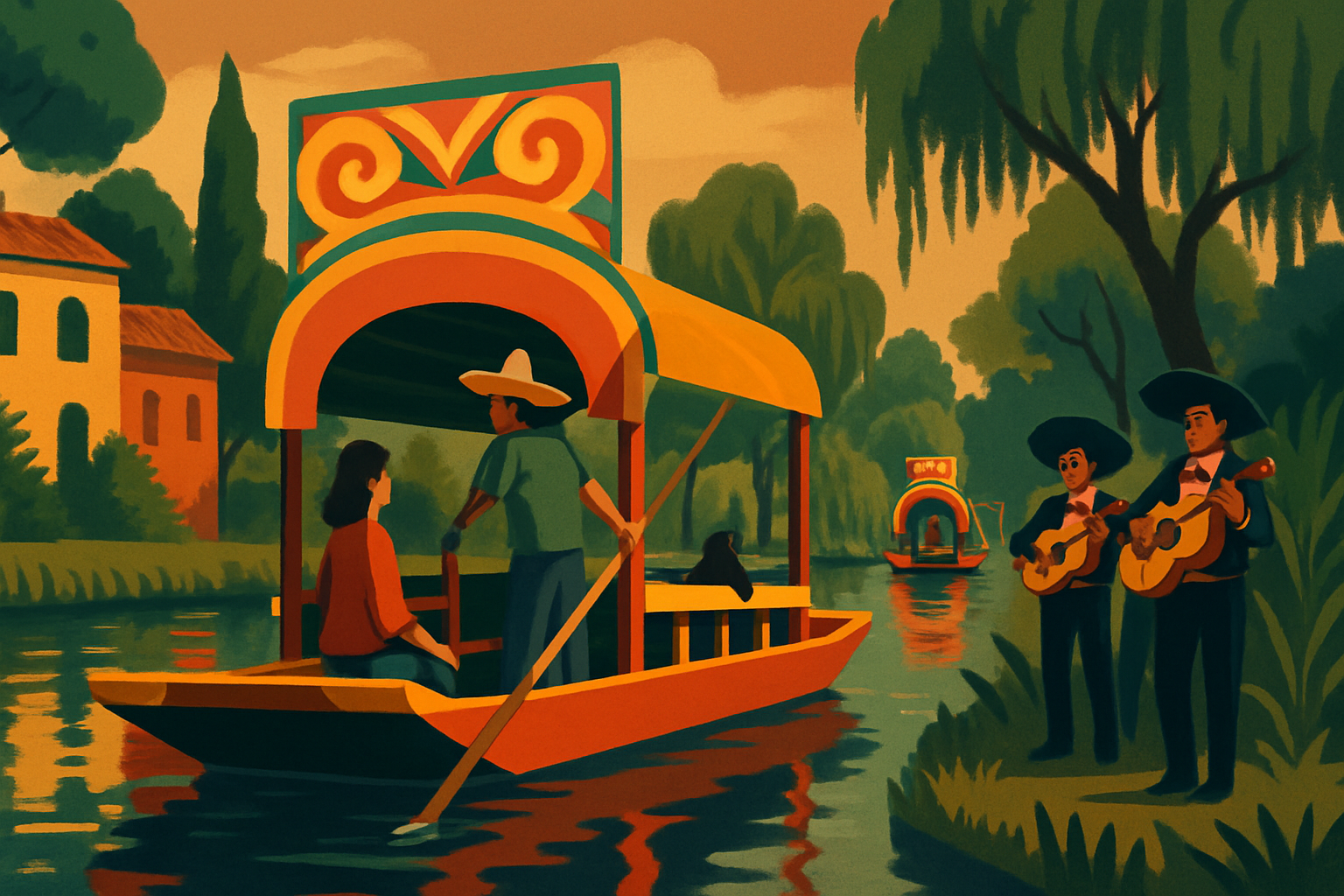
Xochimilco — pronounced so-chee-MEEL-koh — is the last surviving piece of the giant lake system the Aztecs built Tenochtitlan on top of. The colorful flat-bottomed boats you see in every Mexico City Instagram are called trajineras, and they pole through 170 kilometers of canals that have been continuously farmed for more than 1,000 years. UNESCO named it a World Heritage Site in 1987, and the chinampas — the rectangular floating gardens between the canals — still grow lettuce, radishes, cilantro, and edible flowers that show up in restaurants like Pujol and Quintonil the next morning. It's not a theme park; it's a working agricultural neighborhood with a party on top.
•Pre-Hispanic Aztec canal system, still actively farmed
•UNESCO World Heritage Site since 1987
•Located in the southern borough of Xochimilco, ~28 km from Centro Histórico
2. Pick the right embarcadero (this is the whole game)
There are nine official embarcaderos (boat docks), and your experience depends entirely on which one you walk into. Embarcadero Cuemanco is the largest, calmest, and closest to the ecological side of the canals — start here if you want to actually see chinampas and birds. Nuevo Nativitas is the most touristy: dense with mariachi boats, food vendors, and weekend party energy. Embarcadero Las Flores Nativitas sits next door and feels almost identical. Skip Salitre and San Cristóbal unless you're on a tight budget — they're farther from the scenic loop. The taxi/Uber driver will ask which one; tell them, otherwise they'll dump you at whichever pays them a kickback.
•Cuemanco: peaceful, scenic, near Pista Olímpica — best for first-timers and nature
•Nuevo Nativitas: full party — mariachis, micheladas, big groups, weekend chaos
•Embarcadero Belem de las Flores: launching point for Isla de las Muñecas tours
3. What it costs (the rate is regulated — don't get talked up)
Trajineras are price-controlled by the borough government. The official 2026 rate is 600 MXN per boat, per hour — not per person. A trajinera fits up to 20 people, so a group of six pays the same as a couple. There is a giant yellow Tarifa Oficial sign at the entrance to every embarcadero; take a photo of it before you start negotiating. Two hours is the right length for first-timers; four is the sweet spot if you want to bring food, cards, and stay until the mariachi boats find you. Pay the boatman directly at the end. Mariachi boats charge per song (around 200 MXN for a three-song set), passing food boats sell esquites and quesadillas (50–80 MXN), and beer/michelada boats run 50–70 MXN per drink — all separate, all cash.
•Official rate: 600 MXN per boat per hour (whole boat, not per person)
•Mariachi: ~200 MXN per song; food boats: 50–80 MXN per dish
•Bring small bills — 50s, 100s, 200s. Card readers don't exist on the water
4. What to actually do on the boat
First-timers default to drifting and drinking, which is fine — but the canals reward a little planning. Bring a cooler of beer and snacks (BYO is fully allowed and saves money), or stop at one of the chinampa-side restaurants like Arca Tierra for a farm-to-table meal grown 30 meters from your plate. Wave down a marimba boat for a single song — it's cheaper and more atmospheric than a full mariachi set. If you're going for two hours, ask the boatman to head toward the chinampa zone instead of looping the tourist channel; you'll see herons, axolotl signage, and farmers actually pulling lettuce out of the water. On weekends, prepare for floating Tinder energy. On Tuesdays, prepare for total silence.
•BYO food, drinks, speaker, and a deck of cards is normal and accepted
•Ask for the chinampa side, not the tourist loop, for the actual scenery
•Saturdays = busiest, Sundays = family day, Tuesday/Wednesday = empty canals
5. Isla de las Muñecas (the doll island) — worth it or skip?
The Isla de las Muñecas is the famously creepy chinampa where a hermit named Don Julián Santana hung dolls in the trees for 50 years to ward off the spirit of a girl who drowned nearby. It's real, it's deep in the canal system, and it's a 2-hour boat ride each way from Embarcadero Cuemanco — meaning a 4–5 hour total trip and roughly 2,500–3,000 MXN per boat. It's worth it if you love offbeat history and weird photography; it's a slog if you came for vibes and a michelada. If you only want a peek, the Isla de las Muñecas II is a much closer replica run by Don Julián's family, but purists will tell you it's not the original.
•Original Isla de las Muñecas: 2 hours each way from Cuemanco
•Total cost: 2,500–3,000 MXN per boat (5-hour round trip)
•Closer replica (Isla II) exists, but it's not the original site
6. Pair it with the Dolores Olmedo Museum or Frida's Casa Azul
Xochimilco sits in southern CDMX, far from Roma and Centro, so you've already burned the Uber fare — pair it with something nearby. The Museo Dolores Olmedo, in the neighboring colonia of La Noria, holds one of the largest Frida Kahlo and Diego Rivera collections in the world inside a 17th-century hacienda surrounded by peacocks and xoloitzcuintli dogs. It's roughly 10 minutes north of Cuemanco. Coyoacán — Frida's Casa Azul, Mercado Coyoacán, and Plaza Hidalgo — is another 25 minutes north and pairs perfectly as a late-afternoon stop after a morning on the canals. Don't try to do Centro Histórico the same day; the cross-town traffic will eat you alive.
•Museo Dolores Olmedo: 10 min from Xochimilco, big Frida + Diego collection
•Coyoacán + Casa Azul: 25–35 min north, perfect afternoon pairing
•Skip Centro the same day — traffic back north is brutal after 5 p.m.
7. How do I get to Xochimilco, and is it safe?
By Uber or Didi, Roma Norte to Embarcadero Cuemanco runs 250–400 MXN and 35–55 minutes depending on traffic. From Centro Histórico, budget 45–70 minutes. Public transit is doable: take Metro Line 2 (blue) south to Tasqueña, then transfer to the Tren Ligero (light rail) all the way to its final stop, Xochimilco — about 90 minutes total but cheap (under 10 MXN). Going home, use Uber, not the light rail after dark. Xochimilco is generally safe during daylight inside the embarcaderos, which are regulated, gated, and policed. Stay on official boats (look for the Tarifa Oficial signs and registered boatmen with vests), don't bring valuables you can't afford to drop in the water, and finish your boat ride before sunset — the canals get pitch black fast.
•Uber from Roma/Condesa: 250–400 MXN, 35–55 min
•Public transit: Metro Line 2 → Tren Ligero → Xochimilco terminal
•Be off the canals by sundown; Uber back rather than transit at night
8. Best time to visit Xochimilco?
Weekdays are quiet and gorgeous — perfect if you want birds, photos, and a peaceful chinampa ride for under 1,500 MXN total. Weekends are the cultural experience — packed with Mexican families, full mariachi sets, floating bars, and a chaotic energy you won't find anywhere else in the city. Saturdays after 1 p.m. are the busiest. The dry season (November–April) is ideal: clear skies, no afternoon storms, jacarandas blooming through April. Rainy season (June–September) means dramatic but short afternoon downpours — go in the morning and you'll be back at your hotel by the time the sky opens. April mornings, like right now, are arguably the best window of the year: warm, dry, blue-sky, jacaranda-tinted, and not yet hot enough to fry your shoulders on a flat-roofed boat.
•Weekday morning: peaceful + scenic + cheapest
•Weekend afternoon: full mariachi-and-michelada party energy
•Best weather: late October through April; mornings during rainy season