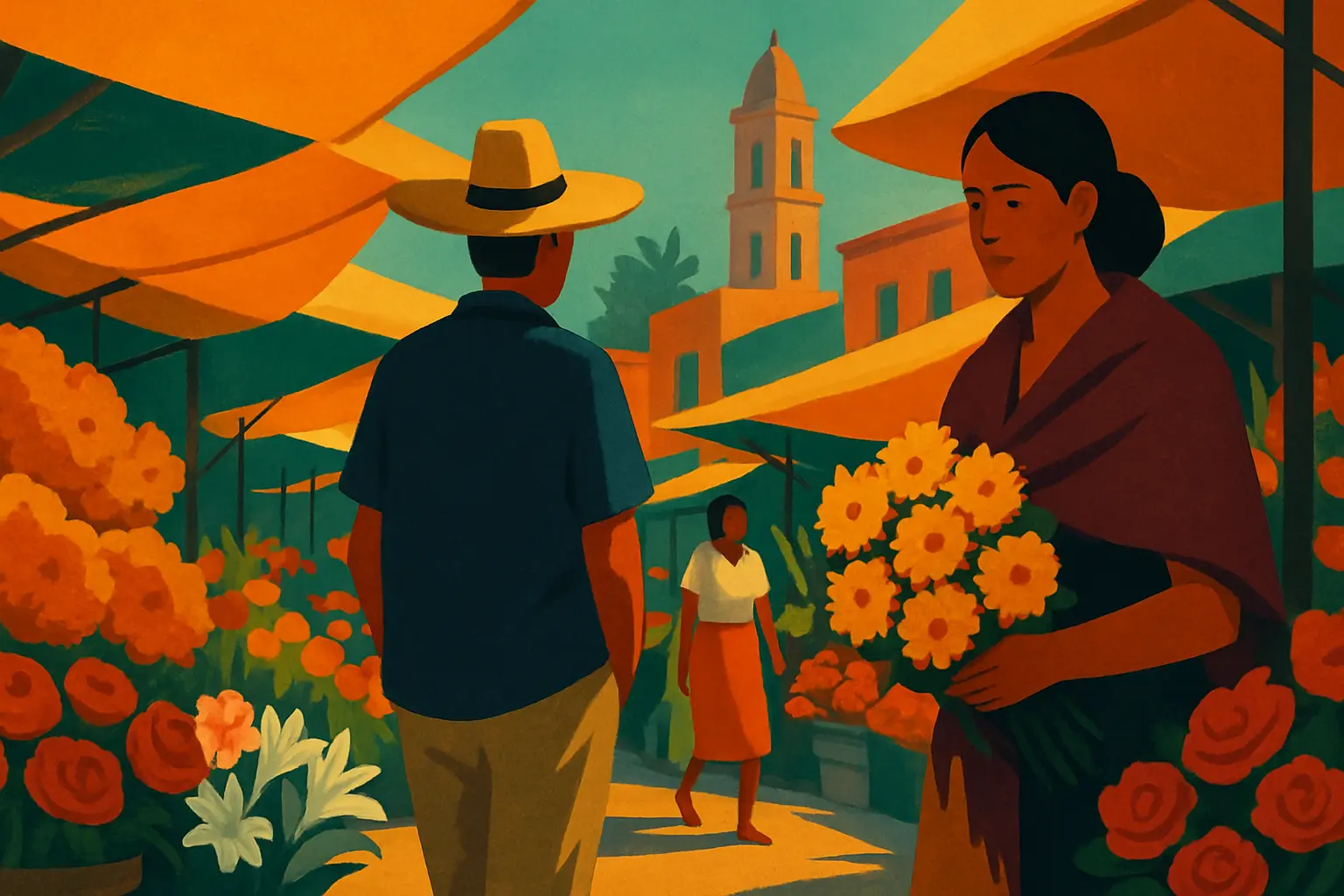
Mexico City has hundreds of markets, but Mercado Jamaica runs on a completely different clock from all of them. The wholesale flower trade doesn't wait for business hours. Trucks from Puebla, Veracruz, Chiapas, Oaxaca, and Michoacán start arriving well before midnight, unloading calla lilies, tuberose, marigolds, gladiolas, and bird of paradise by the crate. By 2 or 3 a.m., the buyers arrive — florists, event planners, restaurant owners, church suppliers, and ofrenda decorators — to select what they need for the coming day. By the time a tourist wanders in at 9 a.m., the market has already done half a day's business. This 24-hour rhythm separates Jamaica from every tianguis and weekend market in the city: it's a working wholesale operation first, a retail market second. Which also means the prices, the scale, and the energy are nothing like what you'd find at a tourist-facing craft fair. Retail visitors are completely welcome — you just need to understand what you're walking into.
Flower deliveries arrive from multiple Mexican states starting around midnight
Wholesale buyers peak between 2 and 6 a.m. — retail visitors peak from 8 a.m. onward
Open every day of the year, including holidays
The market occupies a full city block on the corner of Avenida Congreso de la Unión and Avenida Morelos in Colonia Jamaica. The complex is split into three interconnected warehouses, each with a different personality. The main flower hall is the one worth setting aside real time for: row after row of metal buckets organized loosely by variety and color, from waist-high stacks of marigolds to elaborate pre-built arrangements for quinceañeras and funerals. The scale is genuinely disorienting — you can spend an hour in this hall alone. The second warehouse area moves into decorative and potted plants: tropical varieties, succulents, ornamental trees, and artificial flower displays used for events. The third section is more of a general market, with food stalls, bulk dried herbs, and everyday goods. Don't skip the herb section: epazote, hierba santa, hoja de aguacate, and dried chiles sold by the kilo from vendors who can explain exactly which dish each ingredient belongs in. Everything is priced for wholesale buyers, which means retail visitors get flowers at a fraction of what any flower shop charges.
Main hall: loose flowers and pre-made arrangements organized by variety and color
Second warehouse: potted tropical plants, succulents, decorative arrangements
Third section: bulk herbs, dried chiles, and general market goods
Get short, interactive stories that make each place easier to remember while you travel.
If you've seen the film Coco, you've seen cempasúchil — the orange-gold marigold used to build pathways from the spirit world to the family ofrenda. Those marigolds, millions of them, come from Mercado Jamaica. In the weeks leading up to Día de Muertos (November 1–2), the market transforms into something almost hallucinatory: entire warehouse sections stacked ceiling-high with cempasúchil, the scent of marigold overwhelming the whole neighborhood, buyers wheeling cartloads of flowers to vans that will carry them to every corner of the city. The tradition runs deep — cempasúchil was associated with Aztec death rituals centuries before the Spanish arrived — but Jamaica is the modern supply chain that makes it happen at city scale. The Aztec name comes from Nahuatl: cempoal (twenty) and xochitl (flower), referring to the many petals. Even outside of October and November, Jamaica is the main source of cempasúchil for restaurants, hotels, and anyone decorating a year-round altar. If you visit in late October, the market during this period is one of the more arresting sensory experiences in the city.
Jamaica supplies cempasúchil (marigolds) for Día de Muertos altars across the city
Cempasúchil comes from Nahuatl — 'twenty flowers' — and predates Spanish colonization
Late October visits hit the market at its most dramatic and fragrant
Jamaica is a wholesale market, which means quantities lean high and sellers expect buyers ordering by the dozen or crate. But retail visitors are welcome — just understand you might buy a bundle of 10 roses rather than three, and that this is actually a good deal. Prices are dramatically lower than any flower shop: expect 30–80 MXN for large bouquets that would cost two or three times as much elsewhere. The best buys are whatever arrived this week — ask a vendor what's freshest. In May and June, look for gladiolas, anthuriums, birds of paradise, and heliconia. September and October bring in the cempasúchil season. December is all poinsettias (nochebuenas). For potted plants, Jamaica is a reliable source for unusual tropical varieties, herbs, and succulents at very low cost compared to garden centers in Roma or Polanco. Negotiation is light — vendors are polite but not aggressive, and the stated price is usually close to fair. Buying more than one type of flower from the same vendor will sometimes get you a small discount without you needing to ask.
May–June: gladiolas, anthuriums, birds of paradise are peak season
October: cempasúchil floods the market ahead of Día de Muertos
Potted plants and herbs are excellent value compared to retail nurseries
The food stalls at Mercado Jamaica run alongside the market's unusual hours, which means there's a full breakfast operation firing at 4 a.m. and late-night taco service for the overnight flower buyers. The main food corridor runs through the interior of the market and serves the standard fonda format: a row of clay pots on a burner, each holding a different guisado — rajas con crema, nopales con huevo, chicharrón en salsa verde, picadillo — scooped onto a fresh tortilla and topped with whatever salsa you point at. Look for the carnitas vendor near the Avenida Morelos entrance who begins cooking around 6 a.m. and usually sells out by 10. For a sit-down breakfast, find one of the market-interior fondas serving chilaquiles and café de olla — pot-brewed coffee sweetened with cinnamon and piloncillo, the traditional market drink. This is not a tourist food destination, but the breakfast scene is very good and priced for market workers, which means 40–80 MXN for a full plate.
Fondas inside the market serve guisados from around 5 a.m. — price per plate runs 40–80 MXN
Carnitas near the Morelos entrance: arrive before 10 a.m., it runs out
Café de olla (cinnamon-sweetened pot coffee) is the correct market breakfast drink
The market is served directly by Metro Jamaica — take Line 9 (the brown line) and use the street-level exit to Avenida Morelos. A critical note: Line 9 and Line 4 both stop at Jamaica station, but Line 4 uses an elevated platform that exits on the wrong side of the market complex. Take Line 9. From Roma Norte or Condesa, the ride is about 15–20 minutes from Insurgentes station. From Centro Histórico, it's roughly 10 minutes on Line 2 toward Tasqueña, transferring at Pino Suárez. Rideshare (Uber or DiDi) is practical if you're buying flowers and plan to carry them out — the market is easy to drop off and pick up from on Congreso de la Unión. Best time to visit: weekday mornings, 7 to 10 a.m. The overnight delivery chaos has settled, the main buying rush is underway, the food stalls are at peak form, and the light inside the main flower hall is at its best. Avoid Saturday afternoons — that's peak retail density and navigating between stalls gets difficult. If you want to see the wholesale buying scene at its most theatrical, visit at 3 or 4 a.m. on a weeknight. It's a completely different market.
Metro Jamaica (Line 9, brown line) — use the street-level exit, not the elevated Line 4 exit
Best time: weekday mornings 7–10 a.m. for flowers, food, and manageable crowds
3–4 a.m. weeknight visits show the wholesale buying scene in full operation
Jamaica is a working-class market neighborhood in the Venustiano Carranza borough — safe for daytime visits with the same basic city awareness you'd apply anywhere in CDMX. The market interior is busy and staffed entirely by vendors focused on their business; pickpocketing is the only real concern in the most congested sections of the main flower hall. Keep your phone in a front pocket or bag, and carry only the cash you plan to spend. The walk from Metro Jamaica to the market entrance is about two minutes and is fine at all hours. Late-night visits (2–5 a.m.) are unusual for tourists but not dangerous — stick to the market complex and you're fine. There's no real reason to wander the surrounding side streets. For a southeast CDMX day combining two very different market experiences, Jamaica pairs naturally with Xochimilco's floating gardens and canal markets, about 30 minutes further south on the Metro.
Carry only the cash you plan to spend — pickpocketing in crowded stall sections is the main risk
Metro exit to market entrance is a 2-minute walk, safe at all hours
Pairs well with a Xochimilco visit as a southeast CDMX day trip