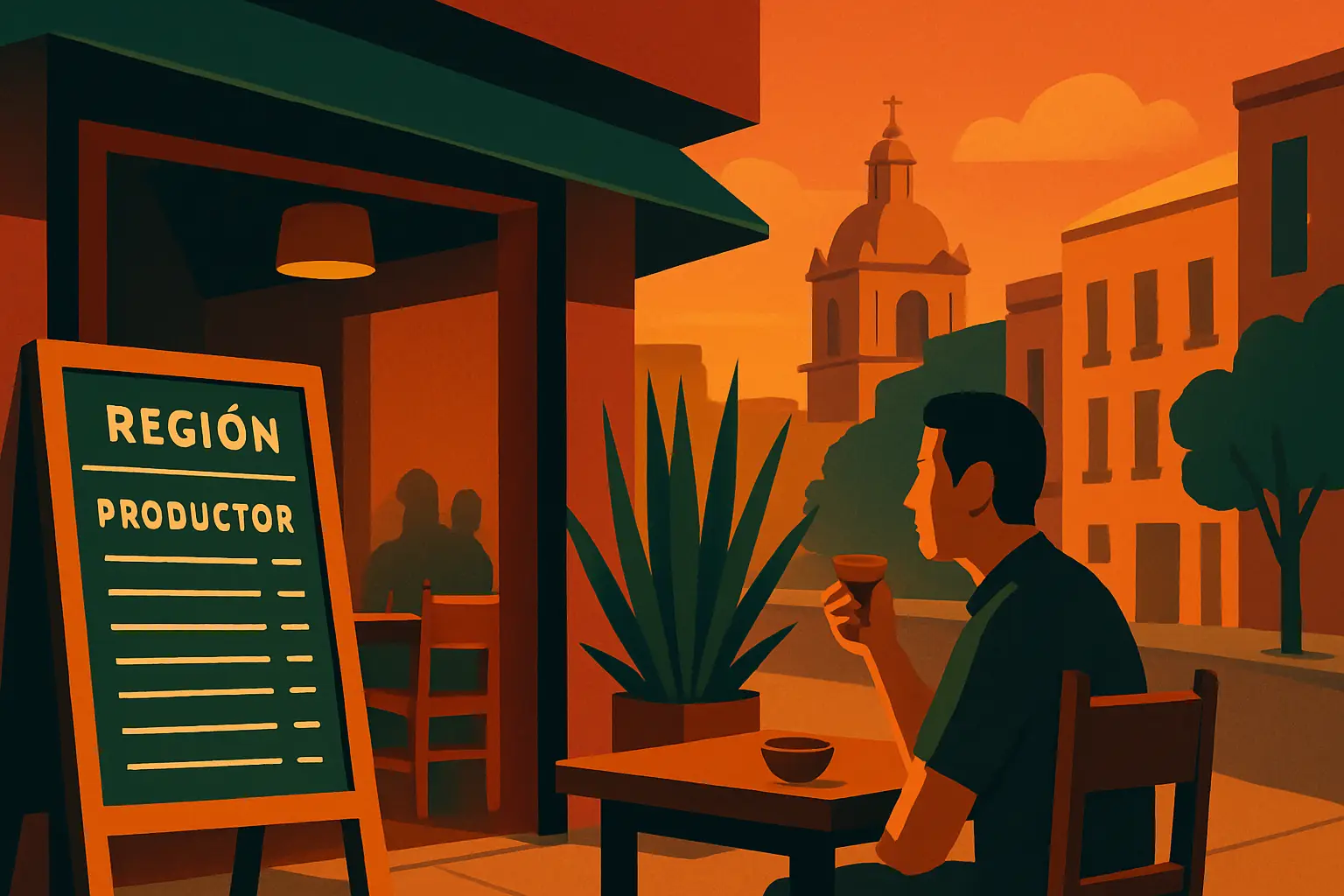
A mezcalería is a specific format, and the difference from a regular bar is easy to miss until someone explains it. The menu is organized by agave variety and producer — not by price or cocktail name. Each spirit comes from a named palenquero (the mezcal maker), a specific village, and a specific agave plant that took anywhere from seven to thirty years to mature. You'll see terms like espadín (the most common agave variety), tobalá (wild-harvested, rarer, usually more floral), and ensamble (a blend of two or more agave species distilled together). A good mezcalería also stocks pechuga — a rare mezcal redistilled with raw chicken or turkey breast and dried fruit, traditionally made for weddings. The serving format in Mexico City is a small clay copita (about two tablespoons), a wedge of orange, and a pinch of sal de gusano — salt ground with dried agave worms. You sip slowly, alternating with small bites of orange and a tap of the worm salt. It's deliberate, it's quiet, and it's nothing like shooting tequila at a resort bar.
Menu organized by agave variety, producer, and region — not by cocktail name
Served in small clay copitas, not shot glasses
Sal de gusano with orange is the correct pairing — not lime and salt
Bósforo sits just off Isabel La Católica in Centro Histórico and has been one of Mexico City's most serious mezcal destinations since before the category was fashionable. The room is small and deliberately unfussy — mismatched chairs, dim lighting, and a chalkboard behind the bar that lists the current selection by region and producer. The list changes as bottles run out, and staff can tell you exactly which Oaxacan village each one came from. Don't come for cocktails — Bósforo is a sipping bar. Order one mezcal, take your time, and ask the bartender which bottle they'd drink if they were off the clock. The answer will usually point you toward something rare that hasn't made it onto any blog post. The walk from Metro Isabel La Católica is about three blocks, and Centro rewards weekday evening visits when the tourist foot traffic has thinned and the bar actually has room to breathe.
Near Metro Isabel La Católica, Centro Histórico
Chalkboard menu changes as rare bottles sell out — ask what's new
A sipping bar, not a cocktail bar — ask staff for a personal recommendation
Get short, interactive stories that make each place easier to remember while you travel.
Two bars within easy walking distance of each other have made a stretch of Roma Norte the most accessible entry point for mezcal newcomers in the city. La Clandestina, on Álvaro Obregón 298, carries around 40 mezcals organized by region and style — staff are patient with questions and there's no pressure to order expensive bottles. It's the right place for a first serious mezcal flight: pick three different agave varieties, taste them side by side, and let the staff explain what makes each one distinct. Brujas, a short walk toward Plaza Rio de Janeiro, takes a different approach — it's a female-founded bar that ranked No. 44 in North America's 50 Best Bars 2024. The specialty cocktails mix mezcal with ingredients like cotija cheese, grasshopper brine, and bacanora in combinations that sound alarming and taste extraordinary. Order the Shepherdess if it's on the current menu. Both bars fill up after 9 p.m. on weekends — arriving around 8 p.m. gives you a seat and an unhurried bartender.
La Clandestina (Álvaro Obregón 298): 40+ mezcals, the right first stop for beginners
Brujas: cocktail-forward, ranked in North America's 50 Best Bars 2024
Arrive around 8 p.m. on weekends — both bars fill fast after 9
Los Amantes in Polanco is not subtle about its ambition — the bar carries more than 200 mezcal bottles organized across an entire wall, making it one of the largest selections in the world. The crowd is a mix of Polanco regulars and serious agave enthusiasts who came specifically to work through the list. The food is better here than at most mezcalerías: botana plates, tlayudas, and seasonal Oaxacan dishes designed to accompany a long mezcal session rather than just to fill a table. If you want to taste the difference between a Guerrero papalometl, a Durango cenizo, and an Oaxacan tobalá in the same evening — with someone who can explain each one — Los Amantes is the right room for that conversation. It's a more polished experience than Bósforo or La Clandestina, which suits Polanco's personality exactly.
200+ mezcal varieties organized by region and agave species
Better food than most mezcalerías — tlayudas and Oaxacan botana plates
More spacious and polished than Roma bars — built for a long mezcal dinner
Pujol is consistently listed among the best restaurants in the world, and Ticuchi is its bar sibling — an agave-focused cocktail bar from chef Enrique Olvera tucked into the same Polanco street. Where Los Amantes is about the breadth of the mezcal world, Ticuchi is about precision: each drink is engineered around a specific agave spirit, with housemade syrups, ferments, and infusions that push agave into entirely new territory. The room is small and quiet, designed for a two-hour visit rather than a bar crawl. Reservations are recommended, especially on weekends. It's the most expensive mezcal experience in the city, but if you want to understand what's possible with agave when a serious culinary mind is involved, Ticuchi makes the argument better than anywhere else in Mexico City.
From the team behind Pujol, one of the world's top-ranked restaurants
Precision agave cocktails with housemade ferments and infusions
Reservations recommended — small room, weekend tables fill fast
All three come from agave plants, but they're completely different products with different histories and different drinking cultures. Tequila is made only from blue agave (Agave tequilana), only in a specific region around Jalisco, and is industrially produced at scale — it's the category that got marketed globally. Mezcal can be made from more than 40 agave species, in multiple Mexican states (primarily Oaxaca, Guerrero, Durango, and Puebla), by small-batch producers using traditional clay pot stills. The smoky flavor comes from roasting the agave hearts (piñas) in earthen pits before fermentation — a process that varies by producer and creates wildly different flavor profiles. Pulque is the oldest of the three: it's the raw fermented sap of the maguey plant, never distilled, slightly viscous, and usually around 4 to 8 percent alcohol. You can read about pulque and Mexico City's pulquerías separately — it's a completely different experience from the mezcal bar scene.
Tequila: one agave species, one region, industrial scale
Mezcal: 40+ agave species, multiple states, small-batch production
Pulque: fermented agave sap, not distilled — a separate drink and culture
A mezcalería chalkboard can be disorienting if you don't know the vocabulary. Start with espadín — it's the most common agave variety and serves as the baseline for everything else. It's earthy, slightly smoky, and gives you a reference point for comparing other bottles. From there, try a tobalá if it's available — wild-harvested, rarer, and usually more floral and complex. If the bar has an ensamble (two or more agave varieties distilled together), it's worth ordering to see how the producer thinks about blending. Ask the bartender whether the mezcal is artisanal (clay pots, no commercial equipment) or ancestral (the traditional Zapotec method using a wooden fermentation canoe and a clay pot still). Ancestral mezcals are the rarest and most regionally specific. And just as with the cantinas and their botana rhythm, pace is everything here — mezcal drinking is measured in hours, not rounds.
Start with espadín — it's the mezcal baseline and the most widely available
Ask for artisanal or ancestral production — the method matters as much as the agave
Ensamble = two or more agave species from the same producer, distilled together
Mezcal sold at a reputable mezcalería is safe — these bars source from certified artisanal producers and the spirits are properly distilled. The concern about methanol applies to unregulated street-level product or very cheap bottles not produced in a certified palenque. Stick to the bars in this guide and you're drinking the real thing. Alcohol content runs higher than most cocktails — most mezcals are between 45 and 55 percent ABV, and some ancestral bottles push past 55 percent. Copitas are small for exactly this reason: two or three in an evening is a full session. First-timers should eat before arriving (most mezcalerías have snacks but not full kitchens) and drink water between rounds. Best nights to visit: Tuesday through Thursday, when bars are less crowded and staff have time to walk you through the menu without a line behind you.
45–55% ABV is typical — copitas are small on purpose, not by accident
Eat before arriving; drink water between rounds
Best nights: Tuesday through Thursday for space and staff attention