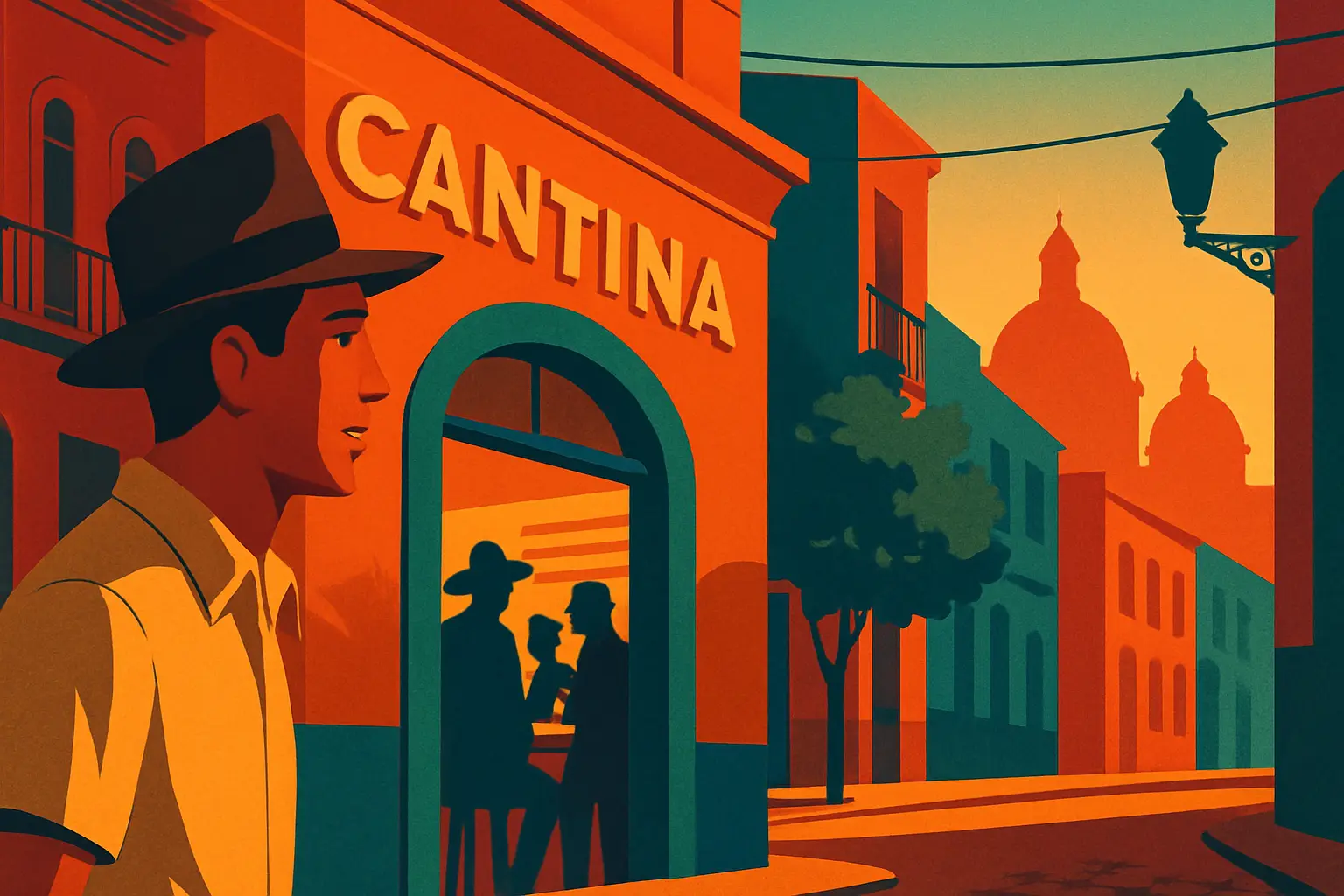
A cantina isn't a bar with tequila on the shelf. It's a specific format with its own rules — most of them written in the late 1800s and barely changed since. You sit down, you order a drink, and a plate of food shows up for free. Order a second drink, a second plate arrives, usually better than the first. This is the botana tradition, and it's the reason cantinas are the cheapest serious meal in Mexico City if you know how to play it. The rooms are almost always rectangular with tile floors, high ceilings, long wooden bars, saloon doors, and decades of yellowed photos of bullfighters and presidents nailed to the walls. Until 1982, most cantinas were legally men-only. Most now welcome everyone — but the format, the botana, and the unhurried afternoon-into-night rhythm are still exactly what they were a century ago.
Drinks come with free food (botanas) that escalates per round
Most open at 1 p.m. — peak time is 4 p.m. to 8 p.m.
Women have been legally welcome in cantinas since 1982
If you only walk into one cantina, make it La Ópera. It opened in 1876 at 5 de Mayo 10 in Centro Histórico, two blocks from the Palacio de Bellas Artes, and the interior is pure Porfiriato belle époque — carved dark wood, gilded ceilings, red velvet banquettes, and enormous mirrors imported from France. Ask the waiter to point out the bullet hole. Legend says Pancho Villa rode his horse into the cantina in 1910 and fired a single shot into the ceiling to get the room's attention. The hole is still there, circled in chalk. La Ópera has served mole poblano, chiles en nogada, and cold cuba libres to poets, presidents, and film stars for 150 years. Come for a late lunch, stay for two rounds, and you'll understand why Mexicans call it the most beautiful cantina in the country.
Address: 5 de Mayo 10, Centro Histórico
Opened 1876; always admitted women — rare for its era
Ask for the bullet hole — it's on the ceiling above the main dining room
Get short, interactive stories that make each place easier to remember while you travel.
Covadonga sits on Puebla 121 in Roma Norte, three blocks from the Glorieta de la Cibeles, and it's been open since 1947. It was founded by Spanish immigrants from Asturias, and that heritage is still the whole personality — serrano ham and manchego boards, fabada asturiana in winter, and a glass of cider poured theatrically from a meter overhead. Walk in on a weekday afternoon and half the tables will be older Spanish-Mexican men playing dominoes in the exact same seats they've used for twenty years. Walk in on a Saturday night and the same room becomes a packed Roma dinner crowd. Hours are generous: 1 p.m. to 2 a.m. Monday through Saturday, 1 p.m. to 7 p.m. Sunday. No reservations, so come a little before the Roma dinner wave hits at 9 p.m.
Address: Puebla 121, Roma Norte
Open since 1947; Asturian Spanish menu alongside cantina classics
Dominoes in the afternoons, young Roma crowd after 10 p.m.
Two blocks apart in Centro Histórico, these are the cantinas where locals drink when they don't want tourists. Tío Pepe, on Independencia 26 near Alameda Central, has been pouring since the 1870s — it's one of the oldest continuously operating cantinas in the city, with an original wooden bar, stained-glass backsplash, and a ceiling so nicotine-yellowed it tells its own history. It's small, loud, cash-preferred, and unbeatable for an afternoon tequila derecho. La Faena, a few blocks south at Venustiano Carranza 49, is the opposite in scale — a cavernous former theater with a 30-foot ceiling, a faded bullring mural, and glass cases holding actual matador costumes and capes. It's a museum you can drink inside. Neither is polished. Both are exactly what a cantina is supposed to feel like.
Tío Pepe: Independencia 26, Centro — small, historic, cash is easier
La Faena: Venustiano Carranza 49, Centro — bullfighting memorabilia
Both are walking distance from Bellas Artes and Zócalo metro stops
Ask a Mexican friend where to learn the botana rhythm and they'll send you to La Mascota, on Mesones 20 in Centro, a few blocks southeast of the Zócalo. It opened in 1934 and the system is simple and ruthless: you order a beer or a cuba, and a plate of food lands on the table. Finish the plate, order another round, a bigger and better plate arrives — consomé, tinga, chicharrón en salsa verde, pancita. By the fourth drink you've eaten a full meal and the bill is about 250 MXN per person. The room is pure 1930s — tile floors, ceiling fans, wooden chairs, a dark bar that's barely been touched in ninety years. Arrive at 2 p.m. for the lunch crowd, or 7 p.m. for the after-work one. Skip it after 10 p.m., when Mesones gets quiet.
Address: Mesones 20, Centro Histórico
Open since 1934; escalating free botanas per round
Best time: 2 p.m. lunch or 7 p.m. after-work crowd
Every neighborhood guide to Condesa pushes the same trendy mezcalerías, and most of them are fine — but El Centenario, at Vicente Suárez 42 between Avenida Nuevo León and Alfonso Reyes, is the one place in Condesa that still drinks like 1950. It's narrow, wood-paneled, and permanently half-lit, with a long bar on one side and a handful of small tables on the other. The botana is smaller than at a Centro cantina but it's there — pickled chiles, queso fresco, a cup of consomé. Locals bring dogs, order micheladas, and argue about fútbol. It's the easiest cantina in the city to walk into solo: close enough to Roma and Condesa apartments that you can stop in for one round after Parque México and be back on the street in forty minutes.
Address: Vicente Suárez 42, Condesa
Walkable from Parque México and Avenida Michoacán
Best solo-friendly cantina on the Condesa side of the city
The drinks in a classic cantina are simple, and the order shapes how much botana you get. Order a beer with lime and salt, a cuba libre (rum and Coke), a tequila derecho with sangrita on the side, or a mezcal con gusano. Avoid asking for cocktails that require a mixologist — wrong venue. Tipping is 10 to 15 percent left in cash on the table. Don't split the check six ways with six cards; one person pays and the group settles later. Speak a little louder than you would in a restaurant — the room should sound alive. And never rush the waiter; cantina service runs on its own clock, and the reward for patience is the next plate of botana. One more thing: if you're with a local, let them order the first round. It sets a tone the kitchen respects.
Classic orders: cerveza con limón, cuba libre, tequila derecho, mezcal
Tip 10–15% in cash; one person pays, the group settles later
Don't rush the waiter — patience earns a better next botana
Yes on all three counts, with a few common-sense notes. The men-only rule was lifted nationally in 1982, and every cantina in this guide has welcomed women and mixed groups for decades — Salón Covadonga and La Ópera are full of them every day. Centro Histórico cantinas (Tío Pepe, La Faena, La Mascota) are safest during daylight and early evening; after 10 p.m., walk to a well-lit avenue and take an Uber instead of wandering the Centro side streets. Roma and Condesa spots (Covadonga, El Centenario) are safe until close. Solo travelers are common and nobody will bat an eye — pick a seat at the bar, order one thing, let the botana arrive, and you'll be talking to the person next to you inside half an hour. That is, in the end, what a cantina is actually for.
Centro cantinas: best before 10 p.m., Uber out afterward
Roma and Condesa cantinas: safe until close
Solo travelers: sit at the bar — conversation finds you