Polanco is bigger than most travelers expect, so start at its emotional center: Parque Lincoln, the long, narrow park that runs down Calle Emilio Castelar between Tennyson and Luis G. Urbina. You'll find a clock tower, reflecting pools, a small free aviary with macaws and toucans, and — on the south side — a one-third-scale replica of Abraham Lincoln that gave the park its name. It's two blocks south of Avenida Presidente Masaryk, two blocks north of Parque América, and close to almost every café, bakery, and dinner reservation you'll make in the neighborhood. Walk a slow loop, sit on a bench, and you'll read Polanco's rhythm in about fifteen minutes.
Address: Calle Emilio Castelar, between Tennyson and Luis G. Urbina
Free aviary on the north end, open 11 a.m.–4 p.m. most days
The Lincoln statue is at the south end, facing Alejandro Dumas
Plaza Carso — ten minutes north of Parque Lincoln by Uber or twenty-five on foot — holds the single highest-value stop in Polanco, and it's free. Museo Soumaya is the silver twist of a building you've seen on Instagram: architect Fernando Romero clad it in 16,000 hexagonal aluminum tiles, and inside Carlos Slim's private collection spans six floors and around 66,000 pieces, including the largest Rodin collection outside Paris (380 sculptures, headlined by a cast of The Thinker). Next door — and this is the part most first-timers skip — Museo Jumex is the David Chipperfield-designed contemporary art museum holding Damien Hirst, Andy Warhol, and Gabriel Orozco. Also free. Give yourself 90 minutes for Soumaya, 45 for Jumex, and go on a weekday morning.
Museo Soumaya: Blvd. Miguel de Cervantes Saavedra 303, free, open daily
Museo Jumex: next door at #303, free, closed Mondays
Weekday mornings are nearly empty; weekends get school groups
Get short, interactive stories that make each place easier to remember while you travel.
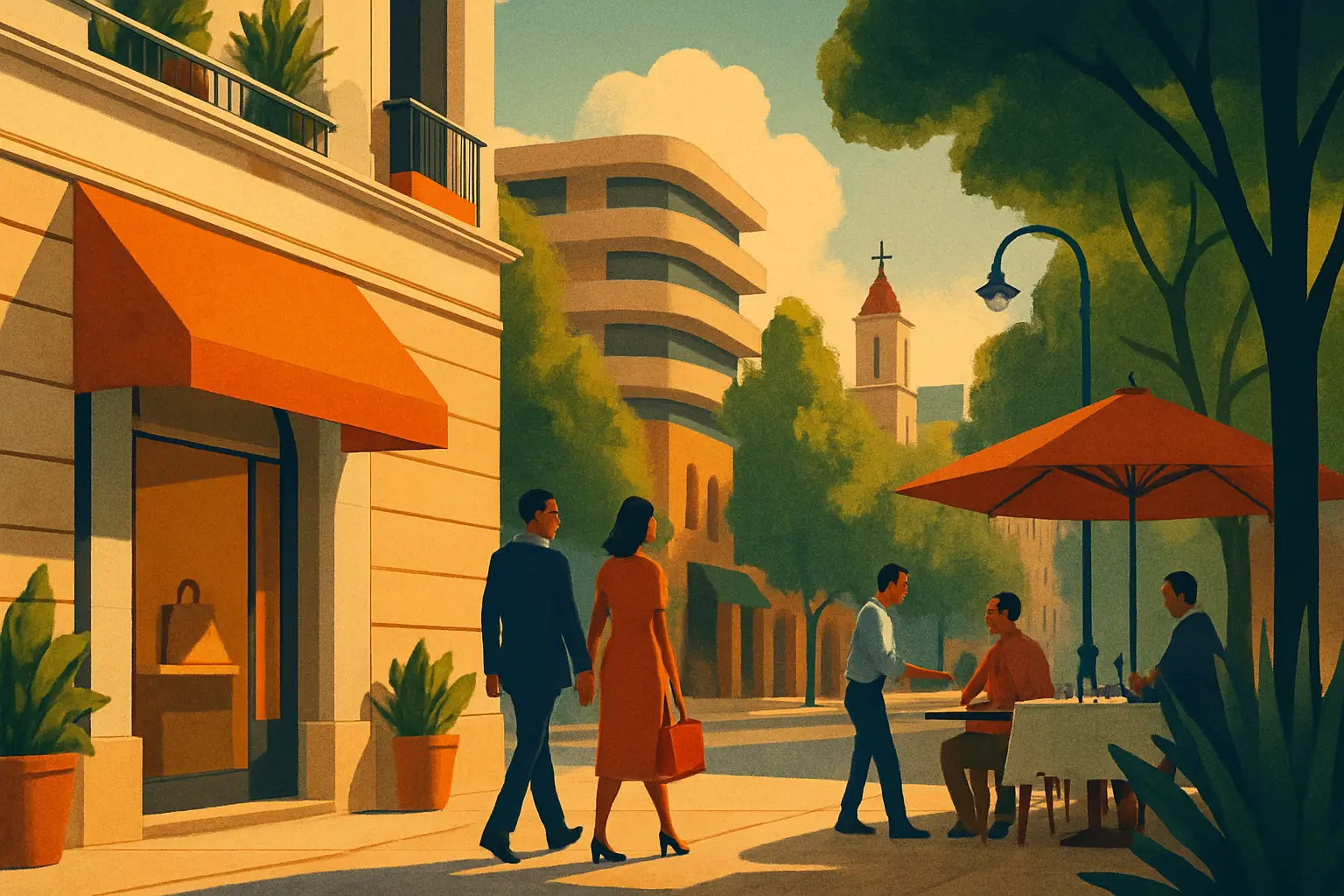
Masaryk is Mexico City's luxury spine — Louis Vuitton, Hermès, Cartier, Tiffany, Gucci, and most of the world's major fashion houses operate flagships along the ten blocks between Calle Anatole France and Calderón de la Barca. What makes the walk worth it even if your wallet stays closed is the architecture: mid-century modernist homes stripped and reskinned into boutiques, tall jacarandas that bloom purple in late March and April, and the quiet side streets (Alejandro Dumas, Julio Verne, Oscar Wilde) lined with embassies and restored 1950s residences. Aim for the stretch between Parque Lincoln and the Moliére intersection for the densest concentration of window displays and café terraces.
Main shopping stretch: Masaryk between Anatole France and Moliére
Best people-watching: Dumas, Julio Verne, and Oscar Wilde side streets
Embassy row: Avenida Masaryk east of Parque Lincoln toward Campos Elíseos
Polanco is the only neighborhood in Mexico City that holds two restaurants on the World's 50 Best Restaurants list, and both are worth the flight on their own. Pujol, on Tennyson 133, is Enrique Olvera's tasting-menu temple — the famous mole madre has been aged and re-fed for thousands of consecutive days. Quintonil, on Newton 55, is Jorge Vallejo and Alejandra Flores's seasonal Mexican counterpart, quieter and arguably the better tasting-menu experience right now. Both sell out two to three months ahead; release days are Tuesdays for Quintonil and rolling windows on SevenRooms for Pujol. No reservation? Ticuchi (Olvera's mezcal bar on Petrarca 254) takes walk-ins, and Blanco Colima Polanco accepts last-minute tables most weeknights.
Pujol: Tennyson 133, tasting menu, reserve 2–3 months ahead on SevenRooms
Quintonil: Newton 55, reservations drop every Tuesday for 2 months out
Walk-in backups: Ticuchi (mezcal + small plates) and Dulce Patria
The café-and-terraza grid around Parque Lincoln — locals call it Polanquito — is where Polanco unwinds. Emilio Castelar and Alejandro Dumas both have pedestrian-friendly stretches packed with outdoor tables from breakfast until close. Saks (Dumas 166) is the 35-year Polanco institution for chilaquiles and enfrijoladas. Eno (Emilio Castelar 163) is Enrique Olvera's casual café — the pan con aguacate and huevos rotos run under 200 MXN each. For dinner without a reservation, walk into Cambalache for Argentine steak or Fonda Fina Polanco for updated Mexican comfort food. Most kitchens close by 11 p.m., so plan earlier than you might in Roma or Condesa.
Saks: classic Polanco brunch, no reservations, go before 10:30 a.m. on weekends
Eno: Olvera's affordable café, best open-faced avocado in the city
Cambalache and Fonda Fina: dinner walk-ins up to 9 p.m. on weeknights
Polanco's southern edge runs right into Chapultepec Park, the biggest urban park in the Americas, and the single most important museum in Mexico sits just inside it. The Museo Nacional de Antropología — on Paseo de la Reforma at Gandhi, a 15-minute walk from Parque Lincoln — holds the Aztec Sun Stone (the Piedra del Sol), Lord Pakal's jade burial mask from Palenque, and a reconstructed Teotihuacán temple under its signature concrete umbrella by architect Pedro Ramírez Vázquez. Entry is 95 MXN. Give it three hours minimum. If you have energy left, walk ten minutes east to Castillo de Chapultepec, the 18th-century castle perched on the hill with the city's best free skyline view from its terraces.
Museo Nacional de Antropología: 95 MXN, closed Mondays, allow 3 hours
Castillo de Chapultepec: 95 MXN, terraces are the best free view in CDMX
Both sit on Metro Line 7 Auditorio stop — easy combined with Polanco
From Benito Juárez airport, an Uber or Didi to Polanco runs 25–40 minutes and costs 220–300 MXN depending on traffic. The Metrobús Line 7 runs the length of Paseo de la Reforma and drops you at Auditorio, a five-minute walk into the neighborhood. By metro, Line 7 (orange) stops at Auditorio and Polanco stations, both central. Polanco is consistently ranked the safest neighborhood in Mexico City — it's heavily policed, well-lit, and busy with foot traffic until at least midnight along Masaryk and around Parque Lincoln. The only real caution is the common-sense one: Masaryk has designated Uber pickup zones outside the major stores, so use those rather than hailing curbside where security will wave you off.
Airport → Polanco: 25–40 min Uber (~220–300 MXN)
Metro Line 7 Auditorio or Polanco stations drop you in the center
Use designated Uber pickup zones along Masaryk, not curbside hails
Polanco shines in dry season, November through May, when the jacarandas along Masaryk and Campos Elíseos explode into purple bloom — late March and early April are the peak two weeks. June through September is rainy season, with short dramatic afternoon storms that actually time perfectly with a two-hour Pujol or Quintonil lunch. Weekday mornings feel almost private; Saturday nights pull the full see-and-be-seen crowd, especially along Emilio Castelar and at rooftop bars like Corazón de Maguey and Fifty Mils at the Four Seasons. Avoid the long weekends in December and January if you want reservations — Pujol and Quintonil go from three-month lead time to essentially impossible.
Jacaranda peak: late March–mid April along Masaryk and Campos Elíseos
Rainy season (Jun–Sep): plan outdoor walks before 4 p.m.
Long weekends Dec–Jan: book flagship restaurants 3+ months ahead