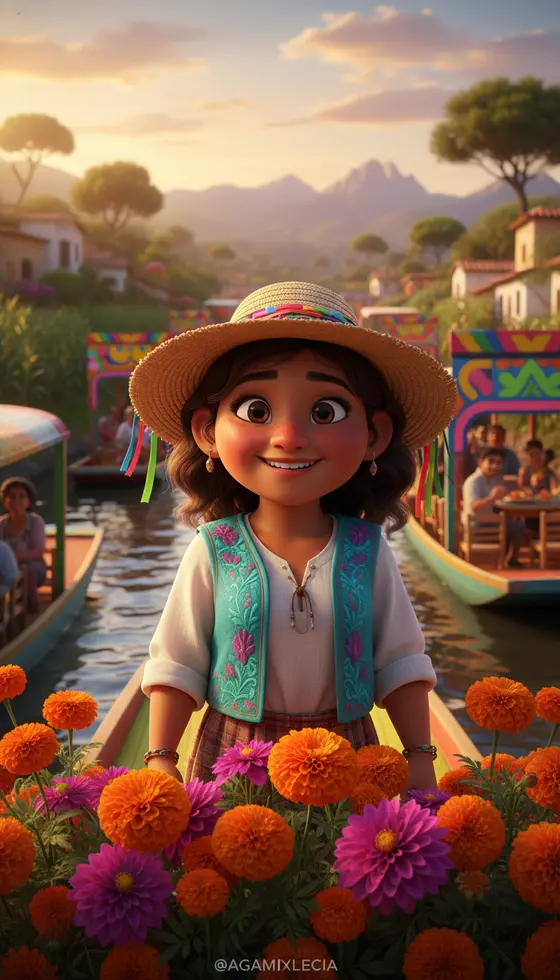
Most visitors arrive in Mexico expecting a destination. They leave understanding it's a civilization. Mexico is one of only six places in the world where complex civilization developed independently — alongside Egypt, Mesopotamia, China, India, and the Andes. That means thousands of years of original philosophy, architecture, astronomy, agriculture, and art before any European contact. What makes it different from other 'ancient civilization' destinations is that the lineage is unbroken: the descendants of the people who built Tenochtitlán still live in Mexico City, speak languages that predate the Aztecs, and practice traditions that survived — sometimes underground, sometimes in plain sight — five centuries of colonial rule. Understanding this is the key to understanding everything else.
One of six places on Earth where complex civilization developed independently
The lineage from ancient to modern Mexico is unbroken — not ruins but a living heritage
Mexico City has been continuously inhabited for over 700 years
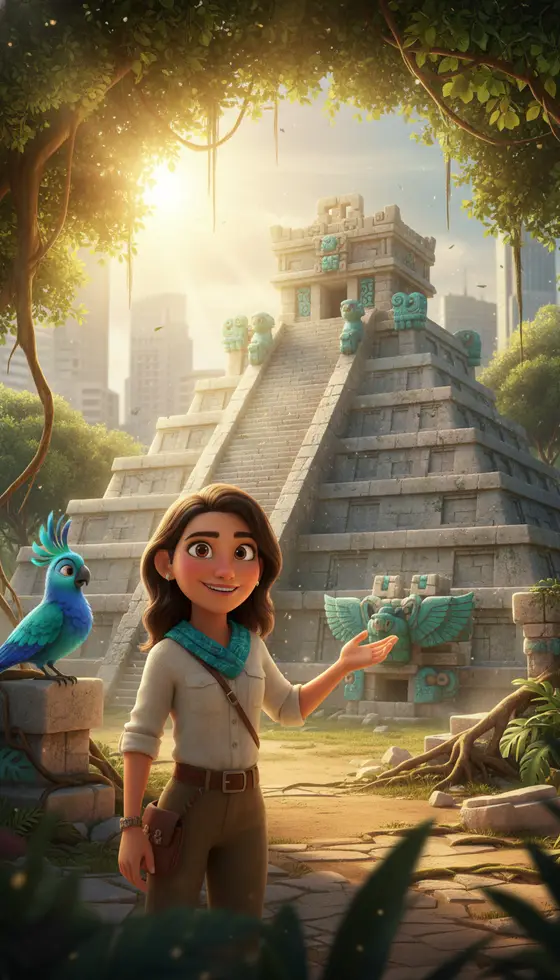
Mexico City sits on the ruins of Tenochtitlán, the Aztec capital — but the Aztecs were newcomers by regional standards. The Olmec civilization along the Gulf Coast built the first complex society in Mesoamerica around 1500 BCE, establishing the first writing systems and long-distance trade networks. The Maya independently developed one of the most sophisticated mathematical and astronomical systems in the ancient world. At Teotihuacán — the largest city in pre-Columbian North America — a civilization we still don't fully understand built pyramids visible for miles across the Valley of Mexico. The Aztecs (Mexica) arrived last, founding Tenochtitlán on an island in Lake Texcoco in 1325. What you see in modern Mexico City — the layered streets, the ruins beneath the cathedral, the symbols on the flag — is the endpoint of all of this.
Olmec civilization predates the Aztecs by 2,000+ years and shaped all subsequent Mesoamerican cultures
The Maya produced sophisticated mathematics, astronomy, and one of the only pre-Columbian writing systems
Teotihuacán was larger than Rome at its peak — and its builders remain unknown
In 1519, Hernán Cortés arrived on the Gulf Coast with roughly 500 soldiers. By 1521, Tenochtitlán had fallen. The conquest involved disease, diplomacy, and dozens of indigenous groups who allied with the Spanish against the Aztec empire for their own reasons. What emerged from the destruction wasn't simply 'Spanish Mexico' but a genuine fusion: a new religion that blended Catholicism with pre-Hispanic deities, a new language that absorbed thousands of Nahuatl words still used today (chocolate, avocado, tomato, and chili are all Nahuatl), and a new cuisine that remains UNESCO-inscribed heritage. The murals Diego Rivera painted at the Palacio de Bellas Artes are the 20th-century reckoning with this history — a visual argument about who Mexico really is. The Mercado de Sonora shows the living result: Catholic saints and pre-Hispanic folk medicine side by side on the same shelves.
The conquest was as much a diplomatic alliance with indigenous rivals as a military victory
Nahuatl words in global use: chocolate, avocado, tomato, chile, coyote, Mexico itself
Syncretism: Catholic saints were layered over pre-Hispanic deities — the result is still actively practiced
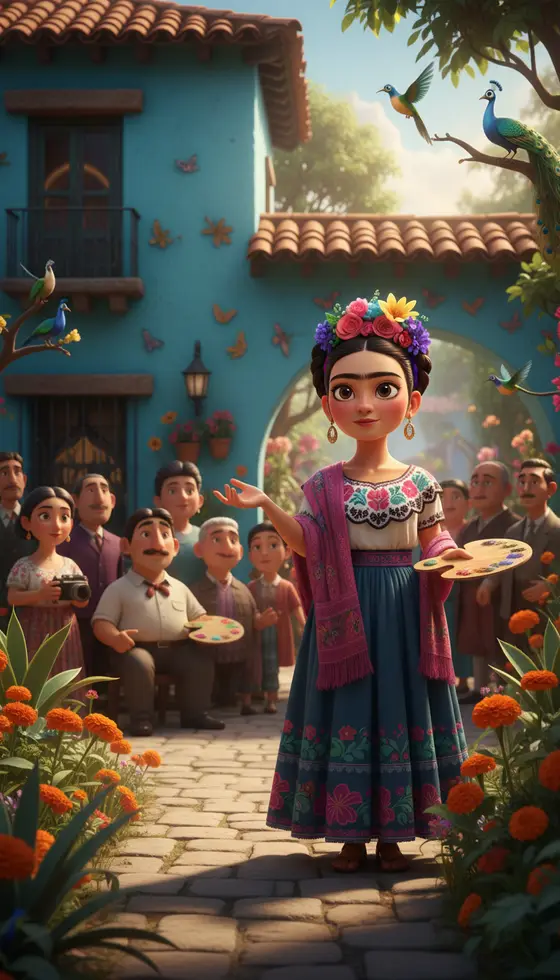
The Revolution of 1910 is the defining event of modern Mexican identity — not just politically but artistically. The armed conflict (which lasted until roughly 1920 and killed up to 2 million people) was followed by a cultural explosion. Diego Rivera, José Clemente Orozco, and David Alfaro Siqueiros created some of the largest and most politically charged public art in history — commissioned by the government to paint Mexico's story on walls accessible to all. Frida Kahlo emerged from the same generation, painting a version of Mexican identity that was indigenous, defiant, and deeply personal. Her Casa Azul in Coyoacán is now one of Mexico City's most visited cultural sites. The government also created the Museo Nacional de Antropología to enshrine pre-Hispanic civilization as the foundation of national identity — a deliberate political project that shaped how Mexico sees itself to this day.
The muralist movement was a government-funded public education program — walls as textbooks for a largely illiterate population
Frida Kahlo was not famous during her lifetime; global recognition came largely after her death in 1954
The Museo Nacional de Antropología was a conscious political identity project, not just a museum
Get short, interactive stories that make each place easier to remember while you travel.
In 2010, UNESCO inscribed traditional Mexican cuisine as Intangible Cultural Heritage of Humanity — only the second cuisine in the world to receive this recognition. This wasn't about tacos. It was about a culinary system: nixtamalization (the ancient process of treating corn with lime that creates masa), the complexity of mole (30+ ingredients, three days to prepare properly), and the regional diversity that makes a taco in Oaxaca almost unrecognizable next to one in Baja California. Mexico City's street food culture is a microcosm of all of this — tacos al pastor arrived via Lebanese immigrants in the 1930s, market stalls trace their lineage to pre-Hispanic tianguis, and the food history of CDMX spans 700 years. The taco guide and market guide give you the practical framework. Food in Mexico is not just sustenance — it's the primary vehicle for expressing regional identity, remembering the dead, and celebrating the living.
UNESCO-inscribed culinary heritage since 2010 — only the second cuisine in the world with this recognition
Mole: 30+ ingredients, 3 days to make properly, dozens of regional varieties — each a distinct dish
Nixtamalization: the ancient corn-processing technique that makes masa possible, invented 3,000+ years ago
Día de Muertos is not Mexican Halloween. It's a multi-day celebration — November 1st and 2nd — that blends pre-Hispanic beliefs about death with Catholic feasts of All Saints and All Souls Day. The core belief: on these nights, the dead can return and visit the living. Families build altars (ofrendas) with photographs, food, drinks, and marigolds — the flower whose scent guides spirits home. The mood is celebratory, not mournful: this is a reunion. In Mexico City, Plaza Garibaldi fills with mariachis hired to play for the dead. The Mercado de Jamaica supplies the city's entire marigold demand through October. Oaxaca hosts the most elaborate public celebrations, with candlelit cemetery processions. It's one of the most profound experiences a visitor can have in Mexico — but only if you understand what you're watching.
Not 'Mexican Halloween' — it's a pre-Hispanic belief that the dead return, blended with Catholic All Souls' Day
Marigolds guide spirits home by scent; Mercado de Jamaica supplies the city's entire demand each October
Ofrendas (altars) include the deceased's favorite food and photos — a literal welcome home for the dead
Cinco de Mayo is the best example of how Mexican culture gets misread abroad: almost unknown as a holiday inside Mexico (celebrated mainly in Puebla, where the 1862 battle happened), but enormous in the United States. Mexican Independence Day — September 16 — is the actual independence celebration, marked on the night of September 15th with the Grito de Independencia in the Zócalo and simultaneously in every plaza in every town in the country. Semana Santa (Holy Week before Easter) transforms Mexican cities with processions, purple altars, and packed churches. Las Posadas, the nine nights leading to Christmas (December 16–24), are neighborhood celebrations with piñatas and candles that trace directly to Aztec winter rituals the Spanish repurposed. Each tradition has layers: official, folk, pre-Hispanic, and Catholic all at once.
Cinco de Mayo: celebrated mainly in Puebla — the US version is a different cultural phenomenon entirely
September 15 Grito: the actual Mexican Independence celebration, simultaneous in every town in the country
Las Posadas: 9 nights before Christmas, traced to an Aztec winter ritual that Spanish missionaries adapted
The muralist movement is Mexico's most internationally influential artistic contribution. After the Revolution, the government commissioned Rivera, Orozco, and Siqueiros to paint Mexico's history on public walls — not in galleries, but in post offices, government buildings, schools, and markets. The result was an art movement that influenced public art globally and produced some of the 20th century's most powerful images. Diego Rivera's murals at the Palacio de Bellas Artes include a recreation of the piece the Rockefellers destroyed in New York. The staircase at the Palacio Nacional depicts the full arc of Mexican history from pre-Hispanic civilizations to the Revolution. The Palacio de Bellas Artes itself — built over 30 years, with a 22-ton Tiffany curtain — is a monument to the same national ambition. Coyoacán, the neighborhood where Frida Kahlo lived, remains the artistic quarter of the city.
Muralism was deliberately commissioned as public history education — not gallery art
Rivera's Man at the Crossroads was destroyed by the Rockefellers for depicting Lenin; he recreated it in Mexico City
The Palacio de Bellas Artes took 30 years to build and sank 3 meters into soft lakebed soil during construction
Mariachi is the most exported version of Mexican music — the trumpets, guitars, and violins that play at weddings, funerals, birthdays, and serenades. Plaza Garibaldi in Mexico City is where mariachi bands have congregated to find work since the 1920s. But mariachi is just one layer. Son jarocho from Veracruz, norteño and banda from the north, cumbia from the Caribbean coast, and dozens of indigenous musical traditions coexist with a contemporary scene that produces globally recognized pop and hip-hop artists. Lucha libre occupies its own cultural category — not quite sport, not quite theater, but a masking tradition with roots in pre-Hispanic ritual performance that has become one of Mexico's most distinctive exports. Ballet Folklórico de México at the Palacio de Bellas Artes synthesizes regional dance traditions from across the country into a single spectacular performance.
Mariachi's home base: Plaza Garibaldi, where dozens of bands compete for serenata commissions on weekend nights
Lucha libre's masks predate wrestling — the masking tradition has roots in pre-Hispanic ceremonial performance
Ballet Folklórico represents 30+ regional Mexican dance traditions in a single evening
Every Mexican child grows up with La Llorona — the Weeping Woman, a ghost who wanders rivers calling for her lost children. The legend predates the Spanish conquest; versions of the story were recorded by Aztec informants telling the friars about omens before the fall of Tenochtitlán. Mexican folk tradition is full of these intersections: Aztec gods reimagined as saints, colonial ghost stories encoding pre-Hispanic religious anxiety, regional legends specific to particular mountains, rivers, and neighborhoods. Mercado de Sonora in Mexico City is where you can see this tradition alive — curanderos, Santa Muerte altars, and herb bundles for spiritual cleansing operating within a living cosmological system that blends 3,000 years of belief into everyday practice. The volcanoes visible from Mexico City — Popocatépetl and Iztaccíhuatl — are named for lovers from an Aztec legend still retold today.
La Llorona predates the conquest — Aztec chroniclers recorded the weeping woman as an omen before Tenochtitlán fell
Popocatépetl and Iztaccíhuatl: Mexico City's two visible volcanoes are named for lovers from an Aztec legend
Mexican folk medicine, spiritual practice, and mythology operate as a single living system, not separate categories
Mexico's cities — especially Mexico City — are among the most culturally dynamic in the Americas. The same week you can see a centuries-old altarpiece in the Catedral Metropolitana, visit a contemporary gallery in Roma Norte, eat at one of the world's best restaurants (CDMX has more restaurants on the Latin America's 50 Best list than any other city), and see a pop-up market in Coyoacán selling artisan goods from indigenous cooperatives. The 2026 FIFA World Cup — with matches in Mexico City, Guadalajara, and Monterrey — is forcing a national conversation about tourism, infrastructure, and cultural identity. Mexico City's World Cup guide covers the practical layer, but the cultural context is this: Mexico has always been a country that processes its identity through massive public events. The World Cup is the latest chapter.
Mexico City has more restaurants on the Latin America's 50 Best list than any other Latin American city
The debate about pre-Hispanic vs. mestizo vs. global identity is ongoing — not resolved
The 2026 World Cup is the latest in a long tradition of Mexico using international events to project national identity
The best preparation for Mexico is not a logistics checklist — it's context. Knowing why the eagle on the flag holds a serpent changes what you see in the Zócalo. Understanding that the murals in the Palacio Nacional are a political argument makes them more than beautiful paintings. Reading what to know before visiting Mexico City gives you the practical foundation. Mexico City facts fills in the numbers. TourMe is built specifically for this: interactive stories that give you the cultural context for the places you're about to visit, organized by neighborhood, topic, and landmark, with collectible cards that make the learning feel like part of the trip.
Context transforms sightseeing: knowing the story behind a site changes how it feels to stand in front of it
Start with Centro Histórico — every layer of Mexican history is visible within walking distance
TourMe's 400+ stories are organized by location — unlock them as you walk through each neighborhood