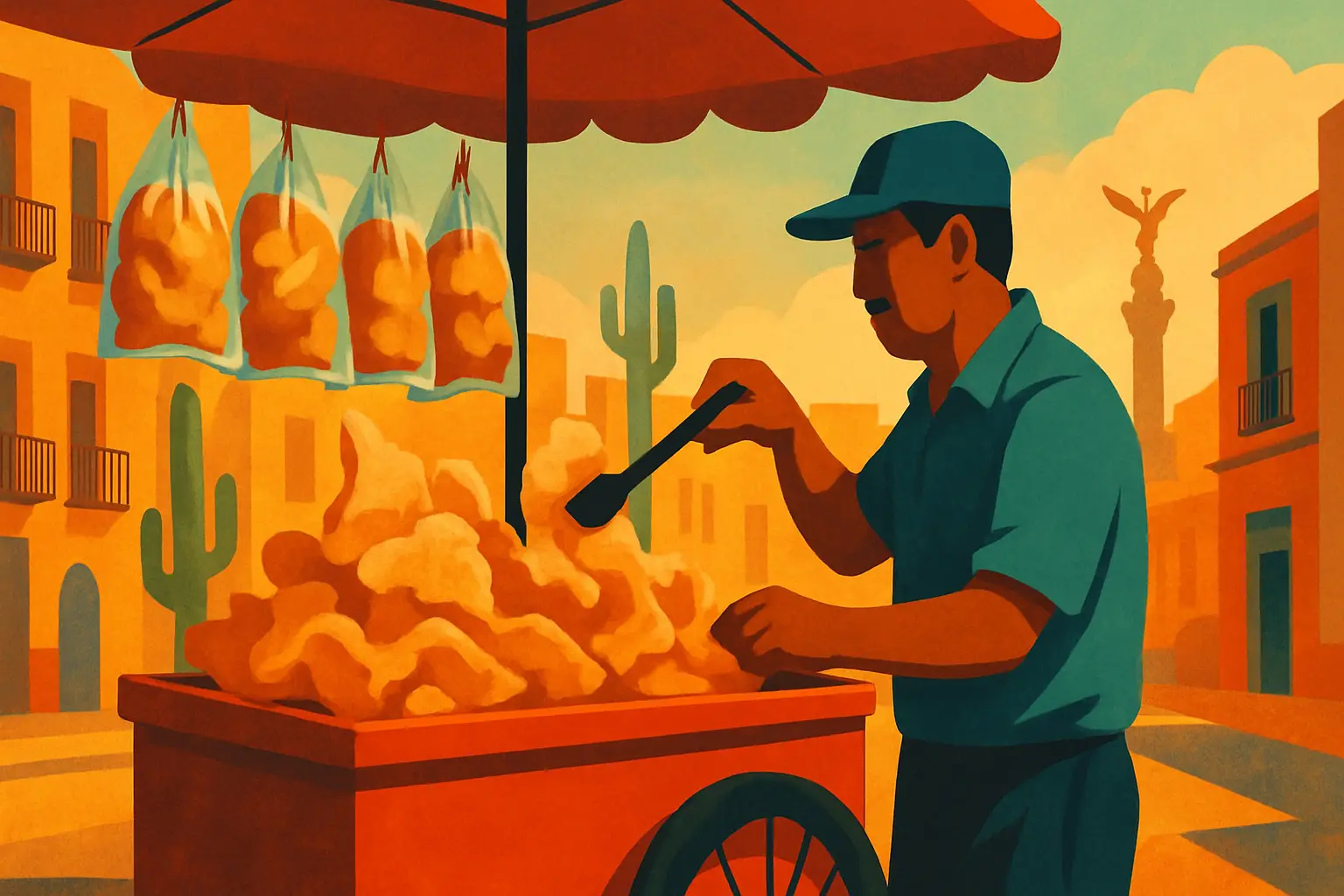
In most of the United States, chicharron means the packaged pork rind bag you grab at a gas station. In Mexico City, it means something a skilled craftsperson makes in large batches in a dedicated facility, and you buy it fresh the same day it was made. The person who fries the chicharron — the chicharronero — is a specialized producer. The process requires pork skin to be rendered and fried in two distinct stages at different temperatures: the first to cook out the remaining fat and moisture, the second at higher heat to puff the skin into the characteristic airy, blistered sheets. When a batch is done correctly, a fresh sheet can measure half a meter across, weighs almost nothing, collapses with an audible crack, and dissolves into a savory, fatty crunch that lasts for about three seconds before you reach for another piece. The experience of eating fresh chicharron with salsa verde and a squeeze of lime is one of the most simple and satisfying things you can do in this city. It costs under 50 pesos. No table required. The packaged product exists in the same category only by coincidence.
Before getting into where to eat, you need to know what you're ordering. Five forms of chicharron appear regularly in Mexico City, and they are genuinely distinct products — same name, very different results.
Chicharron de cerdo (airy sheets): The classic — big, light, bubbly sheets of fried pork skin, bought by weight, eaten fresh with lime and salsa. The gold standard of the category.
Chicharron prensado: Dense blocks pressed from the meat bits, skin fragments, and fat residue left in the cooking vessel after a full batch. Soft, rich, intensely flavored. Used as a guisado filling in quesadillas and gorditas, not eaten as a snack.
Cueritos: Pork skin pickled in vinegar with chiles and spices, sliced thin and set out in jars at taqueria counters. A condiment, not a main event — used to add acid and crunch to tacos.
Chicharron en salsa: Pieces of fried pork skin simmered in salsa verde or roja until soft and silky. A standard guisado served at market kitchens, cantinas, and traditional restaurants throughout the city.
Chicharrones preparados (de harina): Wheat-flour puffs loaded with shredded cabbage, carrot, crema, salsa, and lime — a street food sold by vendors across Centro. These contain no pork at all, despite sharing the name.
Get short, interactive stories that make each place easier to remember while you travel.
Mercado de San Juan Pugibet at Ernesto Pugibet 21 in the Centro Historico is known as the chefs' market — the destination for ingredients that don't appear in conventional markets. For chicharron, it is the most reliable place in the city to find fresh-made sheets of exceptional quality. Dedicated stalls near the market's center sell sheets by weight, priced at roughly 250 to 300 pesos per kilogram. One medium-sized piece — roughly the area of a large dinner plate — is enough for one or two people as a snack. Ask for it in a paper bag with salsa verde and a cut lime on the side. Stand near the stall and eat it immediately while it's still at peak texture. The market is open Monday through Saturday from around 9 a.m. to 6 p.m., with shorter Sunday hours. The reason quality at San Juan is consistently high is turnover: the stalls sell to professional cooks and market visitors all day, which means there is rarely day-old product sitting on the counter. If you want to understand the rest of the market — the exotic meats, the imported cheeses, the Japanese ingredients — the Mercado de San Juan guide has a full breakdown of what else is worth stopping at while you're there.
Prensado is the form of chicharron that most visitors miss because it doesn't look remarkable. Fresh sheets are visually dramatic; prensado is a modest brown block sitting behind glass at a market guisado counter. It is, however, one of the best things you can put inside a quesadilla or gordita in Mexico City. The block is made from everything that remains in the cooking vessel after a full carnitas or chicharron batch has been rendered: the accumulated meat bits, skin fragments, and fatty residue are scraped together, pressed into a perforated mold while still hot, and allowed to set as the remaining fat drains through. The result is dense and soft rather than crunchy, with a concentrated pork flavor that has absorbed hours of aromatics from the main batch. At guisado counters in Mercado de Medellin in Roma Sur and Mercado Jamaica in Iztacalco, prensado appears alongside tinga, rajas, and calabacitas as a standard filling option. Order it on a handmade corn tortilla with a spoon of salsa verde on top. It softens into the warm masa and becomes something that has almost no relationship to what you picture when you hear the word chicharron. This is a dish for people who live here. It costs almost nothing and it is wonderful.
Chicharron en salsa is what happens when crunchy fried pork skin meets a chile-tomato sauce and simmers for twenty minutes. The texture transforms completely: the crispy puff absorbs the liquid and becomes soft and almost silky, while the salsa gets richer from the pork fat leaching out during cooking. Salsa verde — made from tomatillos, serrano or jalapeño chiles, onion, garlic, and cilantro — is the classic pairing because the acidity of the tomatillo cuts through the richness of the pork. Salsa roja with dried guajillo chiles works equally well for a deeper, earthier result. This preparation is a standard guisado that appears on the menu of nearly every traditional restaurant, market kitchen, and cantina in Mexico City. A noted version comes from Restaurant El Cardenal at Palma 23 in the Centro Historico, one of the city's most respected traditional Mexican restaurants, where it appears on the breakfast menu alongside chilaquiles and enchiladas. For a more casual encounter, any guisado counter at Mercado de la Merced carries it daily. The dish is typically served with white rice, black beans, and freshly made corn tortillas. It photographs poorly, feeds well, and is a better representation of daily Mexico City cooking than almost anything you'll find in a cookbook.
Chicharrones preparados are the most visible form of the word on Mexico City streets, and the first thing to know is that they contain no pork. The product is wheat-flour puffs — made from wheat starch, shaped into sheets or flat rounds, and fried or baked until light and crispy — that are entirely flavorless on their own. The experience comes entirely from the toppings. A preparados vendor takes a bag or cone of flour chicharrones, adds shredded raw cabbage and carrot, crumbled queso fresco or cotija, crema, your choice of salsa (typically a sharp red chile sauce or a bright green tomatillo), lime juice, and sliced cucumber, then hands it to you to mix as you eat. The result is texturally chaotic: crunchy, creamy, acidic, spicy, and slightly vegetal all at once. Street vendors selling preparados are ubiquitous in Centro Historico around Eje Central and near Metro stations throughout the city. They run about 30 to 50 pesos for a generous portion. Children and adults buy them in roughly equal proportion from roughly 11 a.m. through evening. The fact that this wheat-based street food shares a name with pork chicharron is a persistent confusion for visitors, and knowing the distinction before you order prevents a significant surprise. If you see shredded cabbage on top, it's the wheat version. If you see nothing but salsa and lime, it's pork.
Cueritos are pickled pork skin — thin strips of skin cured in vinegar with sliced chiles, onion, and spices — and they occupy a very specific role in the Mexico City taqueria ecosystem: they sit in a wide-mouth jar at the condiment counter, free with any order, next to pickled jalapeños, pickled carrots, and dried chiles. Most visitors walk past them without noticing. Regulars grab a few strips and lay them on their taco alongside salsa and onion. The texture is chewy and the flavor is sour, salty, and lightly spiced — a distinct contrast to the richness of al pastor or suadero. Cueritos are standard at working-class taquerias throughout Doctores, Narvarte, and Centro, and at most classic carnitas spots on weekends. They're not something you seek out as a destination; they're something you encounter at the condiment station and try once on a whim. A useful pairing: cuero on a campechano taco (half suadero, half longaniza) at a Centro Historico taqueria, where the sourness of the pickled skin breaks up the accumulated fat of two rich meats. For more context on navigating the taqueria experience, the Mexico City taco guide covers the full ordering vocabulary and comal culture.
Is chicharron bad for you? Chicharron de cerdo — the pork rind sheets — is almost entirely protein and fat with essentially zero carbohydrates. The fat is predominantly oleic acid, the same fat found in olive oil and avocados. It is calorie-dense but not nutritionally empty. A single serving of fresh chicharron is also genuinely filling — more so than it looks. That said, eating a full half-kilo sheet in one sitting is a choice, not a recommendation. What should a first-time visitor order? Start at Mercado San Juan with fresh sheets, lime, and salsa verde. That is the baseline experience for everything else. If you want to try a guisado context, order chicharron en salsa verde at any market kitchen. If you want the street food experience, find a preparados vendor near Metro Balderas or anywhere along Eje Central in Centro and order a medium portion. Is there a best season for chicharron in Mexico City? Unlike barbacoa (weekend mornings only) or chiles en nogada (August through September), chicharron is available year-round. Mercado San Juan sells fresh sheets every day the market is open. The guisado versions appear on menus every morning. No calendar planning required — this is not a seasonal product. Is it the same as chicharron in Guadalajara or Oaxaca? Not exactly. Chicharron prensado is particularly associated with the Mexico City carnitas tradition. Cueritos as a taqueria condiment are more common in CDMX than in many other regions. The fresh sheets are widespread across Mexico, but the density and variety of forms in the capital is its own thing.