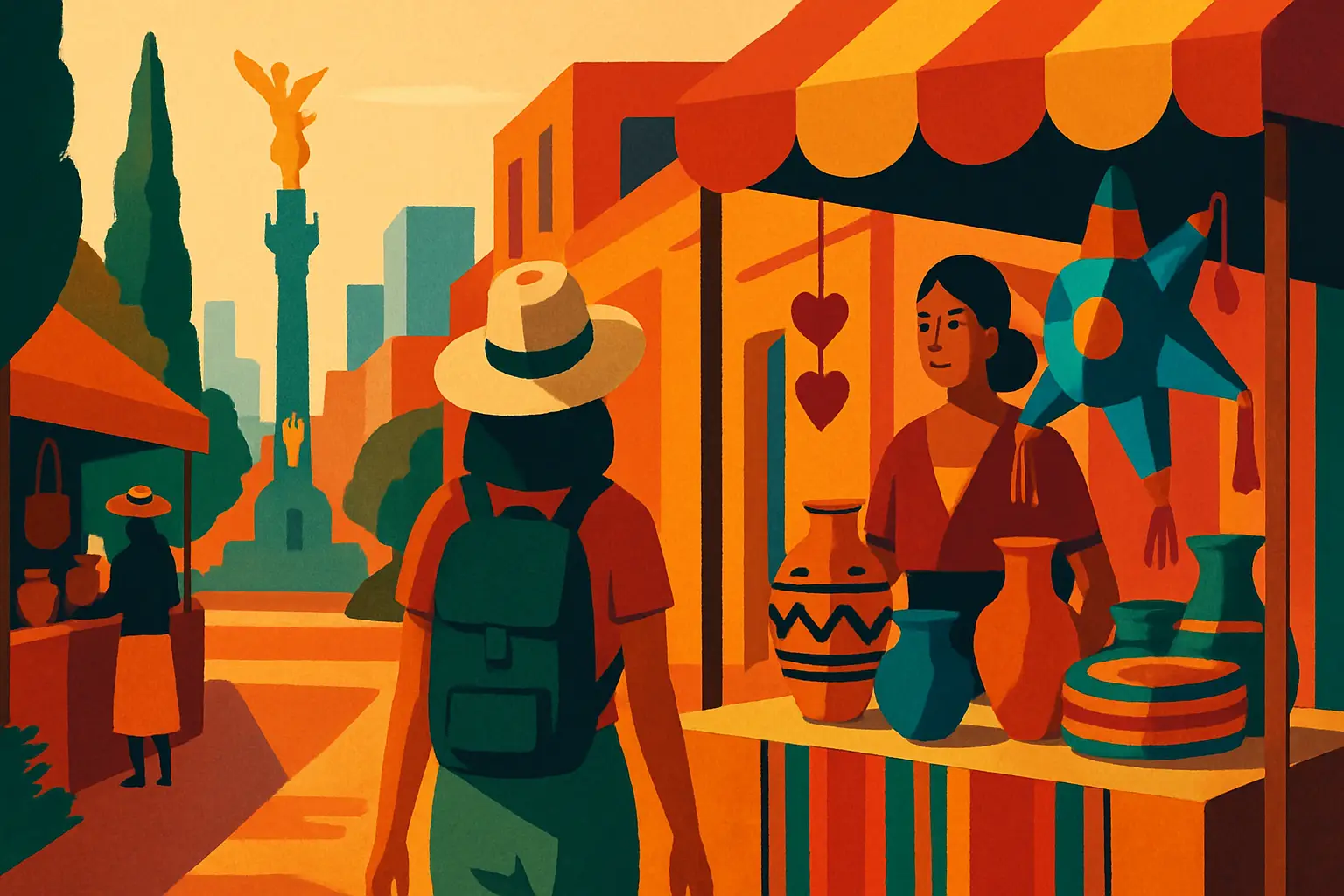
Mexico City shopping doesn't function like a mall or a tourist bazaar in the way visitors expect. There are essentially four tiers, and each operates by different rules. At the top is FONART — the federal government's folk art network, with fixed prices, certified authenticity, and a supply chain that pays artisan producers fairly. Below that is the craft market tier: La Ciudadela and similar mercados de artesanias where 300-plus vendors from every producing state in Mexico sell the same categories of goods and prices are negotiable. Then there's the tianguis — informal street markets that operate on specific days in specific colonias, often selling artisan overflow, vintage clothing, and used goods at the lowest prices in the city. Finally, in neighborhoods like Roma Norte, Colonia Juarez, and Condesa, there's a growing layer of independent concept stores: curated vintage boutiques, local fashion designers, and artisan-adjacent shops catering to the neighborhood's creative class. Each tier serves a different kind of shopper. The mistake most visitors make is treating all four as interchangeable — paying mall-tier prices at a tianguis or trying to bargain at a place where fixed prices are a point of pride.
Mercado de Artesanias La Ciudadela at Balderas S/N, Colonia Centro — two blocks from Metro Balderas (Lineas 1 and 3) — is the most practical single-stop for anyone buying Mexican crafts. More than 350 permanent vendors occupy a large covered market and surrounding corridors, and the sourcing covers virtually every major craft-producing region in the country. A serious walk through Ciudadela takes 90 minutes. You'll move past Oaxacan alebrijes — the fantastical carved wooden creatures painted in vivid Zapotec patterns — alongside Guerrero painted wooden masks, Talavera ceramic pieces from Puebla, hammered tin milagros, embroidered huipiles from Chiapas, black clay pottery from San Bartolo Coyotepec, and hand-woven rugs from Teotitlan del Valle. Prices are negotiable, though vendors begin from a position closer to fair market than you might expect — they're selling to a clientele that includes interior designers, gallery buyers, and export agents as well as individual visitors. Entry is free. The market opens daily from 10 a.m. to 7 p.m., closing at 6 p.m. on Sundays. The quality varies stall to stall — the best alebrijes have painted detail on the underside of every paw, not just the top surface. Walk the full hall before buying anything.
Get short, interactive stories that make each place easier to remember while you travel.
FONART — the Fondo Nacional para el Fomento de las Artesanias — is a federal government trust established in 1974 to support Mexican artisan producers with fair-trade pricing, production training, and market access. Its three Mexico City stores are the only places in the city where prices are fully fixed, certified authentic, and directly benefit the maker. FONART Reforma at Paseo de la Reforma 116 (near Metro Hidalgo) stocks Oaxacan textiles, Michoacan lacquerware, Guerrero jewelry, and high-end ceremonial pieces rarely sold in craft markets. FONART Condesa at Pachuca 189 carries a smaller, sharply curated selection leaning toward wearable folk art: embroidered blouses, hand-dyed rebozos, and artisan jewelry. FONART Patriotismo at Avenida Patriotismo 691 is the largest of the three and carries the most comprehensive range. All three open Monday through Friday around 10:30 a.m. to 7 p.m., and Saturday and Sunday 11 a.m. to 5 p.m. The key strategic use of FONART: price calibration. A quality Oaxacan alebrije here runs approximately 800 to 2,500 pesos. A hand-loomed Teotitlan rug of moderate size runs 3,000 to 8,000 pesos. A certified Talavera piece starts around 400 pesos and scales with size and complexity. Any vendor at Ciudadela quoting you more than FONART's ceiling for equivalent quality is simply pricing for ignorance.
Bazar Sabado operates every Saturday from 9 a.m. to 7 p.m. in and around Plaza San Jacinto in San Angel — a cobblestone 18th-century square in the south of the city, reached via Metrobus Linea 1 (Doctor Galvez stop) or Metro Barranca del Muerto plus a 15-minute walk through the colonial streets. The market has been running since 1960 and distinguishes itself from Ciudadela in one critical way: participation is juried. Artisans apply to sell here and are accepted based on the quality and authenticity of their work. The vendors are often the makers themselves — jewelry designers explaining the silver content of a bracelet, textile weavers who can name the specific village their wool came from, ceramic artists who sign each piece. Bargaining at Bazar Sabado is considered rude by vendors and unnecessary by any practical standard: prices reflect the work and its maker. Expect to pay more here than at Ciudadela — but the ceiling is also higher. Pieces sold at Bazar Sabado regularly end up in galleries and private collections. The surrounding plaza itself is worth the trip: a string of restaurants lines the colonnade on the south side of Plaza San Jacinto, and the cobblestone streets around the square form one of the best-preserved colonial urban spaces in the city. For the full San Angel experience, combine the market with a late lunch at the plaza before the afternoon crowds arrive. More on the neighborhood in the San Angel guide.
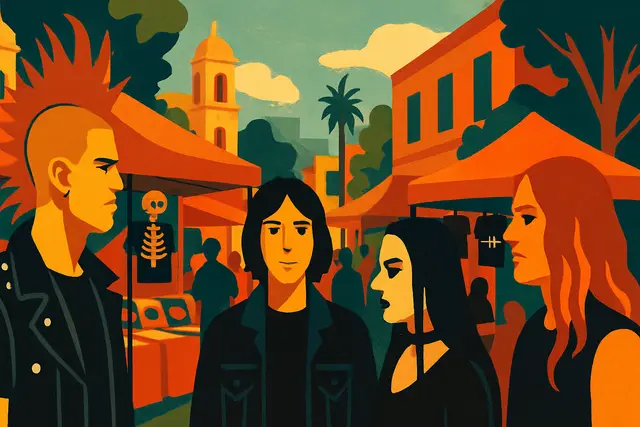
The stretch of Roma Norte and Colonia Juarez centered on Alvaro Obregon, Orizaba, and the streets of Venecia and Genova in Juarez has become Mexico City's most concentrated zone for independent fashion and vintage shopping. The aesthetic leans Japanese-inflected Mexican: natural dye, selvedge denim, pre-owned designer pieces, and carefully restored vintage American workwear. Loose Blues at C. Genova in Juarez is a standout — a three-floor store run by a Mexican-Japanese team that stocks rare vintage workwear, restored indigo-dyed pieces, selvedge denim, and a cafe upstairs with a menu that mirrors the store's aesthetic. Casa Ananda in Roma Norte occupies a 1930s-era house where multiple rooms hold vintage clothing, local art, cassettes, vinyl, and magazines — the kind of place you go expecting to spend 20 minutes and leave 90 minutes later. La Nacion de Todos on Orizaba runs a rotating collective of secondhand vendors with strong curation: designer vintage sunglasses, collector band shirts, and statement pieces. Savage Vintage at C. Venecia 19 in Juarez has the most immediately photogenic exterior in the neighborhood — a bright pink facade with a window display that signals the shop before you step inside. None of these are markets: prices are fixed, quality is edited, and the experience is slower and more deliberate than the craft market circuit.
The best souvenirs from Mexico City have three qualities: genuinely made in Mexico by a specific person in a specific region, useful or displayable rather than shelf-cluttering, and priced in relationship to the labor that made them. The items with the strongest value-to-authenticity ratio at Ciudadela and FONART: hand-embroidered textiles (an Oaxacan tablecloth or Chiapas blouse represents weeks of work and costs a fraction of what an equivalent piece would in the US); black clay pottery from San Bartolo Coyotepec (lightweight, distinctly Mexican, and dramatic-looking on any shelf); and alebrijes from Oaxacan workshops (the ones with detail under every surface are legitimate folk art investments, not decorative impulse buys). Silver from Taxco — Mexico's historic silver-mining city — is sold throughout Ciudadela, and most of it is genuine sterling (marked .925); ask to see the hallmark stamp. Mezcal from Oaxaca is an excellent thing to bring home if you can transport it — the selection available in Mexico is significantly deeper than what's exported, and prices are substantially lower. Pack bottles in checked baggage inside thick socks. The items worth skipping: mass-produced sombrero sets with airbrushed flags, "Aztec calendar" reproductions manufactured in bulk, and anything described as "jade" at under 2,000 pesos — there's very little genuine Mexican jade on the market, and nearly everything sold as jade in craft halls is dyed serpentine.
Hand-embroidered textiles: Oaxacan and Chiapas blouses, tablecloths, and rebozos represent weeks of skilled work at prices that rarely reflect that in pesos
Black clay pottery from San Bartolo Coyotepec: matte black, visually dramatic, and light enough to check or carry
Alebrijes: look for painted detail on all surfaces including the underside — factory copies skip the bottom
Silver from Taxco: genuine sterling is marked .925 and carries an eagle head hallmark; ask to see both
Skip: airbrushed souvenir sets, bulk-produced calendar replicas, and anything labeled 'jade' at under 2,000 pesos
Is bargaining expected? At La Ciudadela and tianguis markets, yes — starting 20 to 30 percent below the ask is normal and vendors expect it. FONART and Bazar Sabado have fixed prices and bargaining is inappropriate; it also accomplishes nothing since vendors won't move. How do you know if something is authentic? For silver, look for the .925 hallmark and the eagle head stamp — Mexico's official silver purity mark. For Talavera, authentic pieces carry a Denominacion de Origen certificate; true Talavera is produced only in Puebla and Tlaxcala. For alebrijes, authentic Oaxacan pieces from Arrazola or San Martin Tilcajete show tool marks, minor variation between painted elements, and painted detail on all surfaces including the underside — factory-produced copies have identical brush strokes and paint that sits on top of the wood rather than into it. What's the best time to go to Ciudadela? Tuesday through Thursday mornings are least crowded and vendors are most willing to negotiate. Saturday afternoons are the most crowded and vendors are least flexible. How do you get there? Metro Linea 1 or Linea 3 to Balderas, exit toward Plaza de la Ciudadela — the market is two blocks from the station. What about mezcal at the airport? Only as a last resort. Airport prices run 30 to 50 percent higher than in the city and the selection skews toward export brands. The full breakdown is in the mezcaleria guide.