1. What enfrijoladas actually are — and why they confuse first-time visitors
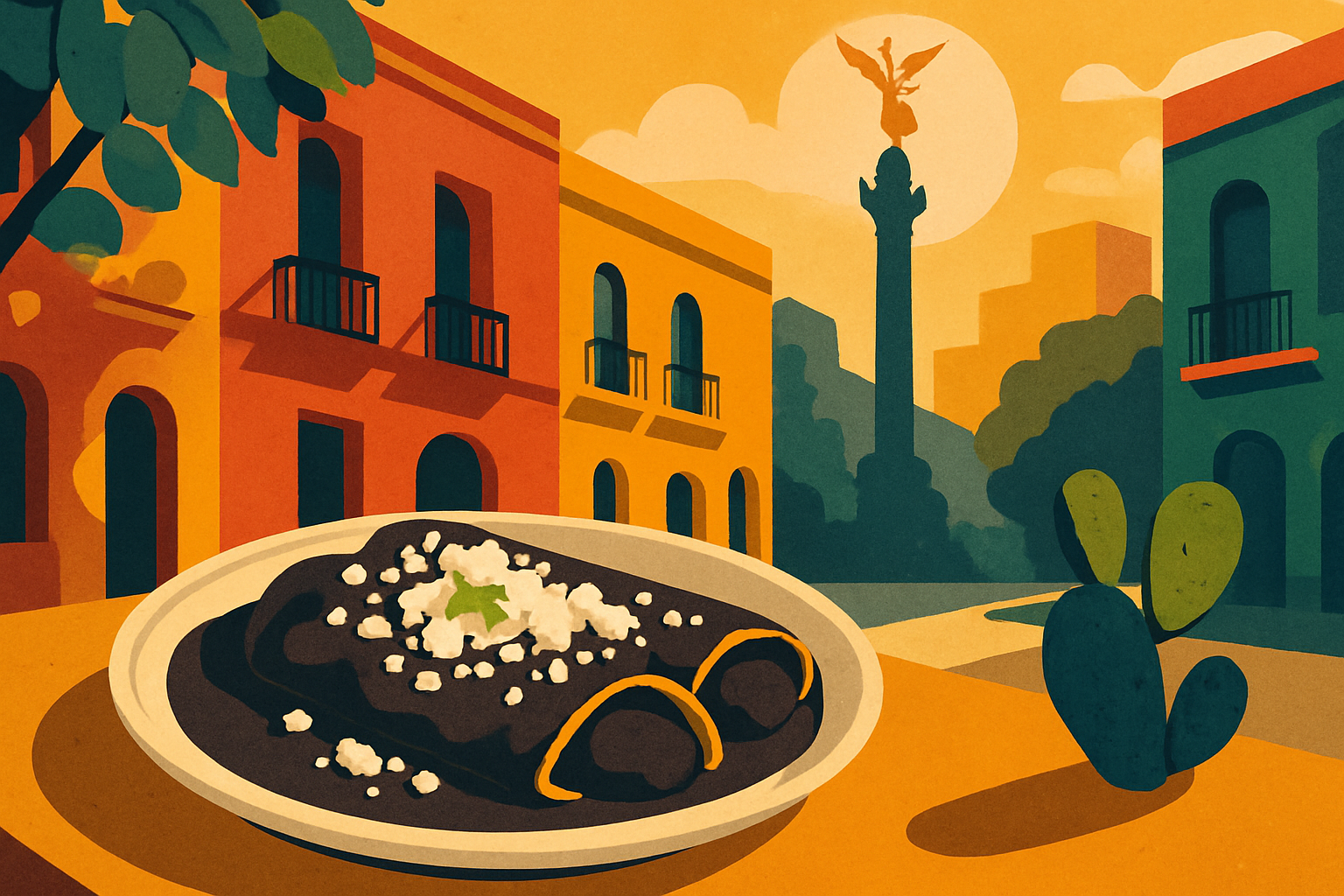
At first glance, they look like enchiladas: folded or stacked corn tortillas in a dark sauce, topped with crema and queso fresco. The difference is the sauce itself. Enchiladas use a chile sauce — red (from dried chiles like ancho or guajillo) or green (from fresh tomatillos and chile). Enfrijoladas use a bean sauce: blended black or bayo beans, thinned with broth, flavored with chile and epazote, and heated until it coats a spoon. The bean sauce is thicker, earthier, and fundamentally different in character from any chile-based preparation. It produces a dish that is more filling and more subtle — you eat enfrijoladas and feel genuinely fed in a way that is harder to explain than to experience.
In Mexico City, the dish is a working-class staple eaten at breakfast or mid-morning, almost always at a market fonda rather than a sit-down restaurant. They are everywhere and entirely unmarketed, which is exactly why visitors miss them. The name comes simply from 'frijoles' — the beans. The dish tells you what it is if you know what to listen for.
•The sauce is blended beans — not chile salsa. This is the single defining difference from enchiladas.
•Standard presentation: 2–3 tortillas folded in half, dipped in hot bean sauce, topped with crema and queso fresco
•A working-class breakfast staple in CDMX — found at market fondas, not tourist restaurants
2. The bean sauce: how it's made, and what separates the good from the mediocre
The sauce — the enfrijolada — is the whole dish, and the best versions require work that does not appear on the plate. It starts with cooked frijoles negros (black beans), the standard in Mexico City since colonial times. The beans are blended with chile (usually serrano for fresh heat, or dried ancho for smokiness), white onion, and garlic. Then the critical ingredient: epazote, a wild herb indigenous to Mexico with a slightly pungent, medicinal-green flavor that has no reasonable substitute. It is cooked directly in the bean pot as the beans simmer — not added at the end — which means the flavor is absorbed into the sauce rather than sitting on top of it.
The blended mixture is thinned with bean cooking liquid or light chicken broth to the consistency of heavy cream — thick enough to coat a tortilla fully, thin enough to spread rather than clump. It is then heated in a small amount of lard or oil, which adds a gloss and helps it adhere. The color of frijoles negros produces a deep purple-black sauce; frijoles de bayo (the speckled brown-beige bean used in some older Centro recipes) gives a warm brown version that tastes creamier and slightly sweeter.
A weak sauce — underseasoned, waterlogged, no epazote — makes enfrijoladas taste like beans smeared on a tortilla. A properly made sauce makes them something else entirely.
•Epazote is cooked in the bean pot, not added as a garnish — its flavor infuses the sauce
•Lard or oil is used to heat the blended sauce, adding gloss and richness
•Frijoles negros = deep, earthy, purple-black sauce. Frijoles de bayo = brown, creamier, slightly sweeter
3. Where to find enfrijoladas in Mexico City: the specific spots
The best enfrijoladas in Mexico City are at fondas inside public markets, not at restaurants. Fondas serve them every morning to people who have been eating the same version at the same counter for years.
Mercado de Jamaica in Colonia Jamaica (Metro Jamaica, Line 4 or 9) has a row of breakfast fondas along Congreso de la Union that open at 7 a.m. The bean sauce here trends toward frijoles negros with a sharper serrano presence — a full plate with crema and queso fresco runs around 70–80 pesos. This is the version that tastes most like old-CDMX cooking.
[Mercado de la Merced](/mx/blog/mercado-la-merced-mexico-city-guide) in Centro has breakfast fondas visible from the Anillo de Circunvalacion entrance on the building's north side. The fonda rows inside are busiest from 8 to 10 a.m. and serve a version with a slightly softer chile presence, typically finished with queso fresco crumbled directly from a wheel.
[Mercado de San Juan](/mx/blog/mercado-de-san-juan-mexico-city-guide) at Aranda 13 in Centro has two or three fondas along its interior south side — completely separate from the gourmet-import vendors most tourists come for. The fonda enfrijoladas here use a bayo-bean sauce with a mild poblano chile, producing a richer and slightly sweeter version than the Jamaica standard.
El Cardenal at Palma 23 does carry enfrijoladas on its traditional breakfast menu, but they are not the centerpiece dish they are at a market fonda. Worth ordering if you are already there for chilaquiles or huevos rancheros — but do not make enfrijoladas the reason to go to El Cardenal specifically.
4. Market fondas: the real enfrijoladas experience
The honest version of enfrijoladas in Mexico City is six stools at a counter, a cook who has been making the same bean sauce before 6 a.m., and a plate that arrives in ninety seconds. Market fondas in CDMX follow a consistent structure: a steam table at the front holds three to five prepared dishes, a handwritten chalkboard lists the morning's options, and the cook at the back runs the entire operation solo. Fondas open between 7 and 7:30 a.m. and transition to comida corrida — a three-course set lunch — by around 1 p.m., at which point the bean sauce is repurposed and the enfrijoladas disappear until the next morning.
For the most direct experience: find any market in your neighborhood, walk past the produce stalls toward the back where you see steam rising and smell something good, and sit at whatever counter looks busiest. The one with four people eating at 8:30 a.m. on a Tuesday is the correct choice. The cook will not greet you with a laminated menu or ask what you are in the mood for. Say buenos dias, look at the chalkboard, and order what you see. You will eat well for under 90 pesos.
The Mexico City markets guide covers all the major markets and which fondas to look for inside each one.
•Fondas open 7–7:30 a.m.; enfrijoladas gone by 11 a.m. when the kitchen shifts to comida
•Look for the counter with regulars already seated — that signals freshness and consistency
•Price: 70–90 pesos for a full plate with crema, queso, and a side of fresh tortillas
5. Toppings, fillings, and how the dish comes together
The tortillas are typically folded in half (like a quesadilla) rather than rolled tight (like a traditional enchilada), which means they hold up better under the bean sauce without falling apart. Each tortilla is dipped individually into the hot bean sauce to coat it fully, then placed flat on a plate — usually two or three at a time.
The most common filling, if there is one, is queso fresco or requesón (a soft, grainy fresh cheese similar to ricotta). Many fondas serve them plain inside — no filling — because the sauce is rich enough that the tortilla alone is sufficient. Toppings go on top of the sauced tortillas: a drizzle of crema mexicana, a handful of crumbled queso fresco, sliced white onion, and sometimes a leaf or two of fresh epazote as a garnish. Some cooks add a few chicharrón pieces on the side as a textural contrast to the soft tortillas.
For protein, the most common additions at fondas are: huevo estrellado (fried egg placed directly on top), pollo deshebrado (shredded chicken folded inside before saucing), or nothing. Enfrijoladas are often eaten without protein by choice — the bean sauce is genuinely filling, and the dish was designed to be a meal on its own.
•Tortillas are folded in half (not rolled tight) — they hold up better under bean sauce
•Fillings: queso fresco or requesón inside, or nothing — the sauce carries the dish
•Protein add-ons: fried egg on top (most common) or shredded chicken folded inside
6. How to order enfrijoladas like a local
Ordering at a market fonda does not require much vocabulary, but the right words matter. Sit down, say buenos dias — this costs nothing and matters more than it sounds in a fonda setting — and then ask: '¿Hay enfrijoladas?' (Are there enfrijoladas today?). The fonda may or may not be serving them that morning depending on what the cook prepared.
If the answer is yes: '¿Me puede traer una orden con crema y queso?' (Can you bring me an order with cream and cheese?) is sufficient. Add 'y un huevo estrellado encima' (and a fried egg on top) if you want protein. For shredded chicken inside: 'rellenas de pollo, por favor.'
The fonda will typically bring fresh corn tortillas on the side as well — use them to scoop up the bean sauce that pools on the plate at the end. Do not let that sauce go to waste. If you cannot find enfrijoladas on the chalkboard, try: 'tortillas en frijoles' — describing the dish literally sometimes works when the specific name does not at a particular counter.
For reference on pricing: frijoles negros version typically costs slightly less than a bayo-bean version, though the difference is rarely more than 10 pesos. If you want to ask about the bean type: '¿Son de frijol negro o de bayo?' A cook who answers immediately and with specificity is a cook who cares about their sauce.
7. Are enfrijoladas vegetarian?
Usually yes — but not guaranteed. The bean sauce is plant-based at its core: beans, chile, epazote, garlic, onion. The question is what fat is used to heat it. Traditional CDMX fonda cooking often uses manteca (pork lard) to fry the sauce at the start, which makes the dish technically not vegetarian. Asking '¿usan manteca?' at the counter will get you a direct answer at most fondas — cooks in Mexico are rarely coy about their cooking fat.
Some fondas, particularly those in Roma Sur and Condesa that cater to a more mixed crowd, now use aceite vegetal (vegetable oil) by default. The queso fresco and crema toppings are dairy-based. The dish is naturally gluten-free: corn tortillas, bean sauce, and fresh cheese contain no wheat.
For travelers who are fully vegan, enfrijoladas are achievable at specific spots but not reliably so at traditional market fondas. Asking for 'sin crema, sin queso' (no cream, no cheese) removes the dairy; confirming the lard question removes the animal fat. The dish without those components is simply bean-sauced tortillas — austere but still worth eating if the sauce itself was made properly.
8. Best time to eat enfrijoladas — and how to build a morning around them
Enfrijoladas are a desayuno or almuerzo dish — breakfast (7–9 a.m.) or mid-morning meal (9–11 a.m.). At most market fondas they stop being served by 11 a.m. when the kitchen shifts to comida corrida. The best time to arrive is 8 to 9:30 a.m. on a weekday: busy enough that the sauce is fresh and hot, not so crowded that the service slows.
Pair them with agua de Jamaica (hibiscus water, which cuts through the earthiness of the bean sauce cleanly) or cafe de olla — the cinnamon-and-piloncillo brewed coffee that has been served alongside bean dishes in Mexico for centuries. A neutral Americano is a missed pairing.
For a full morning: enfrijoladas at 8:30 a.m. inside Mercado de la Merced, then a 10-minute walk north to Templo Mayor before the tour groups arrive at 10 a.m. The meal costs under 90 pesos and puts you inside one of the oldest operating markets in the Western hemisphere before most visitors have finished their hotel breakfast. That is the move.
•Best window: 8–9:30 a.m. on a weekday — sauce is fresh, fonda is not yet crowded
•Pair with agua de Jamaica or cafe de olla — both cut through the earthiness of the bean sauce
•Cost: 70–90 pesos at a market fonda including beans, crema, and queso; 60 pesos is possible in Jamaica or La Merced