1. What is an alambre, exactly?
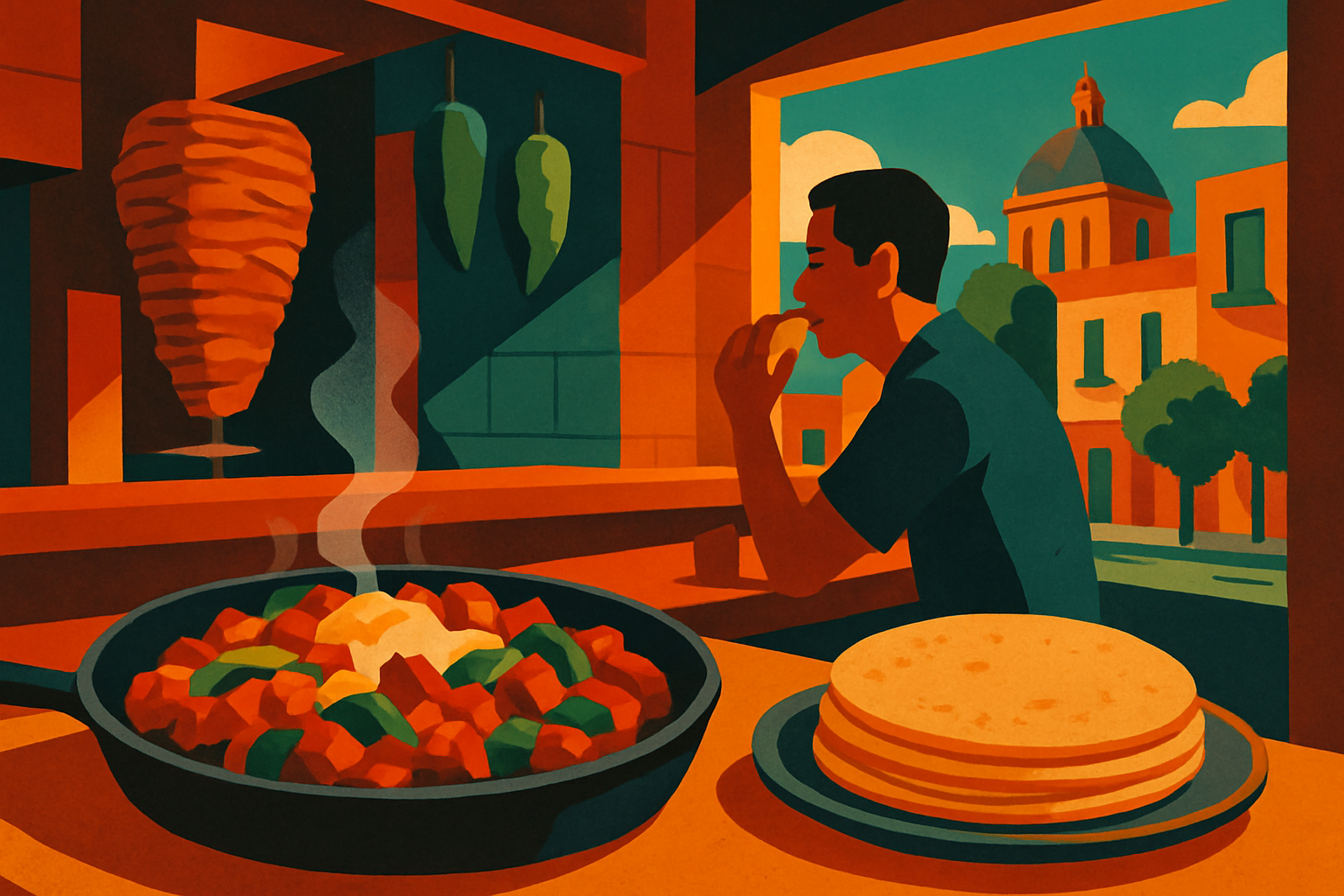
An alambre is a sizzling one-plate dish built on a flat cast-iron griddle (plancha): chunks of meat — usually pastor, carne asada, arrachera (skirt steak), or a combination — cooked together with crispy bacon (tocino), sliced white onion, and strips of colored bell pepper (morrón rojo y verde), then blanketed in melted cheese until the whole surface is a bubbling, caramelized mass. It arrives still in the pan, or plated on a ceramic oval dish, with a stack of warm tortillas alongside. You tear off a tortilla, scoop in a portion of the skillet contents, fold, eat. The format is communal and slightly chaotic in the best possible way.
The word alambre means 'wire' in Spanish. The name traces back to the original preparation method: marinated meats threaded onto metal skewers (alambres) and grilled over coals — the same technique brought to Mexico by Lebanese immigrants in the early 20th century. Today almost no taqueria uses actual wire; everything happens on a cast-iron plancha. The name stuck because the flavor profile didn't change.
•Core ingredients: meat (pastor, arrachera, or res) + tocino + morrón + cebolla + queso melted on top
•Arrives at the table in the pan or on a plated oval — tortillas on the side so you build your own tacos
•Different proteins change the dish: alambre de pastor is richest, alambre de arrachera is smokier and leaner
2. The Arab-Mexican culinary thread that created it
Alambres belong to a lineage that began with Lebanese immigration to Mexico in the late 19th and early 20th centuries. Arab families — mostly from present-day Lebanon and Syria — settled across the country and brought shawarma with them: spiced lamb or beef cooked on a vertical rotating spit, shaved thin and served in flatbread. In Puebla, the Lebanese community adapted shawarma for local tastes, replacing lamb with pork and serving it in a cemita bun or on a corn tortilla — that's the origin of tacos arabes, a dish still eaten in Puebla and in Mexican Arab neighborhoods today.
Mexico City took the adaptation further: marinating the pork in achiote and dried guajillo chiles, adding pineapple for acidity, spinning it on a trompo spit — that evolution produced tacos al pastor. The alambre is the flat-griddle cousin of the same family: same spiced pork, same Arab-Mexican flavor logic, but cooked on a cast-iron plancha rather than a vertical spit, combined with bacon and vegetables, and served communally. All three dishes — shawarma, tacos arabes, tacos al pastor — share the same origin. Alambres are the fourth step in that line.
3. El Tizoncito and the Condesa connection
The taqueria most closely identified with both tacos al pastor and alambres in Mexico City is El Tizoncito, which opened at Avenida Tamaulipas 122 in Condesa in 1966. The founding story credits Concepcion Cervantes with adapting the Lebanese shawarma preparation — replacing lamb with achiote-marinated pork, adding pineapple, mounting it on a vertical trompo spit — and serving it as a street taco for the Condesa neighborhood. Whether the exact timeline holds up under scrutiny is debated among Mexico City food historians, but El Tizoncito has been making the argument in real pork for nearly 60 years, which earns it a place in the record regardless.
The Tamaulipas 122 location is still operating, as is a second branch at Campeche 362-A a few blocks away. The kitchen runs vertical trompos in full view of the counter, shaving pastor directly onto the plancha where alambres are assembled alongside. Their version uses queso Oaxaca, comes with freshly pressed corn tortillas, and is served fast — this is a working taqueria, not a destination restaurant. Arrive between 1 and 3 p.m. when the trompos have been spinning long enough that the pastor exterior is caramelized and the inside is still moist.
•El Tizoncito: Avenida Tamaulipas 122, Condesa — founded 1966, original al pastor and alambre taqueria
•Second location: Campeche 362-A, Condesa — same menu, same open-kitchen trompos
•Best window: 1–3 p.m. lunch rush when pastor is at peak caramelization on the spit
4. How to order: the choices you'll face at the counter
Ordering an alambre requires two or three decisions. First: the protein. Pastor is the classic — the achiote-marinated pork picks up additional char from the plancha in a way it doesn't always get on the trompo, and the rendered fat from the tocino mixes with the pastor juices to build the base flavor of the skillet. Arrachera (skirt steak) gives you something smokier and leaner; it's the right call if you want the peppers and cheese to take the lead. Mixto — a combination of two proteins, often pastor and arrachera — is common at larger taquerias and usually the best value per plate.
Second: the cheese. Most places default to queso Oaxaca (semi-firm, stringy, melts into a white web) or queso amarillo (processed yellow cheese that melts faster with a sharper, saltier flavor). Ask which they use. If you want the more complex, less salty version, request Oaxaca and confirm they have it. Third: corn or flour tortilla. This gets its own section below, but the practical note is that the taqueria will hand you whatever they stock — ask politely if you want the other.
•Protein: 'alambre de pastor,' 'de arrachera,' or 'mixto' — say it at the counter when you order
•Cheese: queso Oaxaca (stringy, mild) vs queso amarillo (sharp, processed) — both valid, different textures
•Always include tocino unless you don't eat pork — the bacon fat binds all the skillet flavors together
5. The flour vs corn tortilla question
Mexico City runs on corn tortillas — the small, slightly thick ones you find at every pastor and suadero stand — not the large thin flour tortillas associated with Chihuahua and Sonora in the north. But alambres sit in a middle zone: because they share culinary roots with northern-style grilling traditions, some taquerias with northern ties serve them on flour tortillas, which hold the heavier skillet ingredients without tearing. If you find a spot making fresh flour tortillas in-house alongside good alambres, that version is worth seeking out. Otherwise, corn is the default and works well. The skillet is what you're really paying attention to.
6. What separates a great alambre from a mediocre one
The single biggest variable is plancha temperature. A hot, well-seasoned cast-iron griddle caramelizes the onions, chars the bell pepper strips at the edges, and creates a slightly crispy, slightly sticky crust on the meat that elevates the dish. A tepid plancha produces a stew. Watch the cook: if they let the skillet ingredients sit and build color before flipping, you're in good hands. Constant stirring from the moment everything hits the pan traps steam and prevents the caramelization that matters.
The cheese matters second. A properly made alambre arrives with queso Oaxaca fully melted into a cohesive, stringy mass that holds the ingredients together and has a few golden spots where it touched the plancha directly. Strips of unmelted cheese sitting on top of the meat signal that the alambre was either rushed or cooked at too low a temperature. The tortillas are third: they should arrive hot off the comal, slightly charred on one side, stacked and wrapped in cloth. A cold or gummy tortilla usually means the taqueria is moving too fast and reheating rather than pressing fresh.
7. Is alambre the same as tacos al pastor?
No. Tacos al pastor are shaved from a vertical trompo spit — one taco is a thin slice of caramelized pork, a sliver of pineapple, raw onion, and cilantro on a small corn tortilla. It's precise and controlled. An alambre is a flat-griddle dish: chunks of meat (which may include pastor from the same trompo) cooked together with tocino, bell peppers, and onion until the fats and juices merge into something richer than any single ingredient. Think of al pastor as the refined version and alambres as the communal, everything-in-the-pan version from the same kitchen.
8. Practical questions: price, timing, and what to drink
A full alambre plate runs 150–250 MXN at most Mexico City taquerias in 2026. The price scales with protein — arrachera alambres cost more than pastor because skirt steak is more expensive than marinated pork. A mixto falls in the middle. The plate is enough food for one person as a main, or two people sharing alongside other orders.
Timing matters more for alambres than for most taco orders. The best windows are the lunch rush (1–4 p.m.), when the pastor trompo has been spinning long enough to be at peak flavor, and late evening (9 p.m. onward), when the plancha is busy enough to stay at consistent high temperature. Avoid the mid-afternoon dead zone between 4 and 7 p.m. at taquerias that aren't open through dinner — a cold plancha produces a noticeably worse alambre.
For drinks: a michelada — cold beer with lime juice, Worcestershire sauce, and a touch of chile — is the traditional accompaniment. The bitterness and acidity cut through the fat from the tocino and melted cheese in a way that agua fresca or soft drinks don't. A straight Modelo or Pacifico works just as well if you want something simpler.
•Price: 150–250 MXN per plate depending on protein — order one to share or as a full main
•Best timing: lunch rush (1–4 p.m.) or late evening (9 p.m.+) when the plancha runs continuously hot
•Drink pairing: michelada or cold beer — the acidity cuts the richness of cheese and tocino