1. What a tianguis is — and why it predates the city itself
The word tianguis comes from the Nahuatl tiyānquiztli — the Aztec term for an open market. When Hernán Cortés's soldiers reached the Aztec capital of Tenochtitlan in 1519, his chroniclers sent letters back to Spain describing the tianguis at nearby Tlatelolco: sixty thousand people trading daily, with gold, feathers, cacao, obsidian tools, medicinal herbs, live animals, and hundreds of types of cloth arranged in orderly sections monitored by market judges who resolved disputes on the spot. The letters described it as larger than any market in Europe at the time.
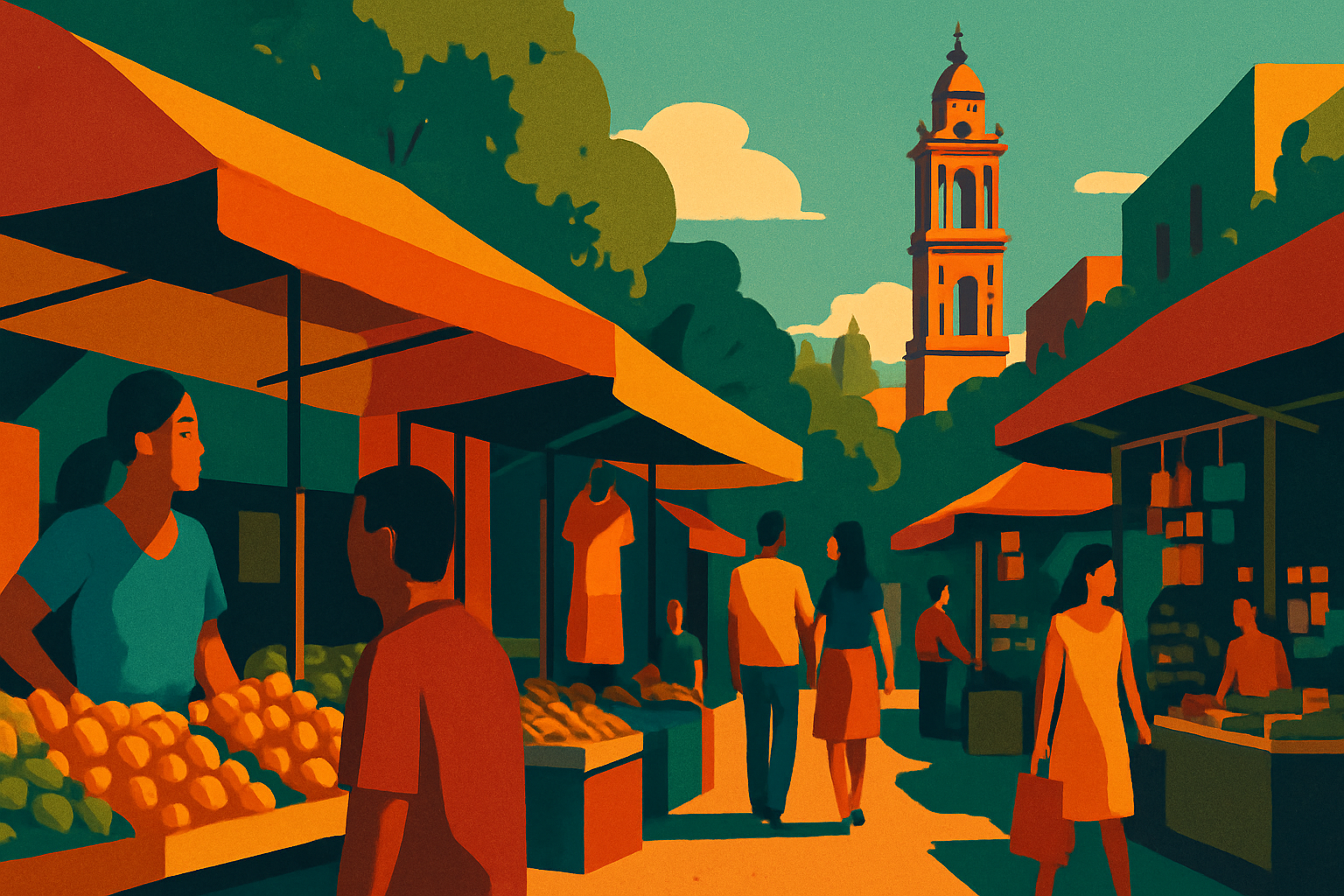
That specific market was largely destroyed in the 1521 siege of Tenochtitlan. The institution wasn't. Mexico City's modern tianguis operate on the same basic logic: a group of vendors takes over a designated stretch of street on a specific assigned day, sets up before dawn, runs through midday or afternoon, and packs out before the street reopens to traffic. The city has hundreds of these weekly markets, each tied to a specific neighborhood and day. They're not tourist infrastructure — they're how a large portion of the city buys its produce, chicken, chiles, cheese, and cut flowers every week, as they have for generations. Understanding this changes how you move through the city. Mexico City isn't organized around supermarkets; it's organized around tianguis.
2. Tianguis del Chopo — the counterculture bazaar at the end of the rail line
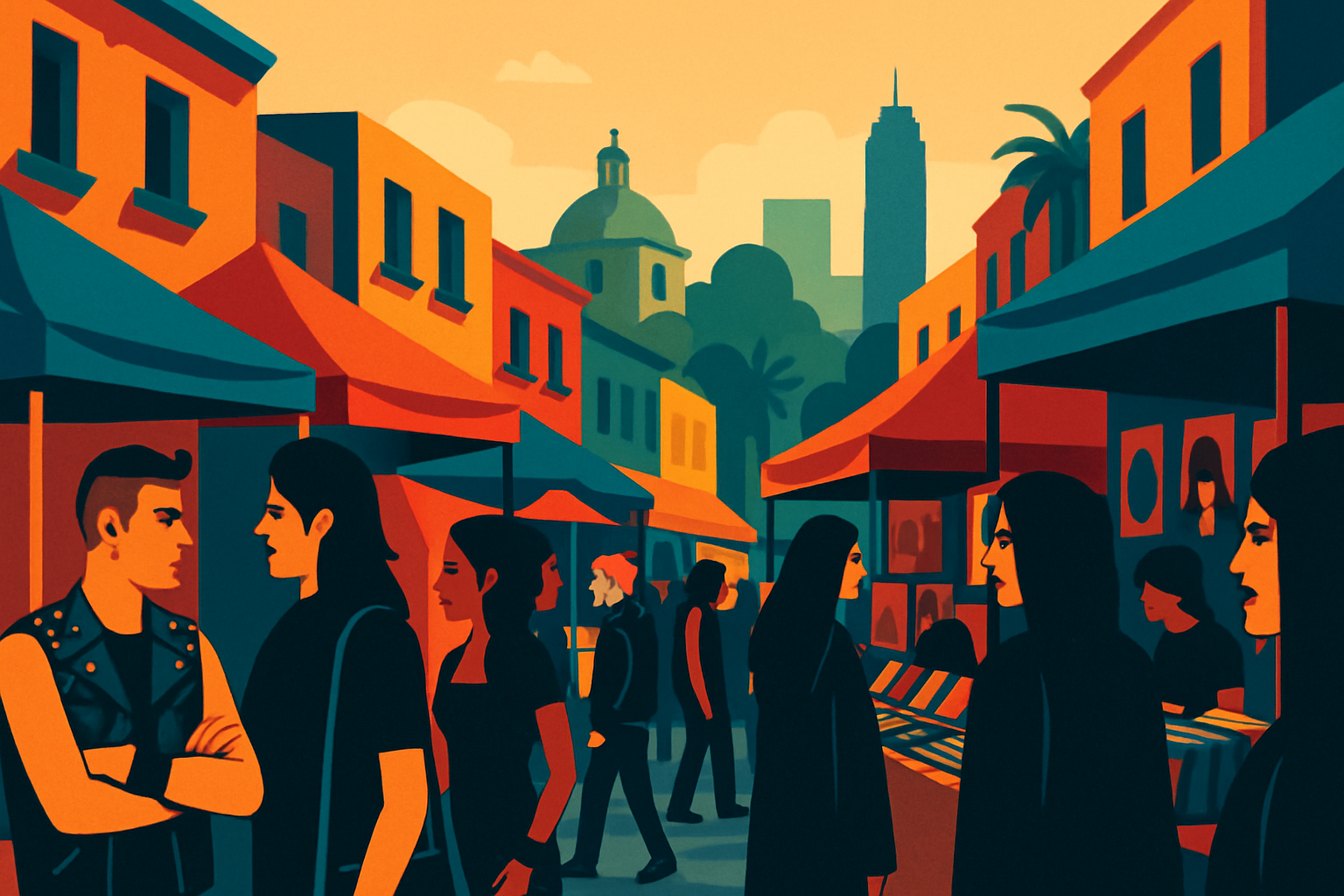
The most famous tianguis in Mexico City has nothing to do with produce. Tianguis del Chopo began in 1980 when a group of punk and heavy metal fans — inspired partly by underground music scenes emerging across Mexico City's working-class neighborhoods — started gathering every Saturday outside the Museo Universitario del Chopo on Calle Dr. Enrique González Martínez in Santa María la Ribera. The museum itself is housed in a German-manufactured iron-and-glass exhibition pavilion shipped over in pieces and reassembled in Mexico City in 1903. The tianguis that grew up on the sidewalks outside it has been running continuously for over four decades.
Today, Tianguis del Chopo runs every Saturday from 10am to 6pm along the blocks surrounding the museum, about a 15-minute walk from Metro Buenavista (Line B). What's for sale: vinyl records — new and used — spanning punk, thrash metal, death metal, goth, psychedelic rock, and everything adjacent; cassettes, which never quite disappeared from the Mexican underground; band t-shirts and patches for hundreds of international and Mexican acts; leather and studded accessories; combat boots; handmade jewelry; zines; and the occasional tattoo demonstration. The crowd is genuinely mixed — teenagers in battle jackets discovering the Ramones for the first time alongside 50-year-olds hunting for a specific Sepultura pressing. If you're a record collector, arrive at opening: serious buyers are there before 10:30am and the best finds go fast. If you're not buying anything, Tianguis del Chopo is still worth seeing as a specific cultural phenomenon — Mexico City's underground music scene compressed into six blocks on a Saturday morning. An annual outdoor festival called the Festival Masivo del Chopo, typically held in August, turns the surrounding streets into a free open-air concert.
3. El Bazar Sábado — the juried artisan market in San Ángel
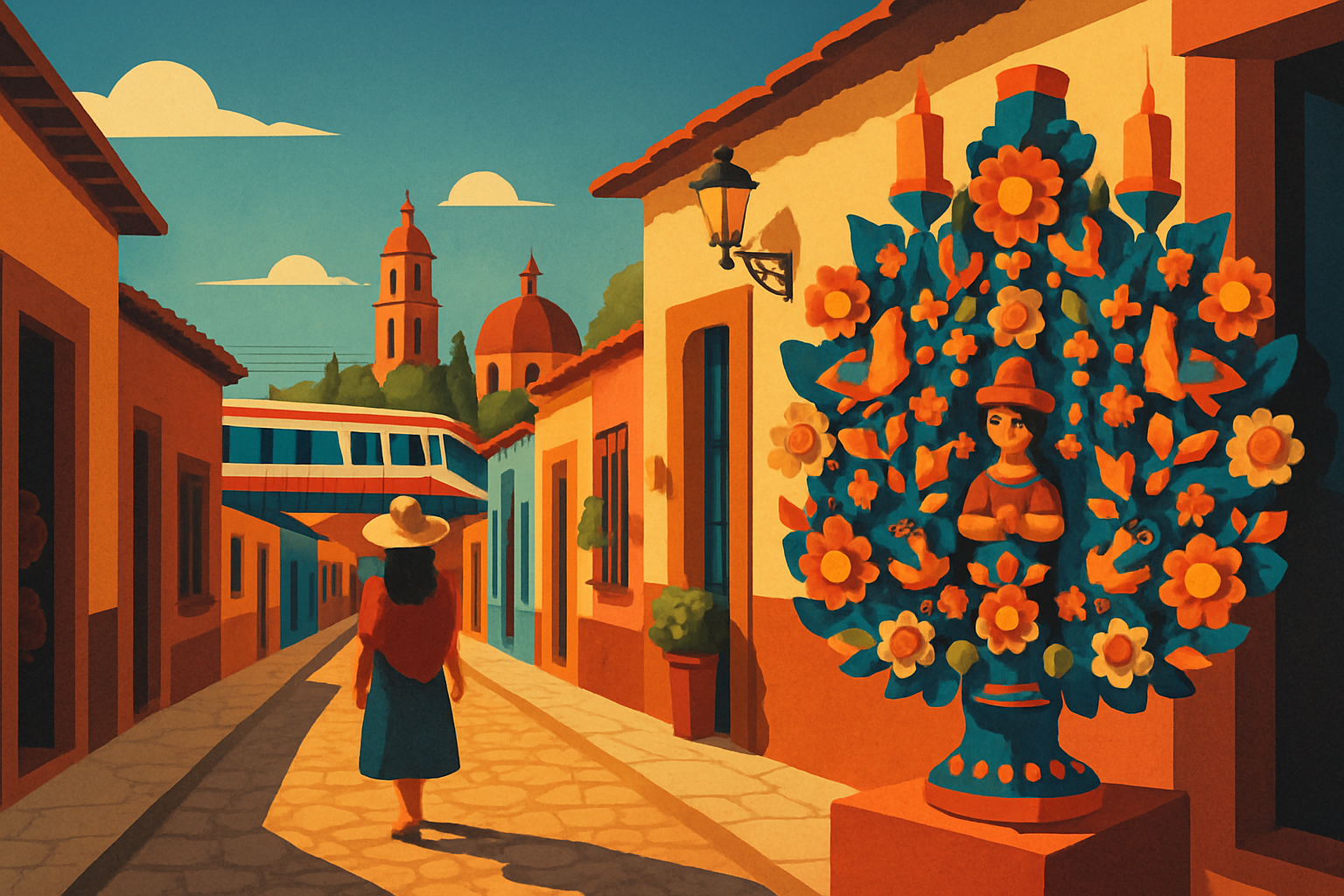
Every Saturday, the colonial neighborhood of San Ángel reorganizes around Plaza San Jacinto as El Bazar Sábado sets up inside and around the 17th-century hacienda at the center of the square. Unlike the Chopo, El Bazar Sábado began not as a grassroots gathering but as a deliberate act of curation: in the early 1960s, a group of Mexican artists and designers established it as a juried market for handmade goods. Vendors must apply, and their work must meet quality standards — which means no mass-produced goods, no factory imports, and no tourist-grade knockoffs.
The market runs Saturdays from 10am to 7pm at Plaza San Jacinto 11, San Ángel. Getting there: Metro Line 7 to Barranca del Muerto, then Uber or taxi about 10 minutes west into San Ángel — or walk from the neighborhood if you're already there. What's for sale: hand-embroidered textiles from Oaxaca and Chiapas, silver jewelry with indigenous design motifs, talavera ceramics from Puebla, hand-thrown pottery, huipiles, hand-woven rugs, painted gourds, and folk art masks. The main hacienda building has an interior restaurant with a colonial courtyard — worth stopping at for a mezcal and some queso Oaxaqueño if you've been walking all morning.
El Bazar Sábado prices are higher than any tianguis de barrio, and bargaining is not part of the culture here. What you're paying for is quality: most of the craftspeople at the Bazar make their living entirely from this work, and the pieces are genuinely handmade in the traditions they represent. It's a far better place to buy something lasting than any airport gift shop or Centro Historico souvenir stall. The combination of El Bazar Sábado and the San Ángel neighborhood makes for one of the best Saturday mornings you can build in Mexico City.
4. Tianguis de barrio — the weekly markets tourists never find
The most important tianguis in Mexico City are the ones that don't appear in any travel guide. Every colonia has at least one tianguis de barrio — a weekly street market that takes over one or two blocks of a residential street on a fixed day, runs from roughly 7am to 2pm, and serves the people who live there. These are produce markets, not cultural attractions. They sell tomatoes, avocados, dried chiles by the kilo, fresh epazote, cut flowers, cheap household goods, secondhand clothing, roast chickens, tamales, and freshly squeezed juice combinations you won't see on any menu.
Finding them requires knowing the day. Unlike fixed mercados, tianguis de barrio leave almost no trace — you'll walk a block on a Monday and see nothing; come back Thursday and find forty vendors filling the same stretch. The easiest way to find yours: look for 'No estacionarse — tianguis' signs posted on light poles, which list the day each street is reserved. Alternatively, ask any building doorman or nearby shop owner — they'll know immediately.
When you arrive: walk the full length of the tianguis before buying anything. Prices are typically fixed and posted or quoted on request — bargaining is not expected and often not welcomed here. The best fresh-juice vendor tends to have the longest line. The pollos rostizados cart (roast chicken) is usually the busiest corner by 10am. Avocados, tomatoes, and tomatillos from a tianguis de barrio cost roughly half of what a Walmart Bodega or Soriana charges for the same items. Fresh herbs — cilantro, epazote, hierba santa — cost almost nothing and are better quality than anything vacuum-sealed in a supermarket. If you're living in Mexico City for more than a week, finding your neighborhood's tianguis is one of the most useful things you can do.
5. The Saturday circuit: combining Chopo, San Ángel, and your neighborhood
Saturday is the best single day to experience Mexico City's tianguis culture. The Chopo opens at 10am in Santa María la Ribera. El Bazar Sábado opens at 10am in San Ángel. Most tianguis de barrio are already winding down by noon, so if you want to hit yours, go early.
A workable Saturday route for someone staying in Roma Norte or Condesa: start at your nearest tianguis de barrio around 8am for breakfast (the tamale and atole vendors are set up by then). Take a car to Metro Buenavista or just Uber to Santa María la Ribera and spend the morning at Tianguis del Chopo. Grab lunch at one of the fondas near the Santa María la Ribera neighborhood before heading south to San Ángel by early afternoon for El Bazar Sábado, which runs until 7pm. The sequence is completely feasible in one day and costs almost nothing in transport.
Other day-specific markets worth knowing: the Lagunilla antiques market in Colonia Guerrero concentrates its best vendors on Sundays, when collectors spread across several blocks of Calle Rayón and Calle Allende with furniture, vintage photographs, old magazines, jewelry, and pre-Columbian reproduction pieces. The Mercado de Lagunilla guide covers this in detail. Separate from the fixed mercado building, the outdoor Sunday flea market portion is one of the few places in the city where genuine antiques turn up alongside clever fakes — worth visiting if you can tell the difference.
6. What to buy and what to skip
The tianguis economy has a clear logic: the closer something is to its point of production, the better value a tianguis offers. Fresh produce, herbs, eggs, fresh cheese, and cut flowers are almost always better quality and cheaper at a tianguis de barrio than in any other retail channel. Handmade crafts at El Bazar Sábado represent genuine value given the curation. Vinyl and music merchandise at Tianguis del Chopo is priced at international vinyl market rates — not cheap, but not marked up for tourists either.
Where tianguis get more complicated: secondhand electronics, name-brand clothing, and tools. These sections of informal markets sometimes include stolen or counterfeit goods alongside legitimate merchandise. This is especially concentrated in certain city areas, most notably around Tepito. For general visitors, the practical rule is simple: if a vendor made it, grew it, or collected it personally, you're almost certainly fine. If it's a logo shoe at 20% of retail, that's a different conversation.
Bargaining customs vary by tianguis type. At tianguis de barrio and the Chopo, prices are generally set — vendors aren't expecting negotiation and react to it differently than market vendors in tourist zones. At El Bazar Sábado, prices are firm. The one place bargaining is occasionally possible is at the Lagunilla antiques section on Sundays, particularly later in the day when vendors prefer to sell rather than transport large items back home.
7. Is it safe? Timing, cash, and logistics for first-timers
Is it safe? Tianguis del Chopo and El Bazar Sábado are as safe as any busy public square in the city — thousands of people, broad daylight, no specific crime profile. Tianguis de barrio in Roma, Condesa, Narvarte, Coyoacán, and similar neighborhoods are completely routine: locals bring strollers and shopping carts. The general rule applies: front pocket for your phone, small bills visible not large ones, stay attentive at the edges where crowds thin.
Getting to Tianguis del Chopo: Metro Line B to Buenavista, then 10-15 minutes on foot along Dr. Enrique González Martínez toward the Museo del Chopo — you'll see the crowd before you see the museum. Or Uber directly to 'Museo Universitario del Chopo.' Saturday mornings the traffic is manageable.
Getting to El Bazar Sábado: Metro Line 7 to Barranca del Muerto, then Uber or taxi 10 minutes west into San Ángel, or walk if you're already in the neighborhood. Parking near Plaza San Jacinto on Saturday is difficult — public transit or rideshare is the right call.
What time should you arrive? For the Chopo: 10am if you want records. For El Bazar Sábado: any time between 10am and 5pm is fine, though the early afternoon is when it's most crowded and most energetic. For tianguis de barrio: 8 to 10am is when produce is freshest and the food vendors are at full strength. After noon, many vendors start packing and the selection thins.