Founded in 1861, Santa María la Ribera is one of the oldest planned colonias in Mexico City — older than Roma, older than Condesa, and a 10-minute walk north of Paseo de la Reforma. For decades it sat quietly in the shadow of the Monumento a la Revolución while everyone else flooded into Roma Norte. In 2026 that's finally changing. You'll see grandmothers buying tomatoes from the same fruit stands their grandmothers used, then turn a corner and find a specialty coffee bar with a single-origin Veracruz pour-over. The colonia hasn't been swallowed yet — and that's exactly why it's worth your morning.
Founded in 1861, predates Roma and Condesa
10-minute walk from Reforma and Buenavista station
Still affordable, still local, still authentically CDMX
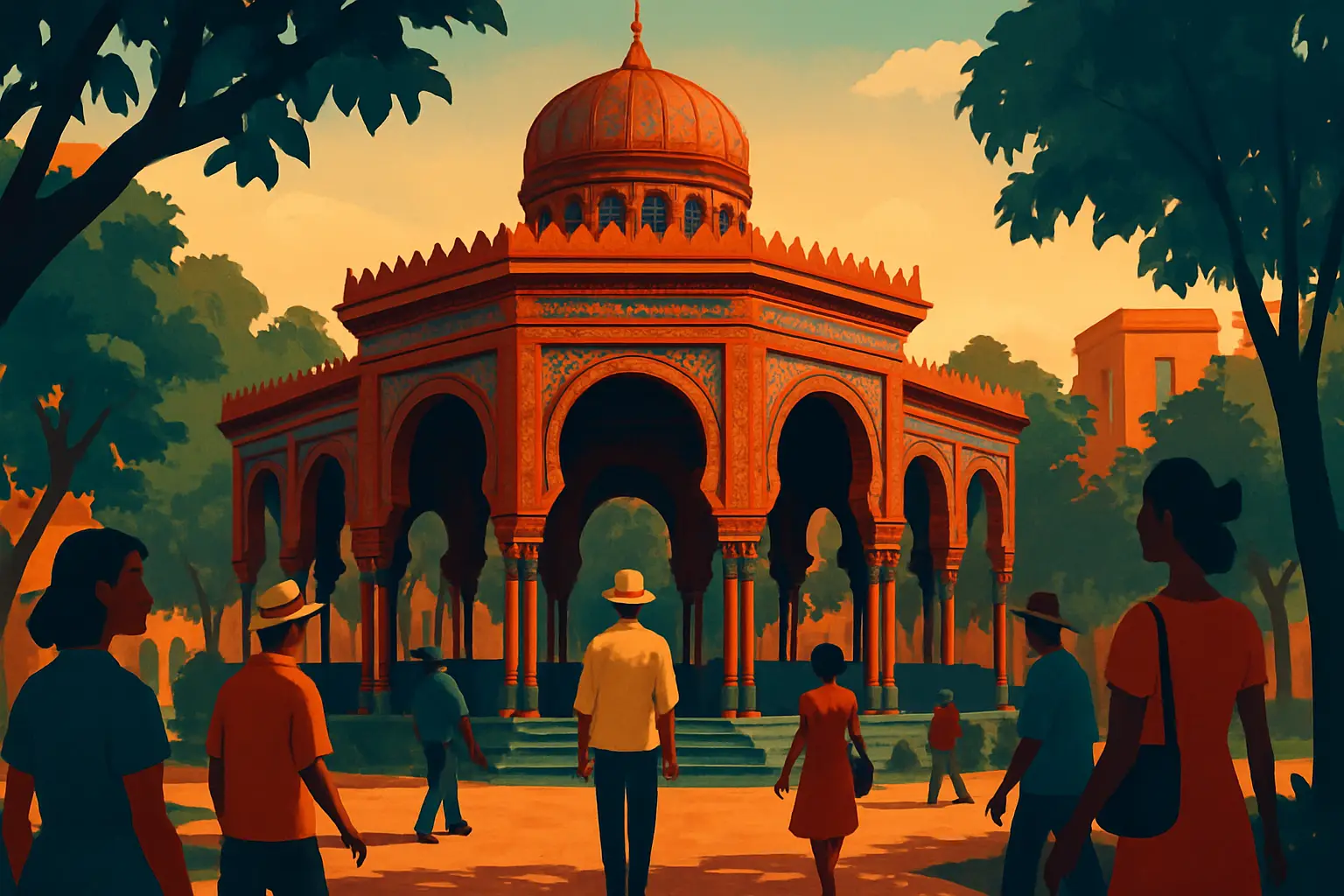
The neighborhood's centerpiece is the Kiosco Morisco — an octagonal Moorish-revival pavilion sitting in the middle of the Alameda de Santa María. The story is genuinely strange: it was designed by Mexican engineer José Ramón Ibarrola and built for Mexico's pavilion at the 1884 New Orleans World's Cotton Centennial Exposition. After the fair it traveled to St. Louis, came home, and then served as the kiosk for the original Alameda Central. In 1910, the Centennial of Independence celebrations needed that space — so the entire iron-and-stained-glass structure was disassembled and rebuilt here. On Sundays the kiosko hosts free danzón dance lessons in the morning and family concerts in the afternoon.
Originally Mexico's pavilion at an 1884 New Orleans World's Fair
Relocated to its current spot in 1910
Sundays: free danzón classes and live music under the dome
Get short, interactive stories that make each place easier to remember while you travel.
Half a block from the kiosko, on Calle Jaime Torres Bodet 176, sits the Museo de Geología de la UNAM. From the outside it looks like a serious civic building from 1904. Step inside and you'll find an art nouveau iron staircase, a stained-glass ceiling, and wood-and-glass display cabinets that haven't changed in a century. The collection itself — meteorites, dinosaur fossils, an enormous mammoth skull, and cases of Mexican gemstones — is almost beside the point. Entry is free, photography is allowed, and most travelers walk through in 45 minutes feeling like they cheated.
Free admission, open Tuesday to Sunday
Art nouveau staircase from 1904 — bring a camera
Real meteorites, fossils, and a complete mammoth skull
Calle Sabino is the food spine of the neighborhood. La Pirata and Pulquería La Joya pour natural pulque and curados (mixed with seasonal fruit like guava, oatmeal, or pine nut) the same way they have since 1907 — slightly viscous, mildly sour, and instantly social. A few doors down, Cancino is the SMLR sibling of the Roma Norte pizza favorite, with thin, blistered pies pulled from a wood-fired oven. For pastries, Forte's brown-butter croissants and cardamom buns are worth the line on Saturdays. Almanegra Café roasts beans on-site for the city's most serious flat white. If you want a sit-down meal, Salón Puebla on Avenida Salvador Díaz Mirón is a 1940s-style cantina serving mole poblano and paella that locals book ahead for Sunday lunch.
Pulquería La Joya: natural pulque since 1907
Cancino: blistered Detroit-meets-Italian pizzas
Forte and Almanegra: pastry + coffee for the morning
Walk south on Calle Dr. Enrique González Martínez and you'll hit the Museo Universitario del Chopo — a gothic iron-and-glass pavilion shipped from Düsseldorf in 1902 to be Mexico's natural history museum, then reborn in the 1970s as a counterculture art space. It still feels that way: contemporary photography shows, alt-music nights, and a bookstore worth a half-hour. From there, the streets unfold. Calle Sabino, Calle Salvador Díaz Mirón, and Calle Dr. Atl are lined with French neoclassical mansions, art nouveau facades, art deco apartment buildings, and tile-covered vecindades — most still lived in. There's no monument trail. You wander, you look up, you photograph a doorway, you keep going.
Museo del Chopo: a German iron pavilion turned art space
Walk Calle Sabino and Calle Dr. Atl for the best facades
Casa Universitaria del Libro for a quiet courtyard pause
The easiest entry is Metro Buenavista on Line B — eight minutes on foot to the Alameda. Metro Revolución on Line 2 is also a short walk if you're already near Reforma. From Roma Norte or Condesa, take Metrobús Línea 1 north along Insurgentes and get off at Buenavista. The colonia itself is small and flat — everything in this guide fits inside a 12-block radius, so once you arrive, walking is the move. A reasonable plan: kiosko first, geology museum second, lunch on Calle Sabino, Museo del Chopo in the afternoon. Allow 3 to 5 hours. If you want a shorter visit, skip Chopo and you can do the rest in a focused half-day.
Metro Buenavista (Line B) is the closest stop
Metrobús Línea 1 from Insurgentes works from Roma/Condesa
Plan for 3–5 hours — everything is within a 12-block walk
By day, the answer is a confident yes — and that includes solo travelers. The Alameda, Calle Sabino, and the streets around the museums are busy with families, students from UNAM's nearby buildings, and locals running errands. Standard Mexico City rules still apply: keep your phone in your pocket on quiet streets, use Uber or the metro after dark rather than walking long blocks, and stay south of Eje 1 Norte (the colonia gets rougher as you approach the Calzada de los Misterios). The well-lit core around the Alameda is fine in the evening for dinner at Cancino or Salón Puebla — locals do it nightly.
Daytime visits are very safe — solo travelers welcomed
Stay south of Eje 1 Norte; the area changes character past it
Use Uber late at night rather than walking long stretches
Sunday morning is the magic window. The danzón classes at the kiosko start around 11am, the bakeries are full, and the Alameda fills with families. Saturday is the brunch crowd. Weekday mornings are quieter and the geology museum feels like it's yours alone. To extend the day, the colonia pairs naturally with the Monumento a la Revolución (15-minute walk south), the MUNAL and Palacio de Bellas Artes (one Metrobús stop), or the Museo Soumaya in Polanco-adjacent Plaza Carso (15 minutes by Uber). If you only have one neighborhood day in CDMX and you've already done Centro and Roma, this is the one to add.
Sunday from 10am–2pm is the most alive
Pair with Monumento a la Revolución or Bellas Artes
Weekday mornings = empty museums, calmer cafés