A taco de canasta is defined by its method, not its filling. You take a thin corn tortilla, fill it with a stew — beans, potato with chorizo, pressed chicharrón, or adobo — fold it, and then stack it in a large basket lined with plastic sheeting and wrapped in cloth. The basket traps heat and moisture. Over the next hour or two, the tortillas absorb the steam and grease from the fillings around them, softening until they become part of the taco itself rather than just its wrapper. The exterior gets slightly oily and yielding; the filling melds into the masa. This is what locals call *sudado* — 'sweated.'
The texture divides people. Anyone expecting the crisp or charred bite of a taco al pastor or the fresh pop of a taco de guisado is going to be confused. A canasta taco is soft all the way through, almost collapsing as you pick it up, warm from the inside out rather than from a hot grill. It's more like a steamed dumpling than anything in the American taco canon. That softness is entirely intentional and has nothing to do with the taco being old or improperly made — it's the point. The steam is what makes it a canasta taco rather than a regular folded taco.
Tacos de canasta trace back to San Vicente Xiloxochitla, a small municipality about 10 kilometers southwest of the city of Tlaxcala, roughly two hours east of Mexico City. The tradition emerged in the 1950s as agricultural communities in Tlaxcala faced declining returns from farming and began sending people to Mexico City to work. Families would prepare tortillas with leftover stews — frijoles refritos, papas con chorizo, chicharrón in salsa — pack them into cloth-lined baskets to stay warm during the journey, and sell them near metro stations, factory gates, and busy street corners in the capital.
San Vicente Xiloxochitla today is considered the undisputed birthplace of the tradition. Between 50 and 80 percent of families in the village are still involved in tacos de canasta production — some as preparers who work through the night, some as vendors who load up and ride into Mexico City before dawn. The village has officially branded itself as the *capital mundial del taco de canasta*. Every morning, dozens of vendors from Xiloxochitla and neighboring Tlaxcalan towns make the trip to the capital, baskets loaded on bicycles or strapped into vans, arriving at their corners before the first metro runs.
This migration route — Tlaxcala to CDMX, same families, same recipe, same baskets, for 70 years — is part of what makes tacos de canasta a genuinely regional tradition rather than just a street food category. The tortillas you eat in Centro Histórico at 7 a.m. were very likely made overnight in Tlaxcala.
Get short, interactive stories that make each place easier to remember while you travel.
Four fillings form the core canon of tacos de canasta. Frijoles refritos (refried beans) are the most basic and the most revealing — a plain bean taco from a good vendor tells you immediately whether the masa is right and whether the beans have been properly seasoned, because there's nothing else to hide behind. Papa con chorizo (potato with chorizo) is the most popular across the board: the potato absorbs the fat from the chorizo, the mixture softens further inside the basket, and the result is dense and savory in a way that makes sense as a pre-work breakfast for someone who won't eat again until afternoon.
Chicharrón en salsa roja puts pressed pork rinds in an adobo sauce made from dried chiles, vinegar, and spices — the acidity cuts through the fat, and the chicharrón chunks absorb the salsa inside the basket until they become something between a crackle and a stew. Chicharrón en salsa verde uses tomatillo-based salsa instead, brighter and slightly sharper, with a different flavor profile entirely despite using the same base ingredient. The best vendors offer all four; the best customers order one of each.
Beyond the canonical four, some vendors offer mole, tinga de pollo (shredded chicken in chipotle-tomato sauce), or rajas con queso (poblano strips with cheese). These tend to appear at established sit-down spots more often than from bicycle vendors, since more complex fillings require more prep time the night before.
Frijoles refritos: the baseline — a plain bean taco reveals immediately whether the tortilla and seasoning are right
Papa con chorizo: the most popular, dense and fatty in the best way — a real breakfast for a real work day
Chicharrón rojo (adobo) and verde (tomatillo): same pork rinds, completely different flavor — order both to compare
Most tacos de canasta come from a person standing next to a basket — no table, no menu, pay and eat on the sidewalk. Taquería Los Especiales on Av. Francisco I. Madero 71, half a block from the Zócalo in Centro Histórico, operates at a different scale entirely. The taquería sells an estimated 40,000 tacos a day, making it likely the highest-volume canasta operation in the city. Each basket holds more than 200 tacos, loaded and restocked continuously through the morning rush.
The Quiroz family, originally from Tlaxcala, has operated Los Especiales for over four decades, moving to the current Madero location about 15 years ago. The setup is partly sit-down, partly counter service — you order by filling, pay at the end, and eat at a shared table surrounded by office workers, tourists who stumbled in, and regulars who've been eating here since before the Madero pedestrian street was renovated. The location has Michelin Guide recognition — not for fine dining, but for being exactly what it claims to be.
The fillings at Los Especiales stick to the four core options: frijoles, papa con chorizo, chicharrón rojo, chicharrón verde. The salsa verde at the condiment station deserves attention — it's brighter and sharper than the salsa inside the tacos and works as a counterpoint to the fatty fillings. Open from early morning; the crowds peak between 8 and 10 a.m. on weekdays and arrive earlier on weekends. If you're staying near the Zócalo and want to understand how working Mexico City eats breakfast, this is the most efficient stop you can make.
Address: Av. Francisco I. Madero 71, Centro Histórico — pedestrian street, half a block from the Zócalo
~40,000 tacos sold daily, Tlaxcala family recipe, Michelin Guide recognized for authenticity
Peak hours: 8–10 a.m. weekdays; arrive before 8 a.m. on weekends to avoid the longest lines
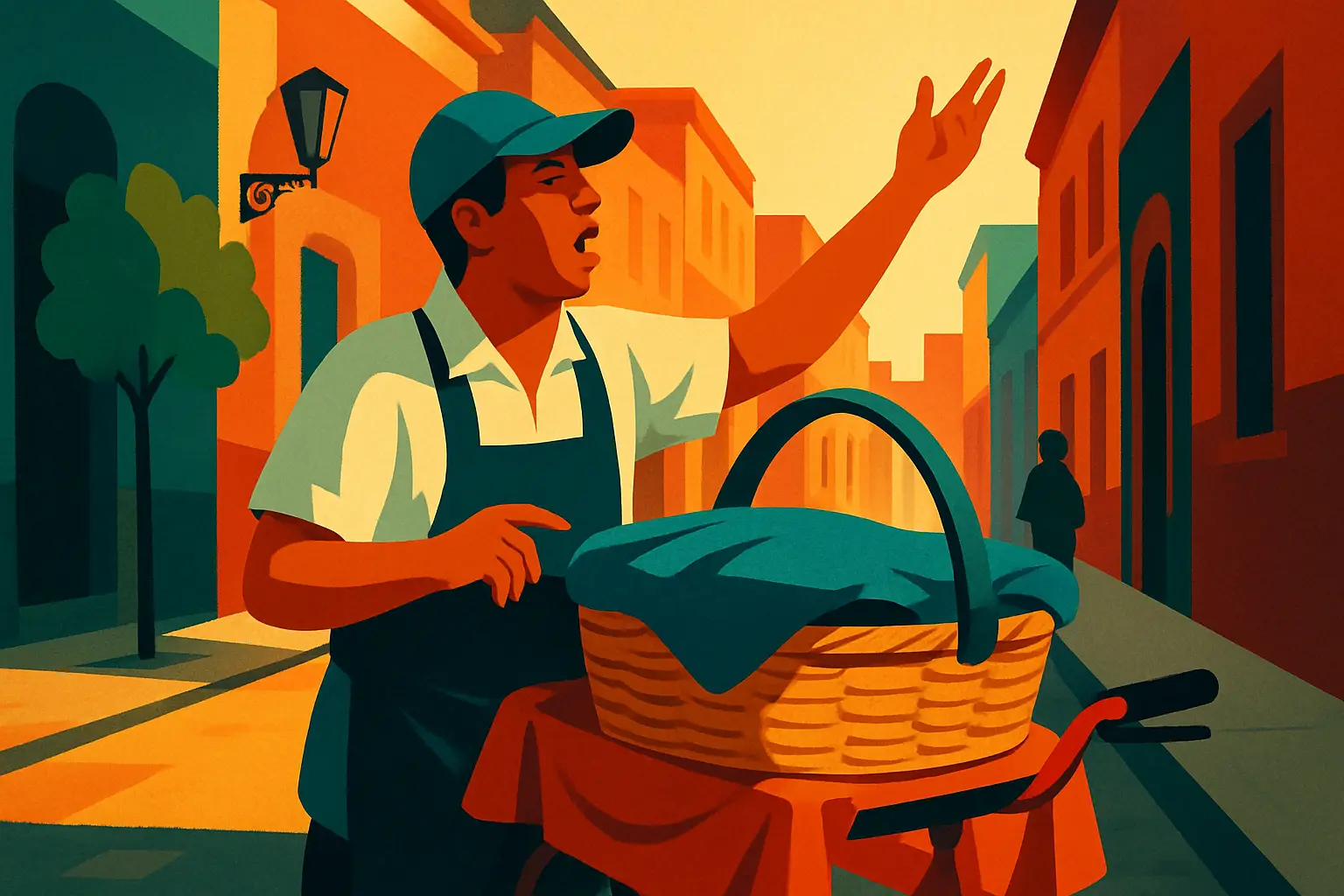
Los Especiales is the famous option, but most tacos de canasta in Mexico City are sold from the street by vendors who load up before dawn and work until the basket runs out — usually by 11 a.m. The bicycle is the classic delivery method: a large insulated basket lashed to the rear rack, wrapped in towels or blankets to hold the heat, the vendor calling 'canasta, canasta' or a specific filling list as they move through a neighborhood. Some vendors park at fixed corners; others move through residential streets on a fixed morning circuit.
The best areas to find street vendors are near metro entrances during the morning rush — Metro Balderas, Metro Salto del Agua, and Metro Lagunilla in Centro are reliable spots. Working-class colonias like Doctores, Guerrero, Tepito, and Iztapalapa have higher vendor density than tourist corridors, because the customer base is the neighborhood itself, not visitors. In Roma Norte or Condesa, you might pass a vendor once a week on a side street; in Narvarte or Doctores, the same corner may have a vendor every weekday morning.
The price from a street vendor is typically 10–12 MXN per taco — occasionally 15 at well-trafficked corners. Three tacos and a shared bag of chiles from the vendor runs you 30–40 pesos and takes five minutes. It is without question the cheapest and most time-efficient breakfast you can have in Mexico City, and it tastes better than it has any right to at that price.
Every major Mexico City taco type tells a story about how the city formed. Tacos al pastor arrived with Lebanese immigration in the early 20th century, transformed over decades into the vertical spit and pineapple combination that's now synonymous with the city. Tacos de guisado developed from the market stall tradition of selling daily cooked stews by the plate — putting them in tortillas was the adaptation for people eating on their feet. Tacos de canasta emerged specifically from rural-to-urban migration, from a Tlaxcalan agricultural community finding a new economic model for surviving in the capital.
The basket itself is the logistics solution. A vendor can prepare 300 tacos the night before, pack them in an insulated basket, transport them 120 kilometers by early morning, and sell out within four hours — all without electricity, a stove, or a commercial kitchen at the point of sale. The steam-and-sweat method that defines the taco's texture is also, practically speaking, the storage and transport method that makes the whole model work. The flavor is the function.
That's the thing most food writing about canasta tacos misses: the softness isn't a quirk to be explained away to skeptical readers. It's the evidence of the system that produced the taco in the first place. When you understand the Tlaxcala-to-CDMX route, the pre-dawn preparation, the bicycle basket, and the working-class customer who buys three tacos before the first metro and has no time for a sit-down anything, the texture makes complete sense. The taco is designed to survive a two-hour journey and still taste like something you'd want to eat before a long day.
This is the question every first-time visitor in Mexico City eventually asks about street food, and for canasta tacos specifically there are a few things worth knowing. The preparation method — fillings cooked the night before, stored in a sealed and insulated basket — means the tacos are held at a warm but not hot temperature for several hours before you eat them. That's different from a taco al pastor cooked in front of you off a turning spit, and it's worth being clear-eyed about.
In practice: established vendors with regular morning routes and high turnover are the safest option. A vendor who sells out by 9 a.m. because they have 200 loyal customers is not holding tacos in a lukewarm basket until noon. Turnover is the real safety signal, not the basket itself. Los Especiales in Centro is high-volume enough that the basket is continuously refreshed. A street vendor at a busy metro entrance who runs out within two hours is a good bet.
The risk increases if you buy from a vendor with a nearly-empty basket late in the morning who appears to be selling the last ten tacos from a four-hour-old preparation. Common sense applies here, exactly as it would with any street food anywhere. The vast majority of tacos de canasta eaten in Mexico City daily are eaten without incident by millions of people who have eaten them this way their entire lives.
The honest answer is: before 10 a.m., ideally before 9. The canasta taco is a breakfast food. It's designed to be eaten before work, on your feet, in five minutes, by someone who doesn't have time for a table. Eating them at noon when a vendor is down to their last eight tacos is a technically possible but suboptimal experience.
Weekday mornings are better than weekends for finding street vendors, because the core customer base works weekdays. Weekend mornings, Los Especiales on Madero is busier than usual but remains well-stocked. If you're spending time in Centro Histórico anyway — for the Templo Mayor, the Palacio Nacional murals, or the Zócalo — building a 7:30 or 8 a.m. canasta breakfast into the start of the day is one of the most honest ways to experience how the city actually begins its mornings.
In rainy season (May through October), the taco-on-a-bench-outside approach gets complicated by 3 p.m. downpours — but early morning is typically dry across all seasons in Mexico City, and the vendors are out regardless. A canasta taco in the shade of a pedestrian arcade in Centro while the metro empties its first wave of commuters is, in its specific way, a perfect Mexico City thing to do.