1. The building Porfirio Díaz commissioned to prove Mexico had arrived
In the late 1890s, President Porfirio Díaz was running what amounted to a nationwide architectural PR campaign. After three decades in power, he wanted Mexico's public buildings to look like those of a European capital — and he had the budget. The Porfiriato was an era of foreign investment, railway expansion, and forced modernization that left Mexico City with its most striking early 20th-century architecture. The Correo Mayor — Mexico's main post office — was still housed in a cramped colonial building near the Zócalo. Díaz commissioned Italian architect Adamo Boari to fix that. The first stone of the Palacio de Correos was laid on September 14, 1902. On February 17, 1907, Porfirio Díaz himself walked through the newly completed building and marked the inauguration by posting two letters — a gesture photographed and publicized as proof that modern Mexico had mastered its own infrastructure. Construction had taken five years. The Palacio de Bellas Artes, started the same year with the same architect, would take thirty more.
2. The architecture: what you are actually looking at on the facade
The Palacio de Correos is classified as Spanish Plateresque Revival — a style that treats stone facades like silverwork, covering surfaces with dense, layered relief carvings. But Adamo Boari was never a purist. The building freely mixes Venetian Gothic arched windows, Moorish tracery in the ironwork, Art Nouveau organic curves at the main entrance, and Elizabethan decorative elements in the carved stonework. The exterior material is Chiluca — a pale cream volcanic stone quarried from hills north of Mexico City. Chiluca glows in direct sunlight and turns nearly white in the midday light of Centro Histórico; at golden hour it picks up a warm amber tone. The ground-level facade features carved figures of mail carriers and postal iconography between the windows — small reliefs of messengers and envelopes that most visitors walk past without noticing. Inside, black and veined Pueblan marble covers the floors and staircase risers, creating a sharp visual contrast with the bronze railings. The columns along the ground floor are cast iron, not stone — an engineering choice that allowed the floors above to be lighter and the atrium to open fully upward without load-bearing interruptions.
3. The staircase from Florence: why the interior stops people cold
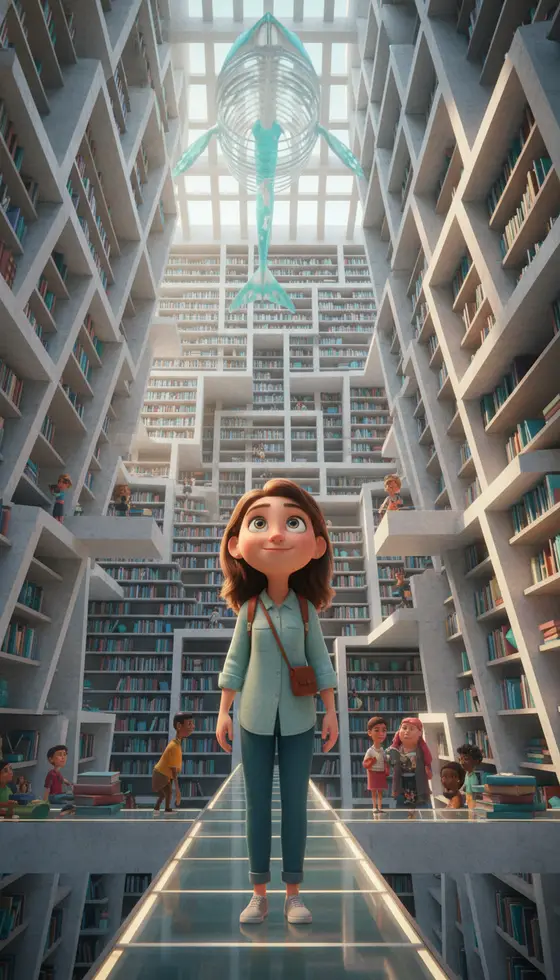
Walking into the Palacio de Correos through the Tacuba entrance does not feel like entering a post office. The ground floor opens into a tall atrium with vaulted ceilings and ornate iron grating over the windows. At the center is the staircase that has caused more than a few visitors to stop speaking mid-sentence. The staircase structure was fabricated in steel in Florence, Italy, by the Fonderia Pignone — the same foundry that produced the bronze elements for the Palacio de Bellas Artes across the street. It was shipped to Mexico in sections and assembled on-site. The steps are Pueblan marble. The railings are cast iron and bronze with organic Art Nouveau curves. Standing at the base and looking up, you see layer after layer of mezzanine balconies rising to a decorative ceiling with arched windows that let in natural light at angles that change through the day. The atrium is almost always quieter than you expect. The post office service windows along the ground floor perimeter are active during business hours — the building still processes mail, sells stamps, and handles registered correspondence daily — but the center of the space holds the specific, muffled hush of a building designed to be beautiful first and functional second.
4. The Bellas Artes connection: why these two buildings stand in the same block
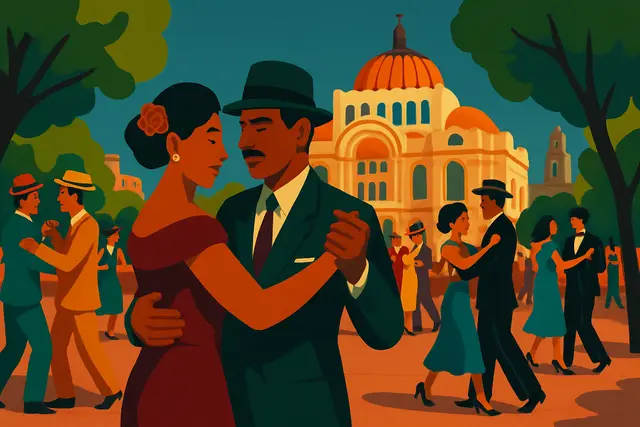
Standing on Eje Central Lázaro Cárdenas, you can see both buildings at once: the Palacio de Bellas Artes to the west and the Palacio de Correos to the east, facing each other across a wide urban boulevard. Same architect (Adamo Boari), same engineer (Gonzalo Garita y Frontera), same commissioning president (Porfirio Díaz), same year of groundbreaking (1902). The divergence is instructive. The Palacio de Bellas Artes was conceived as a national monument — an opera house and arts palace — which meant it accumulated ambitions faster than it could be built. It began sinking into the soft lake-bed sediment immediately, the Revolution interrupted construction, funding collapsed, and a different architect had to complete the interior in Art Deco style decades later. The Postal Palace had a narrower mandate: build a functioning central post office by the date Díaz set. Boari finished it in five years. The result is architecturally more coherent than Bellas Artes — a unified exterior style rather than the Beaux-Arts outside / Art Deco inside compromise that Bellas Artes became. Of the two buildings, the Postal Palace is the one where Boari completed his vision. Bellas Artes is the one Mexico completed for him.
•Same architect (Adamo Boari), same engineer (Gonzalo Garita), same groundbreaking year: 1902
•Bellas Artes took 30+ years due to the Revolution, a sinking foundation, and funding gaps
•The Postal Palace took 5 years — Boari's most architecturally complete work in Mexico
5. What's inside: the museum, philately room, and Saturday concerts
The ground floor is a working post office — you can buy stamps, send packages, and mail registered letters at the service windows during operating hours. International stamps run 25–30 MXN; postcards are occasionally sold near the main entrance. The second floor holds the permanent Cultura Postal (Postal Culture) exhibition: historical postal tools, early 20th-century letter carrier uniforms, original route maps from the Porfiriato era, and documents tracing the evolution of Mexican communications infrastructure from the colonial period forward. Adjacent to it is the Sala de Filatelia — a philately room featuring rare and early Mexican stamps with panels on how stamps functioned as instruments of national identity-building. The room is small, specific, and unhurried; it attracts stamp collectors but most visitors walk past the door without entering. On Saturday mornings, the main atrium hosts free chamber music concerts — small ensembles (string quartets, piano and violin duos, occasionally early music groups) perform for 45 to 90 minutes. The acoustics in the vaulted space are genuinely good. These concerts are open to anyone who walks in. The schedule is posted near the Tacuba entrance and changes monthly.
•Ground floor: fully functioning post office — stamps, registered mail, packages
•Second floor: Cultura Postal museum — uniforms, route maps, postal history
•Second floor: Sala de Filatelia — rare Mexican stamps, philately exhibits
•Saturday mornings: free chamber music concerts in the main atrium
6. How to combine the Palacio de Correos with the rest of Centro Histórico
The building is at Tacuba 1, a 30-second walk from the Palacio de Bellas Artes and roughly 10 minutes on foot from the Zócalo. The natural Centro Histórico route links these three anchors: start at Bellas Artes, cross Eje Central to the Postal Palace via the Tacuba entrance, then walk east along Calle Tacuba toward Templo Mayor and the Zócalo. This east-west walk along Tacuba passes notable buildings: the Casa de los Azulejos (the Sanborns covered in Talavera tiles, at Madero 4), the Palacio de Iturbide (a Banamex cultural center with free rotating exhibitions, at Madero 17), and the 16th-century Iglesia de la Profesa. The Torre Latinoamericana observation deck is 5 minutes south from the Postal Palace at the corner of Madero and Eje Central. Metro access: Bellas Artes station (Lines 2 and 8) is one block south on Eje Central; Allende station (Line 2) is three blocks east on Tacuba.
7. FAQ: Is it free? How long should you spend?
Admission: The main atrium and ground floor are free to enter during operating hours. Some visitors report a small fee (50–100 MXN) for the second-floor museum rooms; others have entered freely. Carry cash. Hours: Post office windows are open Monday through Friday 8 a.m. to 4 p.m., and Saturdays 8 a.m. to 12 p.m. Museum sections are typically open Tuesday through Sunday 10 a.m. to 5 p.m. — verify at the entrance since hours shift seasonally. How long to spend: 30 to 45 minutes covers the atrium, the staircase, and the second-floor exhibition. Saturday visitors staying for chamber music should plan 90 minutes to two hours. Is it worth visiting if you're short on time? Yes — the atrium takes under two minutes to walk in and out of, and it will be one of the more unexpectedly beautiful things you see in Centro Histórico. This is not a full-day museum commitment; it's a short, rewarding detour that almost nobody takes.
8. FAQ: Photography and what most visitors miss
Best time to photograph the interior: Weekday mornings between 9 and 11 a.m., when natural light enters the east-facing atrium windows and the space is not yet busy with post office foot traffic. Best shots: standing at the base of the staircase looking up at the stacked mezzanine levels; from the second-floor balcony looking down into the atrium; the facade from across Eje Central with Bellas Artes visible in the same frame. The building is photogenic at any hour — there are no bad angles — but the interior crowds are a fraction of what you see at Bellas Artes or Templo Mayor even on peak days. What most visitors miss: The carved mail carriers on the exterior stonework at ground level, just above eye height on the Tacuba facade — look for the small figures between the lower window frames. Also: the Moorish geometric patterns woven into the upper-floor iron grating. Also: the building itself. Most visitors heading to Bellas Artes see the Postal Palace from across Eje Central and assume it's a government office not open to the public. It is open. The door is unlocked. You can just walk in.