1. Why tipping in Mexico City is a moral obligation, not a reward
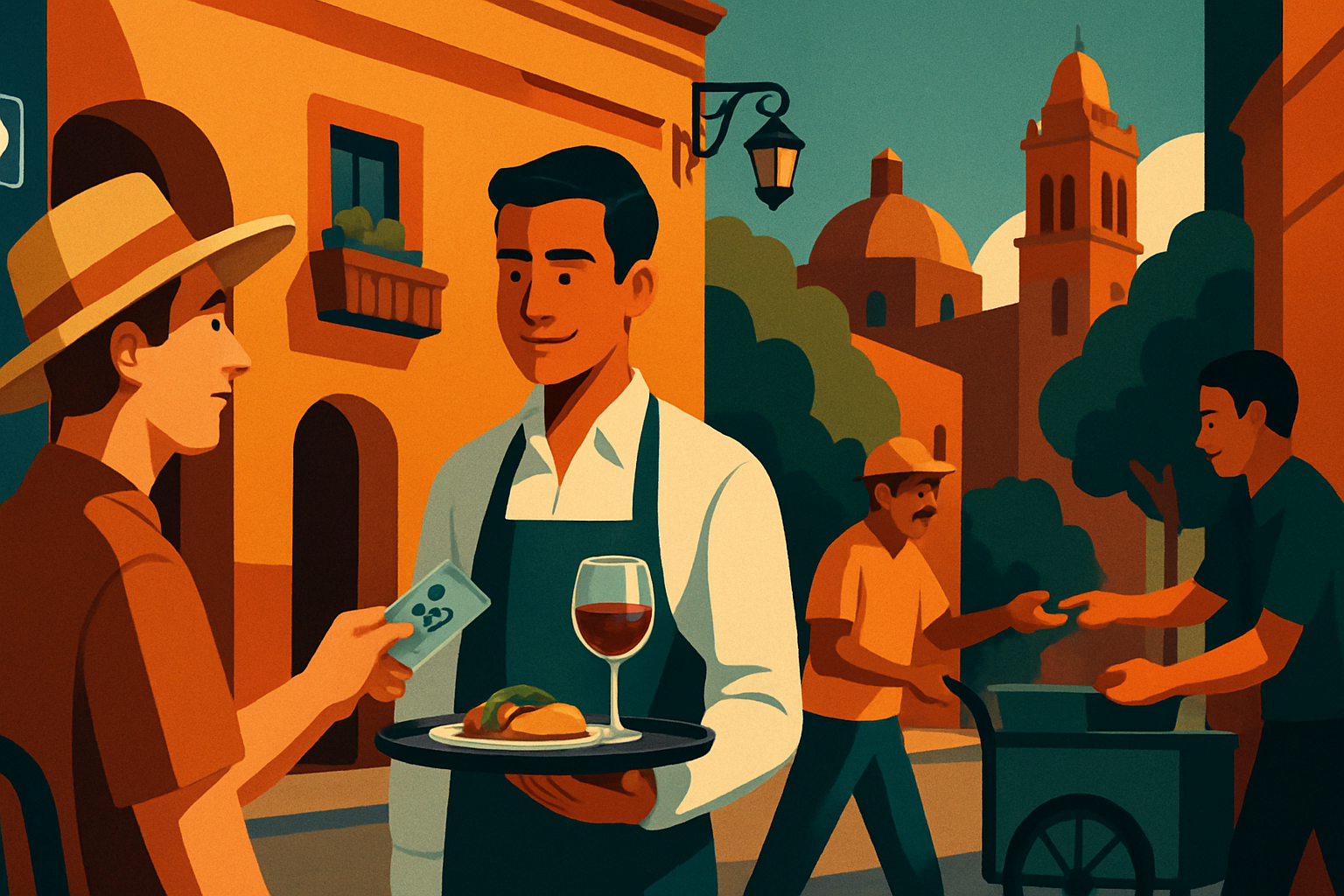
Mexico's daily minimum wage in 2026 is 315 pesos — roughly $15 USD for a full day of work. A restaurant server in Roma Norte might earn 130 to 180 pesos in base wages for a six-hour shift. The tip doesn't arrive on top of a living wage; it's what bridges the gap between those wages and something survivable. That changes the social weight of tipping entirely. In the US, leaving 20% signals exceptional service. In Mexico City, leaving nothing at a sit-down restaurant communicates dissatisfaction or ignorance of local customs — it's a statement, not just an absence. The informal tip economy runs deeper than restaurants: the empaquetadores at supermarkets, the franelero on Orizaba watching your car, the cerillo at the checkout who has been there since 7 a.m. These workers are threaded into how the city actually functions, and a visitor who tips correctly moves through Mexico City with a fundamentally different relationship to the place.
2. Restaurants: the 10–15% rule and how to actually apply it
The local standard at sit-down restaurants is 10–15%. In tourist-heavy areas — Polanco, Condesa, and Roma Norte — the expectation trends toward 15–20%, particularly at places where English is spoken and international visitors are common. Calculate the tip on the subtotal before IVA, not the final total; some bills don't split these clearly, but the difference is usually 15–30 pesos on a typical meal. Paying cash is always preferred — it goes directly into the server's pocket rather than through a register process that may not reach them fully. A practical benchmark: at a mid-range Roma Norte restaurant where two people spend 500 pesos including drinks, a 75-peso tip (15%) is correct. At a quick tacos-and-drinks order totaling 200 pesos, leave 25–30 pesos. At a proper Polanco dinner approaching 2,000 pesos, 300 pesos is the floor. Leaving nothing is noticed — it is never invisible.
•Always check for 'propina incluida' on the bill — hotel restaurants and some Polanco spots add it automatically
•IVA (the 16% tax) is not a tip — calculate your tip on the pre-tax subtotal
•Cash tips are always preferred over card; they reach the server directly and immediately
3. Taco stands and street food: a few coins carry weight
At a taquería de la calle or a street food stall tucked into a market corridor, the expectation is lower than at a restaurant — but not zero. If there's a tip jar or a small dish near the salsa bar (and there usually is), leaving one or two 10-peso coins is the local norm. For a standing-only taquería where you paid 80–120 pesos for your order, 10–15 pesos is generous by local standards. At an elotes cart or a tamales vendor outside the Metro, tips aren't customary and no one expects them — but small change left behind is always quietly appreciated. The moment to tip more generously: when someone has been particularly warm, recommends the right green salsa, or has visibly been at work since before the sun came up. A 10-peso gesture costs you less than fifty US cents and lands with real weight.
4. Empaquetadores: the tip workers most visitors walk right past
At virtually every major supermarket in Mexico City — Chedraui, La Comer, Walmart, City Market, Soriana — you will find an empaquetador or cerillo at the checkout counter. This person, often elderly, often a retiree supplementing a pension or a volunteer earning extra income, receives zero base salary from the store. Their entire income is whatever customers hand them as they leave. The standard tip is 5–10 pesos per bag; for a medium grocery run producing five or six bags, 30–50 pesos total is appropriate and genuinely impactful. The exchange is brief — they pass you the bags, you give them the coins directly — and it happens without ceremony. If you have nothing smaller than a 50-peso bill, hand it over anyway. The system functions because enough visitors understand how it works; it breaks down when they don't.
•Empaquetadores work entirely for tips — Chedraui, La Comer, Walmart, and Soriana pay them nothing
•5–10 pesos per bag; 30–50 pesos total for a medium grocery run is appropriate
•Hand coins directly to the person — don't leave them on the belt
5. Hotels: tip the people you never see
The hotel workers who matter most for tipping are the easiest to forget. Bellhop or porter: 20–50 pesos per bag, paid when they deliver your luggage to the room — not at checkout, when they may no longer be on shift. Housekeeping: 50–100 pesos per day, left on the pillow or bedside table each morning, not as a lump sum at the end of a stay. The person cleaning your room on Tuesday is often not the same one on Wednesday; daily tipping ensures the right person receives it. Valet parking: 20–50 pesos when they return your car. Concierge: 100–150 pesos when they come through on something genuinely useful — a hard-to-book table at a cantina in Centro Histórico, a reliable car service for the airport, a same-day cooking class. Nothing for standard directions or information you could have found yourself.
6. Taxis, Uber, and getting around the city
For sitio taxis — the registered Radio Taxi service or an app-booked cab — rounding up by 10–20 pesos is appropriate, and more if the driver helped with luggage or navigated skillfully through Reforma construction. For Uber and DiDi, both widely used in CDMX, the app prompts a tip of 5%, 8%, or 10% at the end of the ride; accepting the default is fine for a standard trip, and bumping up is worthwhile for late-night pickups or drivers who wait patiently when you can't find the right entrance. Metro and Metrobús: no tipping, ever. Peseros (the neighborhood minibuses): no tipping either, though exact change is appreciated by the driver's assistant. The franelero — the person who materializes when you park on a street in Roma Norte or Condesa and implies they'll 'watch' your car — is a grayer matter. Most locals leave 20–40 pesos on return, not as endorsement of the arrangement but as practical acknowledgment that it exists. CDMX introduced new regulations in 2026 against the practice, but individual franeleros continue to operate on popular blocks.
•Sitio taxis: round up 10–20 pesos; more if they helped with bags or navigated unusually well
•Uber/DiDi: tip in-app at 5–10%; increase for late-night rides or long waits
•Metro, Metrobús, peseros: no tipping expected or customary
7. Tour guides and cultural experiences
For a private walking tour, a guided visit to Templo Mayor, or a street food tour through a neighborhood market, 10–15% of the tour price is the starting point. Twenty percent is appropriate when a guide goes genuinely beyond the script — delivers real local context, takes you somewhere unexpected, or makes the history feel like something that happened to real people rather than a timeline. On a group tour where each person paid 500–800 pesos, 100–200 pesos per person is the right range. For informal guides — the regular at a Lucha Libre arena who explains the rudo versus técnico dynamic ringside, or the market vendor in Tepito who walks you through their section for twenty minutes — 50–100 pesos is the gesture that makes future visitors more welcome.
8. FAQ: dollars, bad service, and 'keep the change'
The questions that come up every time visitors figure out Mexico City's tipping culture.
•**Can I tip in US dollars?** Technically yes, practically no. Dollar bills require the recipient to exchange them at rates worse than what you got at the ATM. Always tip in pesos — if you're truly out of small bills, a single dollar is better than nothing, but it's the exception.
•**Is it rude not to tip at a restaurant?** Yes. In CDMX service culture, leaving zero communicates dissatisfaction or ignorance — servers notice and remember. It is never invisible.
•**What if service was genuinely bad?** Leave 5–10% rather than nothing — enough to signal awareness, not enough to reward poor service. Speaking to the manager is the more effective option if something went wrong.
•**How do I say 'keep the change'?** Quédese con el cambio. Useful at cantinas, taco counters, and anywhere you hand over a bill and don't want the exact coins back.