1. How the night actually unfolds in Mexico City
The rhythm of a CDMX night is different enough from American or European timelines that it catches most visitors off guard. Here is how it works: dinner runs 9–11 p.m. (a 7 p.m. restaurant reservation will feel wrong). Cocktail bars and mezcalerías fill up between 10 p.m. and midnight — this is when most Mexicans are just beginning their social evening. Clubs open main rooms from midnight, but rooms don't reach their natural density until 1–2 a.m. The best DJ sets and live acts start here. If you arrive at midnight and the room looks sparse, you're doing it right: find a position near the speakers and wait. By 3–4 a.m., the better clubs are at full energy. The night ends — if it ends — with tacos somewhere between 5 and 7 a.m. The 24-hour taco stands around Eje Central and near the Zócalo are as much part of the circuit as the venues themselves.
2. Roma Norte: where most nights begin
Avenida Álvaro Obregón is the clearest starting point for most visitors — a boulevard lined with restaurants, bars, and mezcalerías that transitions naturally from dinner into late-night drinking without requiring you to move more than a block. Departamento at Álvaro Obregón 154 is the anchor of this stretch: a multi-level space with an outdoor terrace, a DJ booth booking house and indie dance most nights, and a crowd that skews local-creative rather than tourist. It opens unusually early by CDMX standards — Friday and Saturday doors from 2 p.m. — making it work as a late-afternoon drinks stop before the rest of the night begins. Two blocks south, Bar Oriente at Calle Durango 181 occupies a historic three-story building with a full VOID Acoustics sound system on the main floor — the same UK-engineered speaker array found in serious European underground clubs — and private karaoke rooms upstairs. The music policy runs from techno to indie dance depending on the night, with Saturdays running 10 p.m. to 5 a.m. The combination of a genuine sound system and an escape valve into karaoke absurdity makes it more interesting than most venues of its type. For the drinks stop before any of this, the mezcalerías guide covers what's within walking distance.
•Departamento: Álvaro Obregón 154, Roma Norte — open from 2 PM Fri–Sat, rooftop terrace, house and indie dance
•Bar Oriente: Durango 181, Roma Norte — VOID Acoustics system ground floor, karaoke rooms upstairs, Sat 10 PM–5 AM
•The Álvaro Obregón stretch: densest concentration of bars in Roma, walkable between stops
3. Colonia Juárez: the neighborhood where things get genuinely interesting
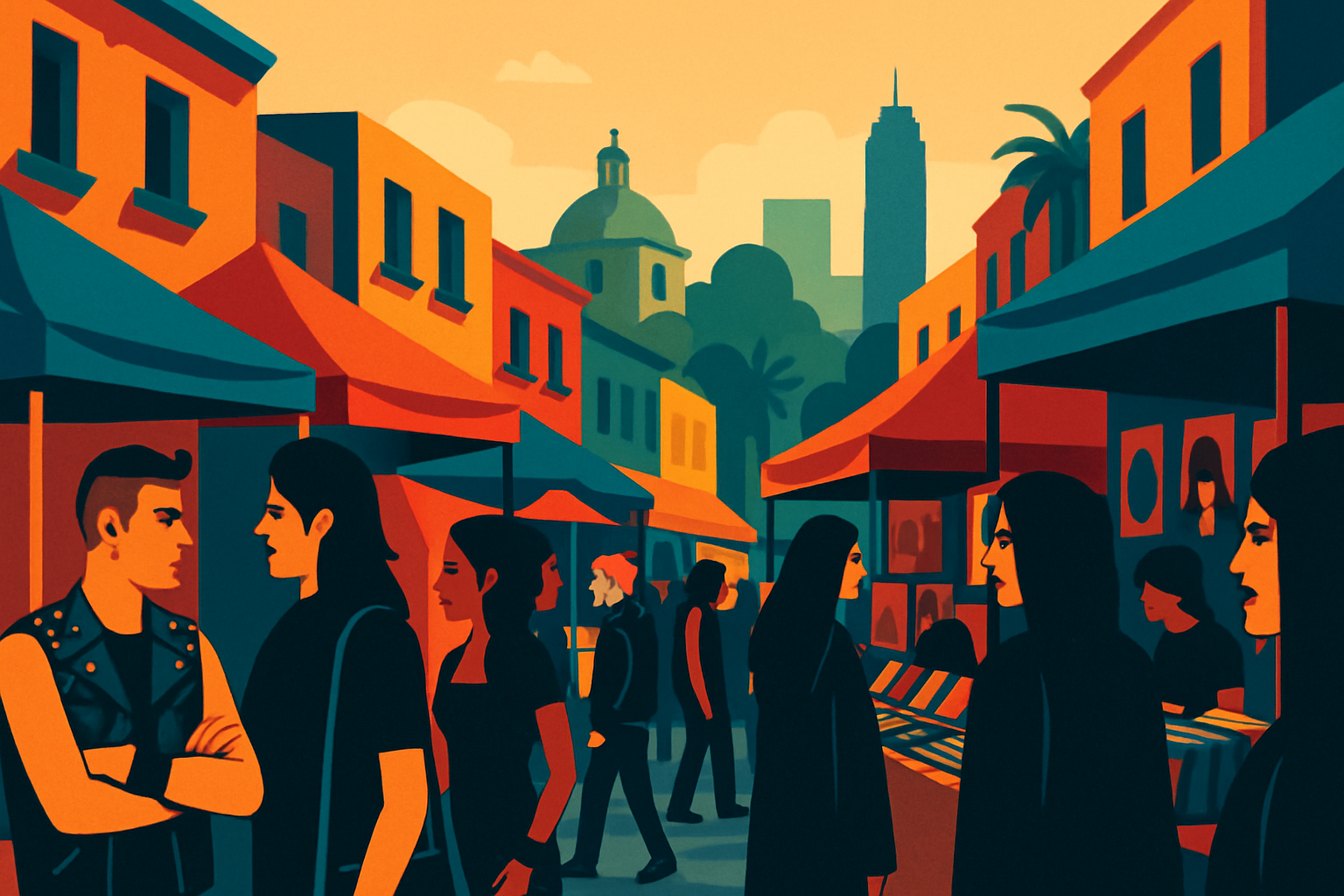
Colonia Juárez sits northwest of Roma Norte, and over the past five years it has evolved into the part of Mexico City's nightlife map where the most unexpected things are happening. The buildings are older, rents are lower than Roma, and the result is a concentration of bars, studios, and venues that operate with less commercial pressure. Essex Club at Londres 195 is the most striking venue in the neighborhood: a 120-year-old building that operated as a brothel at the turn of the century, with an ornate interior — carved wood, original tilework, a bar counter that predates both World Wars — repurposed as a nightclub running house and electronic music Thursday through Saturday. The contrast between the Porfirian architecture and a modern sound system is one of those combinations Mexico City handles better than almost anywhere: layering historical atmosphere with present-tense culture without needing to explain it. The blocks around Calle Londres and the surrounding streets have accumulated enough cocktail bars and small venues that Juárez now functions as a genuine nightlife zone rather than a collection of isolated stops.
•Essex Club: Londres 195, Colonia Juárez — 120-year-old Porfirian building, house and electronic, Thu–Sat
•The Juárez-to-Roma-Norte walk takes under 15 minutes — plan to move between both in one night
•Weeknight lineups at Essex tend to draw a more dedicated music crowd with lower cover than weekends
4. Fünk Club: the basement that serious electronic music fans come for
If the rest of Mexico City's nightlife is for everyone, Fünk Club at Avenida Insurgentes Sur 377 (Hipódromo, Colonia Condesa) is for people who planned their trip around the lineup. The entrance is a stairway below street level, marked by a Fünk Club awning — deliberately unglamorous from outside. Inside is a compact, well-ventilated basement with a sound system that consistently draws comparisons to European techno venues, and a crowd that is here to dance. The music policy runs techno, house, deep house, and tech-house. Guest lineups have included international names that typically play Berlin or Amsterdam, which reflects how seriously the Hipódromo underground circuit has developed. Fünk operates Thursday through Saturday, doors at 11 p.m., typically until 5 a.m. Cover varies with the booking — 150–300 MXN for most nights, higher for international acts. The key distinction: this is a genuine dance floor, not a bar with DJs. Conversations happen at the bar in the back. The main room is loud, dark, and pointed in one direction.
•Address: Av. Insurgentes Sur 377, Hipódromo, Colonia Condesa — basement entrance, below-street-level awning
•Hours: Thu–Sat, doors at 11 PM, typically until 5 AM
•Cover: 150–300 MXN most nights; check @funk_club on Instagram for lineup and pricing before going
5. Polanco: high-glam, dress code, and a completely different city
Polanco's nightlife operates in a parallel universe from Roma, Juárez, and Hipódromo. Venues are larger, more formally staffed, and dress codes are enforced: no shorts, no sneakers at most clubs, and the expectation is that you look like you're going somewhere significant. The crowd is Mexico City's corporate, fashion, and entertainment world — bottle service and table minimums of 2,000–5,000+ MXN are standard if you want guaranteed seating. Ragga, Sens, and Janis are the names that appear on most Polanco nights out, all clustered near Presidente Masaryk and Horacio. They play reggaeton, commercial house, and Latin hits at volumes that make conversation in the main room impossible. That's a description, not a criticism — Polanco nightlife has a specific function: it's where Mexico City goes to celebrate things, dressed up, with a table reserved. For visitors, it's worth experiencing once to understand the full range of the city's social life. For expats living in Roma, it sometimes feels like a different country.
•Dress code: no shorts, no sneakers, no athletic wear — enforced at the door, not negotiable
•Ragga, Sens, Janis: all near Presidente Masaryk and Horacio — bottle service is the operating model
•Polanco Uber: request your car from inside the venue — street taxis work the area late at night
6. Salsa, cumbia, and the live music alternative
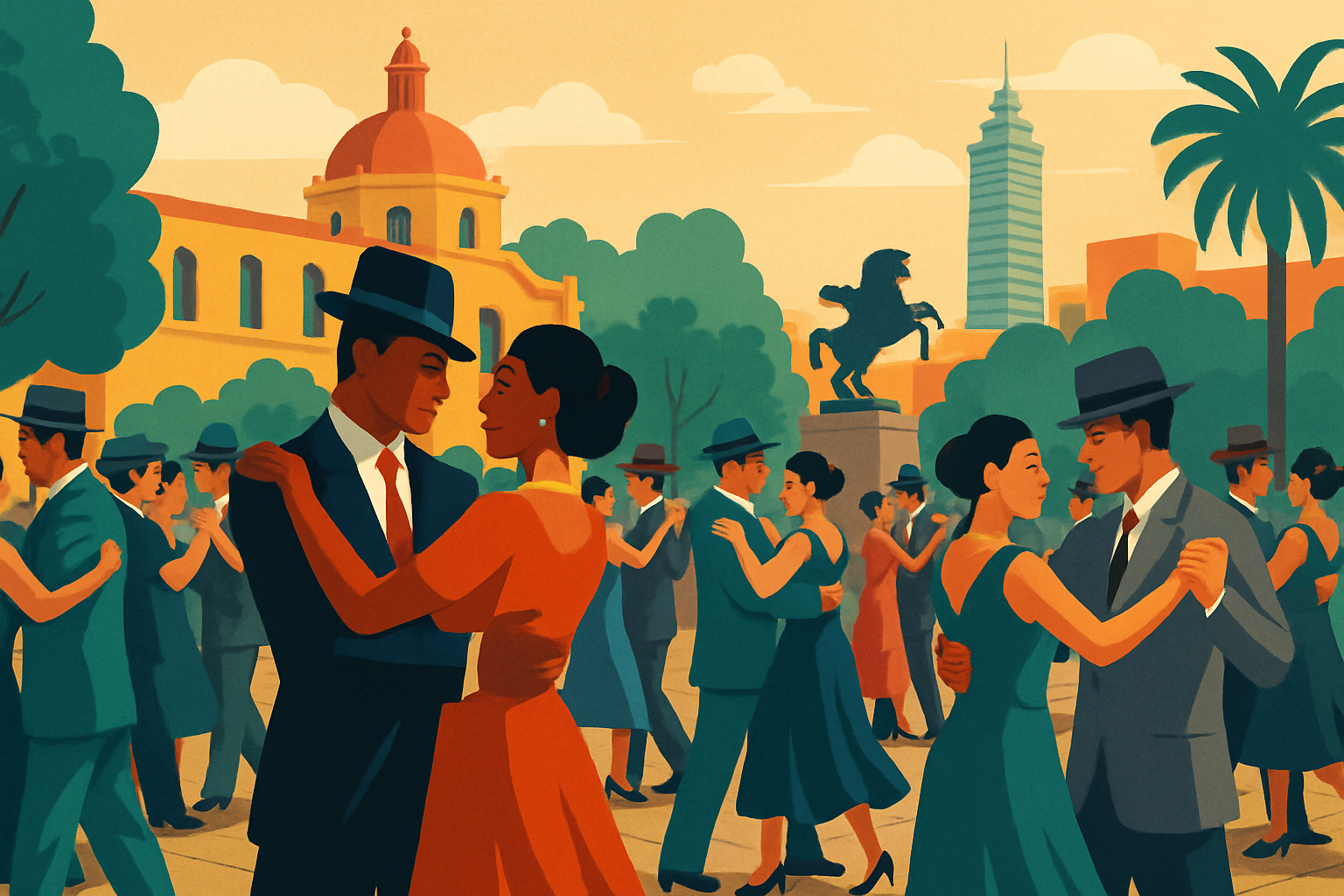
Mexico City's after-dark options don't begin and end with clubs and cocktail bars. Salón Los Ángeles at Av. Lerdo 206 in Colonia Guerrero has been running since 1937 — an 87-year-old dance hall with live salsa, danzón, and cumbia performed by musicians who've been playing the room for decades. The crowd is multigenerational and the dancing is serious; arrive before 9 p.m. on weekends or you'll be standing through the first set. In Centro Histórico, Plaza Garibaldi operates as a 24-hour mariachi stage where competing bands play for the crowd's attention and you can hire a group to perform your song at a negotiated price — typically 100–200 MXN for a single number. Both options require no specific dress code and no bottle minimum. Both also offer something most club nights in Roma can't: a window into the musical life of Mexico City that has existed here for generations and will exist for generations more.
•Salón Los Ángeles: Av. Lerdo 206, Colonia Guerrero — open since 1937, weekends from 8 PM, arrive early for a seat
•Plaza Garibaldi: Centro Histórico — 24-hour mariachi, 100–200 MXN per song, chaotic and unmissable
•Neither venue has a strict dress code or cover charge in the club sense — cash helps at both
7. Is Mexico City nightlife safe? What visitors actually need to know
Roma, Condesa, Juárez, and Hipódromo — where most of the nightlife above operates — are consistently safe by Mexico City standards for evening and late-night activity. The precautions worth taking are the same ones that apply to any major city at 3 a.m.: use Uber or Didi rather than flagging street taxis, keep your phone in a front pocket rather than on the bar, and don't walk solo down empty blocks when a 40-peso Didi gets you to the next stop in four minutes. The specific risk to avoid is what locals call an 'express kidnapping,' which almost always starts with a flagged street taxi in a high-traffic nightlife zone — this is why every reliable Mexico City guide repeats the app-ride rule for after dark without exception. The clubs themselves have security at the door; larger venues in Polanco and established spots in Roma use metal detectors. Mexico City's nightlife has a reputation in some travel writing that's a decade out of date. The reality in 2026 is a scene that draws visitors specifically to participate in it, and the precautions are simpler than the reputation implies.
8. What time do clubs actually open — and when should you arrive?
The fastest way to have a bad night is to arrive at 10 p.m., find an empty room, and conclude it isn't working. Here is the real timeline: 10–11 p.m.: cocktail bars and mezcalerías in Roma and Condesa are at their social peak — good for drinks and conversation. Midnight: clubs open main rooms; cover is often lower before 12:30 a.m. at venues with sliding pricing. 1–2 a.m.: natural density point — rooms are full, DJs are playing their main set. 3–4 a.m.: peak hours at underground spots; if you're at Fünk or Bar Oriente at 3:30 a.m., you're in the middle of what the night actually is. 5–7 a.m.: wind-down — tacos on the street, or the specific venues that run to sunrise. Fridays and Saturdays are full-capacity nights. Thursdays at Fünk and Essex tend to draw a more committed music crowd with slightly lower covers. Departamento opens on Sundays and runs an early-evening session that ends at midnight rather than dawn — a different kind of useful for travelers with early flights Monday.
•1–2 AM is when CDMX clubs reach their natural density — plan to arrive then, not at 10 PM
•Thursday nights at Fünk and Essex: smaller crowd, lower cover, more music-focused than the weekend
•Departamento on Sundays: afternoon-into-evening session, wraps by midnight — useful for a gentler wind-down