1. Why Pátzcuaro earns a full overnight detour
Pátzcuaro sits at 2,174 meters in Michoacán's central highlands, 370 km west of Mexico City, on the southern shore of Lago de Pátzcuaro — one of the highest freshwater lakes in Mexico. It doesn't appear on most short-trip itineraries, partly because nearby Morelia absorbs most Michoacán travel interest. That's a mistake worth correcting.
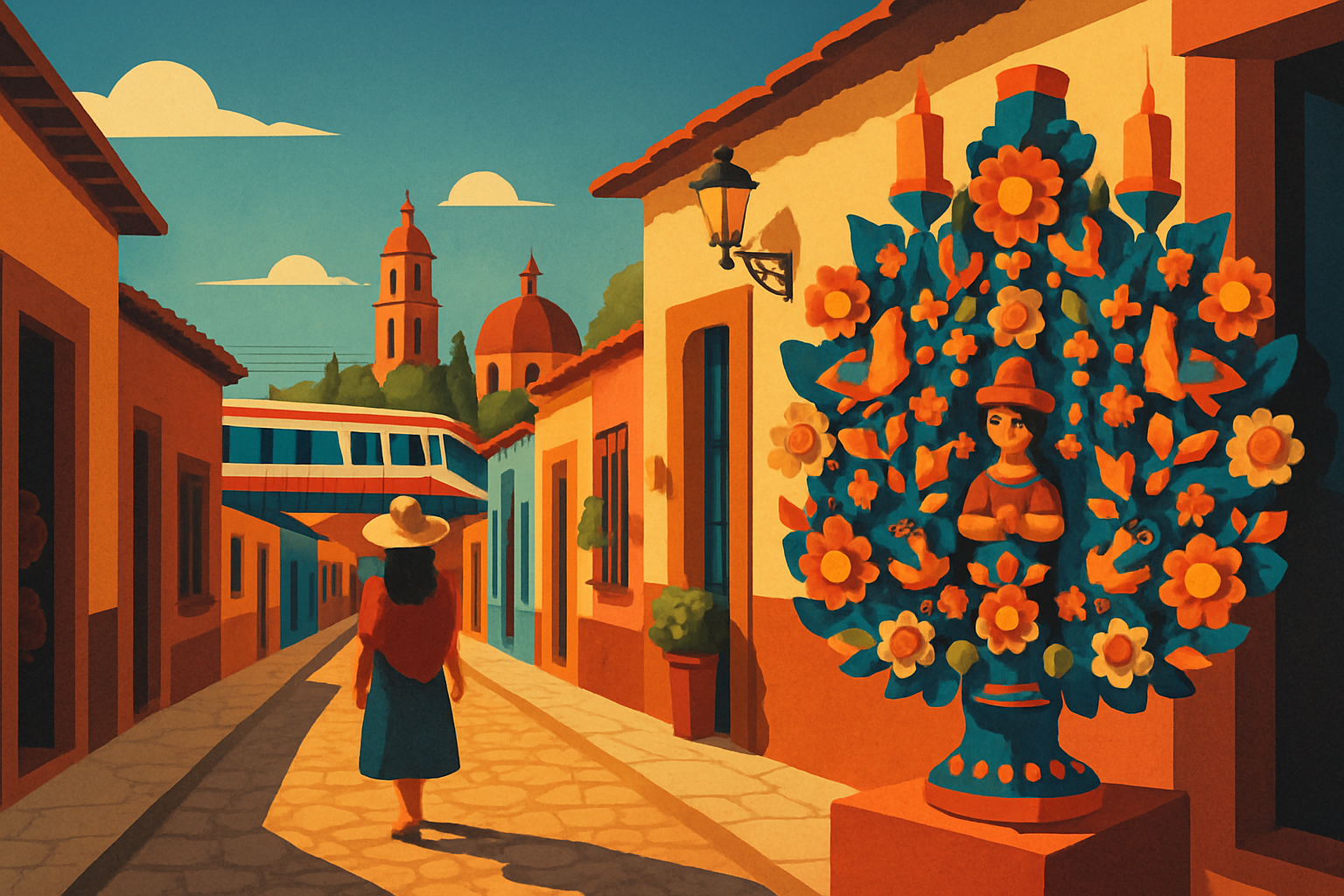
The town's historic center holds Pueblo Mágico status, Mexico's formal designation for towns that preserve exceptional historical and cultural significance. But what actually distinguishes Pátzcuaro is less a list of monuments and more the way it still functions as a living market town for the surrounding lake communities — the Purépecha fishing villages, the copper craftsmen from Santa Clara del Cobre, the ceramic workshops in Tzintzuntzan — that orbit the lake and come to sell. On any morning, the market streets fill with vendors from these communities in ways that have essentially not changed since the 16th century. The town rewards wandering without a map more than most places in Mexico.
2. Getting there from Mexico City
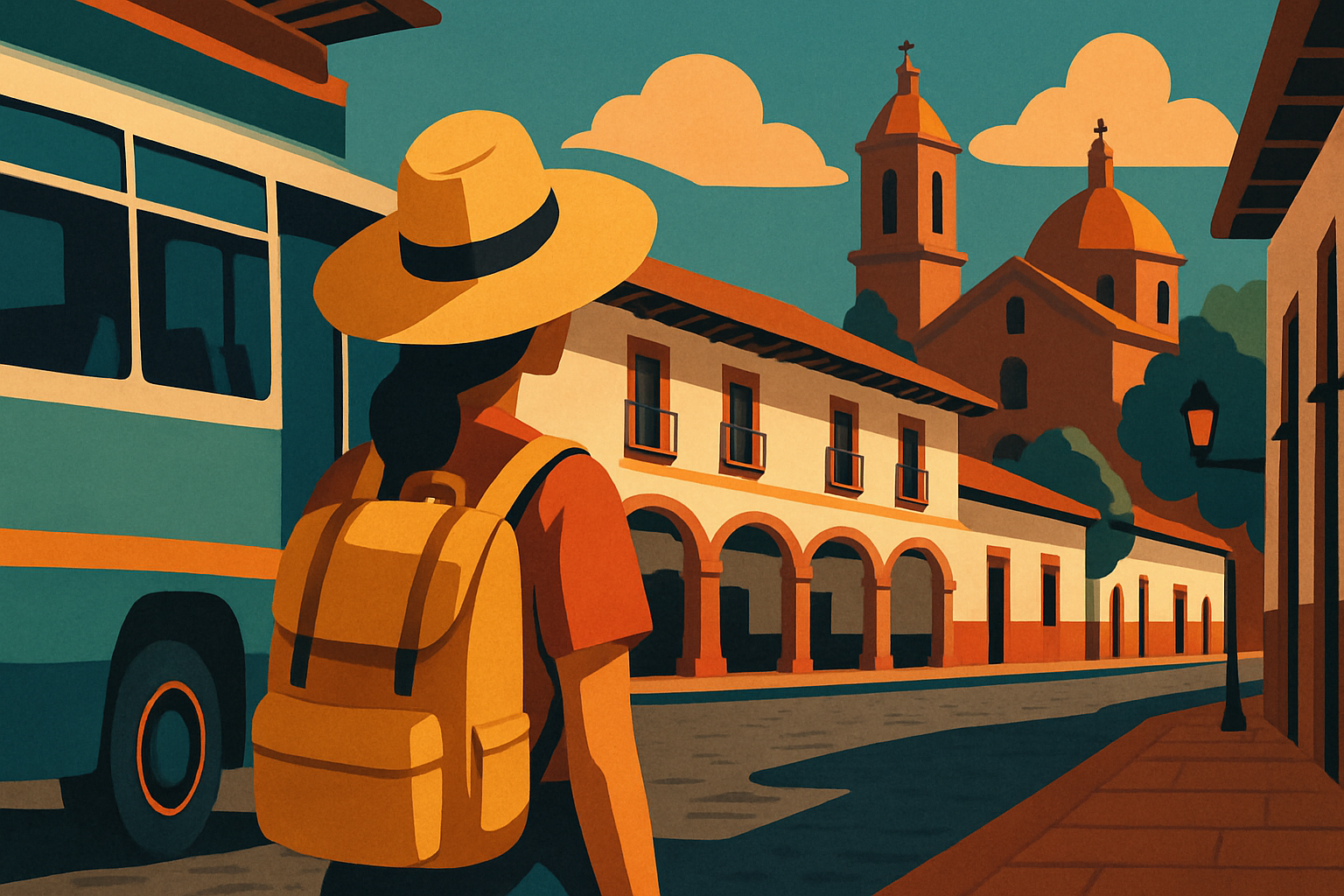
The most direct option is the bus. Primera Plus and other first-class operators run direct service from Terminal Central de Autobuses del Norte (Metro Line 5, Autobuses del Norte station) to Pátzcuaro roughly every few hours. Journey time is 5 to 5.5 hours; tickets cost 700–900 MXN each way. Buy online at primeraplus.com.mx or at the terminal windows — same-day purchase is usually fine except on Day of the Dead (November 1–2) and Semana Santa weekends, when buses sell out days ahead.
The alternative is stopping in Morelia first. Buses from Terminal Poniente (Metro Line 1, Observatorio) reach Morelia in 4 hours. From Morelia, local collective buses and taxis cover the 60 km to Pátzcuaro in about 50 minutes for 60–80 MXN. This is the better format if you have 3 or 4 days — Morelia for a night, Pátzcuaro for a night — and the two cities complement each other well, as explained in our Morelia guide. Uber and official taxis run from Pátzcuaro's small bus terminal to the historic center for around 60–80 MXN.
•Terminal del Norte (Metro Line 5, Autobuses del Norte) — not Terminal Poniente, which serves Morelia
•Primera Plus direct, 5–5.5 hours, 700–900 MXN — book online at primeraplus.com.mx
•Day of the Dead (Nov 1–2) and Semana Santa: all buses sell out days in advance — book weeks ahead
3. Plaza Vasco de Quiroga and the bishop who reorganized Michoacán
The main square, Plaza Vasco de Quiroga, is one of the largest colonial plazas in Mexico — wider and more arcaded than most, ringed on three sides by a continuous colonnade of restaurants, hotels, and craft shops under tile-roofed porticos. In the center stands a stone statue of the man who gave the plaza its name.
Vasco de Quiroga — known throughout Michoacán as Tata Vasco (Father Vasco) — arrived in New Spain as a magistrate in 1530 and was appointed the first Bishop of Michoacán in 1538. Inspired directly by Thomas More's Utopia, Quiroga reorganized the Purépecha communities around the lake into a federated system of specialized production: each town would master one craft, trade it with the others, and collectively sustain the region. He funded the training himself, built hospitals and schools, and the assignments stuck.
Five hundred years later, the craft assignments are still operational. Santa Clara del Cobre (17 km south) produces copper. Quiroga (18 km north) makes lacquerware and painted wood. Tzintzuntzan makes ceramics. Paracho, 60 km north, makes classical guitars — more per capita than anywhere on earth. The bishop's social experiment is the reason every market stall in Pátzcuaro has a coherent story behind what it sells.
The Basílica de Nuestra Señora de la Salud sits on the hill above the plaza, a 10-minute walk up from the arcades. Construction began in the 16th century and proceeded in stages over 200 years. The interior holds the original image of the Virgin of Health that Vasco de Quiroga brought from Spain, still drawing pilgrims from across Michoacán. The view from the basilica steps — town rooftops, then the lake, then the mountains — is the best orientation point for first-time visitors.
4. Janitzio Island: the hollow statue and how to get there
Getting to Janitzio requires a motorized lancha (flat-bottomed passenger boat) from Muelle San Pedrito, a pier about 3 km from the main plaza, reachable by taxi or combi for 30–40 MXN. Boats run continuously from around 9am to 6pm, with reduced service after dark. The crossing takes 20 minutes and costs 75–100 MXN round trip; departures are staggered by the boatmen rather than fixed — you arrive at the dock and board when the boat fills.
The island is a volcanic hill rising steeply from the lake, its slopes covered by a single fishing village of about 2,000 residents. The most prominent feature is visible from the boat: a 40-meter statue of José María Morelos y Pavón, the mestizo priest who became one of Mexico's most effective independence commanders, fist raised against the sky. The statue is hollow. A staircase winds up through the interior past murals painted by Ramón Alva de la Canal in the 1930s, depicting scenes from Morelos' life and his eventual capture and execution in 1815. The views from the lookout at the top extend across the entire lake to the surrounding mountains.
During Day of the Dead (November 1–2), the cemetery at the island's summit is ringed with marigold altars and tens of thousands of candles from the night of November 1 through dawn. Purépecha fishermen cross the dark lake in lanchas carrying torches and the traditional butterfly-shaped fishing nets — a ceremony that is genuinely ancient rather than staged. Arriving before 9pm secures a good position along the cemetery walls; by midnight the island holds several thousand visitors alongside the local families who are there to remember their dead.
•Muelle San Pedrito dock, 3 km from the plaza — taxi or combi for 30–40 MXN
•Boats run roughly 9am–6pm; 75–100 MXN round trip, 20-minute crossing
•The hollow Morelos statue is climbable — interior murals by Ramón Alva de la Canal, 1930s
5. The craft village circuit: Tzintzuntzan, Santa Clara del Cobre, Quiroga
Three towns within 20 km of Pátzcuaro are worth a half-day trip, most easily reached by taxi or combi from the main market street.
Tzintzuntzan (18 km north, 20 minutes) was the capital of the Purépecha empire before Spanish conquest — the civilization in western Mexico that repelled every Aztec military campaign sent against it. The Zona Arqueológica preserves five yácatas: stepped pyramid platforms on a wide ceremonial terrace overlooking the lake, partially excavated and free to walk. Adjacent to the ruins, the 16th-century Franciscan monastery complex contains olive trees reportedly planted by Vasco de Quiroga. The town's craft is ceramics — plates, bowls, and small figures with the fish motifs that appear throughout pre-Hispanic Michoacán art.
Santa Clara del Cobre (17 km south, 20 minutes) is a working copper town where the sound of hammers on metal comes from open workshops on nearly every block. Every item for sale — pots, plates, cups, sculptures — is hammered by hand from sheets of copper. The Museo del Cobre on the main plaza documents the technique; admission is minimal. Pieces here are consistently cheaper than identical items sold in craft markets in Mexico City or Oaxaca.
To get between villages, ask your hotel to call a taxi or find a combi colectivo on the main road. Combining Tzintzuntzan and Santa Clara in a single morning is manageable before a midday return to Pátzcuaro.
6. What to eat in Pátzcuaro
Michoacán's food tradition is distinct from the rest of Mexico, and Pátzcuaro is where you encounter several dishes nearly impossible to find elsewhere.
Corundas are Michoacán's tamales — triangular parcels of masa cooked in corn leaves (not husks like standard Mexican tamales), with no filling or a small amount of cheese or rajas, served with crema and salsa roja. The triangular shape comes from the method of folding the leaf, and the texture is denser and slightly tangier than a traditional tamal. Vendors sell them from metal trays around Plaza Vasco de Quiroga from early morning.
Uchepos are fresh corn tamales — sweeter and lighter than corundas, made with tender young corn rather than dried masa. They're a breakfast food and disappear by mid-morning; the best ones come from the women selling at the covered market on Calle Iturbe, a block east of the main plaza.
Pescado blanco (white fish) is the traditional lake fish of Pátzcuaro — a delicate freshwater species once nearly lost to overfishing and now partially protected. Several restaurants on the arcaded north side of Plaza Vasco de Quiroga serve it grilled or in tacos. El Primer Piso, upstairs on the plaza, has a terrace view of the square and a reliable version with capers and lemon butter.
•Corundas — triangular masa tamales in corn leaves, sold from trays at the plaza from early morning
•Uchepos — fresh corn tamales, sweet and light, gone by mid-morning at the Calle Iturbe market
•Pescado blanco — traditional lake white fish at El Primer Piso on Plaza Vasco de Quiroga
7. Day trip or overnight? What's the right format?
A day trip is technically possible — take the 7am bus, arrive by noon, see the plaza and Janitzio, take the 6pm return — but it is tight and leaves out most of what makes Pátzcuaro worth going to. The craft village circuit, the early-morning market, and the experience of seeing the lake at different times of day all require time you don't have in 6 hours on the ground.
One overnight is the right format. Arrive early afternoon, take the late boat to Janitzio (last departure around 5:30pm), eat at a plaza restaurant, sleep in town. The next morning: the covered market before 9am, a combi to Santa Clara del Cobre or Tzintzuntzan, and the bus back to Mexico City by mid-afternoon.
Hotels on and around the plaza range from 500 MXN for a basic posada to 2,500 MXN for a restored colonial room with views. Hotel Posada de Don Vasco, a 1940s property a few minutes from the center, has grounds, a heated pool, and one of the more reliable kitchens in town. If you have three or four days, pair Pátzcuaro with Morelia — 60 km apart, entirely complementary in character.
8. Is Pátzcuaro safe? Altitude? Best time to go?
Is Pátzcuaro safe? The town center and lake area are consistently regarded as safe for visitors, and the local economy depends substantially on domestic tourism. The U.S. State Department advisory for Michoacán is Level 3 (reconsider travel) as a blanket state designation, but this reflects primarily rural highway risk in specific zones nowhere near Pátzcuaro's tourist corridor. Most visitors — including large numbers of Mexican families — travel here without incident. Use Uber or official taxis between cities and avoid driving rural Michoacán highways after dark.
What altitude is Pátzcuaro? The town sits at 2,174 meters — slightly lower than Mexico City (2,240 m). Visitors from CDMX will notice no altitude adjustment. Evenings are genuinely cold year-round due to altitude and the lake humidity; bring a jacket regardless of the month.
When is the best time to visit? November 1–2 for Day of the Dead is the famous answer, but Pátzcuaro is worth visiting in any season. October through April is dry season with clearest lake views. June through September brings afternoon rain that clears quickly and leaves the streets empty and the light excellent for photography. Avoid Semana Santa and major long weekends when accommodation prices triple and the town fills with domestic tourists.
•Altitude: 2,174 m — similar to Mexico City, no adjustment needed, but evenings are cold year-round
•Day of the Dead (Nov 1–2): book 3–4 months ahead; arrive Janitzio before 9pm for the best position
•Dry season (Oct–Apr) for clearest lake views; rainy season (Jun–Sep) for solitude and green hills