1. Why Cacaxtla is Mexico's most underrated archaeological site
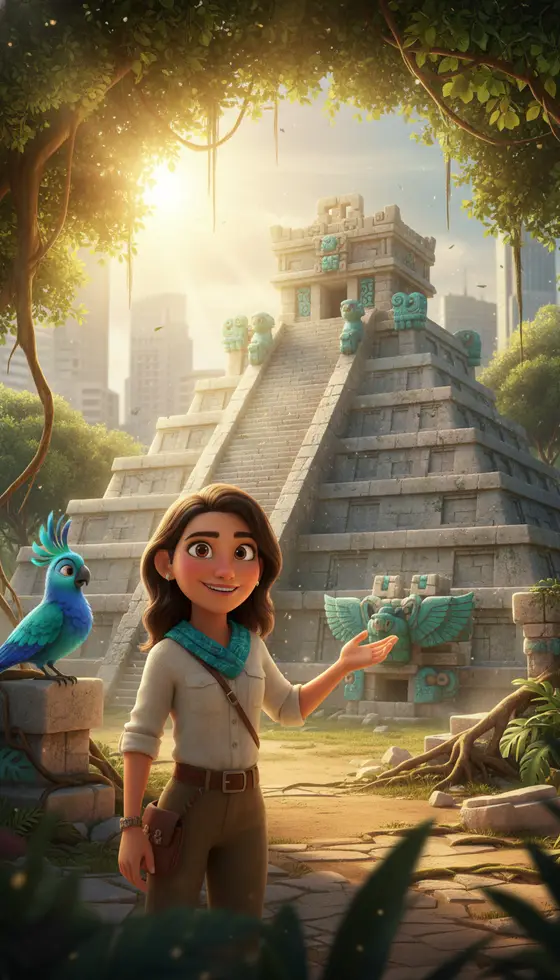
Cacaxtla doesn't appear on most Mexico City itineraries, and that's an oversight on the same level as skipping the Museo Nacional de Antropología because you've already seen a museum. The site protects some of Mesoamerica's most extensive and best-preserved murals — painted in Maya pictorial style, in vivid reds, blues, yellows, and greens, depicting jaguars, battle scenes, aquatic figures, and astronomical symbols that still read with startling clarity after thirteen centuries. While Teotihuacan draws millions of visitors per year, Cacaxtla receives a fraction of that traffic. The murals are sheltered inside a massive modern metal roof structure, which means they're protected from rain and UV degradation in a way that open-air pyramids simply aren't — and it also means you can visit on overcast or rainy June mornings and have exactly the same experience as a clear day. The site sits on a hilltop in the municipality of Nativitas, Tlaxcala, at an altitude that gives wide views across the Tlaxcala-Puebla valley — the same valley that Hernán Cortés crossed in 1519 on his way to Tenochtitlan, marching through this exact region with his Tlaxcalan allies.
2. The people who built Cacaxtla — Mayan traders in central Mexico
Despite the name, the Olmeca-Xicallanca weren't the ancient Olmec civilization of the Gulf Coast. They were Mayan-speaking traders who migrated into central Mexico around 400 CE, likely from the Tabasco-Campeche region, and moved into the power vacuum left by Teotihuacan's collapse around 650 CE. At their peak — roughly 650 to 900 CE — they controlled trade routes linking the Gulf Coast, the Oaxacan highlands, and central Mexico, and Cacaxtla was their capital. Their cultural identity was hybrid by design: they spoke a Mayan language, painted in Maya pictorial style, but lived in the Tlaxcala highlands and absorbed influences from Teotihuacan-era culture, Xochicalco, Oaxaca's Mitla, and the Gulf city of El Tajín. That blending is exactly what makes the murals so unusual — you're looking at art that draws from half a dozen cultural traditions simultaneously, produced by a people who sat at the crossroads of ancient Mexico's trade networks and deliberately coded that cosmopolitan identity into their palace walls.
3. The Battle Mural — what you're looking at and why it matters
The Battle Mural is the one that stops visitors cold. Running roughly 22 meters along the wall of the Gran Basamento — the main palace platform at the heart of the site — it depicts a decisive military victory painted around 650-700 CE. On one side, warriors wearing jaguar skins are shown in vivid detail: their costumes, their obsidian-tipped weapons, their body paint. On the other side, enemy warriors dressed in eagle regalia are shown defeated — stripped, wounded, some mid-collapse. The jaguar warrior iconography connects directly to Mayan military tradition from the Yucatán; the eagle warrior tradition anticipates what would centuries later become central to Aztec military culture. Whether this depicts a real battle — possibly Cacaxtla's destruction of the Cholula city-state around 650 CE, which is when Cacaxtla rose to regional dominance — or is a cosmic allegory about the forces of earth and sky is still debated. Either way, it's among the most dynamically painted surviving murals in the pre-Columbian world. Perhaps the most remarkable fact: the Battle Mural was entirely buried and unknown to modern archaeology until a local farmer accidentally excavated part of it in 1975.
4. The Red Temple and Temple of Venus murals
The Battle Mural is the showstopper, but two other painted areas at Cacaxtla reward close attention. The Red Temple murals, on an older section of the palace compound, show a Man-Jaguar and a Woman-Serpent figure flanking a cacao tree — symbols of fertility, rain, and the underworld rendered in warm red ochre with blue-green accents. These are older than the Battle Mural, likely painted in the late 600s CE, and they show stronger Teotihuacan stylistic influence in the rigid frontal postures of the figures. The Temple of Venus murals feature two figures — one male, one female — both decorated with astronomical symbols including the Venus glyph, the morning and evening star, alongside aquatic imagery of fish, shells, and water scrolls. Venus tracking was central to Mayan astronomical science, used to time agricultural cycles and military campaigns. Its presence at a site this far into central Mexico is one reason archaeologists believe the Olmeca-Xicallanca maintained active contact with Mayan cities in the Yucatán throughout their occupation — trading ideas as well as goods.
5. Xochitécatl — the second site included on your ticket
Three kilometers from Cacaxtla, on an adjacent hilltop visible from the Gran Basamento, Xochitécatl is a contemporaneous but architecturally distinct site, and your Cacaxtla admission ticket gets you in. Xochitécatl is in some respects older than Cacaxtla: the Pyramid of the Flowers there is a circular stepped structure that dates to the Pre-Classic period, making it one of the earliest pyramid forms in central Mexico. The site is associated primarily with feminine cosmology — female figurines have been found in large quantities here, connected to fertility rituals — and a structure called the Pyramid of the Volcanoes faces directly toward Iztaccíhuatl and Popocatépetl, whose silhouettes dominate the eastern horizon from the summit. Most visitors give Cacaxtla two hours and then take a taxi the 3km to Xochitécatl for another hour. If you're arriving by collectivo, ask the driver whether the route passes Xochitécatl — some services do. Budget around M$60-80 for a taxi between the two sites if needed.
6. How to get from Mexico City to Cacaxtla by public bus
The most practical independent route starts at TAPO — the Terminal de Autobuses de Pasajeros de Oriente — reachable on Metro Line 1 to San Lázaro station. From TAPO's ground level, buy a ticket with Autotransportes Tlaxcala or ATAH to the city of Tlaxcala. Buses run roughly every 20-30 minutes from early morning, the journey takes about 90 minutes, and the cost is around $2-3 USD. Once in Tlaxcala, take a taxi or walk about ten minutes to the collectivo departure point on Avenida 20 de Noviembre near Avenida Lardizábal, where shared minibuses to San Miguel del Milagro run regularly through the morning. The collectivo drops you approximately 500 meters from the Cacaxtla entrance. The walk uphill takes about 8 minutes on a clear path. To return, the same San Miguel del Milagro collectivo passes the drop-off at intervals throughout the day — or taxi back to Tlaxcala city, where you can spend an hour walking through the colonial center and its 16th-century cathedral before catching the direct bus back to TAPO.
•Metro Line 1 to San Lázaro → TAPO (5-minute walk) → bus to Tlaxcala, departs every 20-30 min
•Tlaxcala bus terminal → Av. 20 de Noviembre y Lardizábal → San Miguel del Milagro collectivo
•From the collectivo drop-off, walk 500m uphill to the site entrance — about 8 minutes
7. When to go, what to bring, and practical logistics
June is mid-rainy season in central Mexico, which typically means a clear window from 9 a.m. to 1 p.m. before afternoon storms build. Since the main murals at Cacaxtla are sheltered under a roof structure, rain doesn't prevent a good visit — but the walk from the collectivo drop-off and the open-air Xochitécatl portion are exposed, so bring a light rain jacket or packable poncho. Wear closed shoes with grip: both sites involve uneven stone paths and hilltop terrain. The altitude at Cacaxtla is around 2,150 meters, similar to Mexico City, so anyone already acclimatized to CDMX will have no altitude issues. Bring water and snacks from Mexico City — the vendor options near the site are limited to a small cafeteria at the entrance. The site is open daily from 9:00 to 17:30. Your M$80 admission covers both Cacaxtla and Xochitécatl. Credit cards are not reliably accepted; bring cash.
•Arrive before 11 a.m. to beat afternoon rain and midday school groups
•Closed shoes only — stone paths and gravel at both Cacaxtla and Xochitécatl
•Bring cash (M$80 admission), water, and snacks — the on-site cafeteria is limited
8. Is Cacaxtla worth the trip from Mexico City?
If you've already visited Teotihuacan and want pre-Columbian art that is both less crowded and more visually specific than stone pyramids, yes — Cacaxtla is unambiguously worth the trip. The murals are the thing: you're looking at painted people, not carved stone. You can see the jaguar warriors' faces, the posture of their bodies mid-battle, the color of their headdresses. It's one of the only sites in Mexico where the visual culture of an ancient civilization survived intact — not through a ceramic or a calendar but through the actual paintings on their palace walls. Pair it with Tlaxcala's colonial center on the same day and you have a full day that covers 1,400 years of history in a region most CDMX visitors never reach.