1. The monastery that took 20 years to build
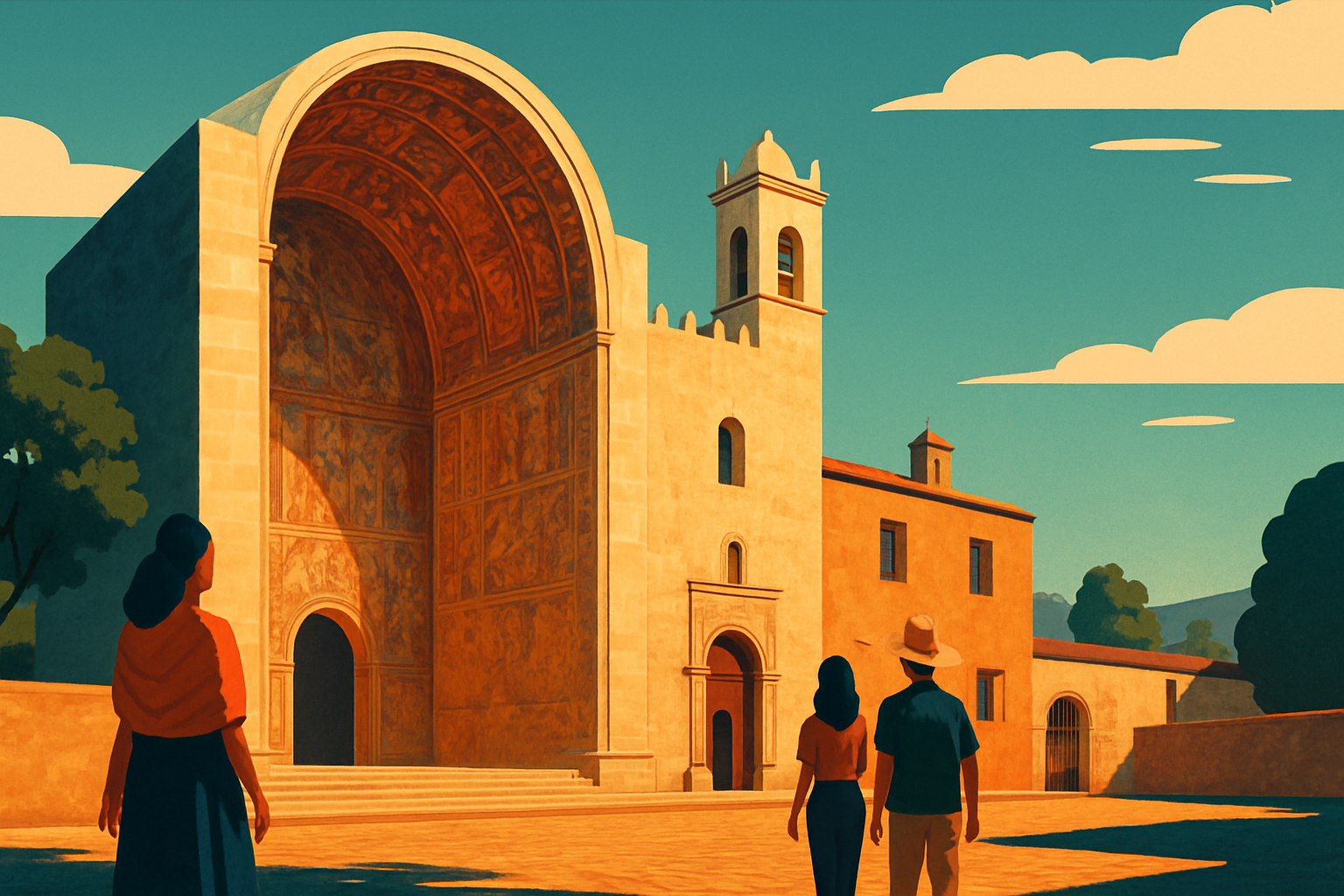
Actopan's Ex-Convento de San Nicolás de Tolentino is one of the finest surviving examples of 16th-century Augustinian architecture in Mexico — and also one of the least visited by international travelers. Construction ran from roughly 1550 to 1570 under the direction of Augustinian friars tasked with evangelizing the Otomi populations of Hidalgo. The scale of what they built was not modest.
The church nave is sixteen times the height of a person. The facade is carved in the Renaissance style — fluted columns, stone-carved friezes, medallions, and deep sunken panels in the cantera stone — with Mannerist ornamental detail layered over a fundamentally Romanesque structure. The main entrance portal is complex enough to study for ten minutes without running out of carving to look at.
But the most extraordinary space is the capilla abierta — the open chapel — a massive outdoor preaching hall with a barrel vault 17 meters high, built to accommodate congregations too large for the interior church. The vault and walls are covered in original frescoes: scenes from Genesis, images of the Final Judgment, figures of saints, and imagery that reflects the religious syncretism of the conversion period — European Christian scenes rendered in a visual vocabulary inflected by the Otomi artists who painted them. Spending time in this chapel, looking up at 470-year-old paint in a structure built by a newly conquered people for their conquerors' religion, is genuinely affecting.
2. The convent interiors and the frescoed stairwell
The complex extends well beyond the church and open chapel. The convent building itself — living quarters, classrooms, refectory, and cells of the Augustinian community — is now converted into a museo de sitio (site museum) whose corridors and vaulted rooms hold additional fresco cycles painted directly onto the walls.
The stairwell cube is the standout: four levels of mural painting depicting generals and intellectuals of the Augustinian order — friars seated in attitudes of reading and study, rendered with enough individuality to suggest they were based on real people. The sala de profundis (the chapter house where friars gathered for readings) has its own cycle. The accumulation of painted surfaces across the complex is quietly overwhelming once you notice how much of it there is — this is not one mural in a side room, it is a comprehensive program covering ceilings, stairwells, vaults, and corridors.
The former stables at the edge of the complex have been converted into a centro cultural and occasionally host temporary exhibitions. Entry to the full complex runs around 50 pesos. Guides are sometimes available at the entrance; if one is there, the 150–250-peso fee is worth it for the iconographic walkthrough of what the frescoes actually depict.
3. Getting from Mexico City to Actopan
The terminal you want is Terminal Central del Norte — usually just called Terminal Norte — on the northern edge of Mexico City. Take Metro Line 5 (the yellow line) to Autobuses del Norte station, exit at street level, and follow signs into the terminal.
Inside, look for counters for Ovnibus or Grupo Senda — both serve the Actopan route. Buses depart roughly every 30 minutes starting around 7 AM. The trip takes about 2 hours via Highway 85D, running north through Tlalnepantla before continuing toward Actopan. Tickets cost 180–250 pesos one-way; no booking required.
Actopan sits 35 kilometers west of Pachuca, the Hidalgo state capital. If you have already visited Pachuca, a combined Pachuca–Actopan day is feasible: arrive in Pachuca first for the Reloj Monumental and the famous pastes (Cornish-derived pasties brought by 19th-century British mining engineers), then catch a local bus or Uber for the 35-minute drive to Actopan for the afternoon. The two towns feel temperamentally distinct enough that the contrast adds rather than creates redundancy — Pachuca is a working city, Actopan is a market town. See the Pachuca day trip guide for what to do on that side.
4. Barbacoa in Hidalgo: what makes it different
Barbacoa in Mexico City most commonly means beef or lamb cooked in large commercial ovens. The Hidalgo version differs in almost every respect: it is specifically borrego (sheep), slow-cooked in a sealed pit lined with pencas de maguey (agave leaves) over wood-burning coals, and the resulting meat has a gamey, smoky, gelatinous depth that the oven version does not replicate.
The cooking process produces two things simultaneously: the meat and consomé — the cooking juices and rendered fat that drip into a clay pot placed below the meat in the pit, becoming a rich, deeply savory broth. A proper order arrives as tacos of shredded borrego alongside a bowl of consomé, fresh tortillas, and a selection of salsas. Eating them at a market stall in Actopan on a Wednesday, with the surrounding crowd doing the same, is meaningfully different from the Mexico City barbacoa experience.
For the traditional version, Barbacoa Don Chava García inside the Mercado 8 de Julio is one of the most consistently recommended spots. Barbacoa Navarrete, Barbacoa Los 3 Reyes, and Barbacoa Santiago are also well-regarded for sit-down service outside the market itself.
•Order the consomé alongside your tacos — the pit broth is as important as the meat
•Barbacoa Don Chava García operates inside Mercado 8 de Julio for the full market experience
•Ask for the meat mixed (maciza y panza) — a combination of lean cuts and stomach that gives you the range of textures
5. The Wednesday tianguis: a 500-year-old market
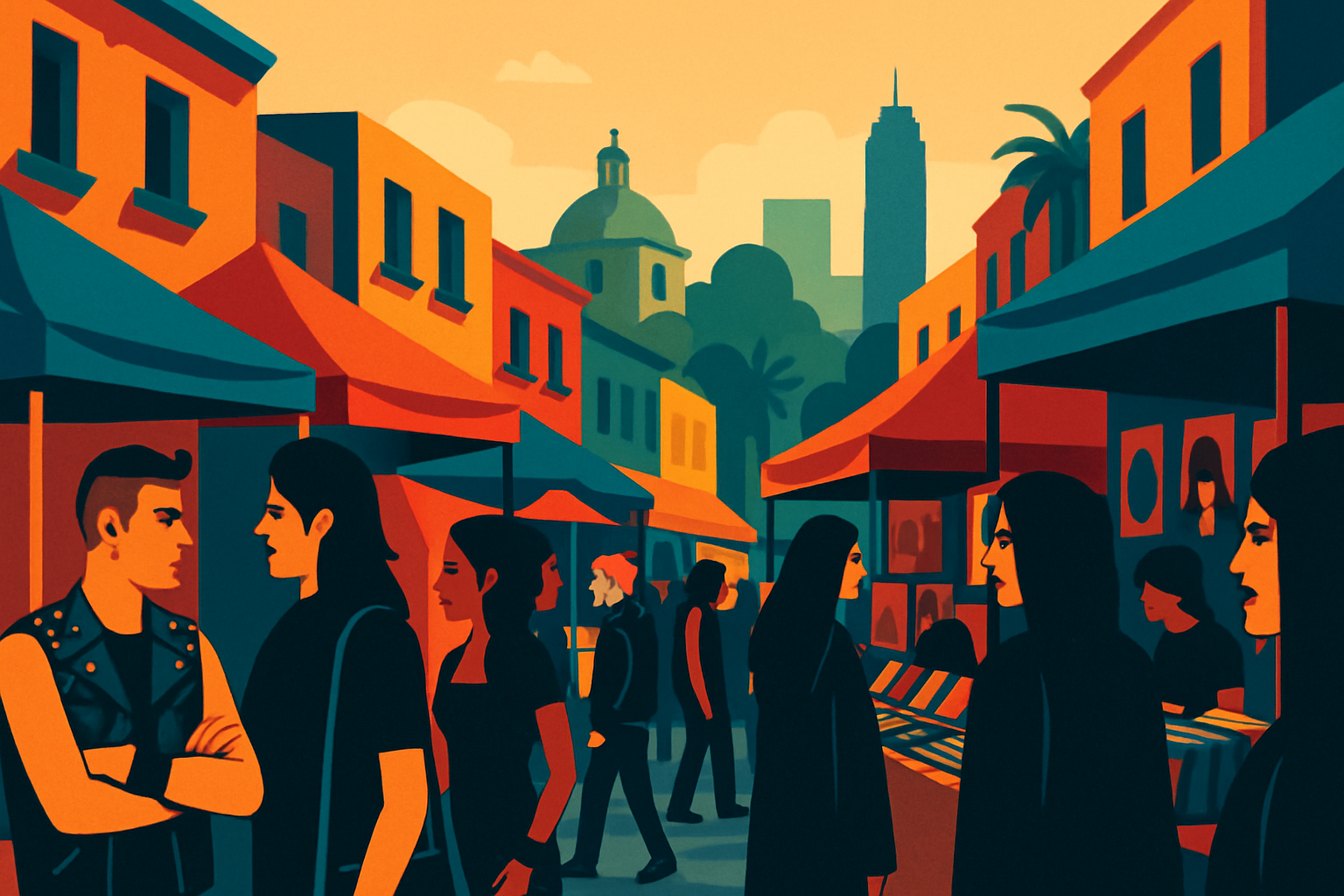
The tianguis — the weekly open-air market — has been held in Actopan on Wednesdays for more than 500 years, a continuity that predates the Ex-Convento by decades. Pre-Hispanic Otomi communities in this region organized exchange around rotating weekly markets, and Actopan's Wednesday market is one of the few that survived colonization without interruption.
What you find on a Wednesday morning: vendors with fresh produce from the Hidalgo valleys, dried chiles and herbs piled in burlap sacks, live poultry, maguey pulque sold from plastic containers, and prepared food stalls making gorditas de cuajada (cheese-stuffed corn cakes fried on a comal). It is a working agricultural market, not a craft fair — the energy is local and purposeful rather than oriented toward visitors.
The Pabellón Gastronómico Actopan opens at noon on Wednesdays and serves as a dedicated food pavilion where multiple stalls offer regional preparations in a more organized setting. If you want to graze through several dishes rather than commit to one restaurant, the Pabellón is the right move for midday. The combination of market morning and Pabellón at noon is the most complete way to eat in Actopan.
6. Is Actopan worth a day trip? What about combining with Pachuca?
Actopan rewards visitors who are specifically interested in colonial religious architecture, regional Mexican food, or authentic market culture. If you are looking for a visually dramatic day trip — sweeping landscapes, well-photographed ruins — there are more cinematic options from Mexico City: Taxco, Cholula, Valle de Bravo. Actopan is for travelers who want to stand inside a 16th-century frescoed chapel and eat pit-cooked sheep at a Wednesday market.
Combining with Pachuca is the most natural expansion. Pachuca is on the same highway, 35 kilometers east, and the local bus between the two towns costs almost nothing and takes under an hour. It makes the journey from Mexico City more efficient and gives you two very different Hidalgo experiences in one day. A practical schedule: Terminal Norte at 7 AM, Pachuca by 9 AM for two hours in the centro, bus to Actopan by noon for the tianguis and barbacoa, Ex-Convento at 2 PM, and the return bus from Actopan to Mexico City before 6 PM.
7. Hours, costs, and what to bring
Ex-Convento de San Nicolás de Tolentino: Open daily, typically 9 AM–5 PM (hours can vary on Mondays; call ahead or plan for Tuesday–Sunday). Admission around 50 pesos for the full complex. Guides available at the entrance for 150–250 pesos for a 45-minute walkthrough.
Getting there: Terminal Central del Norte → Ovnibus or Grupo Senda → Actopan (2 hrs, 180–250 pesos one-way). Return buses run through early evening.
Getting around: The centro is compact and walkable. The Ex-Convento, zocalo, Mercado 8 de Julio, and the Wednesday tianguis grounds are all within a 10-minute walk of each other. Uber has variable coverage in smaller Hidalgo towns — bring cash.
What to bring: Cash for the market, entry fees, and most barbacoa stalls. Comfortable walking shoes. A light layer for the convent interior, which holds cold.
•Admission: ~50 pesos for the Ex-Convento; church free
•Wednesday tianguis: morning; Pabellón Gastronómico opens at noon
•Cash-first town — ATMs exist on the zocalo but market vendors don't take cards
8. Is Actopan safe to visit?
Actopan is a mid-sized market town in Hidalgo — not a tourist resort, and not a city with documented security concerns for visitors. Hidalgo is one of the more stable states in central Mexico, and Actopan's center is active and well-populated during market hours.
The usual day-trip practices apply: use Terminal Norte and the toll highway (Highway 85D) for transport both ways, secure valuables at the tianguis as you would at any large market, and use Uber or a metered taxi rather than flagging random vehicles. Wednesday market days bring energy and crowds, not problems. There is nothing about Actopan that requires unusual caution relative to other central Mexico day trips — it is a town that Mexico City residents visit routinely, which is the relevant baseline.