TourMe
Cemitas in Mexico City: A Complete Guide to Finding the Real Thing
Mexico City • Poblano Food • Sandwiches

Cemitas in Mexico City: A Complete Guide to Finding the Real Thing

A cemita looks like a torta but tastes nothing like one — the sesame-seeded bun, the melted quesillo, and above all the papalo herb make it a completely different sandwich tradition imported from Puebla. Mexico City has had cemita vendors since Poblano migrants arrived in the 20th century, and the best ones are still in the same neighborhoods where those migrants first settled.

🌮 Short stories • Collectible cards • Learn as you travel

Published

Share:Post

Quick tips before you go

Never accept cilantro as papalo
Some vendors substitute cilantro when they're out of papalo. They're not the same herb — papalo is resinous and pungent, cilantro is bright and citrusy. A cemita without papalo is just a filled bun. Ask specifically for papalo before you order.
The bun is the tell
A real cemita bun is round, eggy, slightly sweet, and blanketed in white sesame seeds. If the bread looks like a telera or a bolillo, what you're being sold is a torta. The bun is the entire diagnosis.
La Merced is the address
The highest concentration of authentic Poblano cemita vendors in Mexico City is around Mercado La Merced — specifically the second-floor food section and the stands on Calle Carretones. Metro Line 1, Merced station, 10 a.m. to 2 p.m.

The Mexico City cemita guide

1. What a cemita actually is — and why it's not a torta

Cemitas and tortas share the concept of a filled bread roll, but they diverge at the bread itself and at a single fresh herb that separates one from the other. A cemita's bun — which lends its name to the entire sandwich — is round, slightly sweet, eggy in texture, and topped with a blanket of white sesame seeds. Where a telera (the torta's standard bread) is neutral in flavor and designed to fade into the background, the cemita bun contributes its own sweetness and richness to every bite. The standard assembly works like this: the bun is split and warmed; one half gets a smear of chipotle en adobo; the filling — most often a thin milanesa cutlet — goes in warm; quesillo, Oaxacan string cheese, is pulled into strands and pressed against the hot meat so it begins to melt; avocado is sliced in; and a small handful of papalo goes on last, raw, so it perfumes the entire sandwich from above. That final element is what most torta traditions in Mexico City skip entirely, and it is what turns a filled bun into a cemita.

2. Pueblan origins: bread from a colonial market city

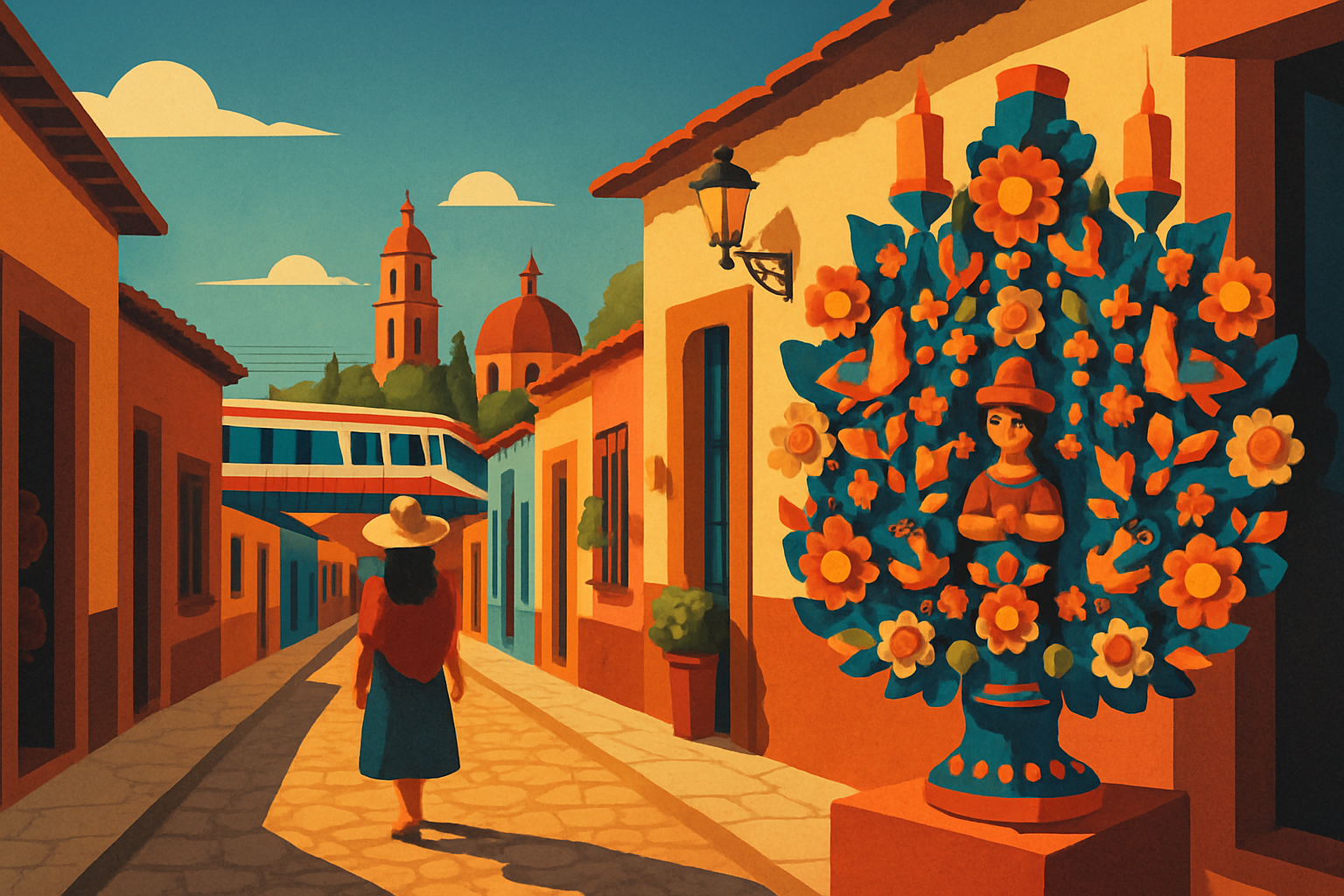
Cemitas originate in Puebla de Zaragoza, roughly two hours southeast of Mexico City. Puebla was one of the most important commercial cities of colonial New Spain — a hub between the port of Veracruz and the capital, built on textile workers, ceramics artisans, and a powerful clergy. The city developed a strong market food culture, and bakers made round sesame-seeded buns for sale alongside protein stalls in covered markets like Mercado El Carmen, the main colonial-era covered market in Puebla's historic center. The cemita sandwich evolved naturally from these conditions: vendors took the bun, the chipotle en adobo, quesillo traded by Oaxacan merchants passing through, and the papalo herb that grew wild in the surrounding milpas, and assembled them with fried or slow-cooked meat. By the early 20th century cemitas were a formal street food category in Puebla with their own dedicated vendors and standardized format. The version that traveled to Mexico City carries that market-city DNA — it is food built for a fast lunch between shifts, designed to hold together and deliver complex flavor without a sit-down kitchen.

Keep exploring

Discover more about Mexico in minutes

Get short, interactive stories that make each place easier to remember while you travel.

3. The papalo question: Mexico's most divisive herb

Papalo (Porophyllum ruderale) is a leafy herb native to central Mexico that grows wild in semi-arid fields and milpas. It tastes like nothing else in Mexican cooking — cilantro in leaf shape and chopped-green quality, but layered with arugula bitterness, a resinous piney note, and something slightly medicinal that registers as intensity rather than flavor. In a cemita, papalo is placed raw on top of the warm filling immediately before eating. It should never be cooked, wilted, or substituted. First-time eaters often find it too strong. Regular cemita eaters find it non-negotiable. The herb has no neutral relationship: either it ruins the sandwich for you or it becomes the thing you miss most when eating a cemita without it. Vendors in Mexico City sometimes substitute cilantro for papalo when supplies run out or when they assume their customers won't notice. This is the fastest way to identify an inauthentic cemita. Cilantro is bright and citrusy. Papalo is dark and resinous. They are not interchangeable and they do not perform the same function in the sandwich.

4. The proteins: how to choose your cemita filling

The protein is listed first on any cemita board. The choices are specific to the Poblano tradition:

Milanesa de res or pollo: thin breaded fried cutlet — beef or chicken — the most common order. Good milanesa arrives hot and unsoggy. If it has been sitting, the breading softens and the textural point collapses.
Pierna adobada: slow-cooked pork leg marinated in adobo chile paste, tender and slightly smoky. Takes longer to prepare but rewards the wait. A better cemita than milanesa when the kitchen is managing its timing well.
Carnitas: Michoacán-style braised and fried pulled pork. Less traditional in a strict cemita context but common in Mexico City versions where Poblano and Chilango food cultures overlap.
Tinga: shredded chicken in a tomato-chipotle sauce, softer and saucier. Works well when the cemita is generous with quesillo, since the cheese balances the sauce.
Tasajo: thin-cut Oaxacan dried and cured beef, charcoal-grilled, with a mineral intensity that differs from every other protein on the menu. The most expensive option at most cemiiterías and worth ordering at least once.

5. How cemitas came to Mexico City — and where they settled

Mexico City absorbed large waves of internal migration throughout the 20th century as workers and entire families relocated from Puebla, Oaxaca, Veracruz, and Guerrero. Poblanos settled heavily in Tepito, La Merced, and the working-class corridors of the Venustiano Carranza and Cuauhtémoc alcaldías. They brought their food with them. Cemita vendors appeared first as market stalls inside covered markets — single-burner setups rented alongside produce and dry goods. Mercado La Merced, already the largest wholesale market in the city, became a natural gathering point. By the 1970s and 1980s, dedicated cemiiterías had opened as permanent storefronts in the blocks surrounding the market and in Tepito's commercial corridors. Today the best cemitas in Mexico City are concentrated within roughly two kilometers of the Zócalo, in exactly the neighborhoods where Poblano migrants built their first communities in the capital.

6. Where to find cemitas in Mexico City

The geography of cemitas in Mexico City follows the geography of Poblano migration — which means the working-class markets of Centro and the north.

La Merced: The most reliable address. Inside the market's second-floor food section and on the exterior stands lining Calle Carretones, several vendors maintain the full Poblano format — sesame buns, in-house chipotle paste, fresh papalo, and quesillo. Arrive between 10 a.m. and 2 p.m. when the buns are freshest. Metro Line 1, Merced station.
Tepito: The blocks north of [Mercado de Tepito](/mx/blog/things-to-do-in-tepito-mexico-city) — particularly Calle Toltecas and the interior food passages — have cemita stalls serving the neighborhood's large Poblano population. Less visible to tourists than La Merced and accordingly more local in atmosphere. Walk north from Metro Tepito (Line 6) and look for stands with sesame-seeded buns stacked behind the counter.
Mercado de Sonora: [Mercado de Sonora](/mx/blog/mercado-de-sonora-mexico-city-guide) has a smaller food section with two or three dedicated cemita vendors operating primarily on weekdays. Prices are lower than La Merced, quality is consistent, and the foot traffic is almost entirely local.
La Más Poblana Cemitas: One of the few dedicated cemiiterías in Mexico City with a fixed storefront address, serving the full Poblano format — milanesa, pierna, tinga, tasajo — with papalo sourced from the same market suppliers that Poblano restaurants across the city rely on.

7. FAQ: How to order, what to pay, and what to expect

How to order: State your protein first, then add-ons. The server will ask *¿con todo?* — say yes. 'Con todo' means avocado, chipotle, quesillo, papalo, and onion. If you want more chipotle heat, ask for más chipotle, por favor. If you want the papalo on the side to gauge the intensity separately, ask for papalo aparte. What to pay: Market stalls in La Merced and Tepito: 60–100 MXN. Sit-down cemiiterías: 110–170 MXN. A cemita priced above 200 MXN at any market stand is tourist pricing — the same quality is usually one stall over at the standard price. What it should look like: The bun is slightly taller than a telera, sesame seeds visible on top, filling stacked above the bun edges, papalo leaves clearly on top. It should feel warm. The quesillo should have started to melt against the hot filling. If the bread arrives cold, ask them to warm it on the plancha — a properly assembled cemita requires a warm bun.

8. FAQ: Do you need to go to Puebla for the real thing?

Puebla's cemitas operate at a different scale than what's available in Mexico City — the city has dozens of dedicated cemiiterías, generations-old vendors at Mercado El Carmen, and regional bun variations (the Atlixco-style vs. Puebla city-style cemita, for instance) that don't exist in CDMX. If you're making the trip to Cholula, which is 20 minutes by combi from Puebla's center, building a cemita stop into the day is genuinely worth the extra 30 minutes. That said, the best cemita vendors at La Merced and in Tepito source their buns from Poblano bakeries supplying the Mexico City market and have been making cemitas for decades. The gap between Puebla and CDMX is in variety and in bun-style specificity — the core quality is absolutely reachable in Mexico City without leaving the city.

Keep exploring

Want to explore Mexico City's food culture with the full backstory?

TourMe turns the markets of La Merced, the migration history behind Tepito's cemita stalls, and the neighborhoods you're walking through into short interactive stories and collectible cards. Learn why Poblanos settled where they did — and what they brought with them.

Keep reading

Access Hundreds of Stories

Curated cultural journeys, each chapter filled with stories you can play.