1. Why Mexico City's torta has a French backstory
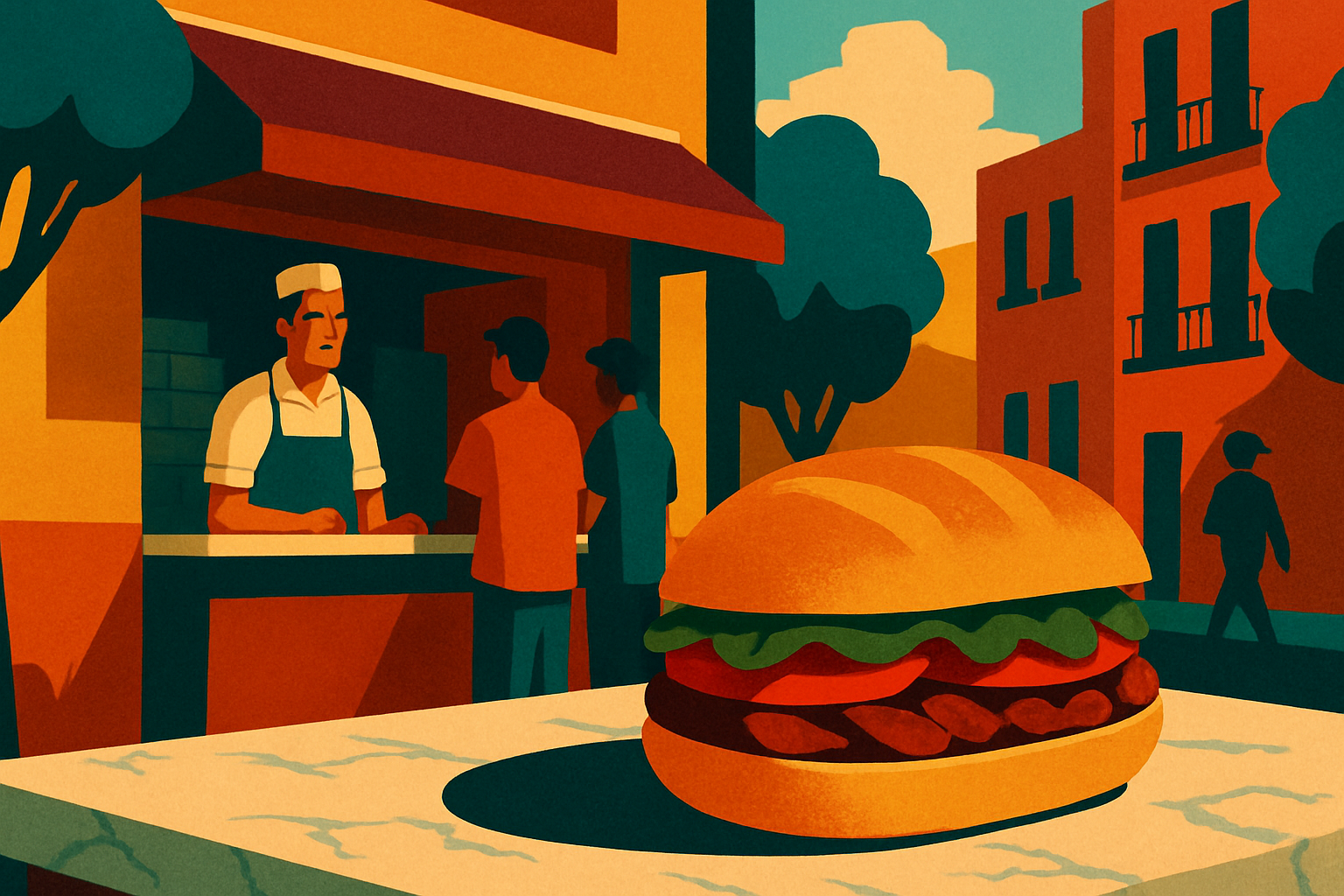
The telera and bolillo — the two bread types that define Mexico City's torta tradition — are not indigenous to Mexico. They trace to French bakers who arrived during the French Intervention (1862–1867) and Maximilian's short-lived Empire. The French military and the imperial court brought European-style panaderías to Mexico City, introducing wheat flour, high-heat stone ovens, and leavened dough techniques that had no local equivalent at scale. When Maximilian was executed in 1867 and the French withdrew, the bakers largely stayed. The bolillo — Mexico's answer to the French baguette, shaped into a small torpedo roll — entered permanent circulation. The telera developed as a softer, rounder local adaptation: less crust, more crumb, with two parallel creases pressed into the top before baking that divide it into three segments. By the late 1800s, the torta format — bread split lengthwise, filled with cooked meat, avocado, and chile — was the standard lunch of Centro Histórico workers and market vendors. The Porfiriato era (1876–1911) saw the first dedicated torterías open as permanent storefronts. Two of them — Tortas Armando and El Rey del Pavo — are still operating. That continuity, from Second Empire bakers to the bicycle cart selling basket tortas outside your Metro station, is what makes Mexico City's torta tradition something more than a sandwich.