TourMe
Axolotl Mexico City Guide: The Aztec Origin Story, the Conservation Crisis, and Where to See One
Mexico City • Xochimilco • Wildlife

Axolotl Mexico City Guide: The Aztec Origin Story, the Conservation Crisis, and Where to See One

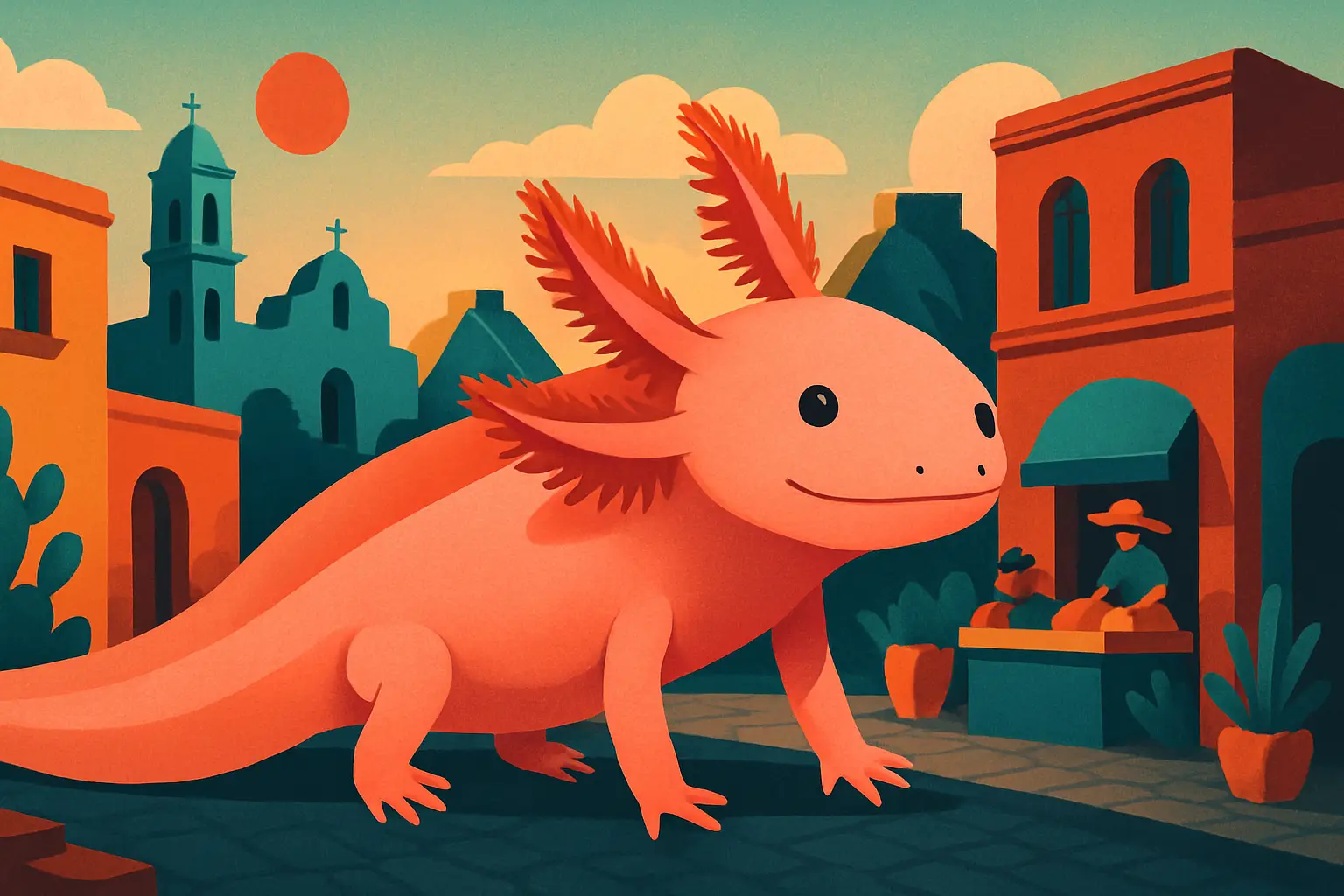
The axolotl is Mexico City's most famous animal — a critically endangered salamander that has lived in the same Aztec canals for over 700 years and whose wild population has collapsed by 99.5% in less than two decades. This is the guide to the mythology, the biology, the conservation fight, and the specific places in CDMX where you can actually see one.

🦎 Short stories • Collectible cards • Learn as you travel

Published

Share:Post

Quick tips before you go

Easiest place to see one
Chapultepec Zoo's Anfibium pavilion — free with park entry, open daily, with multiple axolotls including the wild-type dark morph and the white leucistic form (Metro Chapultepec, Line 1).
Book morning tours for Xochimilco
Boat tours that include the UNAM Ajolotario conservation center are best before noon — afternoon rains arrive by 3-4 p.m. in June, and weekday mornings are dramatically less crowded than weekends.
Adopt one for 500 pesos
UNAM's AdoptAxolotl program at adoptaunaxolotl.mx lets you directly fund field conservation. Contributions go to the Chinampa Refugio researchers working in Xochimilco's canals.

The axolotl guide for Mexico City

1. The animal that refused to grow up

Most salamanders start life in water, metamorphose, and eventually move to land. The axolotl never does. Through a genetic phenomenon called neoteny — the retention of larval features into adulthood — axolotls keep their feathery external gills, their wide flat tail, and their fully aquatic lifestyle for their entire lives. They breathe through three systems simultaneously: external gills, permeable skin, and rudimentary lungs. Biologically, the axolotl is a permanent juvenile, and this is not a deficiency — it's an extraordinarily successful evolutionary strategy that has kept the species alive in a specific niche for millions of years. What has made axolotls famous globally in scientific research is not the neoteny, though. It's regeneration. An axolotl can regrow a severed limb — including bones, nerves, muscle tissue, and vasculature — in a matter of weeks. It can regenerate its tail, large portions of its heart, sections of its spinal cord, and parts of its brain with no scar tissue formation. No other vertebrate has been documented doing this with comparable completeness. Research institutions in the United States, Germany, and Japan maintain large captive axolotl colonies specifically to study the genetic mechanisms behind this ability, with implications for regenerative medicine and wound healing. All of this scientific interest depends on a wild lineage that still exists in one place on earth: the canals of Xochimilco, in the southern part of Mexico City.

2. Axolotl means 'water dog' — the Aztec myth behind the name

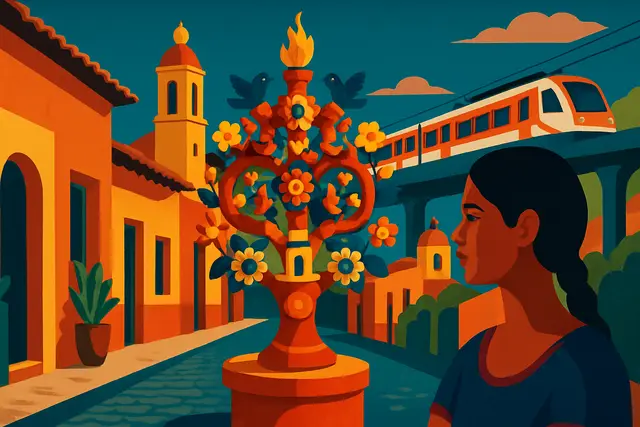
The word axolotl is Nahuatl, the language spoken in Tenochtitlan before and after the Spanish conquest. It combines atl (water) with xolotl — the name of one of the most unusual figures in the Aztec pantheon. Xolotl was a dog-headed deity and twin brother to the feathered serpent Quetzalcoatl. His assigned role was guiding the souls of the dead through Mictlan — the nine-layered Aztec underworld. He was depicted as a wrinkled, bald dog with reversed feet, associated with deformity, transformation, and liminality: the permanent threshold between life and death. The myth behind the axolotl's name works like this: when the gods decreed they must sacrifice themselves to keep the sun in motion, Xolotl refused. He fled by transforming — first into a double-stalked cornstalk (also called xolotl in Nahuatl), then into a double maguey cactus, and finally, cornered at the edge of a lake, he slipped into the water and became the axolotl. The water-dog. The creature that lives permanently in the threshold between worlds, never completing its transformation. In retrospect, the axolotl's neoteny — its biological refusal to leave the water and grow up — is a nearly perfect physical enactment of this myth. The Aztecs ate axolotls regularly and sold them in the markets of Tenochtitlan. They also used them medicinally and understood them as living symbols of regeneration and in-between states, framed through the figure of a god who escaped death by refusing to fully transform.

Keep touring

Discover more about Mexico in minutes

Get short, interactive stories that make each place easier to remember while you travel.

3. 700 years in the Aztec canals: why axolotls exist only here

The chinampas of Xochimilco are not natural islands. They are entirely human constructions — raised agricultural beds built on the shallow lake floor by alternating layers of aquatic vegetation and mud, anchored with ahuejote willow trees whose roots hold the structures together. The Aztecs began building them in the 14th century to extend farmable land across the surface of Lake Xochimilco, eventually covering more than 20,000 hectares with productive chinampa fields. The canals between the beds became both highway and irrigation network. Axolotls lived in these canals throughout the Aztec period and through the centuries of colonial rule, physiologically adapted to the specific conditions of this water: cool temperatures at 2,240 meters elevation, low current, and dense aquatic vegetation. When Mexico City drained most of its original lake system in the 19th and 20th centuries to control flooding and expand the urban grid, Xochimilco was the one remnant that partially survived. Approximately 180 kilometers of canal remain today, reduced from the original Aztec network but still functioning as a working agricultural and ecological system. The axolotl is embedded in Mexico City's visual identity — it appears on the city's official coat of arms (the escudo), in murals throughout the Xochimilco borough, and in government tourism branding. It is not a symbol borrowed from elsewhere. The axolotl evolved in this specific lake basin, the same one the Aztecs built their agricultural civilization on, and it has persisted here continuously for millions of years.

4. The crisis: why the wild population nearly vanished

The axolotl population in Xochimilco has declined by approximately 99.5% in fewer than 20 years. In the early 2000s, UNAM researchers counted hundreds of individuals per kilometer of surveyed canal. Current estimates put the total wild population below 1,000 — and some field surveys suggest the number in viable, accessible habitat may be as low as 50. Two causes account for most of the collapse.

**Invasive carp and tilapia** were introduced to Xochimilco's canals in the 1960s and 70s as a food source. These species eat axolotl eggs, prey on juveniles, and outcompete adults for food — a biological disruption whose timeline overlaps almost exactly with the beginning of the population crash
**Pollution and wastewater runoff** from surrounding urban and agricultural areas have degraded water quality in significant canal sections to hypoxic levels — insufficient dissolved oxygen to support axolotls. Boat traffic from tourist trajineras near popular embarcaderos adds to the chemical load
**Predatory birds** have intensified pressure as the axolotl population has concentrated into fewer viable habitat patches — great egrets in particular have been observed actively hunting in Xochimilco, a predation dynamic that compounds rather than causes the underlying decline

5. The Chinampa Refugio Project: UNAM's effort to bring them back

UNAM's Chinampa Refugio Project took a different approach than ex-situ captive breeding alone. Rather than maintaining animals in laboratory tanks and hoping, the project works directly with chinamperos — the traditional farming families who still cultivate the chinampa islands — to establish pesticide-free buffer zones and restore farming practices that reduce chemical runoff into the adjacent canals. Within these protected sections, researchers installed physical barriers to exclude invasive carp and tilapia, then reintroduced captive-bred axolotls into the restored habitat. The results were significant: captive-bred individuals released into barrier-protected, clean-water chinampa zones survived and reproduced at rates far exceeding those of the general wild population. A study published in 2025 confirmed that captive-bred axolotls can successfully rewild — the first solid scientific evidence that the rescue program is genuinely reversing the decline, not just slowing it. The project also operates the Ajolotario — a live-animal conservation facility at the Xochimilco chinampas that maintains a breeding colony and receives visitors on organized boat tours. UNAM's parallel initiative, the AdoptAxolotl campaign (adoptaunaxolotl.mx), lets individuals fund field work directly. The contributions go to researchers, chinampero partnerships, and canal restoration — one of the more transparent conservation funding mechanisms for any endangered species currently operating in Mexico.

6. Where to see axolotls in Mexico City

Three practical options exist, depending on your time and what kind of experience you want.

**Chapultepec Zoo — Anfibium pavilion** (Bosque de Chapultepec, Section 1 — Metro Chapultepec on Line 1, or Auditorio on Line 7): free entry to the zoo, open daily. The Anfibium houses multiple axolotls including wild-type dark-morph and leucistic white individuals. Best option for limited time or visitors with children — central location and no booking required
**Museo del Axolote at Parque Cuitlahuac** (Iztapalapa, eastern CDMX): a dedicated conservation and education center focused specifically on the species and the Xochimilco ecosystem. Less visited than Chapultepec and more substantive in its conservation content — a better choice if natural history is your main interest
**Xochimilco boat tours with Ajolotario stop** (Embarcadero Fernando Celada near Xochimilco Centro — Metro Tren Ligero to Xochimilco station): 2-3 hour trajinera tours that include a stop at the UNAM-affiliated Ajolotario conservation center. You'll see live axolotls near their natural habitat and pass through working chinampa canals. Book weekday morning slots — afternoon rains arrive reliably by 3-4 p.m. from June through September, and weekday mornings are far quieter than weekends

7. Practical questions: can you hold one, best season, and how it fits with Xochimilco

Can you hold an axolotl? No reputable facility allows it. Axolotls are protected under Mexican law (NOM-059-SEMARNAT-2010), and the oils, soaps, and bacteria on human skin can damage their permeable skin and external gill membranes. At Chapultepec Zoo you'll observe them through glass; at the Ajolotario you'll view them from above in their tanks. Best time of year: the Chapultepec Zoo Anfibium exhibit is year-round with no seasonal variation. Xochimilco canal tours are pleasant any time of year but most atmospheric in the dry season (November through March) — fewer crowds, no afternoon rains, and cooler mornings on the water. If you're visiting in June through September, plan to be at the embarcadero by 9 a.m. to be back before the afternoon showers. Weekday vs. weekend: weekday mornings at Xochimilco are dramatically quieter. Weekend trajinera culture — large family groups, live music, food on the boats — is a genuinely entertaining Mexico City experience, but it's a different experience from a conservation-focused morning tour. You can combine both by doing the ajolotario tour in the morning and joining the festive canal scene afterward. The full Xochimilco guide covers how to structure the full day. Are axolotls eaten? Historically yes — the Aztecs ate them and they were sold in pre-conquest markets. Today, harvesting, possessing, or consuming a wild axolotl is illegal in Mexico. The only legal option would be farm-raised individuals, which exist in very limited, experimental contexts.

Keep touring

Want to explore Xochimilco knowing the full story before you arrive?

TourMe turns the stories behind places like Xochimilco — the chinampas, the axolotl mythology, the 700-year-old canal system still operating under the modern city — into short interactive chapters and collectible cards. By the time your trajinera pushes off, you'll already know what you're looking at.

Keep reading

Access Hundreds of Stories

Curated cultural journeys, each chapter filled with stories you can play.