1. What ouzo actually is — and what it is not
Ouzo is a dry, anise-flavored spirit produced exclusively in Greece and Cyprus. The EU awarded it Protected Designation of Origin status in 1989 — legally, ouzo can only be called ouzo if it comes from those two countries. Absinthe, pastis, and sambuca are in the same anise-forward family but are distinct spirits; ouzo is the only one combining a grape-pomace base with its particular set of aromatics.
The base spirit comes from grape pomace — the pressed skins, seeds, and stems left over after wine production — distilled in copper pot stills. After the base distillation, the spirit is redistilled with botanicals: aniseed is mandatory and dominant, but most distilleries also add star anise, fennel, coriander, cardamom, and sometimes mastic (the resin from the mastic tree of Chios). The exact botanical blend is what differentiates one producer from another and what makes a blind tasting between Plomari and Tirnavos ouzo immediately obvious to someone who knows both.
Alcohol content typically runs 37.5 to 46% ABV, though some Lesvos producers push to 48%. The spirit is produced entirely by distillation — EU regulations prohibit simply adding anise flavoring to neutral alcohol and calling it ouzo, which is how pastis is made and why the two taste categorically different even when both turn white with water.
2. The louche: the chemistry behind ouzo turning milky white
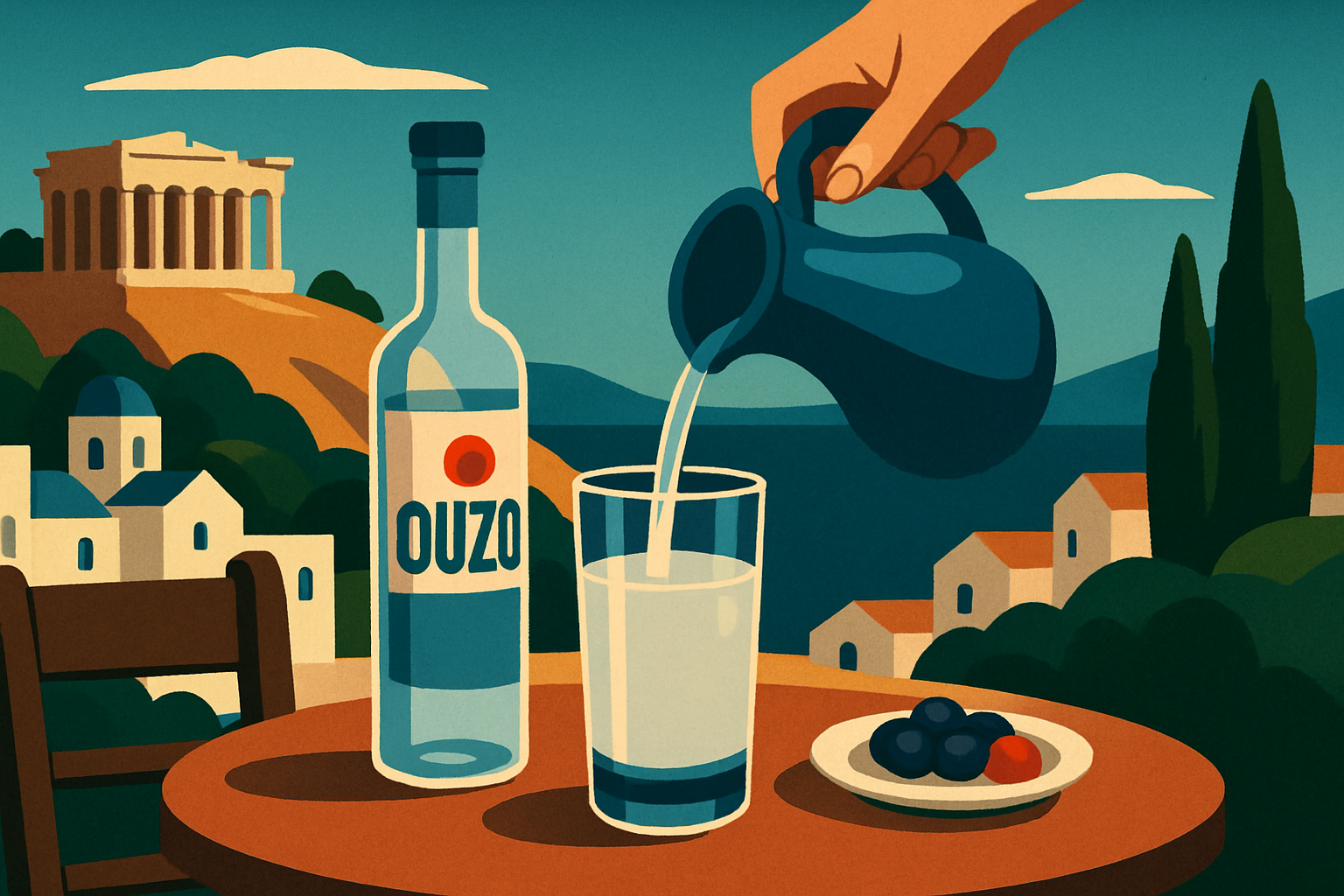
Add cold water or an ice cube to a glass of ouzo and it transforms from crystal clear to an opaque, milky white. This is called louching — from the French word for shady or opaque — and the same phenomenon occurs with absinthe and pastis. The chemistry is straightforward: anise oil is soluble in high-strength alcohol but not in water. When you dilute ouzo below approximately 35% ABV, the essential oils precipitate out of solution and form billions of microscopic oil droplets suspended throughout the liquid. Those droplets scatter light in every direction — the Tyndall effect — which is what produces the opacity.
Every drop of cold water intensifies the louche until the dilution is complete. The traditional ratio is one part ouzo to two parts cold water, which places the final ABV around 12 to 16% — roughly wine strength. Some drinkers prefer less water, a stronger drink, a lighter louche. Some add ice directly; purists argue ice over-dilutes and mutes the aromatics in the first sips.
The louche is also a quality indicator. A high anise oil content produces a thick, fully opaque transformation — the glass goes white and stays white. A bottle with minimal anise barely clouds. In Plomari, where the tradition is taken seriously, this quality test is informal but universal. If you are trying an unfamiliar ouzo, pour a finger and add a few drops of cold water before committing to a full glass — the transformation tells you something real about what is in the bottle.
3. How to drink ouzo: the ouzeri ritual explained
The ritual is specific and widely observed in Greece. You do not do shots. You do not mix ouzo into sweet cocktails. You are not meant to drink it the way you drink wine — continuously, at pace. Ouzo is a slow drink, structured around food and conversation.
The format: pour ouzo into a tall, narrow glass. Add cold water — two parts water to one part ouzo is standard, though this shifts by brand and personal taste. Let the louche complete. Sip. Eat something from the table. Talk. Pour again in twenty minutes. A proper ouzeri session runs 90 minutes to two hours and involves no other drinks — switching between ouzo and beer midway is technically allowed and practically considered a little chaotic.
Ordering ouzo at a traditional kafeneion — the old Greek coffee houses found in neighborhood squares across Athens — will often bring a small complimentary plate of accompaniments without your asking: a few olives, a piece of cheese, sometimes bread. This custom has largely disappeared from tourist-facing streets but persists in the residential neighborhoods. In Psyrri and in the backstreets off Exarcheia, kafeneions running on this format still exist.
Summer timing: an afternoon ouzeri session — cold ouzo with water, grilled seafood, the shade of an awning at 3pm in June — is a genuinely comfortable way to spend a hot afternoon. The diluted spirit is more refreshing in heat than beer at the same pace when consumed with food. June evenings in Athens run warm until midnight, which extends the ouzeri window considerably.
4. Plomari vs Tirnavos: the regional split that determines what you are drinking
In 2004, five Greek production regions received Protected Geographical Indication status from the EU: Ouzo of Mytilene (Lesvos), Ouzo of Plomari (a specific sub-appellation within Lesvos), Ouzo of Kalamata (Peloponnese), Ouzo of Thrace, and Ouzo of Macedonia. The Lesvos designations are the most significant — the island produces roughly 50% of Greece's total ouzo output.
Plomari is a small port town on Lesvos's southern coast. Its microclimate and local water chemistry have shaped a recognizable house style: deep anise character, complex botanical layering, a long finish. The two most significant producers are Barbayiannis (established 1860, the oldest continuous ouzo producer in Greece, now running a distillery museum in Plomari) and Ouzo of Plomari by Isidoros Arvanitis — the bottle most likely to be on a serious Athenian ouzeri's shelf. The Arvanitis family has been distilling in Plomari since 1894.
Tirnavos in Thessaly, mainland Greece, produces a lighter, more neutral style. The anise character is present but less dominant, the finish shorter, the overall profile closer to what northern Europeans expect from an anise spirit. Ouzo 12 — the most internationally distributed Greek ouzo, available in supermarkets across Europe and North America — is made in a Tirnavos style. It is a clean, accessible introduction. It is not what makes a Lesvos resident nostalgic.
A practical exercise: if you are at a well-stocked ouzeri in Athens, ask for Mini Mytilinis (Lesvos) alongside Ouzo 12 and try them separately with water. The difference in the louche density alone is instructive, before the flavor difference becomes obvious.
5. The mezedes that make ouzo work — and why they are not optional
The pairing of ouzo with cold mezedes is not a custom invented for atmosphere. The food is functionally calibrated to the spirit: the salt and fat in mezedes cut the alcohol and moderate the anise intensity, while the aromatic qualities of ouzo enhance the flavor of seafood and brined vegetables in a way that makes both better.
Taramosalata — whipped fish roe with lemon and olive oil — is the first thing to order. The salt, fat, and lemon interact with ouzo's anise in a way that makes the combination taste older than either item individually, which it almost certainly is.
Grilled octopus — charred exterior, tender interior, dressed with red wine vinegar and dried oregano — amplifies ouzo's anise character through a mechanism that is easier to experience than explain. Order this with any serious ouzeri session.
Kalamari tiganito (fried squid in a light batter) is the most classic ouzeri pairing: crunch, mild sweetness, a squeeze of lemon. Every traditional ouzeri in Athens and on Lesvos serves this. Every version is right.
Tirokafteri — spicy whipped feta with roasted red peppers — resets the palate between pours. The heat and dairy fat together create a gap between sips that makes you want more of both the food and the drink.
Olives — specifically large green Halkidiki or black Kalamata — should be on the table from the first pour and stay there. They are not a garnish. They are structural.
6. Where to drink ouzo in Athens: the ouzeries worth finding
Ta Karamanlidika tou Fani at 26 Sokratous Street — between Varvakios Agora and Monastiraki — is a deli and restaurant specializing in cured meats, cheeses, and mezedes with origins in Anatolia and northern Greece. The ouzo list covers Lesvos producers and the Thrace designation; the food — cured sausages, cured mackerel, aged hard cheeses, bread with lard and peppers — is specifically calibrated for serious ouzo drinking. This is the address to go to if you want to understand what the spirit is at its best. The Varvakios Agora guide covers the market a short walk away.
The streets around Plateia Iroon in Psyrri have several traditional mezedopolia where ouzo orders come with complimentary plates — a custom that has largely disappeared from tourist-facing streets but persists in the neighborhood's residential fabric. On a summer Thursday or Friday evening, the tables outside on the square fill after 9pm and the combination of live rebetiko music, cold ouzo, and grilled octopus runs until well past midnight.
Plateia Agia Irini near Monastiraki, in summer, becomes an outdoor living room for the neighborhood from late afternoon onward. The cafes on the square's edges serve ouzo by the glass from around 5pm. The crowd is mixed: some tourists, many Athenians who have been meeting at this square on warm evenings for decades. For Lesvos ouzo in its original context, the waterfront ouzeries in Mytilene town on Lesvos are the real destination — the Lesvos island guide covers the logistics of getting there.
7. How strong is ouzo? Common questions answered
How strong is ouzo? The undiluted spirit runs 37.5 to 48% ABV — the same range as whiskey and vodka. The ouzeri format distributes that alcohol over 90 minutes to two hours of eating, which makes the experience feel gentler than the percentage suggests. Diluted two-to-one with water, a glass of ouzo is roughly 12 to 16% — wine-equivalent. Doing shots of undiluted ouzo achieves the effect you would expect.
Is ouzo a summer drink? In Greece, yes. The combination of cold diluted ouzo, seafood mezedes, and a shaded table in warm weather is one of the more specifically Greek pleasures and is treated as such by Greeks themselves. That said, ouzo is drunk year-round — a shot of warm ouzo (without water) at a mountain kafeneion in January is a recognized variant, very different in character from the summer ouzeri version.
Can you cook with ouzo? Yes, and the results are worth knowing. Ouzo adds anise aromatics to seafood in a way that is distinctly Greek. A splash of ouzo flambéed into a pan of shrimp with tomato and feta — garides saganaki — is the most famous application. The alcohol burns off; the anise flavor integrates with the tomato acidity and the brine of the shrimp. Ouzo also appears in recipes for mussels steamed in the spirit, seafood marinades, and occasionally in pastry glazes. It is a cooking ingredient with a defined Greek culinary tradition, not a novelty substitution.