1. What Chania actually is — Kydonia, Venice, and the city the Ottomans largely left alone
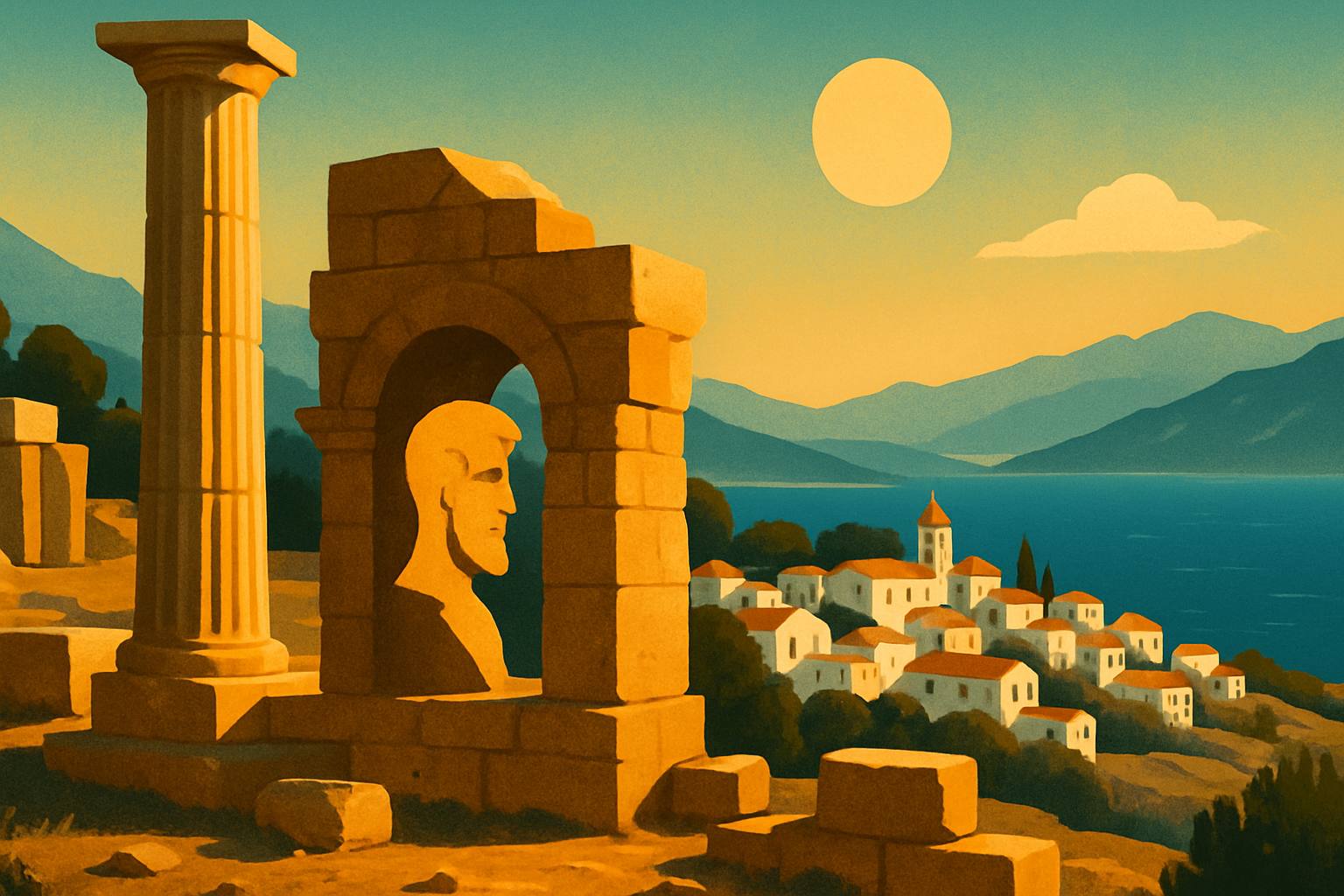
Chania is built on the ruins of Kydonia, one of the three most important cities of Minoan Crete, inhabited continuously since at least 2700 BCE. The name Kydonia appears in Homer, on Linear B tablets from the palace administration at Knossos, and on coins the city was minting well into the Hellenistic period. Excavations beneath the Castelletto district, just northeast of the harbour, have been yielding Minoan-era finds since the 1960s — the old town's foundations are literally dug into Bronze Age levels.
Venice took Crete in 1252 and spent nearly four centuries reconstructing Chania as a working military harbour. The walls, the shipyard arches, the tight street grid between the harbour and the market — these are Venetian urban infrastructure, designed for trade and the provisioning of galleys. When the Ottomans besieged and captured Chania in 1645 after two months of fighting, they found a nearly complete Venetian city. Unlike many conquests of the period, they largely left it standing: converting churches to mosques, constructing hammams in vacant lots, adding minarets to selected buildings. The Ottoman occupation lasted until 1898 — 253 years — which is why the neighbourhood between the harbour and the Topana quarter reads as simultaneously Venetian in structure and Ottoman in ornament.
The old town's survival into the 21st century is unusual. Greek independence and subsequent urban modernisation destroyed most historic town centres. Chania survived partly because its narrow streets and harbour topography made large-scale demolition impractical, and partly because the archaeological value of the site discouraged wholesale redevelopment.
2. The Venetian Harbour and the Egyptian Lighthouse
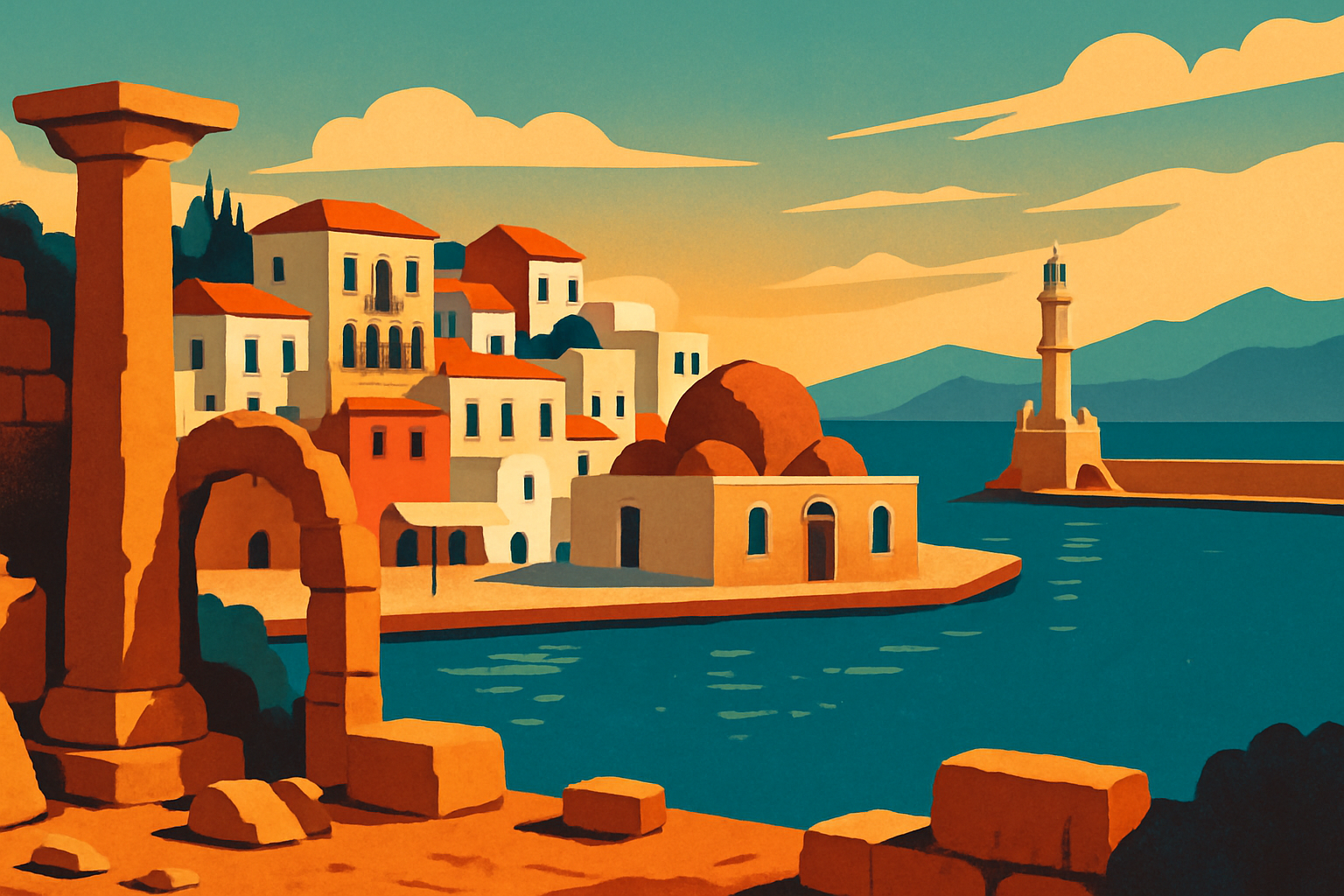
The harbour's crescent shape — sheltered inner basin, long eastern mole, lighthouse marking the entrance — was built by Venice across the 14th and 15th centuries as the Aegean fleet's primary western Cretan port. The lighthouse at the mole's tip is Chania's most photographed monument and most frequently misidentified: most visitors assume it is Venetian throughout. The structure is Venetian in origin, dating to approximately the 14th century, but the lighthouse standing today was rebuilt in the 1830s by Egyptian troops.
This is a piece of Ottoman history that surprises most visitors. After the Greek War of Independence (1821–1829), Crete briefly came under Egyptian administration — Egypt at the time was a nominally Ottoman province under Mehmet Ali, who sent forces to maintain Ottoman control over the island. Egyptian troops garrisoned in Chania used materials from the city's deteriorating Venetian structures to restore the lighthouse, which had fallen into serious disrepair. The 21-meter-tall structure at the end of the mole is therefore more precisely described as early 19th-century Egyptian construction on medieval Venetian foundations.
The mole walk takes about 10 minutes each way. The best moments: before 8 a.m., when fishing boats are returning and the harbour is quiet; or after dark, when the lighthouse is lit and the Venetian facades across the water glow from the restaurant lighting. The view back from the mole tip — the domed Ottoman mosque in the harbour square, the Arsenali arches, the Topana minaret — is the canonical Chania image. At dawn or dusk it earns the cliché.
3. The Arsenali — the Venetian shipyards that launched the galley fleet
At the far western end of the harbour, past the lighthouse mole's base, a row of seven connected stone arches opens directly to the water. These are the Neoria — the Venetian arsenals — the shipyards built to maintain and repair the Aegean war fleet. Construction began in 1526 with the first two structures; by 1599 the complex had expanded to 17 individual bays; five additional Moro Shipyards were added in 1607 at the harbour's eastern edge. Each bay was sized for a single Venetian galley, the standard Mediterranean warship of the period: roughly 40 metres long, oar-propelled, crewed by 150 to 200 men.
Under the Ottoman occupation from 1645, the shipyards were repurposed as storage arsenals, maintained with decreasing interest as the harbour lost its strategic importance. Most of the original 17 structures have since collapsed or been demolished. Eight survive today: the visible row of seven connected arched bays along the western waterfront, and one larger structure further west — the Grand Arsenal — which has been restored and now houses the Center of Mediterranean Architecture (CAM), an exhibition and event space that occasionally hosts architecture shows open to the public.
The Arsenali are best seen from outside rather than entered formally. The clearest view of their scale and form is from the far end of the lighthouse mole, looking back at the harbour from the water: the arched openings and the mass of the stone wall read most accurately at this angle, with no street or parked cars interrupting the line.
4. Skridlof Street and Sifaka Street — two craft trades that survived four centuries
Two streets a block southeast of the harbour contain trades that have operated on the same pavement since the Ottoman period:
Skridlof Street — known locally as Stivanadika, meaning 'the bootmakers' — runs east-west between the harbour and the Municipal Market. For centuries this was where Chania's stivanádes made stivánia: the stiff high-leather boots worn by Cretan men for mountain work, shepherding, and traditional dance. Made on individual lasts to fit the customer's foot exactly, a pair of stivánia represented weeks of craft work and lasted decades. Genuine stivánia makers are now extremely rare. Most shops on Skridlof today sell sandals, belts, and bags — but the leather is cut and worked on-site, not imported pre-finished, and in the open-front workshops you can watch artisans hand-cutting soles, edge-burnishing, and hand-stitching on the premises. Custom sandals made to measure take 2–3 hours and cost €40–60.
Sifaka Street — Machairadika, 'the knife-makers' — is one block south of Skridlof, parallel. The trade here is Cretan knives: stainless steel blades with ornate carved handles made from olive wood, horn, or bone. These are working tools, not decorative pieces — the handle geometry and blade balance reflect a design logic developed by shepherds and hunters who needed a knife they could use for hours without fatigue. O Armenis on Sifaka Street has been run by the same family for four generations and is the most reliable address on the street. A medium blade with an olive-wood handle runs €35–55; larger custom pieces are quoted on request.
5. The Municipal Market and the Ottoman Hammam
The Agora of Chania — the Municipal Market — was built in 1913 in a cross-shaped floor plan modeled on the covered markets of Marseille, with four arms meeting at a central crossing. It is the city's morning hub. Interior stalls sell graviera wheels, fresh myzithra, locally pressed olive oil in unlabeled bottles, White Mountain thyme honey, dried herbs, and tsikoudia (Cretan raki) by the carafe. The stalls near the Skridlof Street entrance are tourist-facing; the best producers are in the deeper arms of the cross, away from the main foot traffic. For a detailed guide to what to eat and buy in Chania — including sfakianopita, antikristo, and the three Cretan cheeses worth knowing — see What to Eat in Crete.
One block west of the market, at the corner of Zambeliou and Douka Streets, stands the Topana Hammam — a late-17th-century Ottoman bathhouse built in the years following the 1645 conquest. The building has six large semicircular domes perforated by glass bell-shaped skylights that serve as the only natural light source. From the street, the exterior reads as compact and unassuming; the domed roofline is most visible from the small open area on the Zambeliou side. The Topana Hammam is property of the Ministry of Culture and not currently open for regular visits, but the exterior — and the contrast between its Ottoman dome and the Venetian stone walls it sits among — is worth the two-minute detour.
6. Where to eat: two streets back from the water
The harbour horseshoe is not where to eat. The restaurants along the inner crescent exist to capture the view; the kitchen quality and price-to-value ratio reflect that priority. Two to three streets back, both improve substantially:
Tamam at 49 Zambeliou Street occupies a converted Ottoman hammam — not the Topana, but one of the many smaller bathhouses that once populated the neighbourhood. The interior courtyard retains the domed stone ceilings of its previous use, and in the evenings when the space fills and the stone amplifies the sound, it is one of the more atmospheric dining rooms in Crete. The menu covers Cretan and eastern Mediterranean preparations; the stuffed squid and slow-cooked lamb are consistently good. Book ahead in peak summer.
To Maridaki at Daskalogianni 33 is a small seafood taverna specialising in simply grilled fish: whole gilt-head bream, anchovies marinated in oil and lemon, fried smelts, octopus grilled directly over charcoal. The kitchen makes no claims beyond fresh fish and correct technique. Midday is better than evening for seating.
Iordanis at Apokoronou 37 (operating since 1924) is the essential breakfast stop — bougatsa cut from a large tray in sweet or savory versions. Arrive before 9:30 a.m.
For raki in the kafeneion tradition: the small coffee houses on the lanes south of the Agora serve tsikoudia by the carafe with plates of olives, dakos, or whatever is on the counter. The food arrives with the drink and the final bill is for the raki only. These places do not advertise and carry no menus — look for older men playing backgammon at tables outside.
7. When to visit, how to arrive, and the beaches within walking distance
Best time to visit? June is the practical sweet spot. Daytime temperatures hover around 28–31°C; the harbour area reads about 4–5°C cooler than inland Chania on a hot day thanks to the sea breeze. Crowds are real in June but manageable — the harbour horseshoe reaches near-capacity in July and August evenings, with waterfront restaurants deploying aggressive table solicitation that makes simply walking along the crescent unpleasant. The old town's interior streets are always less crowded than the waterfront, regardless of season. See the Crete travel guide for broader island planning including best months for different regions.
How to arrive? Chania has its own airport (CHQ, officially Ioannis Daskalogiannis Airport), receiving direct flights from major European cities throughout summer. The airport is 15 kilometres east of the old town; a taxi to the harbour takes 20–25 minutes and costs €20–25. The KTEL regional bus station in the city's eastern district connects Chania to Heraklion (2.5 hours, around €15) and Rethymno (1 hour, around €7), with services every 30 minutes. For travelers arriving by overnight ferry from Piraeus, the port of Souda (8 kilometres east) is the arrival point — buses and taxis connect to the old town.
Beaches near the old town? Two are within easy walking distance of the harbour. Nea Chora Beach (10 minutes west on foot) is a long city beach with sunbeds, umbrellas, and waterfront cafes — reliable conditions and calm water. Koum Kapi Beach (5 minutes east) is smaller and sits directly alongside the old town's stone fortification walls, which makes it visually distinctive. Both are swimmable from late May through October, with water temperatures reaching 24–26°C in peak summer.