1. The building everyone photographs — and almost no one enters
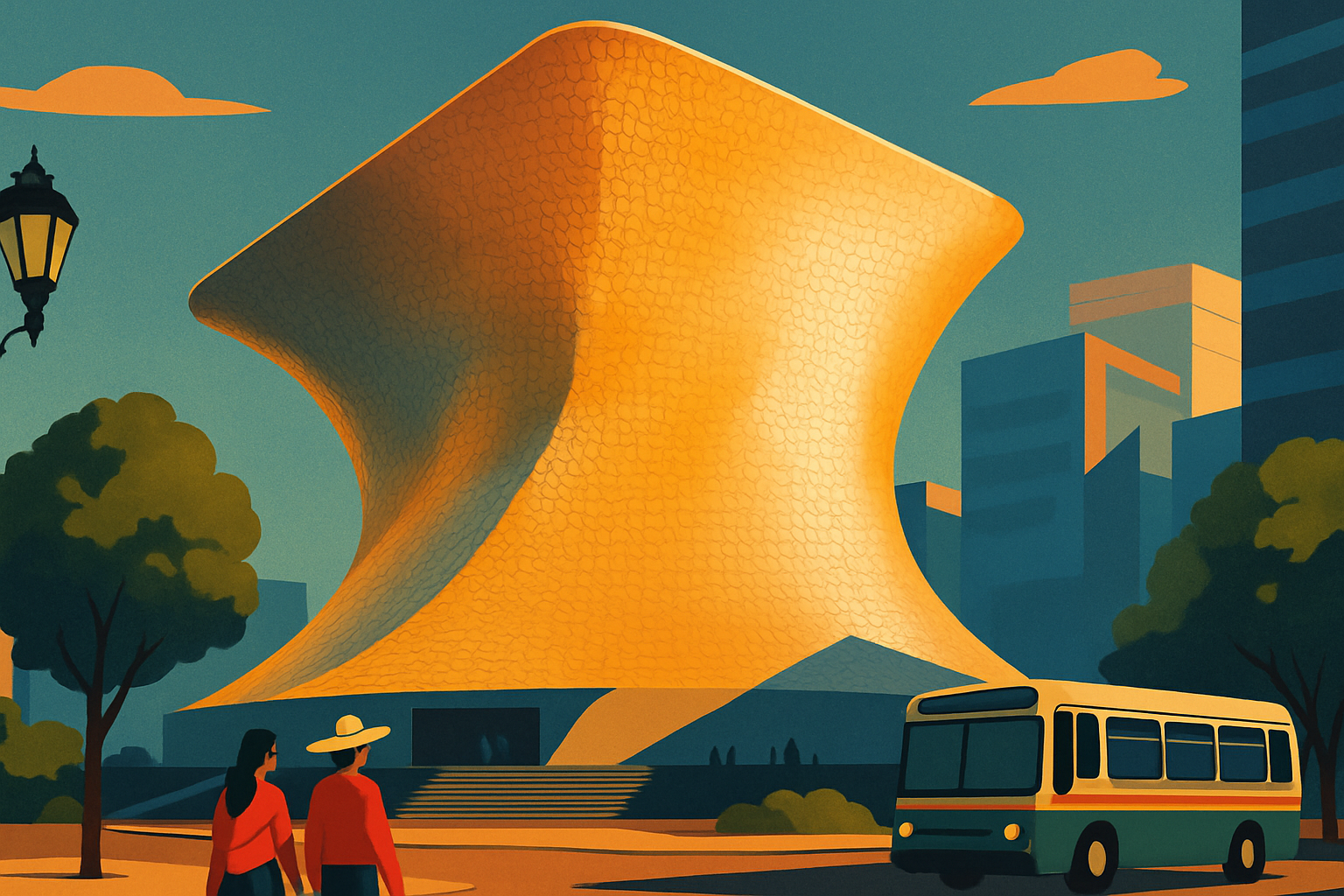
Stand at the edge of Plaza Carso in Nuevo Polanco and Museo Soumaya announces itself immediately: a building with no flat walls, no right angles, no conventional exterior, covered in 16,000 hexagonal aluminum tiles that change color depending on where the sun is. At noon in direct light, the surface reads metallic silver. At dusk, the same building glows amber-gold. Dozens of people photograph it from the plaza every day. A much smaller number actually walk through the entrance.
The building was designed by Fernando Romero — a Mexican architect who also happens to be Carlos Slim's son-in-law — and opened in April 2011 as the anchor of the Plaza Carso development in Col. Granada. The structure rises 46 meters across six floors, connected internally by a continuous curving ramp that spirals up around the outer edge of the interior. Romero designed it so the ramps provide sightlines across multiple floors at once, letting you see a Rodin sculpture above while standing in front of a pre-Hispanic artifact below. The building doesn't just house the art — it changes how you see it.
Practically: the collection is harder to navigate than it looks. First-timers often enter on the ground floor and try to work upward, which puts the oldest pre-Hispanic material first and leaves you climbing toward the most impressive European works tired. The better move is to take the elevator directly to Floor 6 and descend by the ramp. By the time you reach the ground floor, you've moved from Rodin backward through the Impressionists to 3,000-year-old Mesoamerican objects. The building rewards the top-down walk in a way it doesn't reward the bottom-up one.
2. Carlos Slim, Soumaya Domit, and why it's free
The museum is named after Soumaya Domit Gemayel, the wife of Carlos Slim Helú, who died in 1999 from kidney disease at the age of 50. Slim, ranked among the wealthiest individuals on earth for multiple decades, began collecting art seriously in the 1970s and continued throughout his marriage. After Soumaya's death, the Slim Foundation dedicated the collection in her name and made free admission its permanent policy.
That policy is worth dwelling on. In a city where major museum admissions run 70–120 pesos, Soumaya charges nothing — not for tourists, not for residents, not for guided tours of the permanent collection. The practical effect is a world-class European and Mexican art collection that anyone can walk into at no cost, in a city where that kind of access matters.
The Slim Foundation also operates a second, smaller Soumaya location — Plaza Loreto in San Angel — which houses colonial religious art, 19th-century Mexican painting, and a selection of pre-Hispanic artifacts. It charges a small admission and sees a fraction of the visitors. For anyone who finds the Plaza Carso building overwhelming in scale, the Loreto location is a calmer, more focused introduction to the same collection's logic.
•Named after Soumaya Domit Gemayel, Carlos Slim's wife, who died in 1999 at age 50
•Slim Foundation permanent policy: free admission for all visitors, no tickets, no reservations
•Second smaller Soumaya at Plaza Loreto in San Angel — same collection DNA, much smaller scale, modest admission fee
3. Floor 6: The Rodin collection — the reason to visit
The top floor of Museo Soumaya holds the single most significant reason to visit: the world's largest private collection of Auguste Rodin sculptures, and the largest Rodin collection of any kind outside the Musée Rodin in Paris. The collection runs to over 380 works — bronzes, plasters, and marbles — spanning Rodin's full career from early academic pieces through the works that defined late 19th-century sculpture.
The works you'll recognize are here. The Thinker — the brooding seated figure cast from Rodin's original molds — stands on the top floor where you can walk around it rather than peer at it through a barrier. The Kiss is nearby: two marble figures locked in an embrace that Rodin conceived as a scene from Dante's *Inferno*, depicting the lovers Paolo and Francesca at the moment before their deaths. The Burghers of Calais — six bronze figures walking toward their own execution during the Hundred Years War — occupies a section of floor where the full group reads as Rodin intended it, in the round.
Also represented: Camille Claudel, Rodin's student and longtime partner, whose own sculptures are remarkable and whose career was cut short by institutionalization in 1913. And Emile-Antoine Bourdelle, another Rodin student, whose work bridges Rodin's organic forms and the harder geometry of early 20th-century modernism. If you have only one floor's worth of attention, give it to the sixth.
•Over 380 Rodin works — bronzes, plasters, marbles — the largest Rodin collection outside the Musee Rodin in Paris
•The Thinker, The Kiss, The Burghers of Calais: all cast from original molds, viewable without glass barriers
•Works by Camille Claudel and Emile-Antoine Bourdelle also on this floor — both extraordinary sculptors in their own right
4. Floor 4: Impressionism and Mexico's only Van Gogh paintings
Descending from the Rodin floor, the collection shifts from sculpture to canvas and enters the late 19th century. Floor 4 holds Soumaya's Impressionist and Post-Impressionist European holdings: Claude Monet, Pierre-Auguste Renoir, Edgar Degas, Camille Pissarro, Edouard Manet, and Joan Miro.
The headline fact of this floor: Museo Soumaya holds the only paintings by Vincent van Gogh on permanent public display in Mexico. Mexico City has no shortage of world-class art, but Van Gogh's work is genuinely rare in Latin America — most of it lives in Amsterdam, New York, Paris, and a small number of other institutions. The Slim collection's Van Gogh acquisitions represent one of the more significant art-buying decisions in Mexican cultural history, and it's a detail almost no travel guide bothers to mention.
Also in the collection is a work attributed to the circle of Leonardo da Vinci — *Madonna of the Yarnwinder*, considered one of the museum's most valuable pieces. The attribution question (da Vinci himself vs. his workshop) is contested in art history, but the painting dates to the early 16th century and arrived at Soumaya via a series of European auctions. Whether painted by Leonardo or his students, it's an object that almost no Latin American institution can claim to hold.
•Only Van Gogh paintings on permanent public display in Mexico — the Slim Foundation acquired multiple works
•Monet, Renoir, Degas, Pissarro, Manet all represented — a genuinely world-class Impressionist room
•Madonna of the Yarnwinder (Leonardo da Vinci circle, early 16th century) — one of the museum's most valuable and debated pieces
5. The other 60,000 pieces: what fills the rest of the building
The Rodin and Impressionist floors get most of the attention, but the remaining levels of Museo Soumaya cover 30 centuries of object-making in a way that rewards slow wandering.
The lower floors house the largest portion of the collection by volume: pre-Hispanic artifacts from Mesoamerican cultures including Olmec, Maya, Toltec, and Aztec — ceremonial objects, jade pieces, figurines, and stone carvings. Soumaya's pre-Hispanic holdings are smaller and less systematically labeled than the Museo Nacional de Antropologia, but the objects are often presented with an emphasis on aesthetic form over archaeological classification, which makes them read differently.
Above the pre-Hispanic floors: colonial religious art — paintings, sculptures, and devotional objects from the 16th through 18th centuries, produced in New Spain by indigenous and mestizo artists working in European styles. This category is undervalued in most Mexico City museum visits; the colonial period is 300 years of history that gets compressed into a paragraph in most travel coverage, and Soumaya's holdings are a more accessible introduction to it than most.
The collection also holds Diego Rivera paintings — not the famous public murals, but easel paintings from his pre-mural period in Europe and his early return to Mexico. And Salvador Dali: multiple sculptures that surprise visitors who know him primarily from paintings. Dali in three dimensions is a different experience from *The Persistence of Memory*.
•Pre-Hispanic artifacts from Olmec, Maya, Toltec, and Aztec cultures — smaller than Antropologia but with strong aesthetic presentation
•Colonial religious art from New Spain (16th-18th century) — one of the more accessible introductions to 300 years of post-conquest visual culture
•Diego Rivera easel paintings (pre-mural period) and Salvador Dali sculptures round out the modern wings
6. How to get there — and what to do next door
The museum is at Blvd. Miguel de Cervantes Saavedra 303, Col. Granada, Nuevo Polanco — inside the Plaza Carso complex, with the entrance facing the central plaza. The easiest way to arrive is by Uber or Cabify directly to Plaza Carso; the ride from Roma Norte or Condesa takes about 15–20 minutes in normal traffic and costs roughly 80–130 pesos.
For public transit: Metro Line 7 (pink) to Polanco station, then a 20-minute walk north along Presidente Masaryk toward Ejercito Nacional and west to Cervantes Saavedra. Navigable but not obvious the first time — Uber is genuinely faster if you're coming from the southern neighborhoods.
Once you've done Soumaya, the Museo Jumex sits directly across the plaza — a smaller contemporary art museum designed by British architect David Chipperfield, focused on rotating exhibitions of international contemporary work. It's the aesthetic counterpoint to Soumaya's encyclopedic sweep: where Soumaya covers 30 centuries of everything, Jumex focuses narrowly on the present. Both museums in one visit, plus a late lunch along Presidente Masaryk or Moliere in Polanco, makes a full half-day that requires no car and costs the price of lunch.
•Address: Miguel de Cervantes Saavedra 303, Col. Granada — Uber or Cabify to Plaza Carso is the most direct option
•Metro Line 7 to Polanco station + 20-minute walk north along Masaryk and west to Cervantes Saavedra
•Museo Jumex is directly across Plaza Carso — contemporary art, David Chipperfield architecture, natural companion visit
7. When is the best time to visit Museo Soumaya?
The museum is open Tuesday through Sunday. Mondays are closed — worth confirming before making the trip, since the walk or Uber ride will arrive at a locked entrance.
Weekday mornings between 9 a.m. and noon are consistently the quietest. On those mornings you can stand directly in front of The Thinker or The Burghers of Calais without a crowd — an unusual luxury for a collection of this caliber in a city of 9 million. Weekend afternoons, especially Saturdays between 2 p.m. and 6 p.m., bring the largest groups and occasional lines at the entrance.
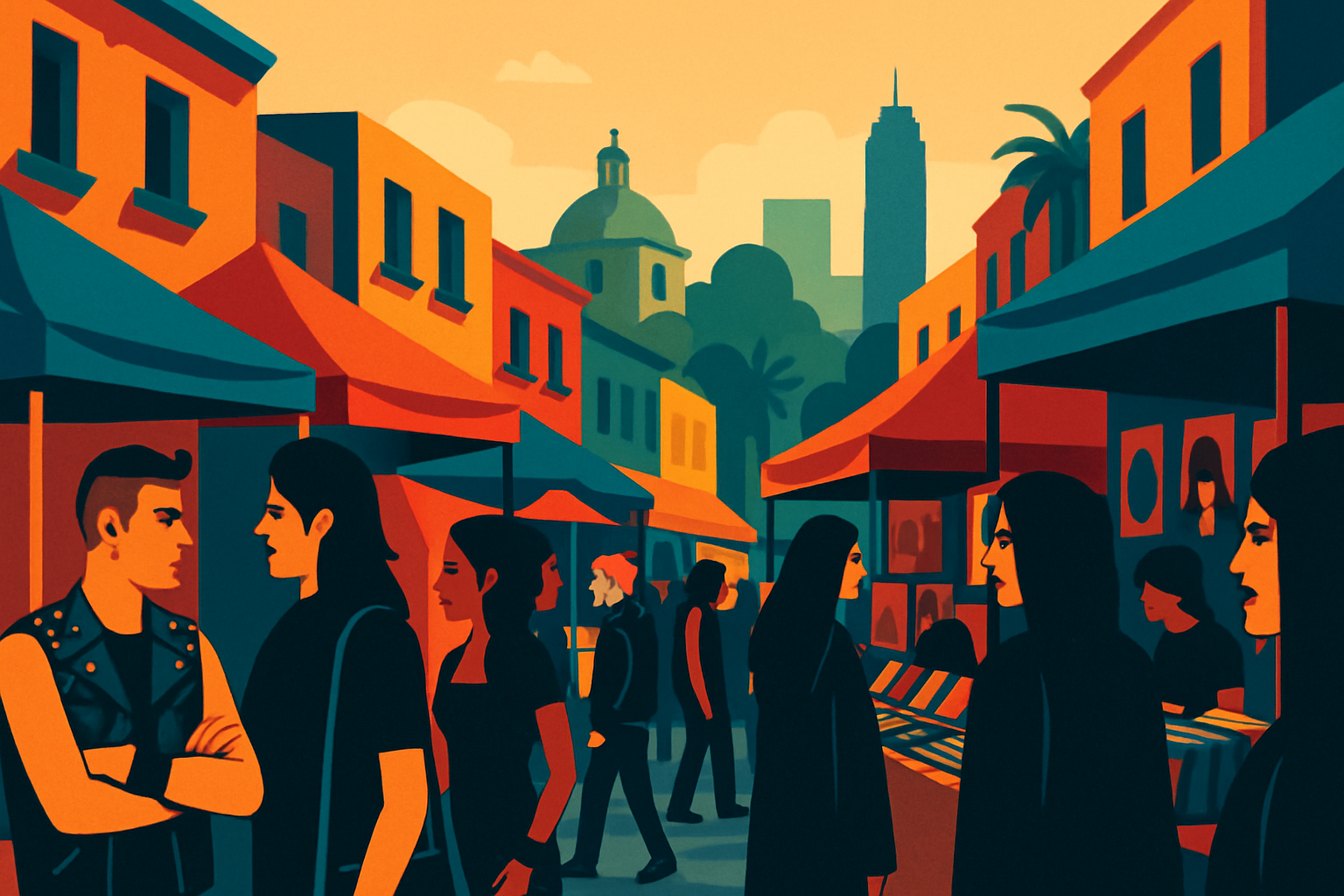
The building's aluminum exterior is most photogenic in the 30 minutes before sunset, when the hexagonal tiles pick up warm light and the surface shifts from metallic silver to deep amber-gold. Arriving around 3 p.m. on a Tuesday or Wednesday gives you a quiet interior and a photogenic exterior as you leave. The Plaza Carso plaza also fills with a small food and craft market on some weekend evenings — a pleasant enough scene that has nothing to do with the museum but makes the exit feel less abrupt.
8. Is Museo Soumaya worth it if you only have time for one museum?
Depends entirely on what kind of museum experience you're after. If you're choosing between Soumaya and the Museo Nacional de Antropologia, the answer is almost always Antropologia first. It's one of the genuinely great museums anywhere in the world — the Sala Mexica alone justifies the visit, and it provides the historical context that makes all subsequent Mexico City experience richer. Soumaya's pre-Hispanic collection, by comparison, is smaller and less rigorous.
But Soumaya wins clearly in two specific cases. If you've already done Antropologia, Soumaya provides what that museum can't: world-class European art — specifically the Rodin and Impressionist floors. No other museum in Mexico City gives you that caliber of European work. And if the person you're traveling with is drawn more to European art history than pre-Hispanic civilization, Soumaya is the right call without qualification.
The free admission also changes the math. You can spend 45 minutes at Soumaya just to see the Rodin floor without feeling like you shortchanged a paid ticket. A low-stakes visit — elevator to Floor 6, one hour, back out — is a natural advantage that most museums of this quality don't offer.