1. CMLL — the world's oldest wrestling organization, and what that actually means
Lucha libre in Mexico City did not evolve from WWE or any American import. It developed independently, rooted in catch wrestling and circus traditions brought by European immigrants in the late 19th century. The Consejo Mundial de Lucha Libre (CMLL) was founded in 1933 by Salvador Lutteroth as the Empresa Mexicana de Lucha Libre — making it the oldest continuously operating professional wrestling promotion in the world. It predates WWE by nearly three decades.
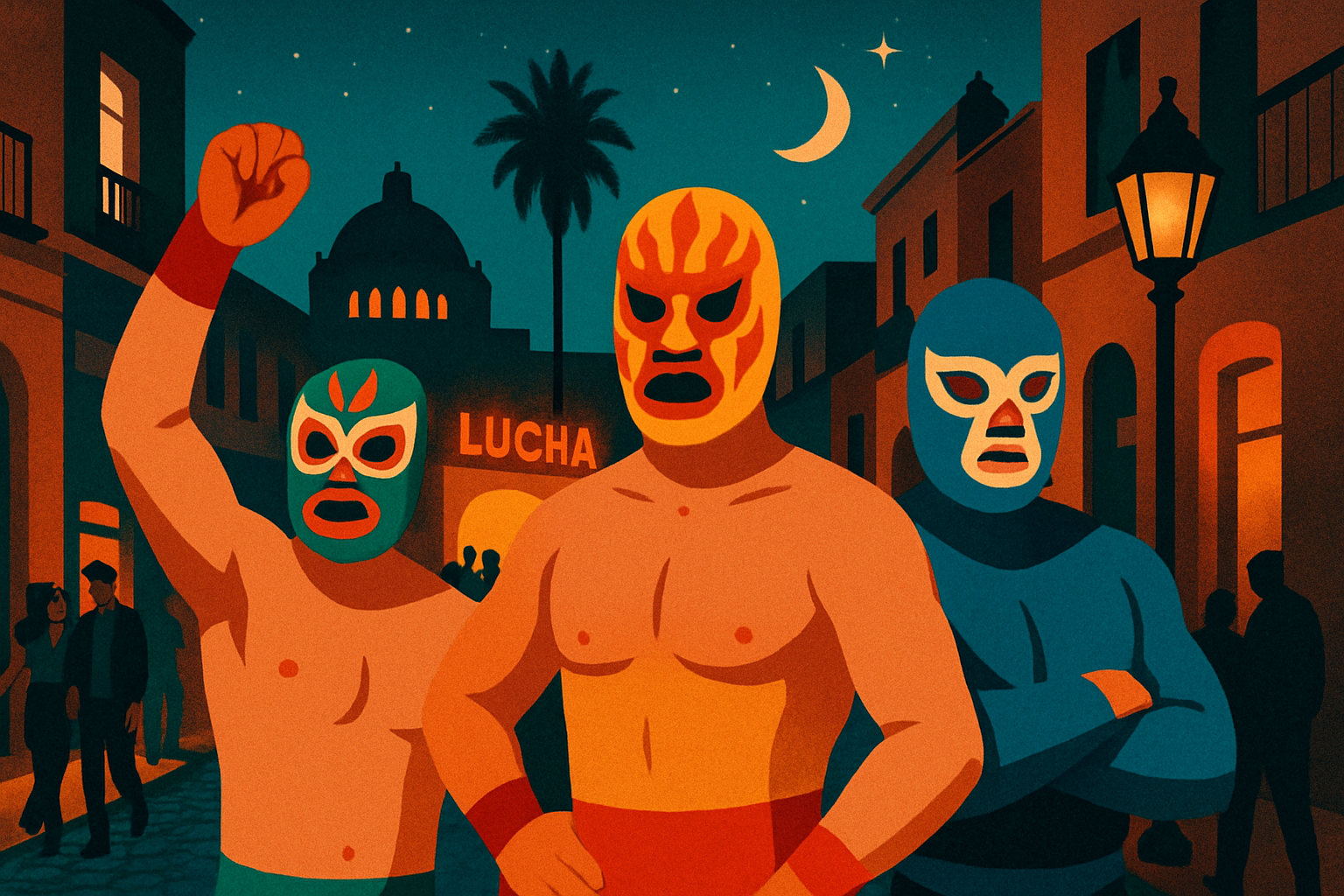
What separates lucha libre from other wrestling styles is the athletic vocabulary: aerial sequences performed at speed, rapid exchanges between three or four competitors in the ring simultaneously, and a match structure built around three falls (caídas) rather than a single pinfall. Técnico wrestlers are the heroes who win through skill and fair play. Rudos are the heels who cheat, bait the referee, and provoke genuine outrage. The crowd's job is to reward the técnicos and punish the rudos with coordinated insults — and Mexico City audiences, particularly in the upper General sections at Arena México, are extremely good at their job.
The other major organization, AAA (Asistencia, Asesoría y Administración), broke away from CMLL in 1992. AAA leans toward theatrical, soap-opera storylines; CMLL runs closer to a sport with an emphasis on in-ring craft. CMLL's shows at the two historic Mexico City arenas are what most visitors to the city are actually attending.
2. Arena México vs Arena Coliseo: two venues, two completely different nights
CMLL operates two permanent venues in Mexico City. They are as different from each other as the neighborhoods they occupy.
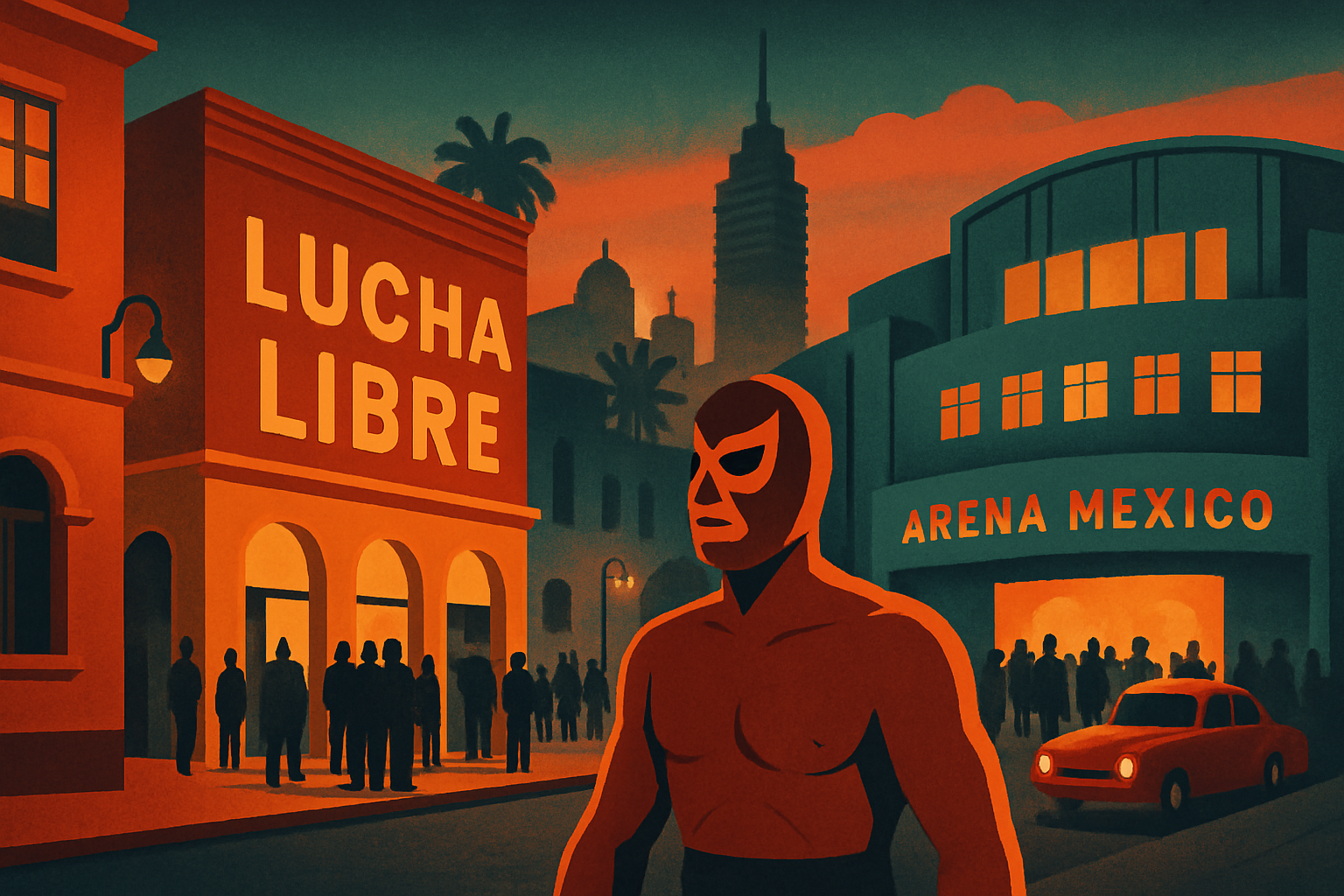
Arena México at Dr. Lavista 197, Colonia Doctores, opened in 1956 and holds up to 10,000 spectators for major events. It is called — with justification — the Cathedral of Lucha Libre. The building sits on a wide block in Doctores, a dense working-class neighborhood east of Roma Norte, and the exterior has changed little in seventy years. Inside, the ring sits elevated at the center of a steeply banked arena; the upper sections look directly down at the action from every angle. Friday nights here — the Función Espectacular — are the biggest regular show in Mexico City lucha libre. The neighborhood surrounding the arena is covered in the Colonia Doctores guide.
Arena Coliseo at República de Perú 77, Centro Histórico, opened in 1943 — thirteen years before Arena México — and is smaller, older, and considerably more atmospheric. The building is mid-century in a way that makes it feel like a set from a Golden Age Mexican film: high ceilings, a compact ring that sits almost at floor level relative to the lower seats, and concession stands that have occupied the same positions for decades. CMLL runs shows here on Tuesdays. The crowds are smaller and more knowledgeable; first-timers mostly filter toward Arena México, so Coliseo on a Tuesday means watching alongside committed long-term fans who have opinions about every call.
For a first visit, Friday at Arena México is the correct choice. For a second visit, or if you are in Mexico City on a Tuesday with no other plans: Arena Coliseo.
3. How to buy tickets without paying tour-operator prices
Almost every Mexico City travel guide mentions lucha libre. Almost none list the actual ticket price, because most are affiliated with tour operators charging 55–90 USD for a seat worth 200–400 pesos.
Walk-up windows at Arena México open approximately two hours before showtime — around 6:30 PM for Friday shows beginning at 8:30 PM. Tickets are sold by section and accepted in cash or card. Most Friday shows have walk-up availability. The exception is Apuesta matches — Máscara contra Máscara events, where a luchador bets their mask on the outcome — which are announced in advance and sell out days before the show. For advance purchase, Ticketmaster Mexico (ticketmaster.com.mx) lists CMLL events at both arenas and sells at face value plus a small service fee.
Approximate ticket prices at Arena México:
- Primera (ringside floor, front rows): 350–550 MXN
- Numerada (numbered reserved, main bowl): 280–400 MXN
- General (upper sections): 200–260 MXN
What tour operators provide for the higher price: an English-speaking guide who explains storyline context during the show, and sometimes hotel pickup. If you want narrative context in real time, this adds genuine value. If you are comfortable following the action on visual cues — which most people are, because técnico vs rudo reads as universal grammar — the window ticket and your own navigation are straightforward.
4. Where to sit and what each section gives you
Arena México's ring is elevated about 1.5 meters from the floor, so every seated section looks down at the action. There are no obstructed-view seats in the main bowl.
Primera (ringside): The front rows at floor level, within three or four meters of the ring apron. At this distance you hear the wrestlers clearly — their breathing, the percussion of a kick landing, the brief Spanish exchange between a técnico and rudo working out their next sequence. Rudos are most likely to drag the action toward your row, berate the audience at close range, or throw water in your general direction. All of this is considered part of the performance.
Numerada (numbered reserved sections): The main bowl, divided into lettered sections radiating from the ring. Elevated angles over the ring mean aerial moves read more cleanly than from ringside — you see the full arc of a 450-degree splash from above, rather than watching someone disappear over the ropes from floor level. Sections closer to the ring cost more; the price steps are visible on the seating map at the ticket window.
General (upper sections): The least expensive seats with one underrated advantage: the complete top-down view makes complex multi-person exchanges — common in CMLL's trademark trios matches, where three técnicos face three rudos simultaneously — much easier to follow than from closer sections. The Doctores neighborhood regulars who have been attending for decades tend to cluster up here. Sit in General and pay attention to the crowd around you; you will absorb more about lucha libre in two hours than any written guide provides.
5. What actually happens at a lucha libre show
A typical Friday Espectacular at Arena México runs four to five matches. The opener (apertura) starts around 8:30 PM with younger luchadores in compact three-fall matches that establish the crowd's rhythm. Each subsequent match escalates in the reputation of the performers and the complexity of the action. The main event (estelar) typically begins around 10:30–11 PM.
Every match uses the caída structure: to win a fall, a wrestler must pin an opponent for a three-count or force a submission. Two-out-of-three-falls is the CMLL standard. The first fall often ends quickly — inside 3–5 minutes, sometimes faster. The second is longer and usually ends with the trailing team tying the match at one fall each. The third caída is where the match actually lives: extended aerial sequences, near-falls the crowd rises and falls with, and the eventual outcome.
The técnico and rudo roles telegraph without language: técnicos fly, coordinate, and play to crowd appreciation; rudos cheat, distract referees, and pull masks — and since masks in lucha libre represent a wrestler's entire public identity, pulling one is the deepest available insult. The referee is not a neutral official. The ref's role includes getting distracted at exactly the right moment and being loudly surprised about it afterward. Crowd participation is not optional. When a rudo does something the arena considers particularly outrageous, the coordinated response from the General section reaches a volume that consistently surprises first-time visitors — even those who arrived knowing what to expect.
6. Food, drinks, and eating before and after the show
Arena México's concession stands are inside the entrance concourse and positioned throughout the main bowl: hot dogs, tortas, nachos, and canned beer (Modelo and Corona) at 80–150 MXN per item. Buying inside is practical if you do not want to miss action; the food is straightforward arena fare.
The better option if you arrive early is the street vendors that set up along Dr. Lavista and the surrounding blocks of Doctores starting around 6 PM on Fridays. Tacos de canasta — cloth-covered basket tacos, steamed and dense, filled with bean, potato, or chicharrón — are available from stands that have worked this corner for years. A cluster further down Calle Dr. Río de la Loza, one block south, runs larger comal operations with tacos de guisado from trays of braised meats and vegetables. Prices at street level: 20–30 MXN per taco.
After the show, the same vendor spots are often still operating, supplemented by late-night taco stands that specifically set up for the post-match crowd. The 24-hour spots near the arena on Dr. Lavista fill between 10:30 PM and midnight with people relitigating the third caída over plastic tables under fluorescent lighting. If you eat at one of these after a Friday show, you are participating in a post-arena ritual that has been running continuously since the 1950s.
7. Is lucha libre in Mexico City safe for tourists?
Arena México sits in Colonia Doctores, which carries a rougher reputation than Roma or Condesa. The practical reality in 2026 is that the arena and the two or three surrounding blocks on show nights are heavily trafficked and safe — several thousand people move through the same streets simultaneously, the arena employs visible security at every entrance, and the crowd is family-heavy. Many regular CMLL attendees are parents with children who have been coming to the same arena since they themselves were young.
The precaution worth taking is the one that applies to Mexico City broadly after dark: use Uber or Didi rather than flagging a street taxi when leaving the arena. Post-show surge pricing is real — stepping half a block from the main exit before requesting your ride typically gets a faster pickup at a lower price than standing directly outside. From Arena Coliseo in the Centro Histórico, the same rule applies. The Zócalo area is a ten-minute walk from Arena Coliseo if you want to extend the evening after the show ends.
8. When to go, what to wear, and how long does a show last
When to go: Friday Función Espectacular at Arena México is the most complete version — largest card, loudest crowd, best production. Tuesdays are cheaper and more technically focused. Arena Coliseo on a Tuesday is the connoisseur option; Arena México on Friday is the right first experience.
What to wear: There is no dress code. The arena sees families in casual clothes, dedicated fans in CMLL merchandise, and regulars who have worn the same jersey for fifteen years. Buying a luchador mask from the vendors on Dr. Lavista before entry — 100–200 MXN for replica masks of famous wrestlers like Místico, Último Guerrero, or Dragón Lee — is not a tourist affectation; plenty of people in the General sections wear them throughout the show, which signals appreciation in the universal language of wrestling fandom.
Duration: Plan 2.5 to 3 hours from doors to final bell. Shows rarely start at the listed time — the first bell is typically 20–30 minutes after the scheduled start, which is consistent enough to rely on. Arriving 30 minutes before the official start time is enough to find your section, eat from the concession stands, and be seated before the opener.
Getting there: Arena México is a 5-minute walk from Metro Doctores (Line 2, blue line) or a 12-minute walk from Metro Hospital General. For Arena Coliseo, Metro Allende (Line 2) or Metro Zócalo (Line 2) leave you within ten minutes on foot — the arena on República de Perú is in the same walkable zone as the Templo Mayor and the cathedral.