1. Why Rhodes food is different — seven centuries of overlapping kitchens
Rhodes is not a typical Greek island in any historical sense, and its food reflects that. The island was Byzantine until 1309, then ruled by the Knights of St. John until 1522, then under Ottoman control until 1912, then under Italian administration until 1943, and formally reunited with Greece only in 1947. Each occupation left marks on the architecture, the dialect, and the kitchen.
The Italian period (1912–1943) is visible in the Art Deco market buildings near Mandraki Harbour and in a handful of preserved-vegetable preparations and pasta-adjacent dishes that survived the shift back to Greek cooking. The Ottoman period left behind layered savory pastries and spice habits that differentiate Rhodian mezedes from their Athenian equivalents. Cumin and coriander appear in dishes that on the mainland would be seasoned with nothing but salt and dried oregano.
The Dodecanese identity — shared with Kos, Patmos, and the other southeastern Aegean islands — means Rhodes cooking runs its own line that diverges meaningfully from both the Greek mainland and the Cycladic islands most travelers know. Pitaroudia and melekouni are not found in the same form elsewhere in Greece. Understanding this context changes how you eat on the island: you are not eating a regional variant of the same food — you are eating something with its own distinct logic.
2. Pitaroudia — Rhodes' signature fritter and what separates it from falafel
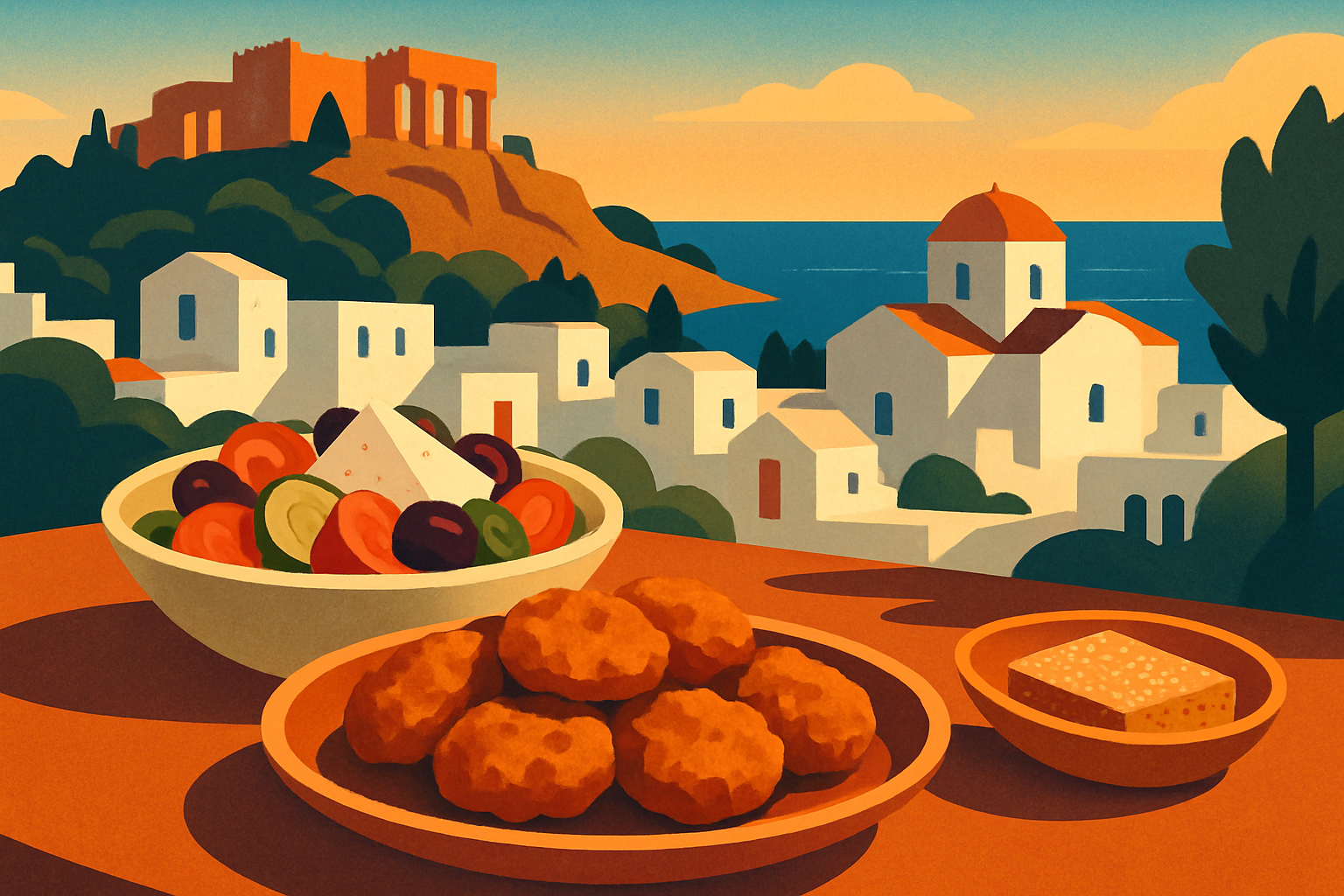
Pitaroudia are chickpea fritters and the dish most closely associated with Rhodian home cooking. The name comes from *pita* (pie) and a diminutive suffix, describing the small round disc that resembles a miniature pie before frying. The Rhodian version is larger and more loosely textured than the dense falafel of the eastern Mediterranean, and the flavoring is specifically its own: grated fresh tomato, chopped mint, white onion, and a significant amount of cumin, which gives the fritter an earthy warmth that falafel does not have.
The preparation requires forethought: chickpeas must soak overnight, cook until soft, then be roughly processed — not smooth, but coarse and mealy — before the aromatics are folded in. The mix forms into plump rounds and fries until the outside develops a pale gold crust while the center remains creamy. Served hot from the oil, they need no sauce, though some kitchens offer a tahini dip or a spoonful of strained yogurt alongside.
In the Rhodes Old Town, pitaroudia appear on menus at neighborhood tavernas in the quieter streets away from the main tourist axis on Socratous Street. Walking one or two blocks east or west of Socratous — toward the Jewish Quarter or north toward the Palace of the Grand Masters — finds kitchens that are more specific. Pitaroudia in these spots typically arrive as a starter plate for 5–7€. Their presence on the menu is the most reliable signal that the rest of the food is worth ordering.
3. Fresh seafood: Mandraki Harbour, Kamiros Skala, and what to actually order
Rhodes is surrounded by the Aegean to the north and the Dodecanese straits to the east and south, and the fishing has been central to the island's economy for centuries. The seafood makes the strongest argument for eating at the island's harbors and fishing settlements rather than in the convenience of the walled Old Town.
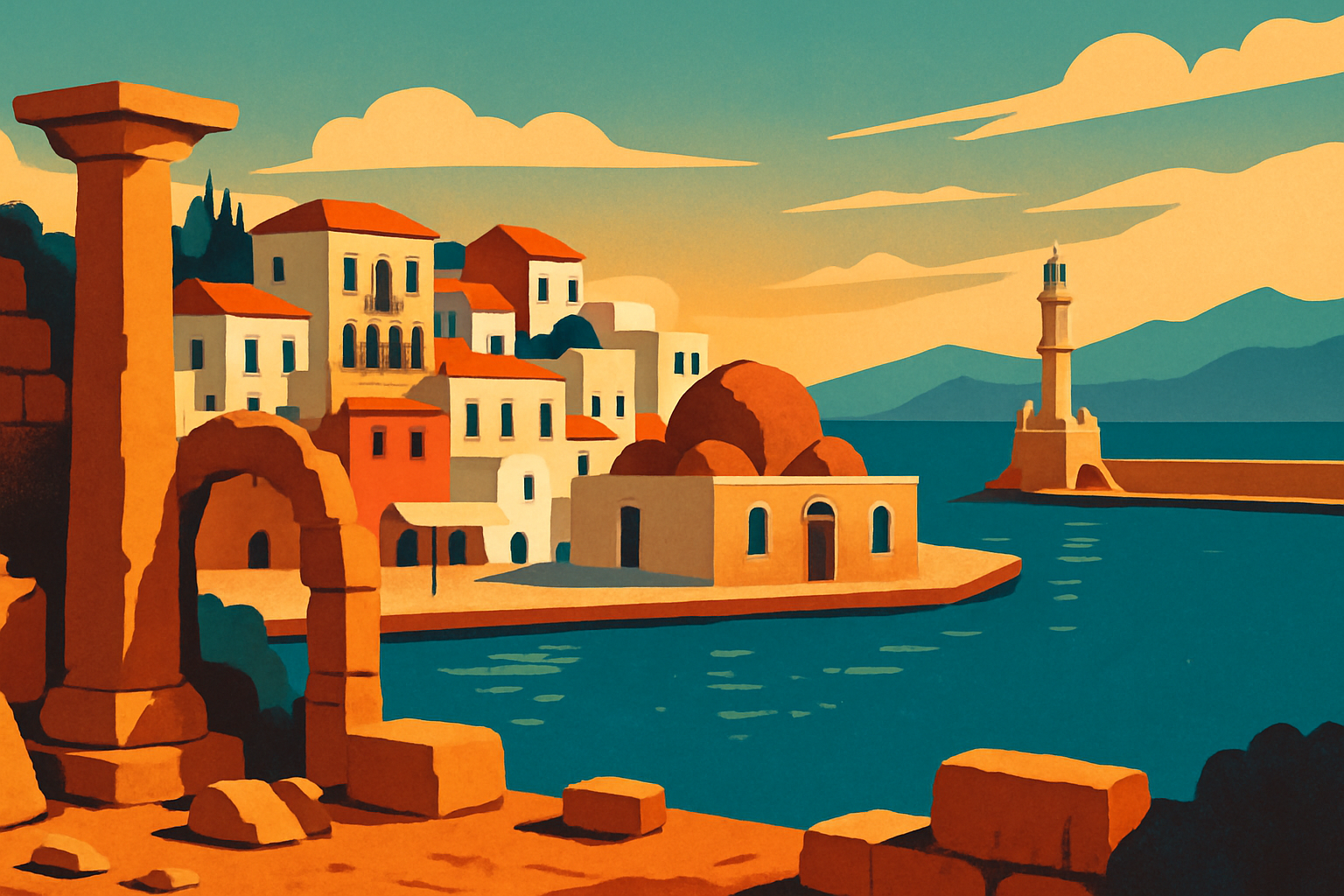
Mandraki Harbour — the northern harbor of Rhodes Town, where two columns topped by a deer and a doe mark the supposed site of the Colossus of Rhodes — has seafood restaurants along the eastern quay. Prices here reflect the harbor view. The practical move is to look for a daily catch board rather than the printed menu; the printed menu reflects sourcing decisions made for cost, while the catch board reflects what came off the boats that morning.
For a more direct experience, Kamiros Skala — a small fishing harbor on the northwest coast, about 50km from Rhodes Town — is where fishermen unload in the early morning and where several small tavernas buy directly from the boats. The drive takes just under an hour and deposits you in a settlement with a handful of tables, a view toward the island of Halki on the horizon, and octopus drying on wooden racks as they have for centuries. Grilled sea bream (tsipoura) and sea bass (lavraki), cooked whole over charcoal, are the order. Grilled octopus dressed with olive oil and red wine vinegar completes the meal.
From Lindos, 55km south of Rhodes Town, the small fishing harbor below the acropolis has several tavernas where fresh catch can compensate for premium setting. Go to Lindos for the acropolis and the light — stay if you find fresh fish on the board.
4. Melekouni — the sesame-honey bar that gets handed out at weddings
Melekouni is a compact bar of roasted sesame seeds pressed with honey, cinnamon, orange zest, and a small amount of coriander, then cut into diamond or rectangular pieces and left to set. It is dense, sweet without being cloying, aromatic, and not like anything sold elsewhere in Greece under a similar name.
The social role is specific. For centuries on Rhodes, melekouni has been the sweet distributed at weddings, engagements, baptisms, and name days — not as a cake alternative but as a small gift from the host to each guest, wrapped in paper and handed out individually. This tradition is what the EU recognized in 2018 when melekouni received Protected Geographical Indication (PGI) status, restricting the name to products made from Rhodian honey and sesame by traditional methods in Rhodes.
The honey used is typically a blend from the island's three primary sources: thyme honey from mountain wildflowers, pine honey from the forested slopes inland, and flower honey from coastal meadows. The proportions affect the final flavor significantly. The Apollona Women's Agrotourist Cooperative in Apollona village has been producing melekouni since 2005 using recipes handed down from grandmothers — a visit gives you both the best version of the sweet and the story behind it.
In Rhodes Town, melekouni is sold in shops along Socratous Street in vacuum packages at €4–8 per piece and by weight at better shops. The loose version by weight, produced more recently, has a softer texture and more pronounced honey fragrance. It keeps without refrigeration for two to three weeks and travels well.
5. Embonas and the Rhodian wines worth seeking out
Almost no visitor to Rhodes ends up in Embonas, and that is a mistake worth correcting. Embonas is a village of around 1,000 residents at 825 meters above sea level in the Attavyros mountain range, 45km southwest of Rhodes Town on a road that winds through pine forest and olive groves. The village square has a kafeneion, a winery, and the smell of the island's most concentrated agricultural production.
The main grape varieties grown in the Embonas vineyards are Athiri — a white grape indigenous to Rhodes with high acidity and citrus character — and Mandilaria, a red variety producing deeply colored, tannic wines with dark fruit. Both grow at altitude with significant day-to-night temperature variation, which gives them structure that coastal island wines rarely achieve.
CAIR (the Rhodian Wine Institute), operating since 1928 and originally established under the Italian administration, produces still wines, sparkling wines, and vermouth from Embonas grapes. Several small family producers offer cellar-door tastings in the village itself, typically free or for a nominal fee. Athiri is the correct order at fish tavernas on the island — high enough acidity to work with grilled sea bream or fried calamari, and enough minerality to suggest something more serious than house wine. A bottle at the source in Embonas costs €6–12; the same wine on a Rhodes Town restaurant menu costs €18–25.
Getting there requires a rental car (45 minutes) or taxi (approximately €45 one way). There is no bus service calibrated for a day of wine tasting. The drive through the Attavyros foothills is worth the trip on its own.
6. Where to eat: Old Town vs New Town vs Lindos — the honest breakdown
The biggest practical question about eating in Rhodes is whether the Old Town is worth it given its tourist concentration. The answer is selectively yes.
Old Town: The UNESCO-listed walled medieval city is spectacular to walk through, but Socratous Street — the main commercial spine — is lined with restaurants calibrated for tourist throughput: English menus, photo displays of food, and pricing that reflects the foot traffic. Walking one or two streets off Socratous finds different kitchens. Look for handwritten daily specials and the presence of pitaroudia as a signal that the kitchen is making considered choices. The Jewish Quarter section and the northern blocks near the Palace of the Grand Masters are the most productive areas to search.
New Town: The area north and west of the walled city, including the streets inland from the Mandraki waterfront, has a mix of tourist-facing restaurants near the harbor and more local options along Griva Street and the residential blocks inland. Pricing here runs 15–20% lower than comparable Old Town spots.
Lindos: The village is spectacular and the food is secondary to the setting. The Acropolis of Lindos above, the bay of St. Paul below, and the Turkish coast visible on a clear day mean restaurants can charge premium prices for moderate cooking. Exception: the fish tavernas at the harbor, where fresh catch can justify the setting premium. The Rhodes travel guide covers the logistics of getting there and timing the visit.
On timing: June is ideal — crowds have not yet reached July–August intensity, the local population is present, and evening temperatures of 24–27°C make outdoor dining comfortable until midnight. Dinner at 9 p.m. is the right timing regardless of where you sit down.
7. Is the Old Town food a tourist trap? And what does a meal actually cost?
Is it a tourist trap? The main street is partially, yes. Socratous Street runs through one of the most visited medieval walled cities in the Mediterranean and the restaurant economics follow. But the Old Town is larger than it appears from the main spine — the streets running into the Knights' Quarter and the Jewish Quarter have working tavernas operating for neighborhood regulars as much as for visitors. The test is consistent: does the menu include pitaroudia and giaprakia (stuffed grape leaves with rice and coriander-spiced minced meat, the Dodecanese variant that carries the Ottoman spice cabinet in every bite) alongside souvlaki and Greek salad? If yes, you are eating at a kitchen with some Rhodian specificity.
What does a meal cost? A full mezedopoleio-style dinner — cold starters including pitaroudia, a main plate of grilled fish or meat, a carafe of Athiri, and coffee — runs 25–35€ per person at a well-run taverna in the Old Town's quieter streets, or 18–24€ per person in the New Town. Lindos adds approximately 30% for the view. A plate of pitaroudia as a street snack is 5–7€. A piece of melekouni from a Socratous Street shop is 4–8€ depending on size and freshness. Budget travel is viable on Rhodes: the pitaroudia, a stuffed pita from a bakery, and a glass of Athiri at a harbor bar is an entirely satisfying lunch for under 12€ if you know what you are looking for.
Best month to eat on Rhodes? October, when the Embonas grape harvest is active and the island returns to its own rhythm after the summer crowds clear. June is a close second: the full summer variety is available, the local population is present, and the fishing boats are running at peak season.