The etymology of *tapa* — literally 'lid' or 'cover' in Spanish — has generated more folklore than almost any other food word in the country. The most frequently repeated story credits Alfonso XIII, who allegedly stopped at a Cádiz inn in the early twentieth century and was served wine with a slice of cured ham placed on top of the glass to keep out flies and dust. Delighted, the king ordered another round 'with the lid.' A charming story, and almost certainly apocryphal.
The more credible historical consensus, supported by food historians including Lara Anderson in her study of Spanish culinary identity, is that the tapa evolved organically from the medieval tavern practice of covering wine vessels with bread or meat to prevent contamination — a functional gesture that gradually became a social one. Documentary evidence of bars serving free food with drinks appears consistently in Andalusian records from the nineteenth century, particularly in Cádiz, Seville, and Granada, where the hot climate encouraged lighter, standing-up eating rather than seated meals.
The reason this origin debate matters for the modern traveler is that it explains the enormous geographic variation in what 'tapas' means today. The tradition never spread uniformly across Spain — it emerged locally, in response to local conditions, and was later exported as a national brand by the tourist industry in the 1960s and 1970s under Francisco Franco's regime, which promoted flamenco, bullfighting, and tapas as symbols of a unified Spanish identity. That marketing project flattened genuine regional distinctions that still exist and still matter. The word became a shorthand for an entire country's food culture, but the reality on the ground was always far more fragmented and specific.
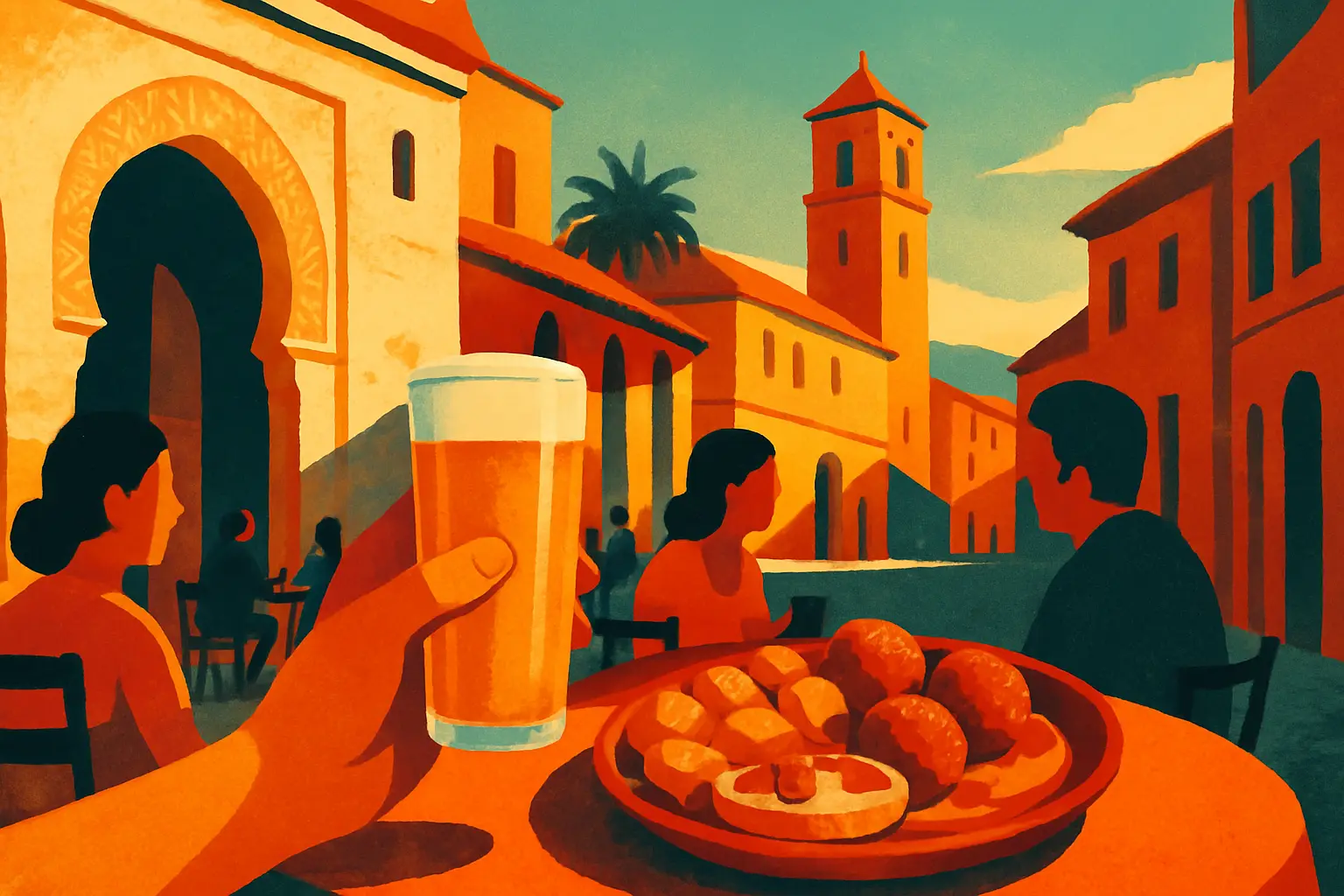
Granada is the city that most confuses and delights first-time visitors. The rule — at least in most traditional bars — is simple: order a drink and food appears. You don't choose the tapa on the first round; the bar brings what it brings. On subsequent rounds, you sometimes get to choose from a short list, or the kitchen simply sends something different. The social logic is elegant: the bar controls food waste, you discover things you'd never have ordered, and the drinking pace is naturally slowed by eating.
This custom is so embedded in Granada's culture that bars compete on the quality of their free tapas as a primary differentiator. A bar offering good tapas will fill up; one offering stale bread and a thin slice of chorizo will lose regulars to the place down the street. The economic model works because drinks maintain consistent margins and food functions as a loyalty mechanism rather than a profit center.
The best neighborhoods to experience this system properly are Realejo (particularly Calle Tendillas de Santa Paula), the Albaicín (though tourist-facing bars here are increasingly stingy), and Calle Navas in the city center, which remains the most concentrated stretch of serious tapas bars in Granada. Bar Los Diamantes on Plaza Nueva has been serving fried seafood tapas with drinks since the 1950s. Bar Avila on Calle Navas is famous for its rotating menu of more substantial tapas — often a small cazuela of slow-cooked meat or a generous salad.
Drinks typically cost €2–€2.50 for a caña (small beer) or glass of house wine. The tapa included is worth, by restaurant standards, another €3–€5. Doing four or five rounds at different bars is Granada's version of a food tour across Andalusia, and it remains one of the best-value eating experiences in Europe.
Get short, interactive stories that make each place easier to remember while you travel.
Call a pintxo a tapa in the Parte Vieja of San Sebastián (Donostia) and you'll get a polite but firm correction. The two traditions share the idea of small bites consumed standing up in bars, but the similarities end there. Where tapas emerged from functional improvisation, pintxos — from the Basque word for 'spike' or 'skewer,' referring to the toothpick that originally held ingredients to bread — are a deliberate, craft-driven food form with their own competitive culture.
The bars of San Sebastián's old town display elaborate pintxo spreads across their counters: towers of txangurro (spider crab) on toast, thin slices of jamón over anchovy, gildas (the original pintxo: anchovy, olive, and pickled pepper on a toothpick), and increasingly complex hot pintxos prepared to order — seared foie gras, bacalao with pil-pil sauce, mushroom and idiazabal cheese combinations. Bar Gandarias on Calle 31 de Agosto is a benchmark for traditional cold pintxos; La Cuchara de San Telmo on Calle 31 de Agosto produces exceptional hot pintxos made to order from a tiny open kitchen; Bar Txepetxa on Calle Pescadería is the city's cathedral of anchovy preparations.
The payment system is fundamentally different from both Madrid and Granada. You take pintxos from the bar counter yourself, keep track of how many you've eaten, and settle up honestly at the end. There's no running tab in the formal sense — it runs on social trust. Prices are typically €2–€3.50 per pintxo, with hot preparations reaching €4–€5. Wash everything down with txakoli, the local slightly sparkling white wine poured from height to oxygenate it, or a zurito (a very small draft beer, smaller than a Spanish caña).
San Sebastián also hosts the Campeonato de Pintxos de Euskadi, an annual competition that has driven extraordinary innovation in the format over the past two decades. This competitive culture has no parallel in the tapas world of southern Spain.
Madrid is not a free-tapa city, and hasn't been for most of living memory. The capital's relationship with tapas is commercial: you order what you want, you pay for it, and the quality-to-price ratio varies enormously depending on where you eat. This isn't a deficiency — Madrid has some of the most sophisticated tapas bars in the country — but it does require a different approach.
The traditional tapas circuit in Madrid centers on La Latina, specifically the streets around Plaza de la Paja and Calle de la Cava Baja. On Sunday afternoons after the El Rastro flea market closes, the entire neighborhood fills with madrileños doing the ronda — moving from bar to bar for vermut and small plates. Juana la Loca (Plaza de la Puerta de Moros 4) makes a celebrated tortilla de patatas with caramelized onion that regularly appears on lists of Madrid's essential bites. Casa Lucio (Calle Cava Baja 35), open since 1974, is famous for its *huevos estrellados* (fried eggs over crispy potatoes), which function as a shared tapa at the bar.
The more historically significant tapas tradition in Madrid is the vermut culture of Malasaña and Lavapiés, where old tabernas serve vermouth from the barrel alongside olives, boquerones en vinagre (anchovies in vinegar), and patatas bravas. Casa González (Calle León 12) has been operating as a deli-bar since 1931. El Federal and La Taberna de Antonio Sánchez (Calle del Mesón de Paredes 13, open since 1830 — one of Madrid's oldest bars) represent different points on the spectrum from modern to archival.
Budget €3–€8 per tapa in most La Latina bars, rising to €10–€14 for more elaborate preparations. The overall cost of a tapas evening in Madrid is significantly higher than in Granada or even San Sebastián, but the range of ingredients — given Madrid's position as Spain's central distribution hub for produce from every region — is arguably unmatched.
Spain's regional tapas culture extends well beyond the famous cities. Three places in particular deserve attention from travelers who want to understand the full picture.
Almería, in eastern Andalusia, arguably has the most generous free-tapa tradition in the country — even surpassing Granada by some accounts. The city is poorer than Granada and less visited, which has kept prices lower and portions larger. Local bars in the Centro neighborhood around Calle Trajano and Calle Real regularly send out full *mediaciones* — half-portions of actual dishes — with each drink. A single round of drinks can arrive with a small bowl of migas (fried breadcrumbs with chorizo), a piece of grilled fish, or a serving of rice. Almería remains almost entirely off the tourist circuit, which makes this experience feel genuinely local rather than performed.
León, in Castile and León, has a tapa tradition centered on Barrio Húmedo (the 'wet neighborhood,' named for its drinking culture) around Calle Ancha and Plaza Mayor. León's free tapas tend toward the substantial: thick slices of cecina (cured beef, a regional specialty), morcilla (blood sausage), and braised pork preparations. The León tapa functions almost as a small main course, reflecting the caloric requirements of the cold Castilian plateau. A round of drinks and tapas here costs roughly €2–€2.50.
Zamora, an hour south of León by car, has a similar culture with its own Barrio de las Posadas tapas circuit. The city is known for its zarajo (braided lamb intestine, grilled or fried) — a challenging but authentic tapa that appears on almost no tourist menus elsewhere. These smaller Castilian cities reward the traveler willing to move beyond the obvious destinations and engage with Spain's inland food traditions.
Three of Spain's most culturally assertive regions — Catalonia, Valencia, and the Basque Country — have particularly complex relationships with the word 'tapas,' for reasons that are as much political as culinary.
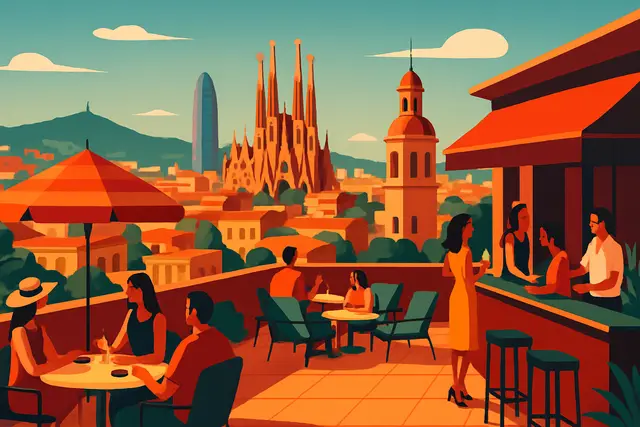
In Barcelona, the word 'tapa' exists and is used, particularly in the Eixample and tourist-facing restaurants. But the native small-plate culture in Catalonia is better described through *entrepans* (filled rolls), *pa amb tomàquet* (bread rubbed with tomato and olive oil, the foundational Catalan snack), and the *vermut* tradition of neighborhoods like Gràcia and Poble Sec. The bar Bar Calders (Carrer del Parlament 25) in Sant Antoni exemplifies Barcelona's version of bar culture — excellent natural wines, serious charcuterie, and an atmosphere that reads as more French bistro than Andalusian tavern. Many Catalans bristle at having their food culture subsumed into a Spanish national narrative, and the pushback against the 'tapas' label in Barcelona is partly an expression of that broader cultural politics.
Valencia presents a different case. The city has a strong tradition of eating at the bar — *almuerzo* (second breakfast, taken around 10:30–11:00) is a serious institution, involving bocadillos, grilled meats, and coffee — but it doesn't organize this around the tapas concept. The real Valencian contribution to Spain's small-bite culture is the horchata and fartons tradition (tiger-nut milk with elongated pastries, consumed at *horchaterías* like the legendary Horchatería Santa Catalina, open since 1836 on Plaza de Santa Catalina).
The Basque Country, as discussed in the pintxos section, maintains the clearest and most defended distinction. It's worth noting that the political dimension here is explicit: Basque cultural institutions actively distinguish pintxo culture from tapas culture as an expression of regional identity, in the same way they distinguish Euskera from Spanish. Exploring Basque food culture means accepting these distinctions on their own terms.
The single most useful thing you can do before arriving in any Spanish city is establish which tapas culture you're entering — because the etiquette, timing, and economics differ substantially. Here's a practical breakdown by region and type.
**Free-tapa cities (Granada, Almería, Jaén, Salamanca, León, Zamora):** Don't ask for a specific tapa on the first round — let the bar choose. It's acceptable to request a preference on round two. Tip is not expected but rounding up is appreciated. Lunch service (14:00–16:00) and evening (20:00–23:00) are peak times. Avoid eating too much before you go — the whole point is to graze across multiple bars.
**San Sebastián (pintxos):** Arrive at the bar's opening time (12:00 or 19:00) for freshest counter selection. Point at what you want, the bartender will plate it. Keep your toothpicks — some bars count them to calculate the bill. Txakoli is the correct wine pairing; ask for it poured alta (from height). Don't stand at a table without ordering — the counter is where the culture happens.
**Madrid:** Lunch tapas (14:00–16:00 Sunday) in La Latina is the week's best session. Order vermut (house vermouth, usually €2.50–€3) as your first drink — it signals you understand local rhythm. Ask for patatas bravas with both sauces (bravas and aioli) combined — this is 'bravas mixtas' and not all bars advertise it. Reservations are unnecessary for bar seating; table reservations are increasingly needed for weekend evenings at serious tabernas.
**Barcelona:** Order pa amb tomàquet automatically with any charcuterie — it arrives in most bars for €1–€2 and is not optional if you're eating seriously. The vermut session (13:00–15:00 on weekends) in Gràcia and Poble Sec is the city's best bar culture moment. In tourist areas, scrutinize menus for tourist pricing — a 'gamba a la plancha' in La Barceloneta that costs €4 at a local bar should never cost €14.
**Valencia:** Don't skip almuerzo (10:30–11:30). Order a *montadito de llom* (pork loin sandwich) at a traditional bar around the Mercat Central and you'll eat better for €2.50 than at almost any tourist restaurant. The city's tapas scene has improved significantly since 2020, with the **Russafa** neighborhood developing a serious small-plates culture across bars like El Celler de la Parra.
**Universal timing rule:** Spaniards eat late. Tapas bars in most cities don't hit their social peak until 21:00–22:00 on weeknights and 22:00–23:30 on weekends. Arriving at 19:00 is acceptable for the first drink; arriving at 18:00 and expecting full atmosphere is going to disappoint in most cities outside of tourist areas.