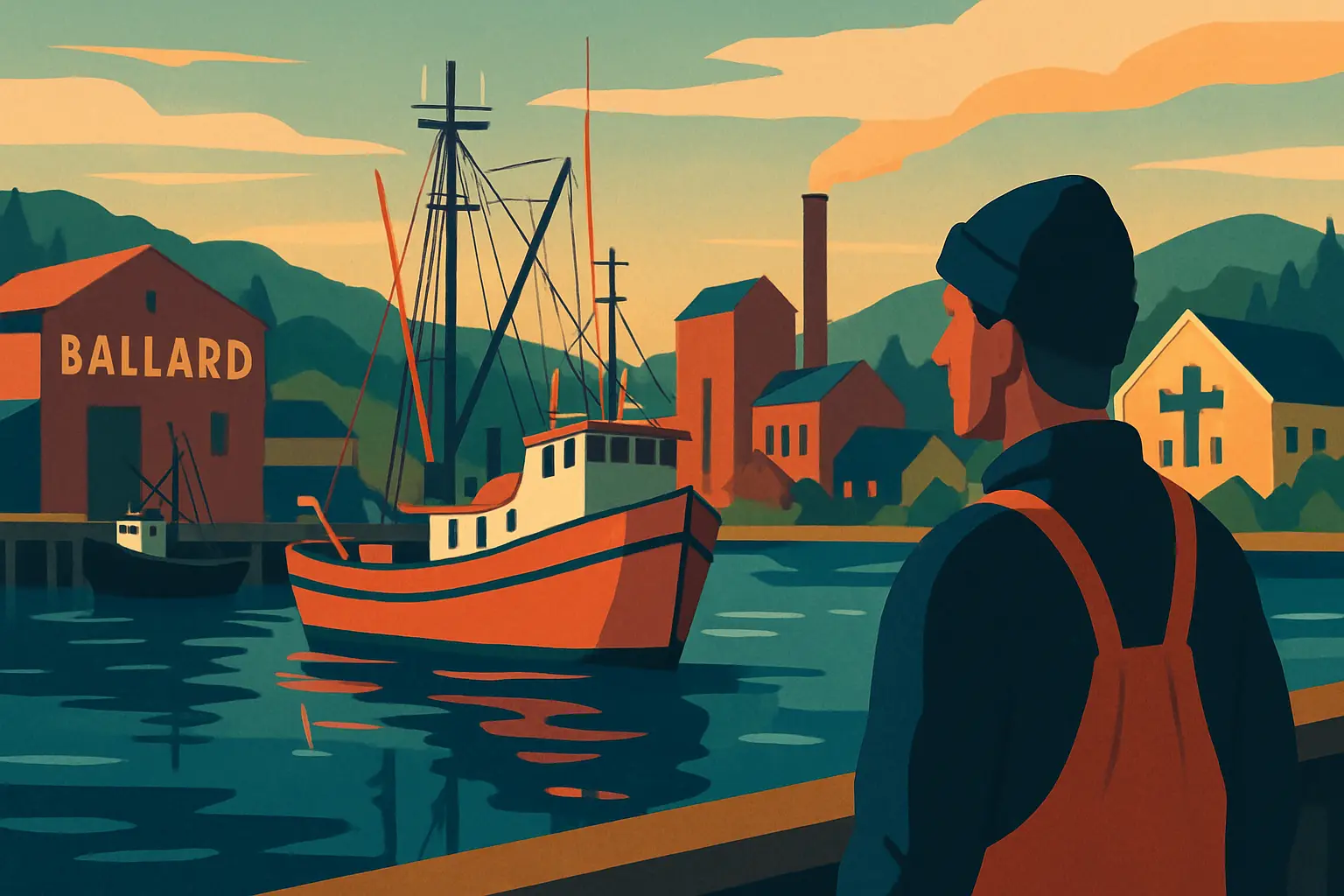
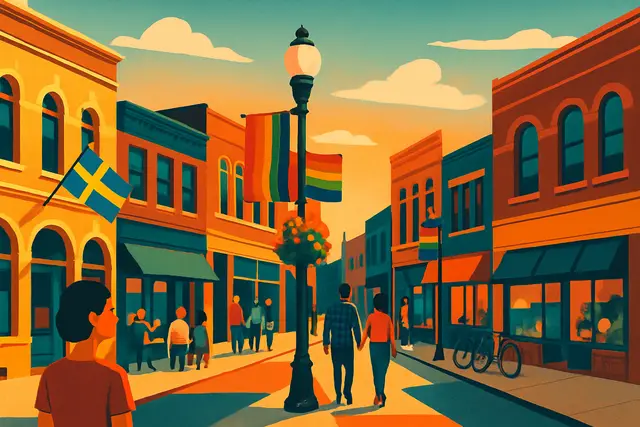
Ballard was incorporated as an independent city in 1890 and remained one for 17 years, until Seattle annexed it in 1907 — largely against the wishes of its residents, who had voted against annexation multiple times before the city finally won on a narrow margin. The resistance was not just civic pride. Ballard had its own economy, its own water supply, and its own identity built around the fishing and timber industries that had brought thousands of Scandinavian workers to the shores of Salmon Bay in the 1880s and 1890s.
The Norwegian fishermen who settled here came for the same reason the timber workers did: the Pacific Northwest's resources were enormous, and Seattle was the staging point for reaching them. By 1900, Ballard had one of the highest concentrations of Scandinavian immigrants in the United States outside of Minnesota. Norwegian, Swedish, Danish, and Finnish were all spoken on the streets of the business district. The salmon-canning operations along the waterfront processed millions of pounds of fish annually for markets as far east as New York.
The timber mills are gone. Most of the canneries closed after World War II. But the street grid that Ballard's original residents laid out is still the one you walk today — 15th Ave NW, NW Market St, and Ballard Ave NW follow the same routes they did in the 1890s. The brick buildings on Ballard Ave NW are original early-20th-century commercial construction, some with the names of Norwegian-owned businesses still visible in faded paint on their upper stories. The neighborhood kept its bones.
The Hiram M. Chittenden Locks at 3015 NW 54th St — called the Ballard Locks by everyone in Seattle — are the point where the Lake Washington Ship Canal meets Puget Sound. The engineering challenge that required them: Lake Washington sits 26 feet above sea level, while Puget Sound is tidal. Moving boats between the two requires a lock system that lifts or lowers vessels to bridge the elevation difference, while also preventing salt water from flooding into the freshwater lake system.
The U.S. Army Corps of Engineers began construction in 1911 and opened the Locks on July 4, 1917, after six years of excavation work that redirected waterways and reshaped the entire north end of Seattle's shoreline. Today the Locks handle approximately 100,000 vessel transits per year — pleasure boats, commercial fishing vessels, research ships from the University of Washington, and recreational kayakers. There are two lock chambers: a small lock (30 by 150 feet) for smaller craft and a large lock (80 by 825 feet) for commercial and military vessels. Watching a dozen sailboats enter, rise 20 feet in a sealed chamber, and exit toward Puget Sound takes about 30 minutes and costs nothing.
The fish ladder runs alongside the south bank. It was added in 1976 to allow salmon migrating from Puget Sound to reach their spawning grounds in the Cedar River watershed above Lake Washington — they can't use the locks, so the ladder gives them a parallel route. The 21-step ladder has a viewing gallery at water level with glass windows set directly into the ladder walls. September and October are the peak months for chinook and coho salmon migration. Watching a 30-pound chinook hold itself against the current three feet from your face, visibly deciding whether to make the next jump, is a different category of wildlife experience than most cities can offer.
Address: 3015 NW 54th St — enter via the west gate off NW 54th St
Open daily 7am–9pm; visitor center open 10am–6pm with salmon and engineering exhibits
Fish ladder viewing gallery: free, no reservation required; best September–October for peak salmon runs
Botanical garden on the grounds is maintained by the Corps of Engineers and is worth a 20-minute walk
Get short, interactive stories that make each place easier to remember while you travel.
The Nordic Museum at 2655 NW Market St is the only major museum in the United States dedicated to Nordic cultural history. The current building opened in 2018 — a purpose-built 57,000-square-foot structure designed by Mithun Architects with the aesthetic intention of evoking a Scandinavian barn: warm wood cladding, pitched rooflines, and a facade that turns dark gray in the winter rain.
The museum covers all five Nordic countries — Denmark, Finland, Iceland, Norway, and Sweden — through permanent galleries on immigration, cultural life, and the specific experience of Nordic communities in the Pacific Northwest. The Nordic Voices gallery on the second floor is the most specific and the most moving: oral histories, family photographs, handwritten letters, and personal objects from the families who built the fishing and timber industries in Ballard and the broader Puget Sound region. The collection ranges from fishing nets and Lutheran church records to the journals of women who made the Atlantic crossing in the 1890s and landed in a city that barely existed.
The ground floor changes with traveling exhibitions — past shows have covered Scandinavian design from 1900 to the present, the history of Nordic folk music, and the contemporary relationship between Sami indigenous culture and Nordic national identity. The museum's research library is open to the public; if your family came from any of the five Nordic countries, the library holds immigration records and regional archives for genealogical research.
Admission is approximately $16 for adults. The museum cafe serves open-faced sandwiches (smørrebrød) and Scandinavian-influenced pastries — a more specific experience than the average museum cafe.
Ballard Avenue NW between 17th Ave NW and 22nd Ave NW is the neighborhood's historic main street — six blocks of early-20th-century brick commercial buildings that survived both Prohibition and the mid-century development that erased similar corridors elsewhere in Seattle. The architecture dates from 1900 to 1920: two- and three-story buildings with original transom windows above the main glass, recessed entries, and cast-iron pilasters. Several retain faded painted advertisements on their upper exteriors for businesses that closed before World War II.
The Walrus and the Carpenter at 4743 Ballard Ave NW is consistently cited among the best oyster bars in the Pacific Northwest. The raw bar selection changes daily based on what arrived that morning; the kitchen produces small plates that pair with the shellfish. Getting a table on a weekend evening is difficult — the bar counter seats walk-ins and is the right place to sit anyway. Staple & Fancy Mercantile at 4739 Ballard Ave NW, from chef Ethan Stowell's restaurant group, runs an Italian-influenced kitchen in one of the avenue's larger ground-floor spaces, and handles larger-party dinners in a way the neighborhood's smaller spots cannot.
On Sunday mornings from 9am to 2pm, the portion of Ballard Avenue NW between Vernon Place and 22nd Ave NW closes to traffic and becomes the Ballard Farmers Market — vendors set up on both sides of the brick street, and the historic buildings give the market a setting few Seattle outdoor markets can match. The market operates year-round in all weather, which is unusual in the Pacific Northwest and reflects how seriously the neighborhood takes its food culture.
Ballard has become Seattle's craft beer neighborhood in a way that happened gradually and then all at once. The cluster of breweries within half a mile of Ballard Ave NW now includes some of the most decorated small producers in Washington State.
Reuben's Brews at 5010 14th Ave NW is the most recognized nationally. Founded by Adam Robbings in 2012 and named for his son Reuben, the brewery has accumulated more medals at the Great American Beer Festival than any other Washington State brewery. The taproom pours around 25 beers at any given time — lagers, imperial stouts, IPAs, sours — in a straightforward, no-frills space where the beer is the point. Weekday evenings are uncrowded enough to get a seat at the bar.
Stoup Brewing at 1108 NW 52nd St sits two blocks from the Ballard Locks, which makes it a natural stop after the fish ladder. The India pale ales and pilsners anchor the tap list; seasonal releases are worth checking. Fremont Brewing — the neighborhood's other large craft producer, covered in depth in the Fremont, Seattle neighborhood guide — is ten minutes east along N 34th St and pairs well with a Ballard afternoon.
For coffee: Lighthouse Roasters at 400 N 43rd St has been roasting in the neighborhood since 1994, predating most of the craft beer scene by a decade. The single-origin filter coffees are among Seattle's most specific, and the shop is small enough that Sunday mornings before the market require patience.
Golden Gardens Park at 8498 Seaview Pl NW sits on Ballard's western edge where the neighborhood meets Puget Sound. The park has a long sandy beach — unusual for Seattle, which typically offers rocky shoreline — with fire pits available by permit through Seattle Parks. On clear evenings from July through October, the beach faces west toward the Olympic Mountains across the Sound, and the light that comes in over the water at that hour is why Seattleites make the drive out specifically.
Shilshole Bay Marina, directly north of Golden Gardens at 7001 Seaview Pl NW, is one of the largest public marinas in the Pacific Northwest with more than 1,400 boat slips. This is the working edge of Ballard's original fishing identity — commercial fishing vessels and Alaska-bound charter boats operate out of the basin, and walking the docks in late summer puts you next to vessels that have been working Alaskan waters. Ray's Boathouse at 6049 Seaview Pl NW has been serving Pacific Northwest seafood from this waterfront location since 1945. The dining room faces the Sound; the cafe bar is accessible without a reservation and serves a shorter menu that includes the clam chowder and Dungeness crab that made Ray's a Seattle institution.
Getting to Golden Gardens from Ballard Ave NW takes about 10 minutes by car or bike through the neighborhood's western residential streets. The beach at 6pm in September — water flat, mountains snow-capped, a few boats moving across the Sound — is one of those Seattle views that explains why people stay here.
How do I get to Ballard from downtown Seattle? The RapidRide D Line (Metro Route D) is the fastest public transit option — it runs from 3rd Ave and Pike St in downtown Seattle directly to 15th Ave NW and NW Market St in about 20 minutes, with service every 7–12 minutes during peak hours. The stop at NW Market St is a short walk to Ballard Ave NW, the Nordic Museum, and Reuben's Brews. By bike, ride the Westlake Ave N cycle track from South Lake Union to Fremont, then continue west along N 36th St into Ballard — the full trip from downtown takes about 35 minutes.
What is the best time of year to visit? September and October are optimal. Seattle's late summer weather holds into September, the Sunday market is at full operation, and the Ballard Locks are showing active chinook and coho salmon runs — the fish ladder viewing gallery is at its best during this window. Golden Gardens fire pits are available through October. The Nordic Museum runs stronger programming in fall and winter.
How does Ballard connect to the rest of Seattle? Fremont is 10 minutes east — the Fremont neighborhood guide covers the Lenin statue, the Fremont Troll, Theo Chocolate, and Fremont Brewing. Pike Place Market is about 25 minutes by the D Line and pairs well with a Ballard visit as both are centered on food, water, and Seattle's working waterfront history.
Is Ballard safe? Yes. The commercial core on Ballard Ave NW, the area around the Locks and Nordic Museum, and Golden Gardens beach are all active and well-traveled during the day and into the evening. The neighborhood is largely residential west of 15th Ave NW, which is quiet after dark.