1. From abandonment to icon: how an LGBTQ+ community transformed a declining barrio
Through most of the twentieth century, the area now known as Chueca was one of central Madrid's least desirable neighborhoods. Bounded roughly by Gran Via to the south, Calle de Fuencarral to the west, Calle de Sagasta to the north, and the edge of the Justicia district to the east, it was a dense grid of aging tenement blocks with cheap rents and limited civic attention. The reputation was for petty crime and neglect. Middle-class Madrileños avoided it.
What changed was a legal and political sequence that began with Francisco Franco's death in November 1975. Under Franco, homosexuality had been explicitly criminalized: the Law of Social Danger and Rehabilitation, in force from 1970, empowered courts to imprison gay men and send them to 'rehabilitation' facilities. The law was amended in 1978 and fully repealed in 1979 — and in that narrow window, a community that had been entirely invisible in public life began, quietly, to build a geography for itself.
The geography it chose was Chueca. The reasoning was practical and precise: rents were the cheapest in central Madrid, the buildings were old and the landlords disorganized, and the neighborhood's obscurity offered a degree of anonymity that more visible areas could not. Between roughly 1978 and 1985, small bars and cafes began opening on Calle de Pelayo and Calle de Gravina — modest places that made no announcements and were found by word of mouth.
By the mid-1990s, the transformation was complete. Residents had renovated apartment buildings that the city had essentially written off. Independent boutiques, design studios, and restaurants followed. A neighborhood that had been among Madrid's poorest central barrios became one of its most sought-after — without a single city-commissioned urban renewal project. The story is important not just as LGBTQ+ history but as a case study in what communities do when they finally have the freedom to build.
2. Plaza de Chueca and the streets that give the neighborhood its shape
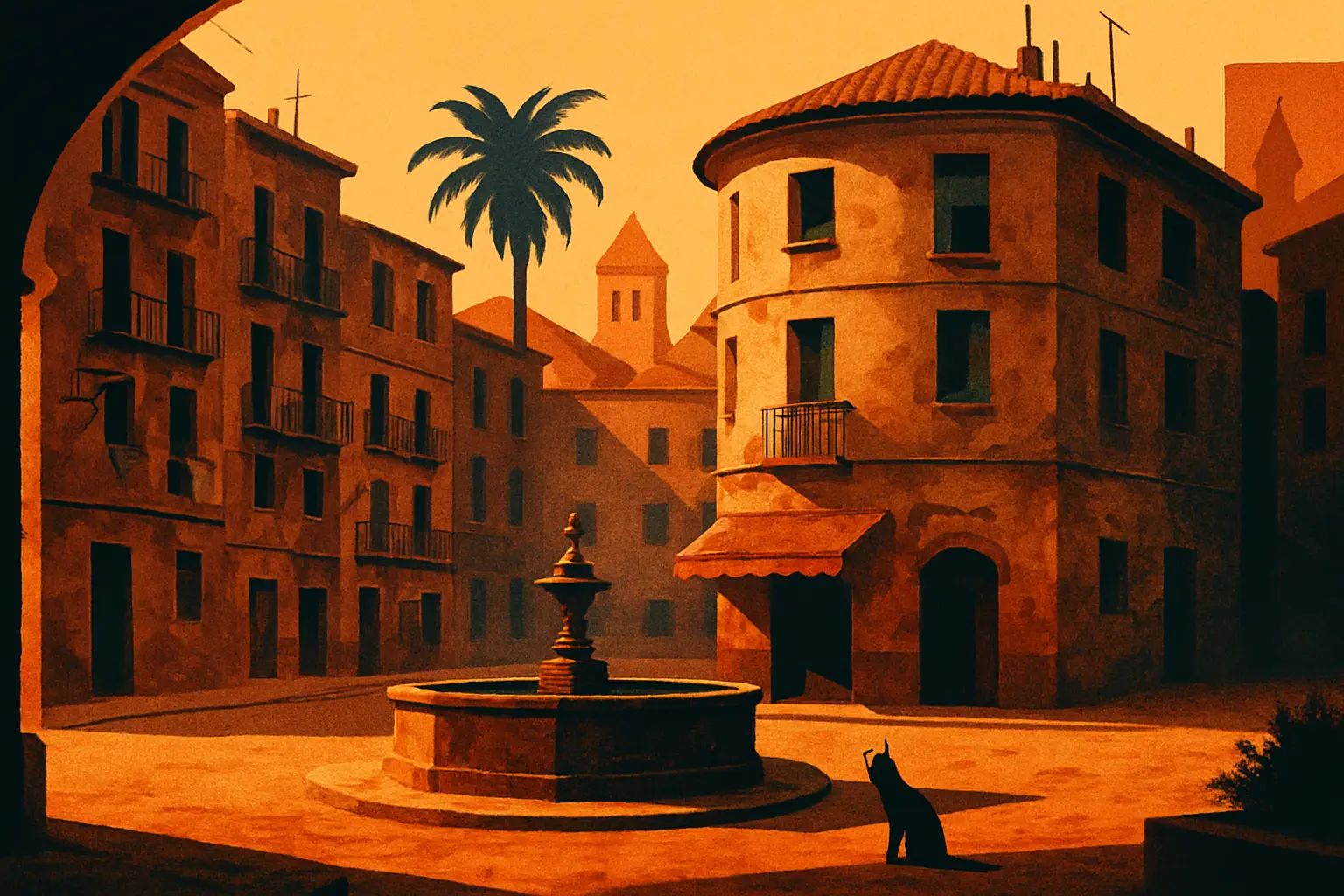
The neighborhood's physical center is Plaza de Chueca — a small, irregular square perhaps forty meters across that functions as the barrio's communal living room at every hour of the day. Unlike the grand staging of Puerta del Sol or the historical symbolism of Plaza Mayor, Plaza de Chueca is intimate. Its terrace tables are occupied by 9 a.m. for coffee and remain occupied past midnight for the last round of drinks. The rhythm of a day in Chueca is largely organized around this square.
The plaza is named for Federico Chueca (1846–1908), a Madrid-born zarzuela composer of considerable fame in his era, who lived in the neighborhood and gave the barrio its official name long before its contemporary identity. A small memorial near the northern edge of the square marks this older history. The irony that a neighborhood now famous for LGBTQ+ culture carries the name of a 19th-century theatrical composer seems to please the people who live there.
From the plaza, three streets carry most of the neighborhood's life. Calle de Pelayo runs north and is the main artery of bars and nightlife — small, crowded, and reliably full from Thursday to Sunday. Calle de Gravina runs east toward Calle de Hortaleza and has the highest concentration of restaurant tables. Calle de Augusto Figueroa runs west toward the Mercado de San Anton. The grid is compact enough to cover on foot in twenty minutes, but the most interesting streets are consistently the ones two turns away from the obvious route.
3. Where to eat and drink: from morning vermut to late-night tables
Chueca's food and drink culture operates on the same schedule as the rest of Madrid but feels more concentrated because the neighborhood is dense enough that every street has something happening at every hour. The defining drink is vermouth, served from the tap at around noon on weekends as a prelude to lunch. Stop Madrid at Calle de Hortaleza, 11 is one of the oldest vermut bars in the neighborhood — a tile-fronted space open since the early 1980s with a façade that has not been significantly renovated. A glass of vermouth on tap costs around €2.20 and comes with a small plate of olives.
•**La Tita Rivera** — Calle de la Reina, 4. A Galician kitchen with a covered patio that fills from 1 p.m. on weekends. The chuletas de cordero (lamb cutlets, ~€16) and the house cider from Asturias are the reasons regulars come back. Reservations recommended for dinner.
•**Lateral** — Plaza de Chueca, 2. Terrace tables directly on the plaza, a reliable Spanish tapas format, and a front-row view of the neighborhood's social life. Around €15–20 per person for several shared plates and a drink.
•**Truco** — Calle de Gravina, 10. A small, unhurried local bar with foosball, cold beer (€2 for a caña), and a clientele that skews toward people who have been coming for twenty years. Exactly what bars in this neighborhood looked like before rents went up.
•**Culto** — Calle de Hortaleza, 34. Specialty coffee, a precise breakfast menu, and an interior that feels more Copenhagen than Madrid. Opens at 8:30 a.m., closes by 6 p.m.
4. The Mercado de San Anton: where the neighborhood actually shops
Two blocks west of the plaza on Calle de Augusto Figueroa, 24B, the Mercado de San Anton occupies a three-story building rebuilt in 2011 and has become one of the most genuinely useful food markets in central Madrid — useful in the sense that it has a real residential clientele, not just a tourist audience.
The ground floor is a traditional wet market: fishmongers, butchers, and a cheesemonger stocking Spanish regional varieties including aged Manchego from La Mancha, Mahon from Menorca, and the creamy Torta del Casar from Extremadura. The first floor converts to a food hall, with stalls ranging from jamón ibérico carved to order to Vietnamese sandwiches. The second floor has a bar and restaurant with a retractable roof that in summer becomes a terrace with views over the Chueca roofline.
The key practical difference from Madrid's more famous Mercado de San Miguel near Plaza Mayor: San Anton's ground floor is where Chueca residents do their weekly shopping. On Saturday mornings it's a social occasion as much as a grocery run. The cheese and cured meat vendors will let you taste before you buy. A selection of three Spanish cheeses to take away runs €8–€14 depending on weight.
5. MADO Madrid Pride: what it is, and why Chueca matters across every month
Every late June and first week of July, Chueca becomes something considerably louder than it is the rest of the year. The MADO Madrid Pride festival — the Orgullo Gay de Madrid — is consistently identified as the largest Pride celebration in Europe, with participation numbers exceeding 3.5 million across the festival week. The main parade along Paseo del Prado draws an estimated one to two million spectators on the Saturday. Hotels across central Madrid sell out months in advance.
But understanding Chueca only through its Pride week misses the point of the neighborhood. The festival is an intensification of something that exists year-round. The terraces of Plaza de Chueca are full on a Tuesday afternoon in November as reliably as they are full during Pride week — because the people using them live here, not because they came for a festival.
For visitors, this has a practical implication: Chueca is worth visiting in any month, and in some respects is more interesting outside the Pride calendar. The bars are less crowded, the terrace tables are easier to get, and the conversation is more likely to include people who have lived in the neighborhood for twenty years than visitors who arrived for the week. If your trip coincides with MADO, book accommodation six months out.
6. Chueca in 2026: what the neighborhood became and what it still is
Chueca is now one of the most expensive places to rent a flat in central Madrid. Average monthly rents for a one-bedroom apartment exceed €1,600 — well above the €900–€1,100 range in Lavapiés or the outer neighborhoods. The community that rescued the barrio from abandonment in the 1980s has, in significant numbers, been priced out of the area it created. The pattern is familiar from Hackney in London, Marais in Paris, and every other neighborhood that was rebuilt by a community and then valued into unaffordability.
What has not disappeared is the neighborhood's character and its particular form of public hospitality. Unlike some gentrified European districts where the original community has been entirely displaced, Chueca maintains visible continuity with its history. Long-standing bars — Black & White on Calle de la Libertad, open since the early 1980s — continue operating alongside newer cocktail bars aimed at a younger international crowd. The Asociación de Vecinos de Justicia-Chueca has been active in limiting tourist apartment licenses and maintaining residential density, fighting the same battle as the Malasaña residents' association a few blocks west, with similarly imperfect but real results.
The neighborhood's current population is a mix of long-term LGBTQ+ residents, younger Madrileños who moved in over the last decade, international workers, and an increasing number of tourists using short-term rentals. The street culture — the terraces, the late hours, the specific ease of public space — remains the neighborhood's defining asset and its most contested one.
7. Practical guide: is Chueca only for LGBTQ+ visitors, and other questions answered
The most common question first-time visitors have about Chueca is whether they will feel out of place if they are not LGBTQ+. The short answer is no. The neighborhood has operated as a welcoming space for all visitors since the mid-1990s, and its defining social dynamic is inclusion rather than exclusivity. The terrace tables on Plaza de Chueca on a Sunday afternoon hold a cross-section of Madrid's population. Families with children, groups of older Madrileños, tourists from across Europe, and the neighborhood's own residents all share the same square without visible friction.
•**Best months:** September and October offer the best combination of weather (~22–26°C), manageable crowds, and competitive hotel rates. May and June are also excellent. July and August are hot (regularly 35–38°C) and considerably more crowded than the rest of the year.
•**Daily budget (mid-range):** €50–€70 covers breakfast, two rounds of drinks, a long lunch, and dinner. Budget travelers can eat well on €30 using the menú del día — a three-course lunch with wine for €12–€15 offered by most sit-down restaurants Monday through Friday.
•**A well-paced day:** Arrive at the Mercado de San Anton around noon for cheese and vermouth on the rooftop terrace. Walk to Stop Madrid (Hortaleza, 11) for a second round. Lunch at La Tita Rivera (reservation required). Slow afternoon walk through the Gravina-Hortaleza grid. Return to Plaza de Chueca for terrace drinks at 7 p.m. Dinner at 9:30 p.m.
•**Safety:** Chueca is safe by any major European city standard. Pickpocketing exists on Calle de Fuencarral (the main commercial street) as in all of central Madrid — keep phones out of back pockets on crowded stretches. The bars and plaza are safe throughout the evening.
•**Language:** English is widely spoken in most bars and cafes, more so than in some other Madrid neighborhoods. Basic Spanish remains appreciated: 'una caña, por favor' (a beer, please) and 'la cuenta' (the bill) go further than speaking English louder.