Roma Norte gets the travel blogs, the specialty coffee on every corner, and the Instagram-ready brunch crowds. Roma Sur, sitting directly to its south and separated by the wide shaded median of Avenida Álvaro Obregón, runs at a different speed entirely. This is where longtime Mexico City residents actually live — in Porfiriato and art deco buildings that have not been converted into boutique hotels or co-working spaces. The streets quiet down after noon on weekdays. The restaurants exist because the neighborhood needs them, not because a food publication put them on a list. The result is a neighborhood that rewards the visitor who knows to look for it: more local, more affordable, and more distinctly Mexico City than the internationally famous version a few blocks north. If Roma Norte is where you go to feel the city's international energy, Roma Sur is where you go to feel the city itself.
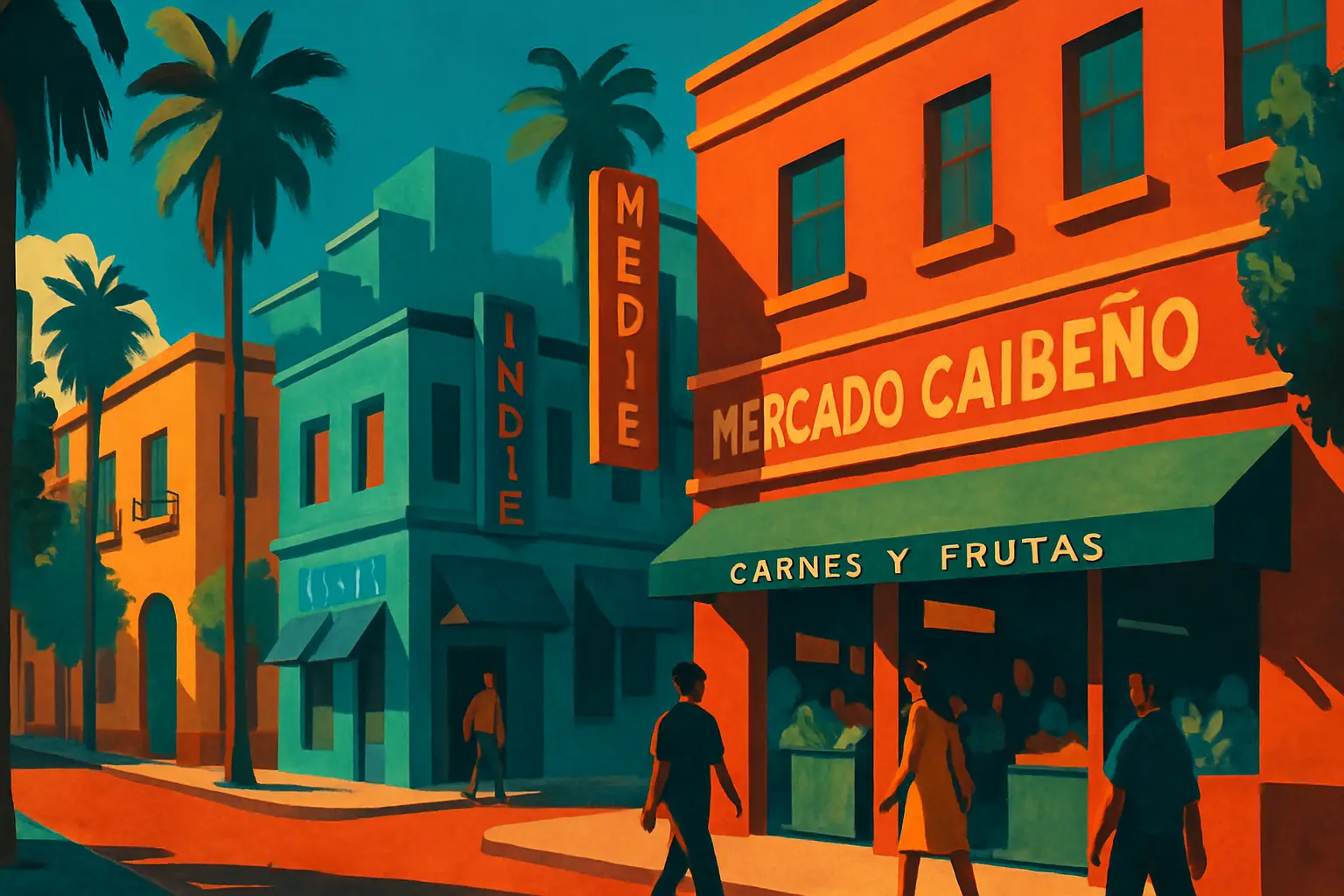
The anchor of Roma Sur — and the main reason many locals make the trip to this neighborhood in the first place — is Mercado de Medellín at Medellín 234, a sprawling public market with more than 500 stalls and a personality unlike any other market in the city. The nickname is 'La Pequeña Habana' — Little Havana — because the market has a heavy concentration of vendors from Cuba, Colombia, and across the Caribbean and South America. Walk in and you'll see Cuban and Colombian flags hanging from stall awnings alongside the Mexican tricolor. The produce section carries ingredients that don't appear elsewhere in CDMX: Colombian panela (raw cane sugar), plantains sorted by ripeness and intended use, yuca prepared multiple ways, bulk achiote paste in a city that usually sells it in tiny packets. La Morenita de Medellín is the market's most famous food stall — a marisquería that has no business being this good in a landlocked city. Red snapper from Veracruz, pulpo al ajillo, oysters cooked in butter, and a Mexican-style paella that invites genuine comparison. Las Tablas Roma, also inside, has been grilling meat and fish to order since 1958. Market hours: Monday through Friday 6 a.m. to 5 p.m., Saturday and Sunday 8 a.m. to 5 p.m. Go on a weekday morning for the freshest stock and the fewest tourists.
Medellín 234, Roma Sur — 500+ stalls; best entered from the Medellín street side, not the Campeche entrance
La Morenita de Medellín: Veracruz red snapper, pulpo al ajillo, oysters in butter — arrive before noon for the freshest selection
Las Tablas Roma: meat and fish grilled to order since 1958, one of the market's oldest continuously operating vendors
Get short, interactive stories that make each place easier to remember while you travel.
At Tonalá 261, Cine Tonalá is the kind of place that would require a paragraph of explanation anywhere outside Mexico City but makes complete intuitive sense here. It's an independent cinema where you can drink a mezcal in your seat during the film, eat a full meal in the restaurant before or after the screening, see a theater performance in the adjacent venue, and walk through rotating visual art exhibitions in the lobby — all under one roof with an industrial design aesthetic: reclaimed furniture, 1980s velvet seats in clashing colors, exposed concrete and pipes. The programming is exclusively independent and art-house films, with at least one Mexican production always on the schedule. The surrounding block on Tonalá has become a cultural node: small galleries, a bookshop, and wine bars within a few minutes' walk in either direction. Cine Tonalá also runs regular music and theater programming that draws a noticeably local crowd — Roma Sur residents who've been coming here for years rather than visitors who saw it in a guide. If you have a free afternoon in the neighborhood, Cine Tonalá is the correct way to spend it.
Avenida Álvaro Obregón runs east-west through the heart of La Roma with a wide tree-lined pedestrian median that functions as the neighborhood's most useful public space. Locals walk it, dogs run along it, and weekend mornings bring food vendors and families occupying the benches in the shade. In late February and March, the jacaranda trees that line the median turn the entire corridor purple — one of the most-photographed seasonal events in the city. The boulevard is also the unofficial dividing line between Roma Norte and Roma Sur. North of it, cafes and boutique hotels get denser. South of it, the residential blocks quiet down and the buildings get older and less renovated. Casa Lamm at Álvaro Obregón 99 sits almost exactly on this boundary — a restored 1911 Porfiriato mansion that now houses one of the city's serious cultural institutions, running rotating contemporary art exhibitions, a gallery, and graduate-level fine arts programs. The exhibitions change regularly and the building itself — original tile floors, high ceilings, wide interior courtyard with a fountain — justifies the stop even without a particular show on.
Because Roma Sur stays off most visitor itineraries, its restaurant scene evolved to serve the people who live there — which means the pricing is calibrated for residents, not for tourists absorbing the cost of prime real estate. Il Fiorino in Roma Sur is the neighborhood's most reliable Italian trattoria: a low-key, regularly packed neighborhood place that doesn't charge Polanco prices and where the clientele is mostly local regulars rather than visitors working through a restaurant list. For the classic mid-century cantina experience — afternoon beers, botanas arriving automatically, ceiling fans overhead — El Sella on Tonalá 148 has been the Roma Sur version of that ritual for decades: an old-school neighborhood cantina that hasn't updated its formula because it doesn't need to. The market itself offers the most affordable full meal in the area — lunch at Mercado de Medellín runs 80 to 120 pesos (about $4 to $6 USD) and covers a plate of mariscos or grilled meat with rice and tortillas. The arithmetic across the neighborhood holds: one or two blocks south of Álvaro Obregón, restaurant prices drop 20 to 30 percent from their Roma Norte equivalents because the rent is lower and the customer base is local.
Il Fiorino, Roma Sur — neighborhood Italian trattoria, reliably full with local regulars and priced accordingly
El Sella, Tonalá 148 — old-school cantina, botanas arrive with drinks, no concessions to tourism
Mercado de Medellín lunch, 80–120 MXN — the most affordable sit-down meal in the neighborhood by a significant margin
Roma's contemporary gallery corridor is real and it concentrates around the Álvaro Obregón median and the blocks running south into Roma Sur. Casa Lamm at Álvaro Obregón 99 anchors the serious end — rotating exhibitions in a genuinely beautiful Porfiriato building with free gallery admission. Lulu at Tonalá 201 is smaller, stranger, and more specifically worth attention: an independent art project space that programs conceptually ambitious work made from unusual materials, with a rotating calendar that moves faster than most commercial galleries. OMR Gallery — one of Mexico City's most established contemporary spaces, representing major Latin American artists since 1983 — is a 10-minute walk north toward Plaza Río de Janeiro. All three spaces are free to enter during gallery hours, generally Tuesday through Saturday from noon to 6 p.m. The gallery walk pairs naturally with Cine Tonalá a few blocks south — you can do both on the same afternoon without covering more than 10 blocks.
Roma Sur is consistently among the safer residential neighborhoods in Mexico City. The streets stay populated at most hours — families, dog walkers, local commuters moving through — and the neighborhood runs at a lower profile than higher-traffic zones like Centro Histórico or the area around Tepito. The same standard practices apply as anywhere in CDMX: don't display expensive cameras or phones visibly on the street, be attentive after midnight when foot traffic thins, and use Uber or DiDi for late-night travel rather than flagging down a street cab. The Mercado de Medellín zone around Medellín 234 is particularly active during market hours, making it one of the most low-concern blocks in the neighborhood during the day. The main orientation point for visitors: Roma Sur doesn't have the tourist-facing infrastructure of Roma Norte — no hostel clusters, fewer English menus, no tour-operator storefronts. It's a lived-in residential neighborhood, which is both the appeal and the reason you navigate it more independently than the more international areas to the north.
The fastest option from most of the city is Metrobus Line 1, which runs south along Insurgentes — the Campeche stop leaves you one block east of Mercado de Medellín, which is the ideal entry point if the market is your first stop. Metro Line 9 (the dark brown line running along Viaducto) has the Chilpancingo station at the southern edge of Roma Sur, useful if you're coming from the east side of the city. From Roma Norte, Condesa, or anywhere along the Reforma corridor, Roma Sur is a 10 to 15-minute walk directly south along Orizaba, Tonalá, or Insurgentes from any point on Álvaro Obregón. Uber and DiDi run 40 to 80 pesos (roughly $2 to $4 USD) from anywhere within the Roma-Condesa corridor and are the most convenient option after the market closes or after dark.