The word 'barbacoa' has been diluted outside of Mexico — you'll find it on fast-food menus and grocery shelves, used loosely to mean any slow-cooked shredded beef. Mexico City's version has nothing to do with any of that.
Here, barbacoa means lamb — almost always lamb — cooked overnight in an earthen pit lined with the thick leaves of the maguey plant. The pit is dug in the ground, heated stones are placed inside, the lamb cuts are wrapped in pencas (maguey leaves that act as both seasoning and steam trap), and everything is lowered in along with a metal pot suspended below the meat to catch every drop of dripping fat and juice. The pit is sealed. The fire goes in Saturday evening. By Sunday morning the lamb is done — deeply tender, slightly smoky, perfumed with the faint vegetal sweetness of the maguey.
This tradition flows directly from the state of Hidalgo, two hours north of Mexico City. The city of Actopan in Hidalgo is considered the epicenter of Mexican barbacoa, and most of the families running the best barbacoa spots in Mexico City trace their knowledge back there. When you eat barbacoa in Roma Sur or Tlalpan, you're eating something with a clear geographic and cultural lineage — not a generic preparation, but a specific regional tradition transplanted to the capital by Hidalgo families who built their restaurants around it.
Walking up to a barbacoa counter without knowing the vocabulary is like ordering at a taqueria for the first time — everything moves fast, and you want a clear picture before you step up.
The cuts: Maciza is the lean meat from the shoulder and leg — the right starting point for anyone unfamiliar with the format. Costilla is the rib, with more fat and more flavor. Cachete (cheek), lengua (tongue), and labios (lips) are the prized soft-tissue cuts for the initiated — intensely gelatinous, deeply seasoned, and eaten with extra lime and salsa verde. Most spots charge the same price per taco regardless of cut, so there's no reason not to try something more adventurous.
Consomé: Under the lamb during the overnight cook, a large pot collects all the drippings — fat, juices, steam condensation — along with garbanzos, rice, and herbs. The result is consomé, a deeply flavored broth served in a cup alongside your tacos. It is arguably the best part of the meal. Some people add chile de árbol directly to the consomé; most add a squeeze of lime. Either way, drink it.
Mixiotes: A close relative of barbacoa, often sold at the same stands. Mixiotes are individual portions of lamb (or sometimes chicken or rabbit) wrapped in the membrane peeled from maguey leaves, stuffed with guajillo and ancho chiles, garlic, and herbs, then steamed until the meat is falling apart inside the packet. They look like small gift packages and smell extraordinary when opened. If the place you're visiting has them, order one alongside your tacos.
Maciza (shoulder/leg): lean, tender, clean flavor — the right first order
Cachete, lengua, labios: gelatinous and intensely flavored — work up to these
Consomé: the rich dripping broth with chickpeas and rice — order it immediately
Get short, interactive stories that make each place easier to remember while you travel.
El Hidalguense at Campeche 155, in Roma Sur, is the spot that food writers keep returning to and the one mentioned first in any serious discussion of Mexico City barbacoa. The restaurant is run by a family from Hidalgo who brings the traditional pit-cooking method to a dining room setting — the name is a declaration of origin: 'the one from Hidalgo.'
Open only Friday through Sunday, from 7 a.m. to around 6 p.m. (or until sold out, which can happen before noon on busy Sundays), El Hidalguense doesn't take reservations and doesn't apologize for the wait. On a Sunday at 9 a.m., it's common to wait an hour for a table. The system: put your name in, wait outside, and watch the neighborhood come alive while you work through your first cup of consomé.
The lamb is cooked overnight on-site. The tortillas are handmade. The salsa verde is very green and genuinely hot. The consomé arrives in a clay cup with a slice of lime balanced on top. Order the mixiotes if they're available. Sit near the kitchen if you can — watching the tortilla press work and the taco assembly line is half the entertainment. El Hidalguense is about a 10-minute walk from Metro Hospital General (Line 3, the yellow line), or a short Uber from anywhere in Condesa or Roma Norte.
Campeche 155, Roma Sur — Friday through Sunday, 7 a.m. until sold out
No reservations — expect a 30- to 60-minute wait on Sunday mornings
10-minute walk from Metro Hospital General (Line 3)
If El Hidalguense is the neighborhood barbacoa spot, Restaurante Arroyo is the institution. Founded in 1940 by José Arroyo and his wife María Aguirre, who arrived in Mexico City from Tulancingo, Hidalgo, with a sign that read 'Here is José Arroyo's barbacoa,' the restaurant has grown over eighty years into something that defies easy description.
Located at Insurgentes Sur 4003 in Tlalpan — the southern borough of Mexico City, near the highway to Cuernavaca — Arroyo is technically the largest Mexican restaurant in the world: nine dining rooms, capacity for 2,200 diners, 600 parking spaces. There are mariachis. There is a performance bullring. The scale is genuinely overwhelming, and on a Sunday afternoon with multiple generations of families at long tables, the energy reaches a pitch that can only be described as festive in the deepest sense.
And yet the barbacoa de borrego — pit-cooked lamb, served with consomé and handmade tortillas — is still the reason to come. Unlike most serious barbacoa spots, Arroyo is open every day of the week. Chef Rick Bayless, who spent years documenting traditional Mexican cuisine for his PBS series, once named it the restaurant where he would choose to have his last meal.
Arroyo is about 30 minutes from Roma by Uber. Go on a Sunday when the full production is running at maximum volume — it's a complete cultural experience, not just a meal.
Insurgentes Sur 4003, Tlalpan — open daily, not just weekends
The largest Mexican restaurant in the world: 2,200 seats across nine rooms
Founded 1940 by a Hidalgo family; endorsed by Rick Bayless as his last-meal choice
Barbacoa El Mexiquense has locations in Roma Norte (Monterrey 172) and Narvarte (División del Norte 1004). It's more accessible than El Hidalguense for visitors mid-stay, as some locations run through the week, and the handmade tortillas and clean Hidalgo-style preparation make it a reliable choice when you want barbacoa without committing to a full Sunday wait. Several food guides rank it among the top three barbacoa experiences in the city.
Barbacoa Renatos, in the northern neighborhood of Azcapotzalco, is less known among tourists but consistently cited by locals as the city's best. The family has been in the barbacoa business for more than fifty years and specializes in Hidalgo-style lamb — the same tradition as El Hidalguense, applied with five decades of practice. It requires a longer metro or Uber ride from the central colonias, but for serious barbacoa the trip is worth planning.
For context on the broader market culture these spots exist within — including the weekend market vendors who sell barbacoa alongside produce and prepared foods — the Mexico City markets guide covers the neighborhood market ecosystem in detail.
In Mexico City, Sunday morning has a specific choreography. It starts before 8 a.m. — a cup of café de olla or atole from the corner stall while waiting for the barbacoa spot to hit its stride. Then the taco window: consomé first, two or three tacos, more salsa than planned, another consomé. The tortillas are warm and slightly thick. The lamb yields to a fork but holds together in the taco. The table is crowded with four salsas, a pile of limes, sliced radishes, and dried oregano.
This is not brunch in the way that word has come to mean in American cities. There's no bottomless anything, no two-hour window for lingering. It's a meal with a clear beginning and end, shared across generations at the same table. Grandmothers and teenagers and fathers with young children are all eating simultaneously from plates piled with the same cuts. The whole thing is done by 11 a.m.
The Sunday format is also a practical consequence of the cooking method. Barbacoa requires twelve to fifteen hours in the pit — the cook begins Saturday evening and doesn't sleep much. You cannot decide to make barbacoa impulsively. The discipline behind it is part of what makes the Sunday meal feel earned.
The best barbacoa experience starts before 9 a.m. — don't sleep in on Sunday
Format: consomé first, then tacos, then more consomé. Don't linger if there's a line outside
Bring cash — most barbacoa spots don't accept cards at the counter
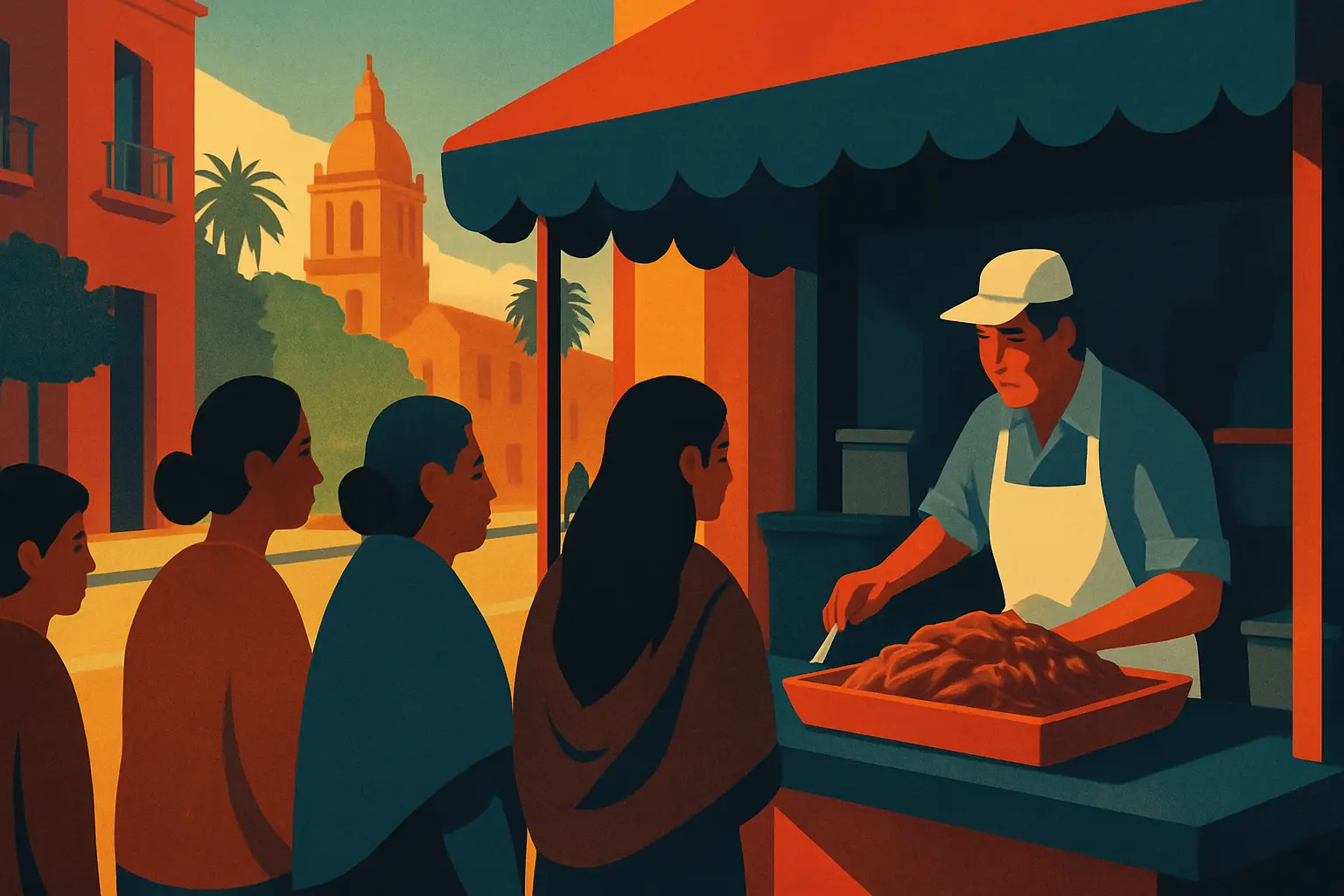
Barbacoa is widely available on weekends across Mexico City, but quality varies enormously between dedicated restaurants and casual vendors. Street vendors at neighborhood markets sell it from large covered pots on Saturday and Sunday mornings — competent versions exist throughout the city. The format at these outdoor stands: choose your cut, get three tacos per order, add your own salsa and lime from the communal setup on the table.
The dedicated restaurants — El Hidalguense, Arroyo, El Mexiquense, Renatos — are categorically different from market vendors. They use overnight pit cooking with proper maguey-leaf wrapping, which produces a different texture and depth of flavor than pot-simmered shortcuts. The consomé is the clearest indicator: a rich, cloudy broth with visible fat and chickpeas signals proper technique. A thin, pale broth usually means a faster preparation method.
If you're in Mexico City Monday through Thursday and want barbacoa, Restaurante Arroyo in Tlalpan is your best option — they operate every day. Otherwise, plan your weekend around the Sunday window: arrive before 9 a.m., bring small bills, and don't overthink the order. For a broader orientation on how Mexico City's food culture works before you arrive, the street food guide gives useful context on timing, payment, and the general logic of how the city eats.
What's the right budget? A full barbacoa breakfast — four tacos, consomé, a mixiote — runs 150 to 250 pesos per person at the dedicated restaurants. At Arroyo the bill can climb higher if you add drinks and the full spread, but the barbacoa itself remains reasonably priced for the quality and experience.
Best day of the week? Sunday is the full ritual experience. Saturday is less crowded at El Hidalguense, which means shorter waits but a slightly lower-energy atmosphere. Friday is the quietest day of their weekend run — good if you want to go slowly and linger.
What should I skip? Any menu item described as 'barbacoa' at a regular taquería or casual restaurant is almost certainly a pot-stewed shortcut, not pit-cooked. The word has no protected status in Mexico, so it gets used loosely. A quick diagnostic: ask if they have consomé. If the answer is no, or if the broth arrives pale and thin, the barbacoa was not made the traditional way. Stick to the dedicated spots on this list.
Is it safe? Yes — the barbacoa at established spots is a cooked-to-the-bone preparation, nothing raw or undercooked. The overnight pit method destroys bacteria thoroughly. The usual Mexico City food safety rules apply: eat from high-turnover vendors, avoid cut fruit that's been sitting in heat, and stay with bottled water.