1. November 1858: How Denver Started in LoDo
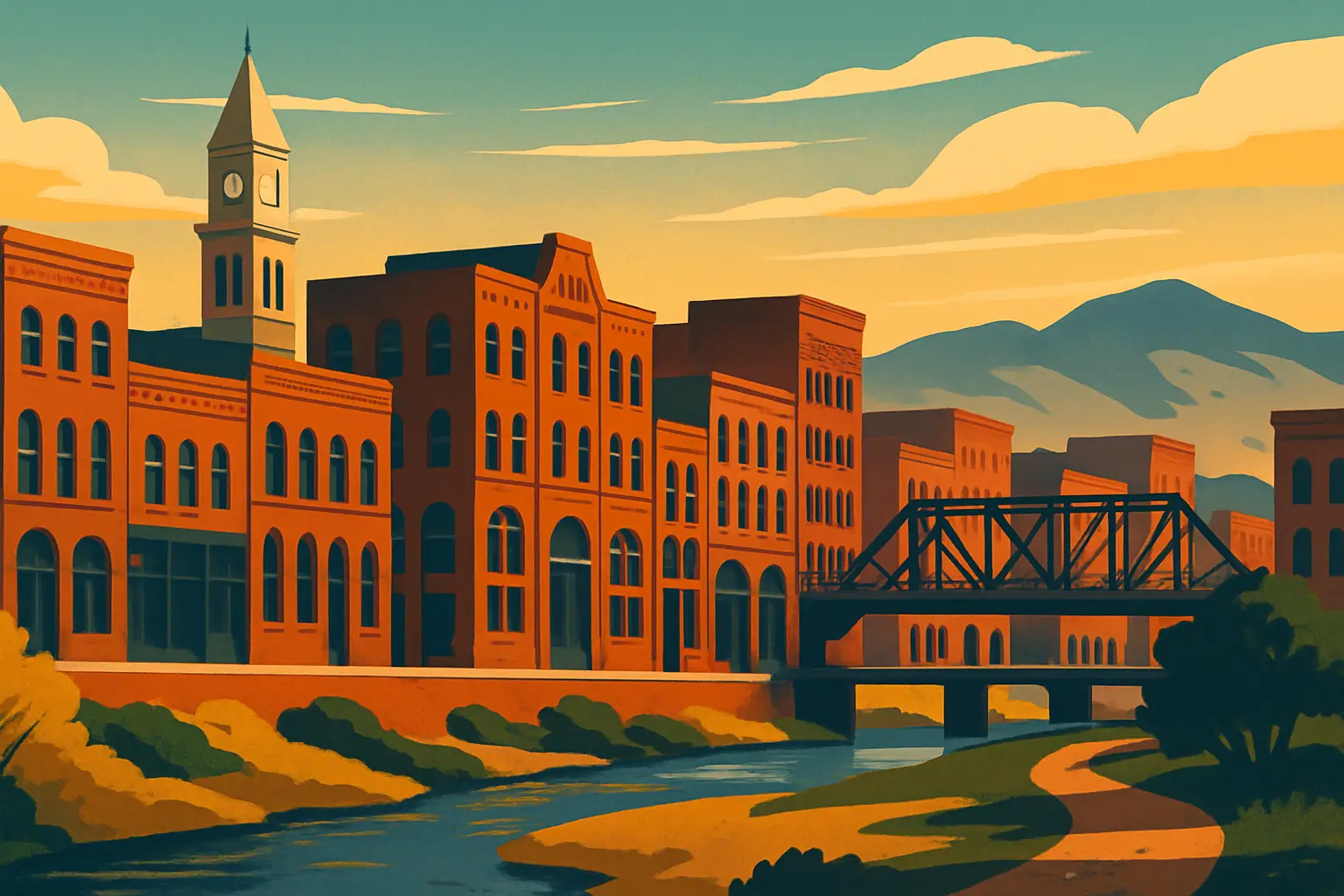
General William Larimer Jr. arrived at the confluence of Cherry Creek and the South Platte River in November 1858, during the height of the Pike's Peak Gold Rush, and staked his claim on a bluff above the water. He named the settlement Denver City — after James Denver, the territorial governor of Kansas, whose jurisdiction Colorado fell under at the time. Larimer Street was laid out immediately as the main commercial corridor, and within months it held saloons, hotels, dry goods stores, and professional offices serving the prospectors moving through.
The gold rush was real but uneven. Some of the '59ers who followed Larimer's maps found placer gold in the mountain streams above Denver; most did not, and Denver's early economy ran not on mining but on supplying miners — a distinction that proved more durable. The city that emerged from the 1860s was a commercial capital rather than a mining camp.
LoDo today encompasses the same 24 historic blocks that formed the original townsite. The street grid that Larimer drew in 1858 still organizes the neighborhood. The diagonal streets — Larimer, Champa, Curtis — run at angles to the cardinal grid because Larimer platted them parallel to Cherry Creek, not parallel to the compass. Every time you navigate LoDo and find yourself briefly disoriented by the diagonal, you're experiencing the original surveying decision made in 1858.
2. The Block Dana Crawford Saved: Larimer Square
In the early 1960s, the Denver Urban Renewal Authority targeted the 1400 block of Larimer Street — between 14th and 15th Streets — for demolition. The Victorian-era brick buildings there were derelict. The neighborhood had collapsed into low-income rooming houses and pawnshops, and the city's redevelopment apparatus was clearing large swaths of downtown for parking lots and office buildings. The 1400 block was scheduled to go the same way.
Dana Crawford had no real estate background and no capital of her own. She persuaded friends to help her purchase and renovate nearly every building on the block. By 1965, Larimer Square had become Denver's first historic district, and Crawford's project became the model that influenced similar preservation efforts in cities across the country.
The earliest tenants built the block's reputation: Your Father's Mustache beer hall, the Bratskellar German restaurant, and the 1421 nightclub drew visitors to Larimer Street before the rest of LoDo had any reason to attract them. Those original tenants are long gone; today the block holds upscale restaurants, bars, and boutiques in the same Victorian shells — including Corridor 44 at 1433 Larimer St, Denver's only champagne bar.
Crawford received every major preservation award in the field before her death in January 2025 at age 93. The 1400 block still stands because she decided, before anyone else thought it was worth saving, that it was.
3. Union Station: From Beaux Arts Ruin to Denver's Living Room
Denver's original Union Station opened in 1890 — at the time the largest structure in Colorado, built from Colorado rhyolite stone with a 504-foot facade and a 128-foot central tower. A fire destroyed the central section in March 1894, and the building that exists today dates to the 1914 reconstruction: a Neoclassical Beaux Arts structure in warm stone, with a large central hall framed by arched windows that still carries the scale and proportion of its era.
By the 1990s the station had declined into a single Amtrak stop. Most of its space sat unused. The $54 million renovation completed in 2014 preserved the Great Hall while filling the building with new life: the Crawford Hotel (112 rooms on the upper floors, named for Dana Crawford), Terminal Bar in the original ticketing office, Tavernetta restaurant, Tattered Cover Book Store, and Mercantile Dining & Provision on the ground floor.
The renovation worked because it treated the Great Hall as a public room rather than a private lobby. The high-ceilinged space with its neon 'TRAVEL BY TRAIN' sign stays open to anyone — no hotel key, no train ticket required. Regional light rail and commuter rail, including the A Line from Denver International Airport, still operate from the east end of the building.
Walk to Union Station from Larimer Square along Wynkoop Street — less than 600 feet. The full west facade, facing Wynkoop Plaza, is best seen at dusk when the stone picks up the reflected light from the sky above the mountains.
4. Coors Field and the Transformation of Blake Street
When Coors Field opened on April 26, 1995, at the corner of 20th Street and Blake Street, the surrounding area was considered Denver's skid row. Vacant lots, cheap hotels, and pawnshops defined the blocks where the stadium now stands. The city bet that a major league ballpark would accelerate the revival already underway around Larimer Square and Union Station. The bet paid out faster than expected.
The 1995 Colorado Rockies sluggers — Andres Galarraga, Larry Walker, Dante Bichette, and Vinny Castilla — earned the nickname 'The Blake Street Bombers,' which quickly attached itself to the bar culture developing in their wake along the street outside the park. Wynkoop Brewing Company (1634 18th St), which had opened as Colorado's first brewpub in 1988, saw sales jump 50 percent when Coors Field opened that first season.
Wynkoop was founded in 1988 by a group that included a then-city council member named John Hickenlooper — who later became mayor of Denver, then governor of Colorado, then U.S. Senator. The three-floor brewpub in a brick warehouse adjacent to Union Station operates with an entirely house-brewed tap list and stays open until 2 a.m. most nights.
Coors Field itself is worth a walk regardless of whether the Rockies are playing. The exterior uses Colorado red sandstone and blends into the warehouse district in a way that newer stadiums in other cities don't. The purple seats in the upper deck of right-center field — marking exactly 5,280 feet above sea level — are a specific detail that rewards a closer look.
5. Where to Eat and Drink: Specific Picks with Addresses
LoDo's restaurant scene has stabilized enough around its anchor institutions that these recommendations hold across seasons.
•**Tavernetta** — 1001 17th St (at Union Station). Regional Italian with a James Beard–recognized wine program and house-made pasta. The menu changes seasonally. Reservations recommended for dinner; bar seats are often walk-in on weeknights.
•**Mercantile Dining & Provision** — 1701 Wynkoop St (Union Station). Alex Seidel's restaurant and market inside the station, known for Sunday brunch. The front counter sells charcuterie, cheese, and prepared foods; the back is a full-service restaurant.
•**Terminal Bar** — inside Union Station at 1701 Wynkoop. Colorado-centric beer and cocktails served in the original ticketing office, with the station's historic arched windows as the backdrop. Open to the public — no stay or ticket required.
•**Wynkoop Brewing Company** — 1634 18th St. Colorado's oldest brewpub, three floors in a brick warehouse. All house-brewed beers, pub food, and a billiards hall on the second floor. Open until 2 a.m.
•**Corridor 44** — 1433 Larimer St. Denver's only champagne bar, operating in the historic Larimer Square district. Walk-in on weeknights; arrives early on weekends.
6. The Oxford Hotel and Denver's Victorian Lodging Pair
The Oxford Hotel at 1600 17th St opened on October 3, 1891 — Denver's oldest operating hotel. The architect was Frank E. Edbrooke, who built the Oxford for brewer Adolph Zang and then, a year later, designed the Brown Palace Hotel at 321 17th St (a 10-minute walk east). Both hotels survive from the brief window when Denver's silver and gold-fueled economy made it one of the wealthiest cities in the American West.
The Oxford's original amenities — elevators, steam heat, electric and gas lighting — were exceptional for the era. Theodore Roosevelt and the Dalai Lama appear on the guest ledger. The hotel holds downtown Denver's only wood-burning fireplace in its lobby bar. Listed on the National Register of Historic Places since 1979.
The Brown Palace operates under Hilton's Curio Collection today and is famous for its afternoon tea service, which has run continuously since the 1930s. The interior atrium — nine stories of open space with wrought-iron railings and a stained-glass skylight — was engineered for passive ventilation before air conditioning existed. Reservations for weekend tea run 4–6 weeks out. Both hotels reward a walk-through even without a reservation; both lobbies are open to the public during daytime hours.
7. Getting There, When to Visit, and Practical Questions
How do I get to LoDo from Denver International Airport? The A Line commuter rail runs directly from DEN to Denver Union Station in 37 minutes, no transfers, for $10.50. It deposits you inside LoDo with no navigation required. There is no practical reason to rent a car or take a rideshare for the airport-to-LoDo leg.
Is LoDo walkable? Yes. Larimer Square, Union Station, Coors Field, the Oxford Hotel, and the Brown Palace all fit within a 10-minute walk from any one point to any other. The 16th Street Mall — a pedestrian-only transit corridor along LoDo's northern edge — runs free shuttle buses connecting to the broader downtown commercial district.
When is the best time to visit? Late May through September for outdoor dining and Rockies games. August afternoons run warm (mid-80s Fahrenheit), but the street grid is shaded and the indoor options are plentiful. Late-afternoon thunderstorms are common in summer — brief and intense, usually over by 6 p.m. The Denver Food + Wine Festival runs August 26–29, 2026, with events concentrated in LoDo and Union Station; most sessions require tickets purchased in advance.
Is LoDo safe for visitors? The commercial core — Larimer Square, Union Station, and the blocks around Coors Field — is well-lit and heavily trafficked on evenings and weekends. Property crime (car break-ins) runs higher than Denver's suburban neighborhoods, so leave nothing visible in a parked car. The blocks immediately west of Union Station, toward the South Platte River, are more isolated at night; stay on the main corridors after 10 p.m.