The Menil Collection (1533 Sul Ross St) is one of the most significant private art museums in the world — and it has been free since it opened in 1987. No timed entry, no reservation, no suggested donation implying otherwise.
The founders were John and Dominique de Menil, French Catholic intellectuals who fled Nazi-occupied Paris and arrived in Houston in 1941 through a connection to the French oil company Schlumberger. Houston in the 1940s was an unlikely place to build a world-class collection. The Menils did it anyway, accumulating over 25,000 works spanning Byzantine icons, medieval reliquaries, African and Oceanic sculpture, Surrealist paintings (René Magritte, Max Ernst, Man Ray), and contemporary art.
Dominique de Menil commissioned Renzo Piano to design the main building. Piano's solution to Houston's brutal summer light was a custom roof of curved white fiberglass 'leaves' — louvers that diffuse natural light into the galleries without UV glare or harsh shadows. The effect is like being inside a cloudy afternoon. The building opened in 1987 and remains one of the finest museum structures in the United States.
The collection is deliberately focused rather than encyclopedic. The Surrealism holdings rank among the best outside Paris; the Byzantine collection is quietly extraordinary; and the contemporary holdings — Joseph Cornell shadow boxes, Yves Klein monochromes — are displayed with more breathing room than you'd find in New York or Los Angeles. Before leaving, walk across the street to the Cy Twombly Gallery (1301 Bissonnet St), a dedicated Piano-designed space for the Houston-based artist's large-scale paintings and sculpture. Also free. Almost always uncrowded.
Hours: Wed–Sun, 11am–7pm; closed Mon and Tue; free admission, no reservation needed
Cy Twombly Gallery: 1301 Bissonnet St — same hours, dedicated to Twombly's late paintings and sculpture
The museum shop carries art books and prints at reasonable prices — one of the better museum shops in Texas
A five-minute walk from the Menil's main building, on a quiet corner at 3900 Yupon Street, is the Rothko Chapel — an octagonal, non-denominational chapel commissioned by the de Menils and completed in 1971.
Mark Rothko spent the final years of his life painting the 14 large-scale canvases that line the interior. They are dark — not black exactly, but deep maroon, plum, and charcoal, with internal fields of lighter tone that reveal themselves only as your eyes adjust. Rothko died by suicide in 1970, one year before the chapel opened. The paintings are considered his last major statement.
The building is intentionally plain: concrete walls, an oculus overhead that lets in flat sky light, wooden benches. Visitors sit quietly, meditate, or simply look. The chapel hosts interfaith services for Jewish, Christian, Muslim, and Buddhist communities, alongside public lectures and human rights events. The de Menils designed it as a place for 'the threshold experience' — and that is what it delivers.
Outside, in a shallow reflecting pool, stands Broken Obelisk — a massive Cor-Ten steel sculpture by Barnett Newman. The de Menils purchased it in 1969 and dedicated it to Martin Luther King Jr., assassinated the previous year. An inverted pyramid balanced against a broken obelisk tip: deliberately unstable, somehow holding together.
Free admission always. Open daily 10am–6pm.
Get short, interactive stories that make each place easier to remember while you travel.
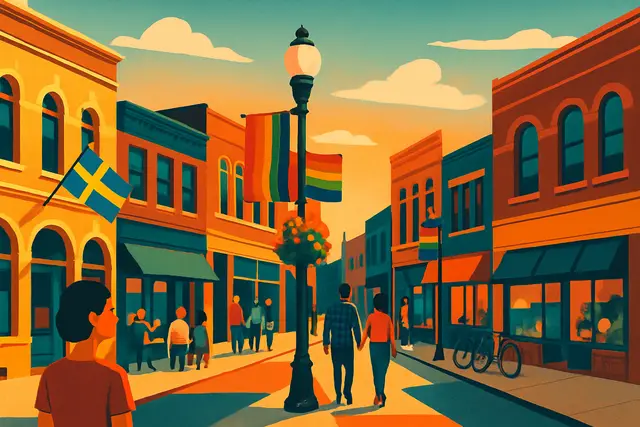
Montrose's counterculture identity begins with cheap rent. In the 1960s, the neighborhood was a modest tree-lined area of bungalows, home mostly to retirees. As the decade ended, artists, students, and gay residents arrived — drawn by low-cost housing and an existing informal atmosphere. By 1972, a modest Montrose home became Houston's first public, above-ground LGBTQ community center, offering meals, counseling, and a gathering space that gave the neighborhood an institutional anchor.
By the end of the 1970s, Montrose had between 30 and 40 gay bars — a remarkable concentration in a Southern city with no legal protections for LGBTQ residents. The 1977 protest against anti-gay activist Anita Bryant, organized by activist Ray Hill when Bryant visited Houston for a fundraiser, drew hundreds of the city's LGBTQ community into public demonstration and is credited with sparking Houston's first Pride events.
Montrose today has far fewer specifically gay bars than it did in 1979 — nightlife has dispersed across the city and the neighborhood's demographics have shifted. But the cultural and institutional center of Houston's LGBTQ community remains here. The Montrose Center (401 Branard St) still operates as a health and community services hub. Meteor (2306 Genesee St) hosts drag performances and LGBTQ nightlife. The neighborhood's long memory is present in almost every block.
For comparison: San Francisco's Castro District followed a similar arc from counterculture enclave to neighborhood of record — worth reading if the LGBTQ history of American cities interests you.
Westheimer Road is Montrose's main artery — a broad east-west corridor that has been the neighborhood's commercial center for 50 years. The stretch of 'Lower Westheimer' between Montrose Boulevard and Dunlavy Street concentrates the neighborhood's older character: vintage and thrift shops that have been here since the 1980s, tattoo parlors, Lebanese restaurants, and Vietnamese noodle spots that predate the neighborhood's current foodie reputation.
At the corner of Westheimer and Montrose Boulevard, the Montrose Collective is a recent outdoor retail development anchored by Uchi and the Italian restaurant Marmo — evidence that significant investment has arrived in the neighborhood without erasing most of what was already here.
The key distinction from most of Houston: this stretch is actually walkable. Sidewalks exist, the blocks are human-scale, and you can stop when something looks interesting. It is one of the few corridors in the city where leaving the car behind is genuinely practical.
Uchi (904 Westheimer Rd) is the entry point for visitors who want to understand Houston's food scene. The Austin-born Japanese restaurant arrived in Montrose in 2012 and remains one of the city's best — inventive plates that sit between sushi tradition and contemporary American technique. The Sake Social happy hour (5–6:30pm daily) is the accessible version: many items under $10, composed dishes that cost double at dinner. Book a table for dinner two weeks out; walk in at the bar during Sake Social.
Hugo's (1600 Westheimer Rd) has been one of the most serious traditional Mexican kitchens in the country since it opened in 2002. Chef Hugo Ortega's menu draws from regional Mexican cooking traditions — mole negro from Oaxaca, Yucatecan slow-roasted meats, Veracruz seafood — not the Tex-Mex fusion the city is better known for. The Sunday brunch with live mariachi is a Montrose institution; reserve a week in advance.
Hugo Ortega also operates Xochi (1777 Walker St, near downtown) — a dedicated Oaxacan restaurant considered one of the best Mexican regional cooking operations in Texas. Worth the short rideshare if mole and tlayudas are a priority.
For Vietnamese food, the blocks along and just off Westheimer have a dense concentration of Southeast Asian restaurants that predate the neighborhood's culinary reputation. Houston has one of the country's strongest Vietnamese food scenes — the Montrose corridor is a good place to start exploring it.
Hugo's Sunday brunch: 1600 Westheimer Rd — mariachi starts around noon; reservations essential on weekends
Uchi Sake Social: walk-in at the bar, arrive by 5:15pm; the hamachi crudo and wagyu carpaccio are the standard orders
Xochi: 1777 Walker St — Oaxacan regional focus, including mole negro and grasshopper-based dishes; dinner reservations recommended
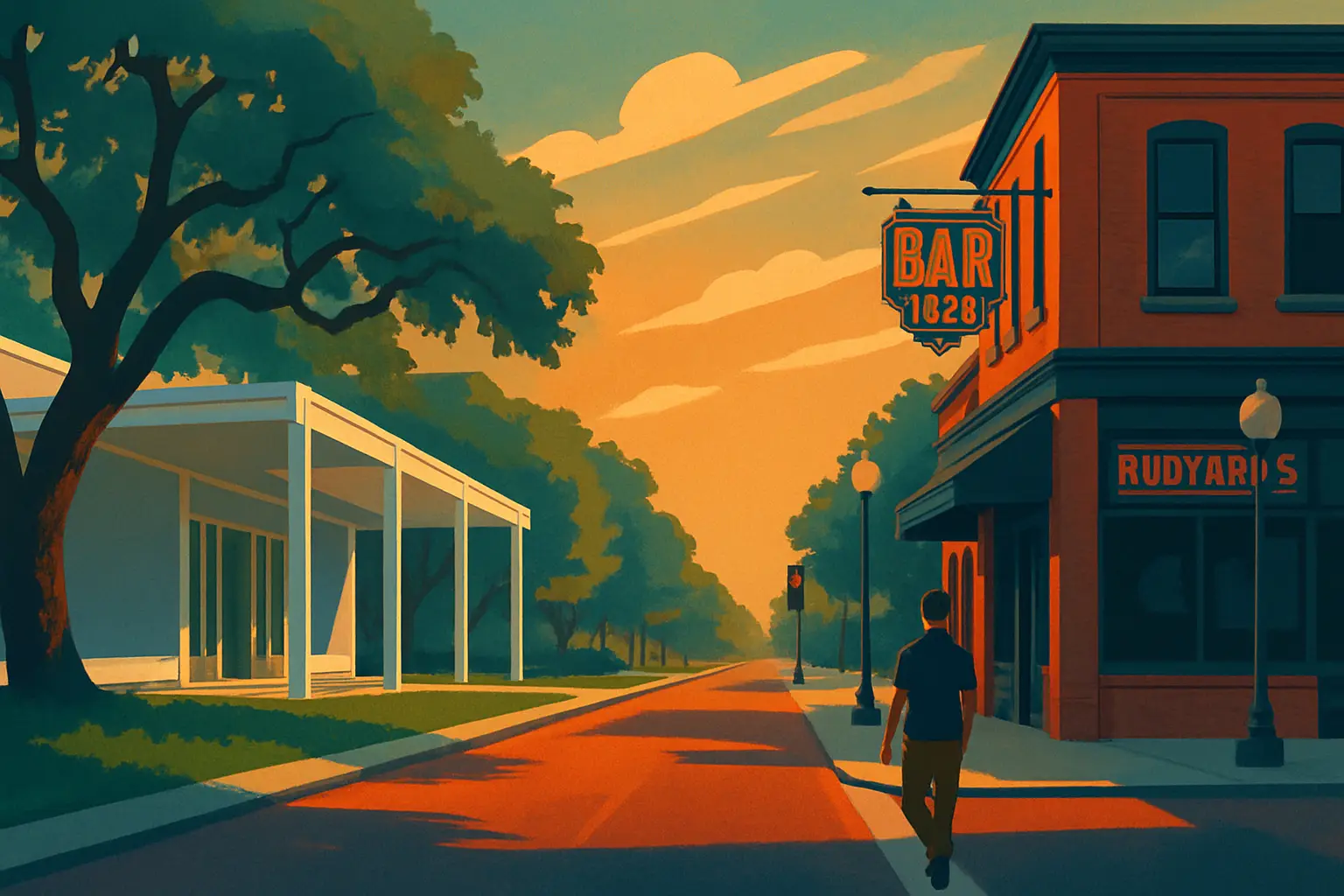
West Alabama Ice House (1919 W. Alabama St) has been serving beer at this address since 1928, making it one of the oldest continuously operating bars in Houston. The format is the classic Texas ice house: mostly outdoor picnic tables on a gravel lot, a simple indoor bar, over 100 beers in bottles and cans, and no pretension of any kind. Cash preferred. It is cheap, loud on weekend afternoons, and genuinely beloved — a neighborhood institution that survived decades of change by being exactly what it is.
Hay Merchant (1100 Westheimer Rd) is the other end of the Montrose bar spectrum: a craft beer bar with one of the most serious tap lists in Texas, rotating local and regional kegs, knowledgeable staff, and a kitchen serving food until late. Happy hour runs 3–6:30pm with discounted pints. The bar was opened by chef Chris Shepherd, which says something about how Montrose treats the line between food culture and bar culture — there isn't much of one.
Anvil Bar & Refuge (1424 Westheimer Rd) occupies the serious cocktail niche — known for spirit-forward drinks and a library of classic and obscure recipes that makes the cocktail menu worth reading on its own.
Is Montrose safe for visitors? Yes. The areas around the Menil campus, Westheimer Road, and the restaurant and bar corridors are active, well-lit, and safe during both daytime and evening hours. Standard urban awareness applies, but Montrose is considered one of Houston's most visitor-friendly neighborhoods without qualification.
How do I get around without a car? From downtown, the METRO Route 82 runs along Westheimer through the heart of the neighborhood. Rideshare from downtown takes 12–15 minutes and runs about $8–12 depending on demand. Free street parking is available on the residential blocks around the Menil campus (Sul Ross, Branard, Mulberry) and on side streets off Westheimer. Within Montrose itself, walking is practical — the commercial strip along Westheimer is compact enough to cover on foot.
Best time to visit? Houston's heat peaks from June through September — in early September temperatures regularly reach 92–95°F with high humidity. The Menil's galleries are air-conditioned year-round, making it a reasonable summer destination if you're strategic about moving between indoor spaces. For Westheimer exploration and outdoor bar sitting, October through March is significantly more comfortable. Houston winters are mild — 50s to 70s — and the neighborhood's patio restaurants and ice house become genuinely pleasant from October onward.
How does Montrose connect to the rest of Houston? The Museum District — Houston Museum of Natural Science, Museum of Fine Arts Houston, Houston Zoo — borders Montrose to the south along Main Street. Buffalo Bayou Park's trail system is a short drive north. If you're building a two-day Houston itinerary, Montrose plus the Museum District plus one other neighborhood (Midtown, the Heights, or Midtown) covers the city's depth without a car for most of it.