The Cumberland River cuts through the center of Nashville and creates a fault line most visitors never cross. Downtown's Lower Broadway — the three-block honky-tonk strip of multi-story bars, neon signs, and live country music from open to close — is the version of Nashville that shows up on every travel list. It is loud, fun, and exactly what the marketing says it is.
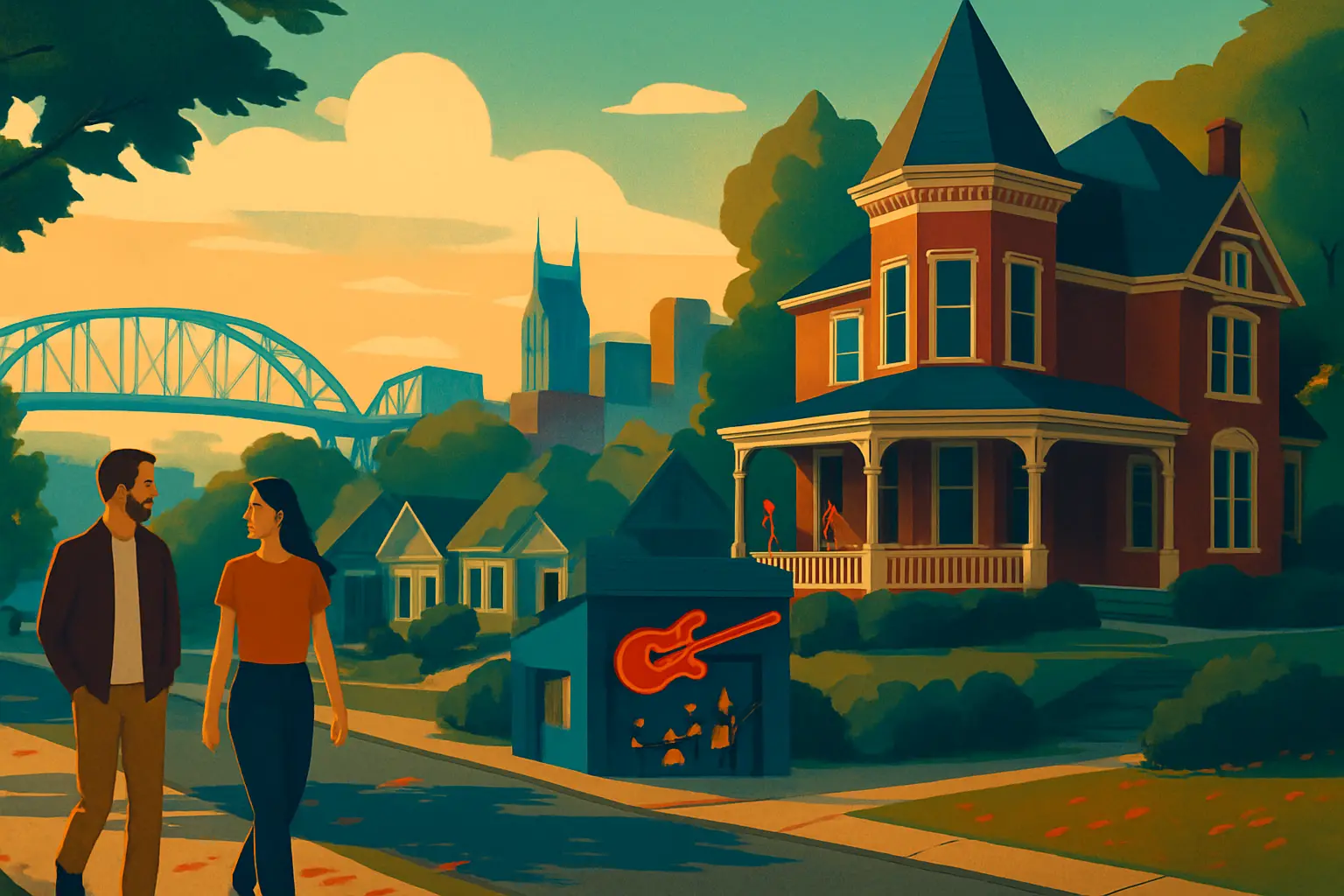
Five minutes east of the Woodland Street Bridge, the city becomes something different. East Nashville (ZIP code 37206) contains the neighborhoods where musicians who play Lower Broadway on Friday go for dinner on Saturday. It is where the city's independent restaurants, record shops, and music venues built for actual shows rather than walk-in bar traffic have concentrated over the last two decades.
The street grid is residential and Victorian, not commercial and high-rise. The blocks between Five Points and the Shelby Park border are full of craftsman bungalows and ornate late-19th-century houses on quiet streets named Fatherland, Holly, Forrest, and Russell. The restaurants are chef-owned and frequently full. The music venues have better sound systems than the bars they outlast. This is the Nashville that rewards people who cross the river.
Five Points is the intersection where Woodland Street, Clearview Avenue, Forrest Avenue, and Holly Street converge — five roads meeting at a single commercial corner that serves as East Nashville's social center. Within a two-block radius of that intersection you can find almost everything the neighborhood has built over the last twenty years.
The Turnip Truck (970 Woodland St) is an independent organic grocery that has anchored Five Points since 2001 — long before it was a fashionable address. Its prepared food counter is one of the better lunch options in the neighborhood. Woodland Wine Merchant (1000 Woodland St) stocks a natural and independent-producer wine list that draws buyers from across the city. The Groove (1103 Calvin Ave, a short walk north on Gallatin) is an independent record shop with deep bins in soul, country, and indie rock that has been selling vinyl here since the late 1990s.
The intersection also contains the two live music venues that define the neighborhood's nightlife: The 5 Spot on Forrest Avenue and The Basement East on Woodland Street. Both open after dinner. Both are the kind of rooms where the performer is close enough to see their face.
What makes Five Points different from comparable intersections in Nashville is that all of it is locally owned. The chains arrived on Lower Broadway. They have not arrived here.
Get short, interactive stories that make each place easier to remember while you travel.
Before East Nashville was East Nashville, it was Edgefield — an incorporated town in its own right, platted in the 1870s on the east bank of the Cumberland River as Nashville's first commuter suburb. The bridges across the Cumberland made it accessible. The hills gave it views. The developers laid out wide lots, and the families who built here in the 1880s and 1890s built to show it.
The streets between Woodland Avenue and Shelby Avenue — especially along Russell Street, Fatherland Street, and Holly Street — hold one of the best-preserved collections of Victorian residential architecture in Tennessee. Italianate homes with bracketed cornices, Queen Anne cottages with decorative woodwork, Colonial Revival houses with full-width front porches — these are houses built when the neighborhood was the fashionable address in Nashville.
The area is listed on the National Register of Historic Places as the Edgefield Historic District. A self-guided walking tour map is available from the Tennessee State Historic Preservation Office and covers roughly 30 notable structures within a 10-block radius. The best time to walk it is late afternoon, when the light comes in from the west and the Victorian streetscape looks the way it was designed to look.
The neighborhood declined significantly through the mid-20th century as Nashville's growth moved outward and the houses subdivided into rentals. The revival that started in the 1990s and accelerated after 2010 has been both a preservation success and a gentrification story, with longtime residents priced out by the same restorations that saved the architecture.
On May 1–3, 2010, the Cumberland River flooded catastrophically after 13 inches of rain fell over 48 hours. The flood was the worst in Nashville's recorded history, and it did not spare East Nashville. Streets near the river — including sections of Shelby Avenue and the low-lying areas around Hadley Park — went underwater. Homes were damaged or destroyed. The storm made national news for about a week and then was largely forgotten outside Tennessee because the Gulf Coast oil spill happened the same week.
What followed the flood was unexpected. Property values in flood-adjacent areas dropped. Artists and musicians who had been priced out of the city's other neighborhoods found that East Nashville had suddenly become affordable. Studios, practice spaces, and small businesses moved in. The neighborhood rebuilt with a specific character: independent, locally owned, deliberately un-corporate.
Shelby Bottoms Greenway — the 900-acre park and trail system along the east bank of the Cumberland River — had also flooded, and its restoration created one of the best urban trail systems in the South. The greenway now connects from East Nashville through the Shelby Park soccer fields and along the river. On weekend mornings, the trail is where the neighborhood runs.
The flood created something its boosters call East Nashville's 'second founding.' The prices are no longer affordable. But the character — resistant to chains, hospitable to unusual restaurants and artists — held.
East Nashville's restaurant cluster is what happens when chefs stop wanting to run restaurants on the tourist strip and start opening the places they actually want to eat at.
Noko (1222 4th Ave N, near the Germantown border of the neighborhood) is the current anchor. Chef Dung 'Junior' Vo's wood-fire cooking earned him a 2025 James Beard Award semifinalist nomination for Best Chef: Southeast. The menu is seasonal and smoke-forward; the product sourcing is specific to Middle Tennessee farms. Book 2 weeks ahead on Resy for a weekend reservation. The bar counter is the right place to sit if you're solo.
Lyra (935 W Eastland Ave) occupies the former Holland House Bar & Refuge space and is run by Chef Hrant Arakelian and Elizabeth Endicott. The cooking draws on Middle Eastern flavors with Tennessee products — a combination that sounds odd on paper and works completely in execution. The dining room is small (about 50 covers), the service is attentive, and the menu changes with the seasons. Walk-ins occasionally work on weeknights.
Butcher & Bee (902 Main St) is the most approachable of the three: a Mediterranean-influenced kitchen with local produce, big vegetable dishes, and the kind of menu that gives you a reason to order four things at once. It takes walk-ins and is the right choice when you want East Nashville food without a reservation challenge.
Five Points Pizza (1012 Woodland St, at the Five Points intersection) does New York-style by the slice. The garlic knots have been famous in Nashville food circles for over a decade. There is no dining room strategy required — it is a counter-service shop, and it is reliably good.
For the full Nashville food context, our Nashville hot chicken guide covers the dish that made the city's food reputation — and why it was invented east of the river in the first place.
Noko: 1222 4th Ave N; book on Resy 2 weeks in advance for weekends
Lyra: 935 W Eastland Ave; book 1–2 weeks ahead; walk-ins sometimes available on weeknights
Butcher & Bee: 902 Main St; walk-ins welcome; open lunch and dinner daily
Five Points Pizza: 1012 Woodland St; counter service, open 11 a.m. daily
The distinction matters: Lower Broadway has bars with live music. East Nashville has music venues.
The 5 Spot (1006 Forrest Ave) is the neighborhood's cornerstone. It has been booking local and touring alternative acts every night of the week since it opened in 1999 — before East Nashville was a destination, when the neighborhood was still recovering from decades of disinvestment. The room holds around 200 people, the sound system has been upgraded over the years while the dive-bar aesthetic has not, and the booking calendar has ranged from unknowns to nationally significant acts who came specifically because The 5 Spot has a reputation in the industry for an honest room. Lady Gaga chose it as the first stop on her 2016 dive bar tour when she could have played any bar in the country. The television series Nashville filmed a scene there. Neither changed the way the room feels.
The Basement East (917 Woodland St) — called The Beast by regulars — is The 5 Spot's larger sibling: a purpose-built concert hall with a capacity around 400, better production values, and a booking calendar that trends toward national indie and alternative touring acts that are too big for The 5 Spot and too small for Ryman Auditorium. Shows typically run Thursday through Saturday and require a ticket in advance. The Basement proper — the original, smaller Basement venue in Hillsboro Village — has a separate booking calendar if you want an even more intimate show.
What both venues have in common is that they exist for the music. The bar is a secondary feature. The sound check matters. The stage is the point. That is not the case on Lower Broadway, and the difference is immediately obvious to anyone who has spent an evening in both.
How do I get to East Nashville from downtown? The fastest route is the Woodland Street Bridge — drive, bike, or ride-share east from downtown across the Cumberland and Woodland Street runs directly into Five Points. From downtown hotels, the trip takes 5–7 minutes by car or about 20 minutes on foot across the bridge.
Is East Nashville safe? Yes. The Five Points corridor and the residential streets around it are active and well-trafficked day and night. The areas nearest the Cumberland River and the eastern edges of the neighborhood beyond Gallatin Avenue are more mixed; standard urban awareness applies after midnight.
What is the best time of year to visit? Late August through October is the neighborhood at its best: patio season peaks in September, the summer crowds on Lower Broadway thin out after Labor Day, and the restaurants and music venues settle into their fall schedules. The Shelby Bottoms Greenway is outstanding for morning runs in September when temperatures drop. Summer weekends are busy; weeknight visits in August are underrated.
How does East Nashville connect to the rest of the city? Germantown — Nashville's other independent restaurant and cafe neighborhood, north of downtown — is about 10 minutes by car and worth combining with an East Nashville trip. 12South, the neighborhood with the I Believe in Nashville mural and the original Frothy Monkey coffee shop, is 15 minutes south. The Grand Ole Opry is 15 minutes northeast in Opryland, a useful midpoint if you want to mix the tourist Nashville with the local one.