1. How a Freight Railroad Became the High Line
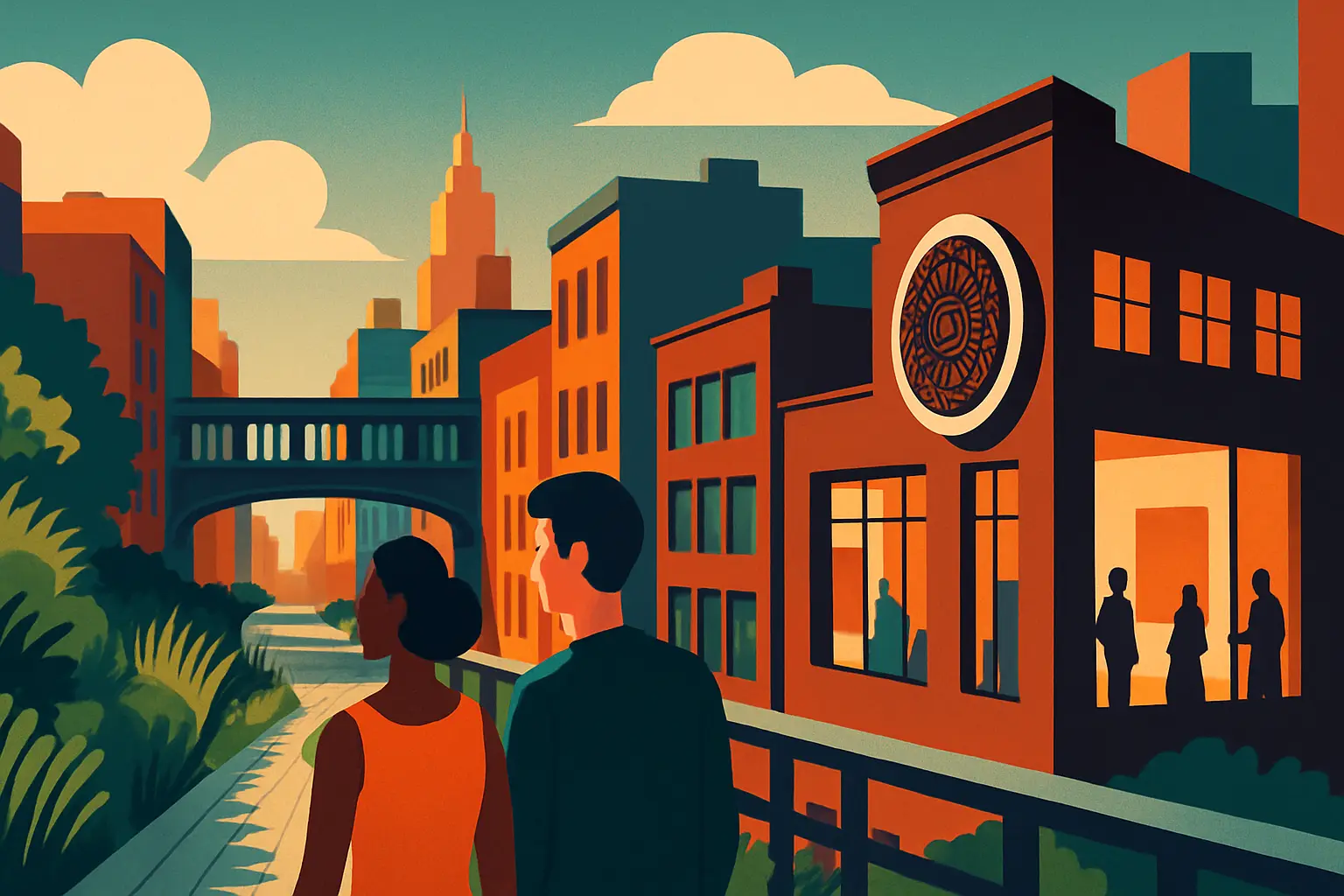
Before 2009, the elevated steel structure running along Manhattan's west side was an abandoned freight rail line built in 1934 to carry meat, produce, and dairy directly into the warehouses and meatpacking plants below. The rail replaced at-grade lines along 10th Avenue — a stretch so dangerous in the 19th century that the city hired horseback riders to ride ahead of trains and warn pedestrians, earning 10th Avenue the nickname 'Death Avenue.'
The elevated line operated until 1980, when a single train carrying frozen turkeys made the last run on the route. Over the following two decades, self-seeding plants colonized the abandoned structure: grasses, wildflowers, and small trees grew up through the steel grating, creating an accidental rooftop meadow visible from surrounding buildings.
In 1999, Joshua David and Robert Hammond, two Chelsea residents with no background in urban planning, founded the Friends of the High Line to advocate for preserving the structure as public parkland rather than demolishing it, as the city had proposed. The design team — James Corner Field Operations (landscape architecture) with Diller Scofidio + Renfro (architecture) and garden designer Piet Oudolf — won the design competition with a proposal that preserved the industrial character of the rail structure while integrating plantings that echoed the original wild growth.
The first section opened June 8, 2009, between Gansevoort Street and 20th Street. The park extended to 30th Street in 2011, and a branching spur near Hudson Yards opened in 2014, bringing the total to 1.45 miles. The High Line now draws roughly 8 million visitors per year — more than the Statue of Liberty. Admission is free at all 11 access points.
2. Chelsea's Gallery District: 200+ Galleries in 10 Blocks
In the early 1990s, SoHo was New York's gallery hub. Rising rents began pushing galleries out, and a handful of gallerists decided to relocate to Chelsea's industrial West 20s. Matthew Marks opened a space at 522 West 22nd Street in 1994, when the neighborhood was still dominated by auto body shops and warehouses. Within five years, more than 100 galleries had followed.
Today the blocks between West 18th and West 29th Streets — concentrated along 10th and 11th Avenues — form the largest cluster of contemporary art galleries in North America. The galleries range from small rooms showing emerging artists to the flagship spaces of international operations.
The district's anchors:
- Gagosian (555 West 24th Street): the flagship Chelsea location of Larry Gagosian's global network, one of the most commercially significant galleries in the world.
- David Zwirner (519–533 West 19th Street): three interconnected buildings forming one of the largest gallery complexes in the neighborhood.
- Pace Gallery (540 West 25th Street): a nine-story building that opened in 2019 as the largest Pace location globally.
- Matthew Marks Gallery (502 West 22nd Street): the original Chelsea gallery, still programming some of the most consistently interesting shows.
All are free to enter. The unwritten protocol is the same at every gallery: walk in, look at the work, and leave. Engaging with staff is optional, and browsing without buying is entirely normal.
3. Chelsea Market and the Building That Invented the Oreo Cookie
The block-sized building at 75 Ninth Avenue — running from 15th to 16th Street, Ninth to Tenth Avenue — was constructed between 1890 and 1898 as the main production facility for the National Biscuit Company, which would later become Nabisco. The Oreo cookie was first commercially produced here on March 6, 1912, in an operation that also produced Uneeda Biscuits, Animal Crackers, and Barnum's Animals crackers. For decades, the smell of baking cookies drifted across Chelsea's west side.
Nabisco moved production out of the building by the 1960s, and the structure sat largely empty before a development team began converting it into a food hall in 1997. The renovation preserved the industrial bones: exposed brick, original freight elevators, concrete floors, and segments of rail track embedded in the flooring. Eighteen separate buildings were linked through a single ground-floor corridor.
Chelsea Market now houses over 35 food vendors and retailers. The anchors include Los Tacos No. 1 (widely considered among the best tacos in Manhattan), The Lobster Place (a full seafood market with a raw bar serving fresh oysters by the half-dozen), and Corkbuzz (a wine bar with an ambitious by-the-glass program). Above the market floor, major media companies including YouTube and the Food Network occupy office space — a late-stage conversion that made the building one of the most unlikely mixed-use properties in the city.
The building's history is documented throughout the interior corridor with plaques, original equipment displays, and period photographs. A substantial installation near the Ninth Avenue entrance details the National Biscuit Company's history on the site.
4. Little Island: The Park That Floats on Tulip Piers
At Pier 55, off the Hudson River Greenway at 13th Street, 132 concrete 'tulip' piers rise from the river to support a 2.4-acre landscaped park that opened in May 2021. Little Island was funded primarily by a $260 million gift from Barry Diller and Diane von Furstenberg and designed by Heatherwick Studio — the same firm that designed the Vessel at Hudson Yards, three blocks north.
The park rests entirely on the piers, with no part touching the riverbed. The varying heights of the tulip bases create an undulating landscape with hills, valleys, and curved paths that produce unexpected sightlines. At its highest point, the park sits about 17 feet above the waterline.
Little Island hosts an outdoor amphitheater (capacity 687) running a summer performance schedule from May through October — theater, concerts, and community events. Many performances are free; ticketed events book through the park's website. The lawn areas are first-come and don't require reservations. The park is open daily 6 a.m. to midnight from May through October, with reduced hours in the off-season.
5. Where to Eat and Drink Near Chelsea
Cookshop (156 Tenth Avenue at 20th Street) has been a Chelsea anchor since 2005. The weekend brunch draws long lines for good reason — the egg dishes and seasonal produce sourcing are consistently strong. Dinner is less crowded and arguably better.
Peter McManus Cafe (152 Seventh Avenue at 19th Street) has been run by the same Irish-American family since 1936, making it the longest-running continuously family-owned bar in New York City. The décor has changed minimally since the mid-20th century. It serves basic bar food and a standard draft list. It is not a destination for food — it is a destination as an unreconstructed neighborhood bar that survived everything the 20th century threw at Manhattan's west side.
Foragers City Table (300 West 22nd Street) sources from regional farms and rotates its menu frequently enough that what was served in April is gone by August. The dining room is small; dinner reservations are worth making.
For coffee: 787 Coffee at 111 Eighth Avenue roasts single-origin beans from small farms in Puerto Rico and Colombia and runs the most serious espresso program in the neighborhood.
6. Is Chelsea Worth Visiting? (FAQ)
Do you need to know about art to enjoy the galleries? No. They are commercial spaces that welcome visitors. Contemporary art ranges from painting and sculpture to video installation. Arriving with no background is the norm.
Is the High Line free? Yes. All 11 access points are publicly accessible with no admission. A handful of vendor carts sell food and drinks along the route, but the park itself costs nothing.
How long does the High Line walk take? The full 1.45-mile walk from Gansevoort to 34th Street takes about 45 minutes at a relaxed pace. Adding the 30th Street spur adds 10–15 minutes. The section above 28th Street is reliably the least crowded on summer afternoons.
What subway lines reach Chelsea? The A/C/E trains run along Eighth Avenue; the 1/2/3 trains run along Seventh Avenue. The 14th Street A/C/E stop puts you directly at the High Line's south entrance. There is no subway on the gallery district's core blocks (10th and 11th Avenues), so expect a 5–10 minute walk from any station.
Is there a single best day to visit? Saturday morning covers the most ground efficiently — the High Line before 10 a.m. when it is quietest, Chelsea Market for lunch, and the gallery district in the early afternoon before galleries close at 6 p.m. Little Island is better on weekday afternoons when lines for the lawn are short.