1. Jefferson Avenue, 1962: The Origin That Predates the Anchor Bar
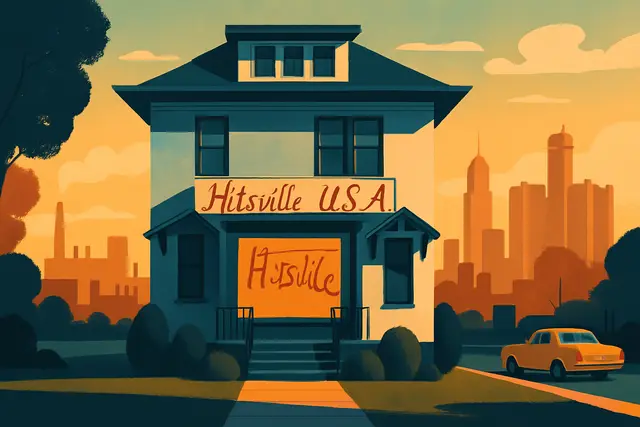
In 1962, John Young left his job and opened a restaurant called Wings and Things at the corners of Jefferson Avenue and Carlton Street in Buffalo, New York. Jefferson Avenue was the commercial spine of Buffalo's Black community during segregation — what residents called Black Main Street — and Young's restaurant became a neighborhood institution on it.
Young served chicken wings whole and breaded, coated in what he called his 'mombo sauce,' a proprietary recipe he never fully disclosed. In a 1981 interview with the Buffalo Courier-Express, he described selling 5,000 pounds of chicken wings in 1962 — a figure he offered as evidence that Wings and Things had already built wings into its signature product years before any competing claim begins.
For context: in the early 1960s, chicken wings had almost no commercial value as a standalone food. Processors sold them cheap because consumer demand was minimal — they were too small to serve as a main course and too fiddly to fillet efficiently. Menus that included wings did so out of economy. What Young recognized was that the wing, fried properly and dressed with the right sauce, delivered as much satisfaction as anything else on a chicken. He built a restaurant around that recognition. He did it before the story most people know had started.
2. The Anchor Bar's 1964 Account — And Its Problems
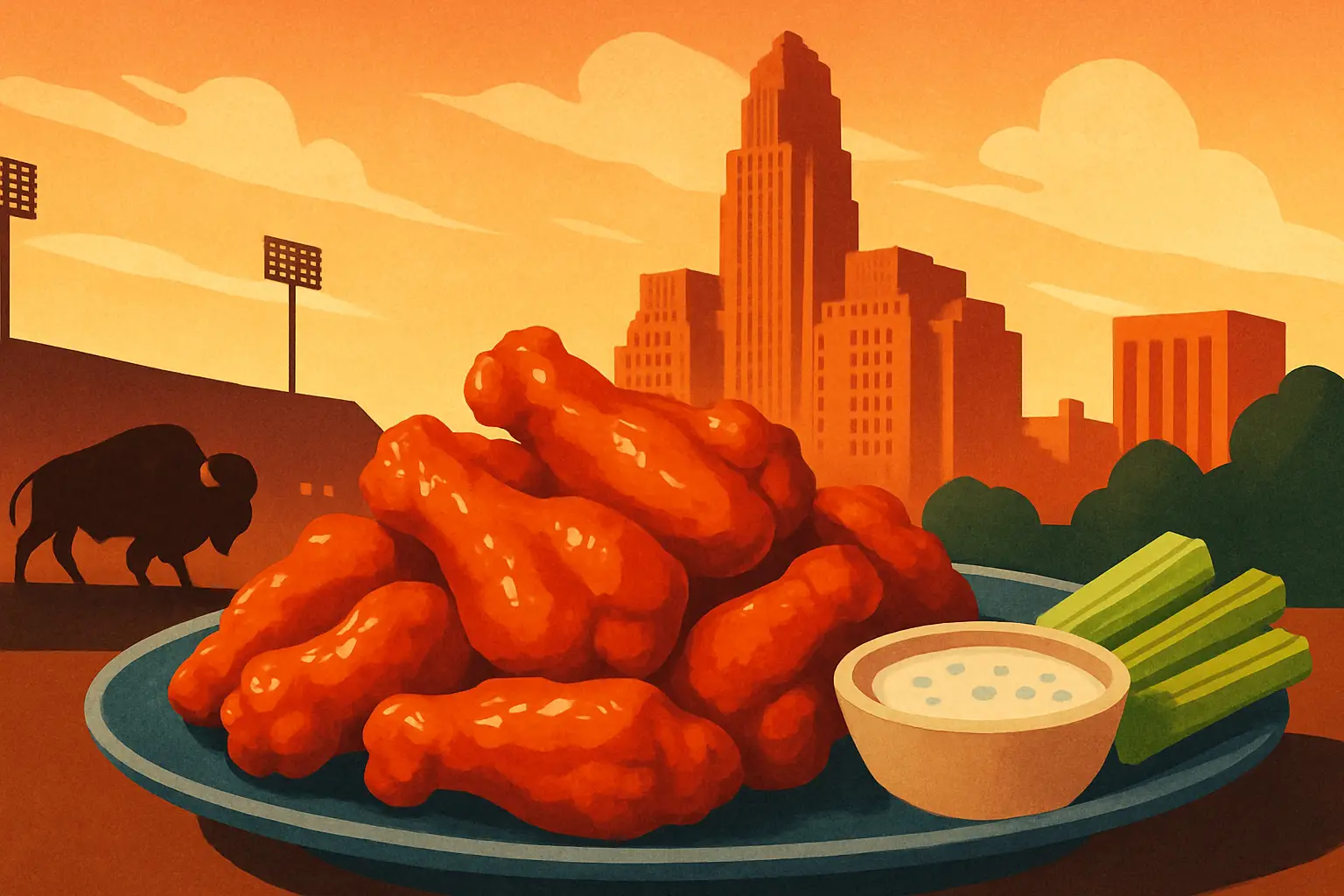
The official Buffalo wing origin story runs like this: on the night of March 4, 1964, Dominic Bellissimo was tending bar at the Anchor Bar Restaurant (1047 Main Street), a family-owned establishment his parents Frank and Teressa had operated since 1935. A group of Dominic's friends arrived late and hungry. He asked his mother to make something quickly. Teressa grabbed a pile of wings — cheap, on hand, usually destined for the stockpot — deep-fried them instead of simmering them, and tossed them in a cayenne-based sauce with butter. She served them with celery from the bar's bloody mary setup and blue cheese dressing from the kitchen. The friends loved it. A dish was born.
This account has documented problems. The Buffalo Courier-Express ran an Anchor Bar advertisement on November 4, 1963 — more than three months before the official origin date — that specifically promoted chicken wings as a menu item. If the wings were a spontaneous improvisation in March 1964, they should not have been in paid print advertising in November 1963.
Additionally, multiple members of the Bellissimo family have over the years told slightly different versions of how it happened. One account centers on a late-night kitchen improvisation. Another credits an accidental oversupply of wings from a supplier. Both agree on 1964 and on Teressa's technique, but they disagree on the trigger — and neither version acknowledges John Young's restaurant, which was operating roughly a mile away through the entire period in question.
3. Whose Wings? The Credit Gap
John Young's claim was not obscure or retroactive. In 1996, two years before his death, he told Buffalo News food critic Janice Okun directly: 'I am the true inventor of the Buffalo chicken wing.' He told her he believed Frank Bellissimo had gotten the idea from him — that the proximity of the two restaurants along roughly the same north-south corridor was not coincidence. Young's family has continued to press the case since his death, citing the 1962 timeline and the volume data from the 1981 newspaper record.
The cultural dimension is hard to overlook. Young's restaurant operated on Jefferson Avenue — Buffalo's segregation-era Black Main Street — while the Anchor Bar operated on Main Street proper, which ran through the city's white commercial district. When food media and the city's tourism infrastructure began constructing an official founding narrative, they built it around the Anchor Bar's account. The documented counter-narrative from Jefferson Avenue had been in the newspaper archive since 1981.
This pattern has a direct parallel in American food history. Nashville hot chicken thrived for decades in Nashville's Black community before a white-owned restaurant formalized it for a mainstream audience and absorbed the founding story. Young's specific preparation differed from the Anchor Bar method — his wings were breaded and used mombo sauce, while the unbreaded Frank's-and-butter style became the national standard — which complicates the question of direct lineage. But his timeline, documented in his own words in 1981 and 1996, does not.
4. The Technique: What Makes It a Buffalo Wing
Whatever origin you accept, the preparation that went national — that spawned a food category and named it — is the Anchor Bar method. Understanding it explains why the form is reproducible anywhere and why it tastes the way it does.
True Buffalo wings are not breaded. They are fresh wings, split at the joint into drummettes and flats, deep-fried in hot oil without batter or breadcrumbs. The exterior crunch comes entirely from rendered skin and fat. This matters because the sauce adheres to rendered skin in a way it cannot adhere to batter — the fat in the skin bonds with the fat in the butter component of the sauce.
The sauce is two ingredients. Frank's RedHot Original Cayenne Pepper Sauce and unsalted butter, combined roughly two parts hot sauce to one part melted butter, in a bowl large enough to toss the wings fully. The butter softens the vinegar sharpness of the hot sauce and creates a fat carrier that makes the sauce coat rather than pool. Variations exist across dozens of restaurants, but the Frank's-and-butter base is what the Anchor Bar used and what defines the category.
The accompaniments are not optional. Blue cheese dressing cuts the fat. Celery and carrot sticks cool the mouth — the water content of raw vegetables provides a genuine physiological reset between high-heat bites, not a crunchy garnish. Both elements have been on the plate since the dish's documented origin.
5. Where to Eat Buffalo Wings in Buffalo, NY
Buffalo has roughly 20 restaurants with a genuine claim to exceptional wings. These four serve as reliable starting points, each offering something different.
•**Anchor Bar** — 1047 Main St, Downtown Buffalo. Go for the history and the room; the walls are dense with memorabilia and every food television personality who passed through Buffalo in the last 30 years has been photographed here. The wings are good. Locals will tell you they are not the city's best. Mon–Thu 11 a.m.–10 p.m., Fri–Sat 11 a.m.–11 p.m., Sun noon–9 p.m.
•**Duff's Famous Wings** — 3090 Orchard Park Rd (main location); also a South Buffalo location on Abbott Rd. Established 1946 and renamed to emphasize wings in 1985 when the dish went national. Consistently cited by Buffalo residents as the benchmark for a properly calibrated wing. Mon–Sat 11 a.m.–10 p.m., Sun noon–9 p.m.
•**Gabriel's Gate** — 145 Allen St, Allentown neighborhood. Over 50 years in the same Victorian-era building in one of Buffalo's most intact historic districts. A proper neighborhood tavern — wood bar, regulars who have been coming since the 1980s — with wings that rank among the city's best. Open daily from 11:30 a.m.
•**Bar Bill Tavern** — 185 Main St, East Aurora (approximately 25 minutes south of downtown via Route 20A). Consistently at or near the top of regional wing rankings despite its distance from the tourist circuit. The drive is worth it if you have the time. Open daily from 11 a.m.
6. How a Throwaway Cut Became America's Most Ordered Food
In 1960, chicken wings had essentially no commercial value as a standalone product. Processors included them in whole chickens or used them for stock. A pound of wings was priced below every other chicken cut because demand was negligible.
The Buffalo preparation changed this economics in a specific way: a technique requiring no butchery skill, using a cheap cut, producible at volume in any bar or restaurant, created the conditions for explosive geographic spread. By the early 1970s, Buffalo-style wings had traveled through upstate New York. By the early 1980s, national food media — including a 1980 New York Times piece by critic Craig Claiborne, who visited the Anchor Bar specifically — introduced the dish to a readership far outside the region.
The National Chicken Council now tracks Super Bowl wing consumption because the numbers are significant enough to warrant it: an estimated 1.4 billion wings are consumed across the United States during Super Bowl weekend alone. That figure has grown annually since the Council began tracking it in the 1990s.
The economic irony is sharp. The wing's rise as a national food category — driven by a preparation invented partly because wings were cheap enough to experiment with — made those same wings substantially more expensive within two decades. Wings are now among the most margin-sensitive items on a restaurant menu, traded as a commodity that spikes in price every January before the Super Bowl and every August when the NFL preseason begins and demand starts to build.
7. FAQ: Buffalo Wings for Travelers
Why are they called 'Buffalo' if they have nothing to do with bison? The name is geographic — Buffalo, New York. The dish was named after the city, not the animal. This is one of the most persistent misconceptions attached to any American regional food, and it comes up every time the dish appears on a menu outside the Northeast.
Is August a good time to visit Buffalo? It is one of the best months. Buffalo sits on the eastern shore of Lake Erie, which moderates temperatures significantly: August highs average 78–84°F, considerably cooler than inland cities at the same latitude. The Canalside waterfront district at the foot of Main Street is fully activated in summer, and the Elmwood Village neighborhood — Buffalo's walkable arts and café corridor along Elmwood Avenue from Forest to North Street — is at its best on foot in warm weather.
What else is Buffalo known for? The city holds one of the most intact collections of Louis Sullivan and Frank Lloyd Wright buildings in the country. The Darwin Martin House Complex (125 Jewett Pkwy) is Wright's most complete surviving Prairie-style residential commission and offers guided tours. The Buffalo AKG Art Museum (1285 Elmwood Ave), reopened in 2023 after a major expansion, holds one of the strongest mid-century American art collections in the Northeast, including a significant Clyfford Still donation.
Blue cheese or ranch, really? Blue cheese. Always. The celery is there for a reason. You can order ranch — they will bring it — but you will be identifiable as someone from out of town for the rest of the meal.