1. What Ibiza actually is — geography, culture, and how the island divides itself
Ibiza (Eivissa in Catalan, which is the official name on every road sign) measures about 40 kilometers north to south and 20 kilometers east to west — roughly 572 square kilometers of pine-covered limestone hills, hidden coves, and a coastline that varies dramatically between its sides. The west coast faces the sunset and shelters the island's best beaches behind headlands that block the prevailing winds. The east coast is quieter, flatter, and less visited. The northeast has farmland and old finca architecture largely untouched by tourism. The south has the airport, Playa d'en Bossa's long party beach, and the main concentration of clubs.
The island organizes itself around three towns: Ibiza Town (Eivissa) in the southeast, which is the capital and contains Dalt Vila; San Antonio (Sant Antoni de Portmany) on the west coast, which has been the budget-package-holiday center since the 1970s and is earnestly reinventing itself; and Santa Eulalia (Santa Eularia des Riu) on the east coast, which is the quietest and most family-oriented of the three.
The island has a permanent population of about 140,000. In August, that number roughly triples. The tourist infrastructure is large enough to absorb this without the city completely losing its sense of itself — which is more than can be said for some Mediterranean destinations at peak season.
2. Dalt Vila — 2,600 years of history inside a UNESCO fortress you can walk for free
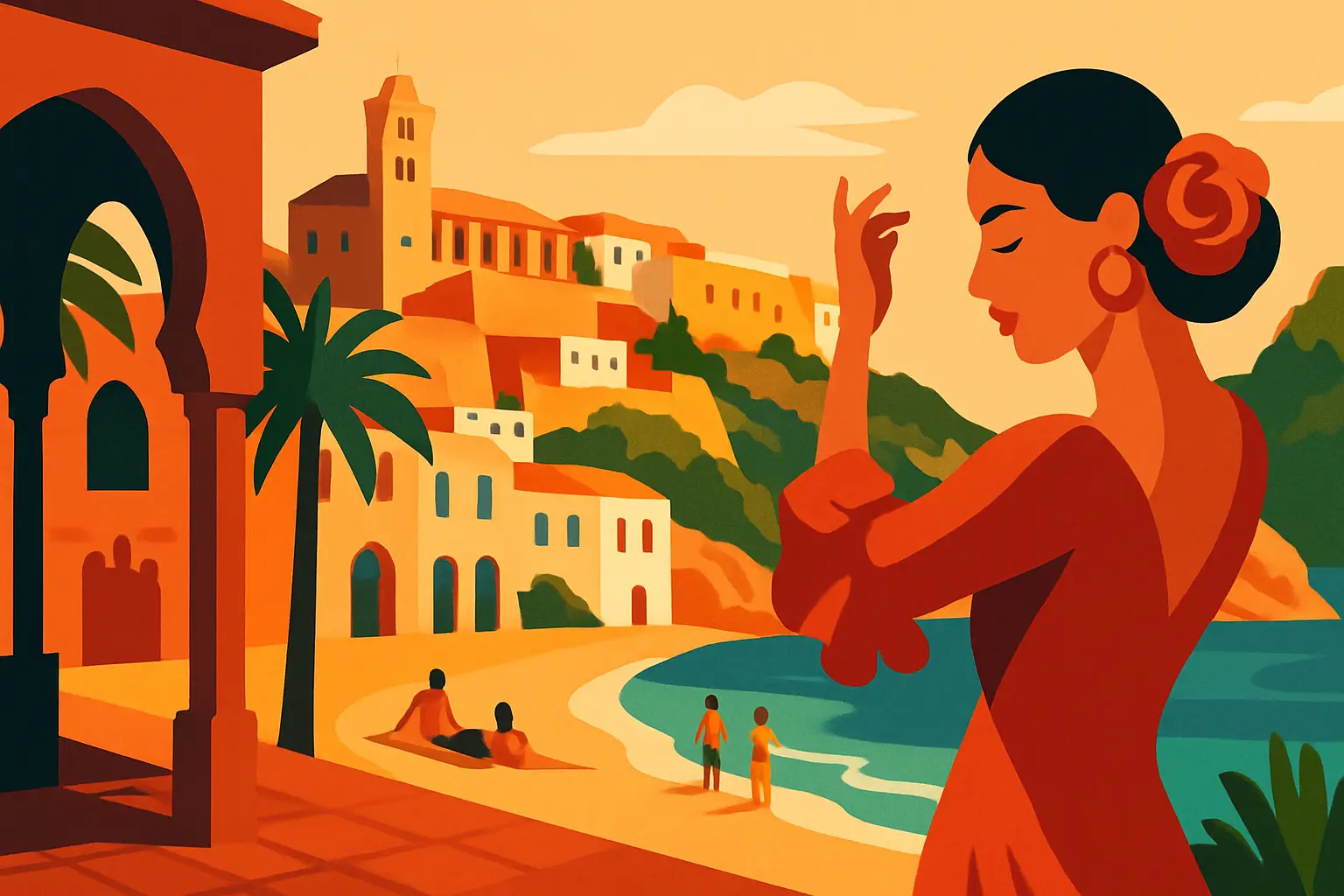
The most undervisited thing in Ibiza is the part of it that has been there the longest. Dalt Vila (the Upper City) is the fortified hilltop quarter of Ibiza Town, classified as a UNESCO World Heritage Site in 1999 for its outstanding example of Mediterranean Renaissance military architecture.
The hill has been continuously occupied since 654 BC, when Phoenician traders from Carthage established a port settlement here called Ibosim, recognizing the harbor's defensive advantages and the island's strategic position along Mediterranean trade routes controlling salt, pottery, and metals. After the Phoenicians came the Carthaginians, then the Romans (who called it Ebusus), then the Moors, who built the first serious fortifications during their occupation from 902 to 1235. The current walls are none of those — they were commissioned by King Philip II of Spain between 1555 and 1585, designed by the Italian military engineer Giovanni Battista Calvi specifically to resist Ottoman naval artillery and Barbary corsair raids. Seven angular bastions project from the walls at intervals, a distinctly Renaissance defensive geometry designed to eliminate the blind spots that medieval round towers left open.
Inside the walls, the streets narrow and climb steeply toward the summit, where the Cathedral of Our Lady of the Snows (Catedral de Nuestra Senora de las Nieves) sits on the foundations of an earlier mosque, which itself sat on a Roman temple. The cathedral's current structure is mostly 14th-century Gothic with an 18th-century baroque tower. The Ibiza Archaeological Museum (Museu Arqueologic d'Eivissa), housed in the former Armory at Placa de la Catedral, holds Phoenician ceramics, Carthaginian burial goods, and Roman-era mosaics that tell the island's layered history more clearly than any overview can.
Entrance to Dalt Vila's streets is free. The Archaeological Museum charges around €4 admission.
3. The west-coast beaches — and why they are different from anything else in the Balearics
Ibiza's west coast produces a specific quality of afternoon light that photographers chase and sunset-watchers plan their entire days around. Three beaches here are worth knowing in specific terms, not just by reputation.
Cala Comte is the most celebrated sunset beach on the island, and the designation is earned. Located about 15 kilometers northwest of Ibiza Town off the road to Cala Tarida, it is actually a cluster of small coves with turquoise water so shallow you can walk 50 meters out and still see your feet clearly. Scattered islets just offshore break the horizon into a layered view. In August, the parking fills completely by 5 PM; arriving by 4 PM on foot from the road gives you a chance of a decent spot.
Cala d'Hort, on the southwest coast about 25 kilometers from Ibiza Town, is the beach with the most dramatic offshore view in the Balearics. Es Vedra — a pyramid-shaped limestone rock rising 382 meters from the sea roughly 2 kilometers offshore — dominates the horizon in a way that has generated decades of mythology (claimed magnetic anomalies, proposed connection to the lost city of Atlantis, mass sightings of unexplained phenomena). The rock is a nature reserve, uninhabited, and accessible only by private boat. From Cala d'Hort, the view is simply stunning by any standard. The beach itself is 150 meters of coarse sand with beachfront restaurants known for paella and fresh fish cooked over wood fires.
Cala Tarida, a few kilometers north of Cala Comte, is wider, calmer, and more family-friendly than either of the above — multiple small coves with soft sand, clear shallow water, and the Cotton Beach Club at the northern end for visitors who want a full-service beach experience with sunbeds and cocktails (sunbed hire approximately €25 per day per person).
4. The club system — how it actually works for visitors who want to use it
Ibiza's nightlife has a specific structure that confuses first-time visitors because it operates nothing like a city's bar and club scene. Understanding it in advance makes the whole thing much more manageable.
The island runs on a residency model: major DJs and brand events take weekly slots at specific clubs for the entire season (late April to mid-October), rather than one-off bookings. This means that on any given night, you can predict exactly which artists and sounds are at which venue — the schedule is published months in advance, tickets go on sale weeks ahead, and the crowd at each club self-selects accordingly.
The four clubs that define the island's reputation and geography: Pacha (on the Ibiza Town harbour, opened 1973, making it one of the world's longest-running clubs, mixed house and more dressed crowd); Amnesia (on the road between Ibiza Town and San Antonio, celebrating its 50th anniversary in 2026, known for hard techno and house, capacity around 5,000); DC10 (just north of Ibiza Airport — the sound of low-flying planes overhead while dancing is genuinely part of the experience, famous for its Monday Circoloco session, stripped-back and music-focused); and Ushuaia (at Playa d'en Bossa, an open-air stadium format with headline residencies running from 4 PM, more commercial house, visually spectacular). Hi Ibiza at Playa d'en Bossa is the newest of the major venues and has replaced the former Space club in the local hierarchy.
Ticket prices range from €40 for DC10 on a quiet night to €90 for headline acts at Ushuaia. The Disco Bus — lines D1 and D3 — connects all major venues through the night for €4–5 per ride. It is genuinely reliable until around 6 AM and is how most people who aren't staying at hotel parties get between clubs without paying taxi rates that double after midnight.
5. Ibiza Town at street level — La Marina, Sa Penya, and the ferry to Formentera
The part of Ibiza Town that visitors actually inhabit on foot divides into three zones sitting directly adjacent to each other: Dalt Vila (the walled city above), La Marina (the port neighborhood at the base of the walls), and Sa Penya (the eastern quarter spreading from the edge of the old town toward the commercial harbor).
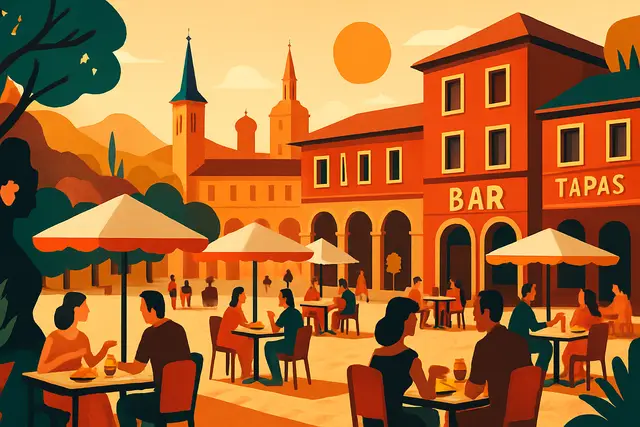
La Marina is the classic postcard version of Ibiza Town: white-painted buildings with bright shutters, a working harbour, restaurants with outdoor terraces facing the water, and the Mercat Vell (Old Market) building on Carrer de la Constitucio, a 19th-century iron-and-stone market hall now housing artisan stalls and a tourist information office. This is the densest concentration of visitors per square meter in Ibiza and prices reflect that — a caña (beer) at a harbour terrace runs €4–5 versus €2.50 a few blocks inland.
Sa Penya, accessible from La Marina through the Baluarte de Santa Lucia, is a labyrinthine quarter of narrow stone-paved streets with a distinct character: gay-friendly, more local, lined with small bars, tattoo studios, and independent shops along Carrer de la Mare de Deu and Carrer d'Enmig. It operates on the island's late schedule — most places here come alive after 11 PM.
From the Estacio Maritima (Ibiza Town ferry pier), the journey to Formentera takes 25–35 minutes by fast catamaran. Formentera is technically a separate island but functions as Ibiza's quiet, car-light counterpart — Ses Illetes beach on Formentera's northern spit consistently ranks among the most beautiful beaches in Europe. Return ferry tickets cost approximately €30–40, and several companies operate the route from 7 AM through the late evening.
6. Is August the right time to visit Ibiza?
August is peak Ibiza in every measurable sense: highest prices, most visitors, fullest club schedules, warmest sea temperature (around 26–28C), and the longest wait times for everything from ferry queues to restaurant tables. Whether that is the right time for you depends entirely on what you are there to do.
If clubs and the full summer social scene are the reason you are going, August is correct — the residency schedules hit their peak, the parties at Ushuaia and Pacha are at full power, and the energy on Playa d'en Bossa is what Ibiza means culturally. If you want beaches without crowds, September does everything August does with roughly 30–40% fewer people, water still warm enough for comfortable swimming, and hotel rates dropping significantly after the second week.
For families or visitors primarily interested in Dalt Vila and the quiet west-coast beaches, late June or early October offers the same landscape and history at a fraction of the cost and crowd pressure. The island's natural attractions are independent of the club calendar entirely.
•August accommodation: €150–400/night for a standard double in Ibiza Town; budget hostel beds from €60/night
•September: same beaches, 30–40% cheaper, still 24–26C sea temperature
•Clubs run May through mid-October; closing party season begins mid-September
•Formentera in August: ferry queues of 45–60 min are common — book a specific sailing time in advance (Balearia and Trasmapi both offer advance booking online)
7. Getting to Ibiza and around the island
Ibiza Airport (IBZ) is one of the busiest airports in Spain during summer, with direct flights from most major European cities — the flight from London is 2h 30m, from Amsterdam 2h 45m, from Berlin 2h 20m. From mainland Spain, the ferry from Barcelona to Ibiza takes about 8 hours on the overnight service or 4 hours on Balearia's fast ferry; from Valencia, the route takes 4–6 hours depending on the operator; from Denia on the Costa Blanca, the Balearia service takes about 2 hours and is the most direct mainland connection. Spanish rail (Renfe) has no direct connection to the island — the combination of train + ferry from Madrid is around 9–10 hours total.
On the island itself, renting a car or scooter is the practical choice for the beach-hopping itinerary — the west coast coves are not easily reachable by bus. The Ibiza Bus network (ibizabus.com) covers the main corridors between Ibiza Town, San Antonio, Santa Eulalia, and the airport for €1.55–3 per trip. The Disco Bus (night bus) is specifically designed for club-to-club movement and costs €4–5 per ride.
•Airport: Ibiza Airport (IBZ) | Direct flights from most European hubs | ~2.5h from London, ~2.5h from Amsterdam
•Ferry from Barcelona: 4h fast ferry (Balearia) or 8h overnight | Book in advance in August
•Ferry from Denia: ~2h | Most direct mainland connection | Balearia operates multiple daily sailings
•Car rental: €40–80/day in August | Essential for west-coast beaches | Book weeks ahead
•Disco Bus: Lines D1 and D3 | €4–5/ride | Connects Ibiza Town, Amnesia, Pacha, DC10, Ushuaia, Playa d'en Bossa