Barcelona's festive calendar starts on November 26, 2026, when the official Christmas lights go live across the city. It ends on January 6, 2027 — Epiphany — with the Three Kings Parade, the season's most anticipated night. In between, the city layers markets, nativity scenes, Catalan traditions, and neighbourhood events across six weeks.
The timing matters for how the city feels. The first two weeks of December are genuinely festive without being overwhelmed. The week from December 23 through January 2 is peak season — hotels fill, restaurants take reservations weeks ahead, and crowds on Passeig de Gracia and in the Gothic Quarter are dense. Barcelona is also more family-focused at Christmas than you might expect from its reputation as a party city. December 24 (Nochebuena) and December 25 are quieter than many visitors anticipate: most locals spend them with family at home, and a surprising number of restaurants close for both nights. December 26 — Sant Esteve — is a public holiday unique to Catalonia, observed nowhere else in Spain. Plan accordingly: book restaurants for December 22-23 rather than December 24-25 if you want to eat out without searching hard.
The lights switch-on on November 26 is the symbolic start of Christmas, and Barcelona City Council has confirmed November 26, 2026 as the official date. In recent years the opening ceremony has taken place on Passeig de Gracia, where the famous Modernista lampposts are supplemented by overhead light installations running the boulevard's full length.
The best-lit circuit on foot: start at Passeig de Gracia metro (exit at the junction with Consell de Cent), walk the full length of Passeig de Gracia toward Placa Catalunya, turn onto Portal de l'Angel (a pedestrian street into the Gothic Quarter), and continue down toward the Cathedral. The whole route takes about 40 minutes at a walking pace and links the main commercial lights with the Fira de Santa Llucia market below. Gran Via de les Corts Catalanes and Avinguda Diagonal both get their own installations, though with lower foot traffic. The lights run nightly from roughly 5:30 pm until 1 am throughout December and into early January — the same schedule as 2025. The confirmed location of the 2026 ceremony had not been announced at time of writing; check barcelona.cat closer to November 26 for the opening programme.
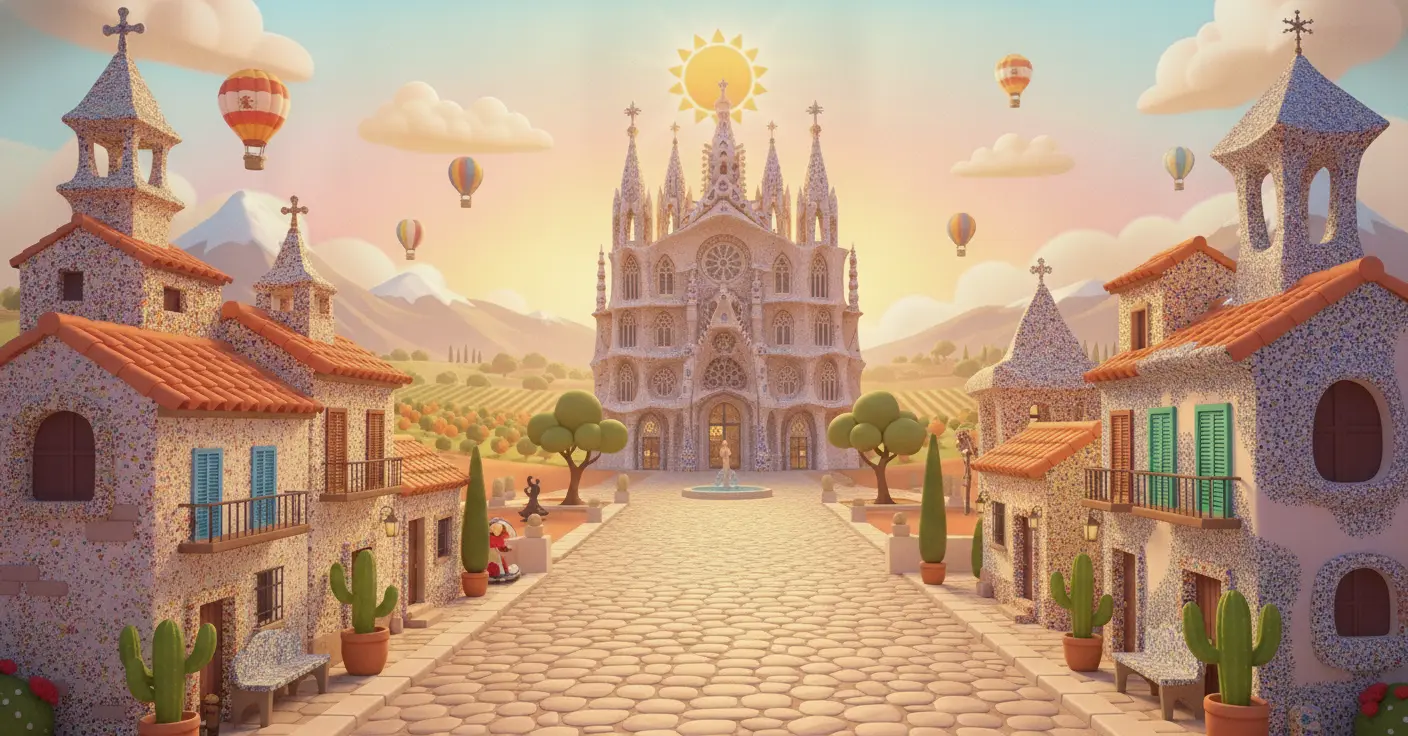
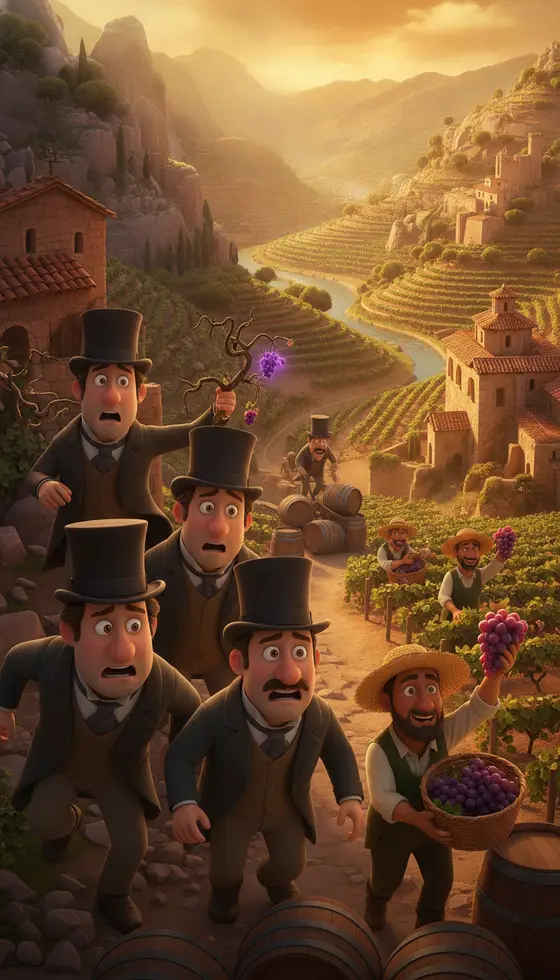
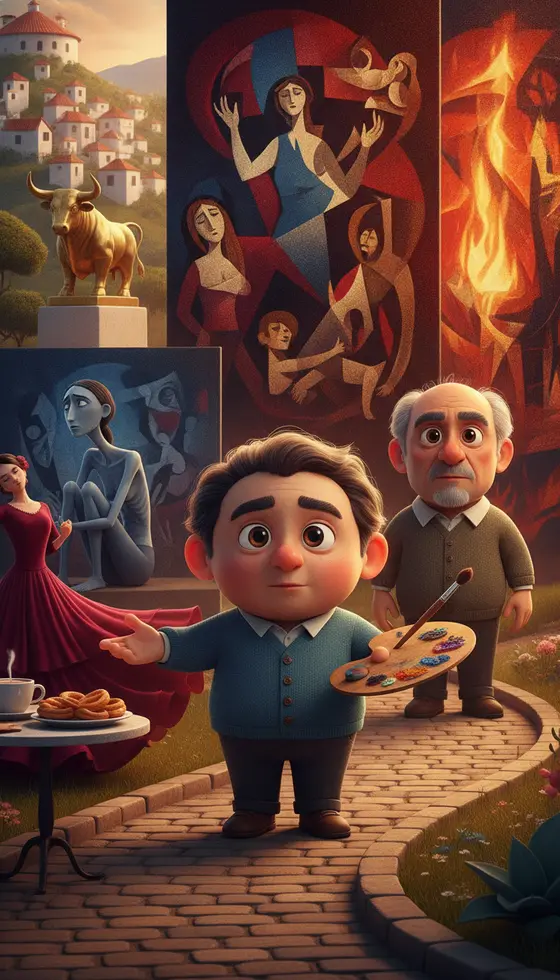
Get short, interactive stories that make each place easier to remember while you travel.
The Fira de Santa Llucia has taken place in front of Barcelona Cathedral since 1786. First held at Placa de la Catedral, it now fills Avinguda de la Catedral and Placa Nova — the open space directly in front of the Cathedral's Gothic facade. That makes it one of the oldest continuously-running Christmas markets in Europe, and what it sells reflects that history: nativity scene figures (pessebre in Catalan), Caga Tio logs at every size, ornaments, nativity accessories, and Christmas sweets including turro and polvorons.
The market ran from November 28 to December 23 in 2025, with stalls open daily 10 am to 9 pm. The 2026 dates follow the same pattern but had not been officially confirmed at time of writing — check firadesantallucia.com before you travel. Entry is free. The practical advice: go on a Tuesday or Wednesday morning in the first two weeks of December. Stall holders are unhurried, you can inspect the figures closely, and the Cathedral's Gothic facade directly behind the market is at its quietest. Weekends in the final week before December 23 are very crowded. The Cathedral itself (Catedral de la Santa Creu i Santa Eulalia) is free to enter before 12:30 pm and is worth combining with a market visit: the cloister contains thirteen white geese year-round — a living tradition tied to Barcelona's patron saint, Santa Eulalia.
If you visit Barcelona at Christmas and wonder why there is a hollow log with a painted face sitting in a shop window wearing a red Barretina hat — you have met the Tio de Nadal, commonly called the Caga Tio. The tradition works like this: starting from the Feast of the Immaculate Conception on December 8, families feed the log treats every evening and cover it with a blanket to keep it warm. On Christmas Eve or Christmas morning, children beat it with sticks while singing a traditional Catalan song, and the log produces small gifts and sweets from underneath the blanket. The gifts are modest — turron, nuts, dried figs — but the ritual is taken seriously by Catalan families, and the logs are sold in the Fira de Santa Llucia at every scale, from pocket-sized to armchair-sized.
The Caganer is the other tradition: a small figurine of a crouching person in traditional Catalan dress, tucked into the corner of every nativity scene. The figure first appeared in 18th-century Catalan nativity scenes and has accumulated centuries of folk interpretations — good luck, fertilising the earth, levelling everyone before God. Today the market sells Caganers shaped like famous athletes, politicians, and pop stars. Finding the Caganer in a church nativity display is a small and genuine side quest during any Christmas visit to Barcelona.
The Sagrada Familia at Christmas is worth visiting separately from your standard daytime ticket. The Nativity facade — the east face of the basilica, the only one Gaudi saw completed in his lifetime — is illuminated with a dedicated light show in the days just before Christmas. In 2024 this ran from December 20 to 22, with free projection shows each evening starting around 7 pm. The 2026 programme had not been announced at time of writing; check sagradafamilia.org in December for confirmed dates and times.
Midnight Mass on Christmas Eve (December 24) is held inside the Sagrada Familia and is free to attend without a standard entry ticket. Doors open around 11 pm; arrive at least 45 minutes early as seating fills quickly. The interior acoustics at Christmas Mass are genuinely extraordinary — the basilica was designed with sound in mind, and a full choir at night is worth planning around. Outside the basilica, the intersection of Avinguda de Gaudi and Carrer de la Marina is the best free viewing point for the illuminated spires without paying for entry.
Spanish children do not traditionally receive gifts on December 25 — they receive them on the morning of January 6, Epiphany, left by the Three Kings: Melchior, Caspar, and Balthazar. The night before, January 5, Barcelona stages its Cabalgata de Reyes: a parade of floats, music, and costumed performers that moves through the city while the Three Kings throw caramelos (sweets) into the crowds.
Barcelona runs one of the largest Cabalgatas in Spain, drawing hundreds of thousands of people. The Three Kings traditionally arrive by boat at the Port Olimpic or Moll de la Fusta and proceed through the city — a detail unique to Barcelona and unlike any inland Cabalgata. The 2027 route and schedule had not been confirmed at time of writing; check ajuntament.barcelona.cat in late December 2026 for the confirmed programme. If you have children, position yourself along the middle sections of the route rather than the start or finish where crowding peaks. January 6 is a public holiday: most shops close, bakeries open early to sell the roscon de Reyes, and the city quietly returns to normal by January 7.
How cold is Barcelona in December? Warmer than Madrid or northern Spain. Average December highs in Barcelona sit around 13-14 degrees C, with lows around 6-8 degrees C. Rain is more likely in December than in summer, but snow is essentially unknown. A medium coat and layers are sufficient; heavy winter gear is not necessary.
When is it most crowded? The week of December 20-26, and again December 30 through January 2. Early December (December 1-15) is fully decorated, festive, and noticeably quieter than the final stretch — the best window if you have flexibility on dates.
Are the Christmas markets free? Yes. Fira de Santa Llucia and all major Barcelona outdoor markets charge no entry fee. The Cathedral is also free before 12:30 pm.
Where should I stay to be close to the action? The Gothic Quarter (Barri Gotic) puts you a five-minute walk from Fira de Santa Llucia and the Cathedral, and within 15 minutes on foot of Passeig de Gracia. The El Born neighbourhood is equally well-placed and quieter than the Gothic Quarter at night — a good option for a week-long stay.
Is Barcelona or Madrid better for Christmas? Different, not better. Barcelona has the unique Catalan traditions and the most beautiful market backdrop in Spain; Madrid has larger public celebrations and a longer, more consistent festive programme. See our Christmas in Madrid guide for the comparison.